

The national trust have removed the fences from around Badbury Rings to restore the natural downlands.
This offers a fantastic opportunity to see the site in a less obviously managed way, and completely opens up the landscape.
Over the next year until October 2011 the national trust will be monitoring the effect on grasses and wildlife from the removal of the fences.
This is the website of the Hunebed Center Museum at Great Borger.


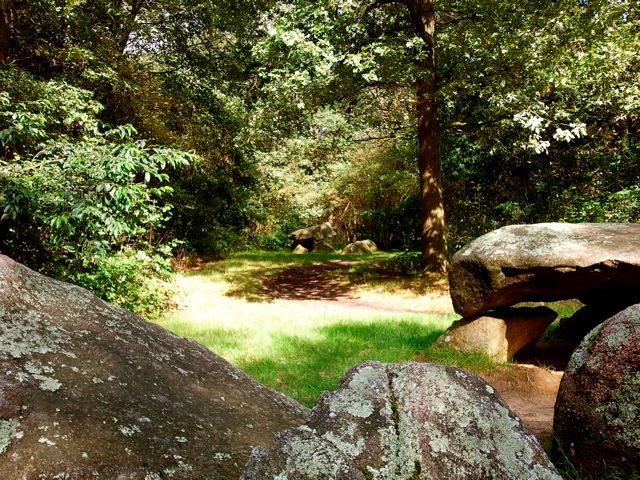


At D21 the Oak tree is also right next to this very well preserved monument. While sitting there meditating on the place I found myself drifting and thinking about the trees. Of course they wouldn’t have been their at the time the monuments were in use but there still seemed to be a great relevance to my modern perspective of the monument. I was thinking about a recent permaculture course I took, and about pioneer species, natural succession and Climax community, when the stable community that is reached and no further succession occurs. This seemed very relevant to me when considering these old stones and the people that put them there, coincidental? Maybe but still a beautiful vision of life beyond words and history.


A photo of Castelrigg has just won the Archaeological Photography Competition 2010 sponsored by Andante.
You can see the photo and the other winning photographs at this link...
Tests carried out on a skeleton discovered at an archaeological dig in Derbyshire have found it was that of a pregnant woman.
Experts said they were surprised by the female find because the site, near Monsal Dale in the Peak District, had been believed to be a military scene.
Now, extra lottery funding means there can be a second dig at the Fin Cop hill fort site to find out more.
Archaeologists unearthed the Iron Age skeleton last August.
During the excavation, the woman was uncovered among the jumbled stone of a collapsed rampart.
More here news.bbc.co.uk/1/hi/england/derbyshire/8691348.stm


“In the middle of this barton of Trove on the top of a hill is still extant the downfalls of a castle or treble intrenchment called … , in the midst of which is a hole leading to a vault under ground. How far it extends no man now living can tell by reason of the damps or thick vapours that are in it, for as soon as you go an arrow flight in it or less your candles will go out or extinguish of themselves for want of air. For what end or use this vault was made is uncertain though it is probable it was an arsenal or store house for laying up arms ammunition corn and provision for the soldiers of the castle wherein it stands. In the wars between Charles I and his Parliament divers of the royal party pursued in the West by the Parliament troops under Sir Thomas Fairfax were privately conveyed into this vault as far as they could proceed with safety, where Mr Leveale fed and secured them till they found opportunity to make their escapes to the king’s friends and party.”
William Hals
en.wikipedia.org/wiki/William_Hals
This is a web leaflet about Carn Euny you can download as a PDF
It was previously thought that treasure was buried under the monument, and digging over the years certainly weakened the foundations and probably contributed to its collapse.


