The Modern Antiquarian. Ancient Sites, Stone Circles, Neolithic Monuments, Ancient Monuments, Prehistoric Sites, Megalithic Mysteries

Miscellaneous Posts by GLADMAN

Latest Posts
Showing 1-20 of 131 miscellaneous posts. Most recent first | Next 20

Nash Point (Cliff Fort)

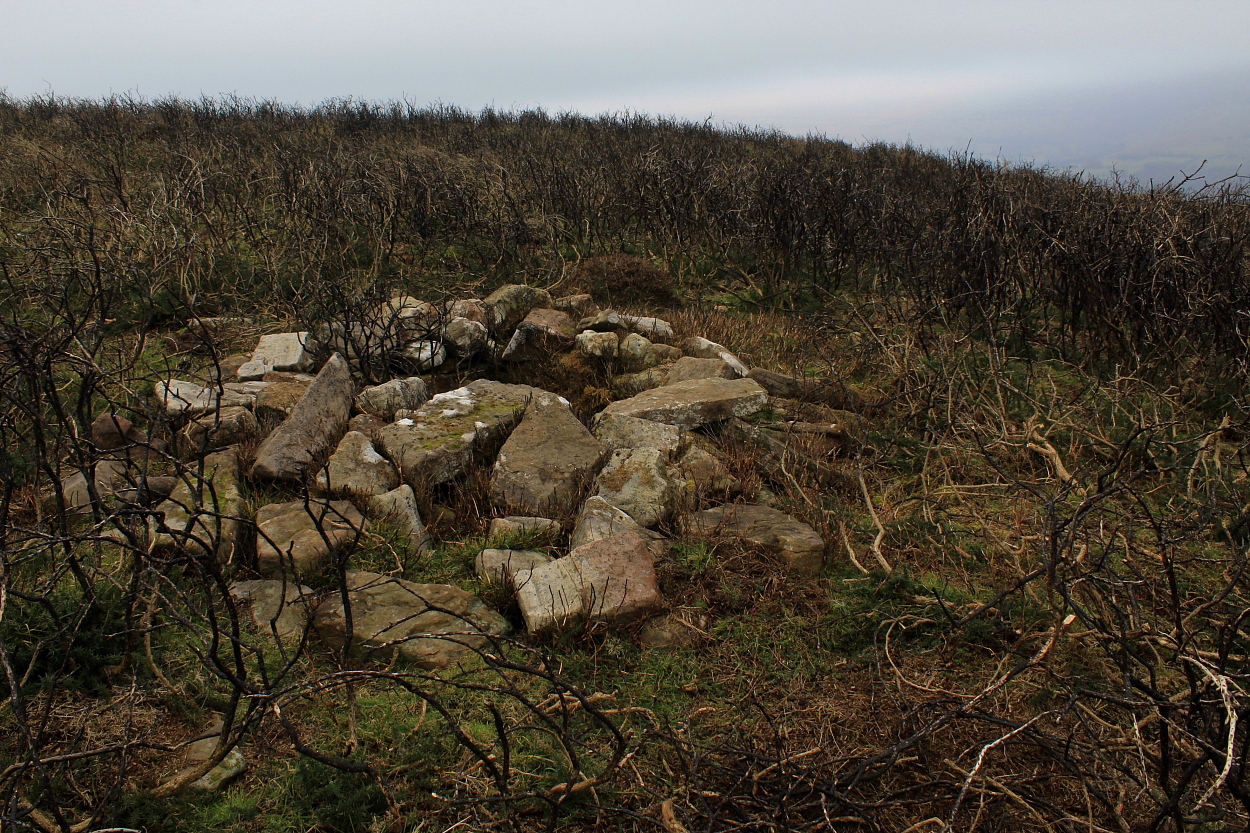
Cae'r Eglwys - a possible long cairn, Nash Point

Shockingly treated by locals, covered in cans, assorted rubbish and dog waste, this site, marked as an 'earthwork' upon the 1:25K OS map, is nevertheless cited by Coflein as a possible Neolithic long cairn, being an....

'Oval stony mound about 50m long by 15m wide at east end and 8m wide at west end. (1999.05.21.RCAHMW/SLE). The mound has been mutilated by the digging of a narrow trench about its perimeter, possibly to rob a revetment. Associated with the site of an old church, possibly one lost to the sea. (J.Wiles 19.12.02)'

Weald Park (Hillfort)

Poor South Weald Camp has been badly treated by the passage of time, of that there can be no doubt. Firstly, by its incorporation within a deer park in medieval times, then by having a road driven through its centre... and last but not least... by having its eastern half remodelled as a cricket ground! To be honest, it's a wonder anything exists at all.... but thankfully it does.

The western half of the enclosure can be freely visited, lying as it does within the Weald Park Country Park. Not so the eastern, since the cricketing chaps would no doubt think it very bad form if a traveller was to go walkabout during a game. However I'd suggest the whole of the enclosure is worth seeing. And it costs nothing to ask permission, does it not?

Essex HER [SMR 531] has quite a bit of data regarding the site, including:

'On high ground partly within the eastern boundary of Weald Park. It is approximately circular, enclosing about 7 acres. On the east side is a rampart and steep scarp. If there was an external ditch it has gone, the northern section of defences has almost disappeared. The site of the entrance is doubtful.Two trenches were excavated across the defensive ditches in 1990 in an attempt to confirm the Late Iron Age date. Three years after the excavation, a detailed contour survey of the earthwork and its immediate environs was undertaken as part of a separate project aimed at assessing the archaeological potential of the Essex Country Parks.The two trenches excavated sectioned the univallate defences in the north-west and south-west quadrants. Both the excavations and the contour survey date the beginning of the construction of the hillfort to the Late Iron Age. Dating is provided by small amounts of Late Iron Age pottery in the rampart make-up. One trench had a well-defined linear cut interpreted as a slot for a revetment at the rear of the rampart. Within the area enclosed by ditch and rampart were a number of post holes also dated to the late iron Age; they may represent internal structures.

[FAU. 1994. South Weald Surface Model; Medlycott, Maria et al. 1995. South Weald camp - probable late Iron Age hill-fort; excavations 1990; Isserlin, RMJ. 1995. South Weald Camp, Brentwood and Langdon Hills, Basildon: Analytical Earthwork Survey.]'

Cribarth (Sacred Hill)

Amazing what you can pick up from local knowledge, isn't it? OK, I had surmised - whilst hanging out at the Llorfa stone circle back in September - that the profile of Cribarth looked a little like a recumbent figure from that direction. However I wasn't aware the 1,387ft mini-mountain was known locally as the 'Sleeping Giant'..... my thanks to Rob, The Mam C's daughter's fiance, for that snippet of information.

Apparently the best viewpoint to appreciate the likeness is near Cae'r-Lan, north-east of Ystradgynlais (at approx SN804120). Too cloudy to test this out personally this Christmas, but on-line photos seem very convincing. Sacred Hill, indeed. I wandered up it a number of years back in mist. Need to return some time for a proper look, methinks.

Sully Island (Promontory Fort)

Coflein has the following to say about this quite remarkably sited fort:

'The east end of Sully Island is defended by a succession of three ramparts. There has been erosion, particularly on the south, and the north half is thickly overgrown; the present area of the main enclosure is about 0.4 ha, but it may originally have been twice as much. The inner rampart, cutting off the subsidiary promontory at the point of contraction, was fronted by a ditch and is thought to have been revetted, or walled in stone.

D.K.Leighton, RCAHMW, August 1987. RCAHMW AP955145/50-1'

Note that the Mam C's husband works nearby (at time of posting) and reckon's the warning notices posted in the vicinity most certainly mean what they say.... the tides upon this coastline are not to be trifled with, so watch yourself please.

Bryn-yr-Hen-Bobl (Chambered Cairn)

Access to the wonderful Bryn-yr-Hen-Bobl has always seemed problematic. However plan in advance and my solution - although admittedly back in October 2006 - was to write to The Marquess of Anglesey to see what the position was..... I quote from his (handwritten) reply:

'Just back from S. Italy to receive your [letter] of 29 Sep. I am v. pleased to give you permission to visit the 2 sites you mention in week beginning 23 October. Remember to shut the gate at the Hen Bobl! Every good wish.....'

Not exactly unfriendly, it has to be said, so suggest this may well be the best option if you wish to hang out at the site in peace. If so, the address is:

The Marquess of Anglesey,
Plas Newydd,
Llanfair P.G.
Anglesey,
North Wales LL61 6DZ

Craig yr Aderyn cairn (Cairn(s))

Although well seen from the wondrous hillfort occupying the north-western section of Craig yr Aderyn, since this rather obvious cairn, crowning the crags to the approx south-east, was not marked on my 1:25K OS map I assumed it to be modern, possibly the result of quarrying work. Needless to say I'm glad to report that I was wrong. Not only do the people at Coflein disagree re modernity - suggesting a Bronze Age origin - they also cite a possible further ancient enclosure upon said summit. I quote:

'Large stone cairn constructed of scree, with central robber pit, which lies some 300m south-east of the prominent hillfort of Craig-yr-Aderyn. The cairn sits on a rocky crag at the south-western end of possible stone defended enclosure, with substantial scree-built rampart to north-east. Not investigated on the ground. Discovered during RCAHMW aerial reconnaissance on 17th October 2005, image ref: AP_2005_2283. T. Driver, 5th June 2008'

Good reason to return at some point, I guess.... What a drag. As if the sublime views weren't reason enough?

Carn Gwilym (Round Barrow(s))

I was prompted to make this post following a recent visit to Carn Fawr... the twin cairns of Carn Gwilym standing proud (with a little help from modern 'masons', it has to be said) upon the summit of Carn Hyddgen across the valley.

Intriguingly, Coflein quotes a field report from 1910 stating:

'there are here two cairns, 60 feet apart. They stand on the summit of Mynydd Hyddgen... an outlying height of Plynlymon, midway between the sources of Nant y Garn and Nant Lluest fach. They are each 20 feet in height; of rough construction, the stones being piled into a mass without any signs of regular courses. No stones similar to those used in the building of these cairns are to be seen anywhere around; none are scattered about from which they could now be erected, and none are of a size larger than one man could carry hither. Of the carneddau of the Plynlymon district Carn Gwilym is probably the best preserved'

Each cairn measuring 20 feet in height in 1910? Surely not? Oh, come on?

Whatever the accuracy of the 'not so modern antiquarians', CPAT gives a succinct appraisal of the current state of affairs:

Northern cairn - 'Substantial summit cairn c. 13m diam. Original form difficult to assess due to disturbance and construction of a modern cairn 3.2m diam x 2.8m high, off-centre to S. Small shelter also built into cairn on E side. Outer edge of cairn is turf covered, with loose rubble interior, Top has been levelled and remains of a revetment wall survive on S side. Irregular group of stones to SE is of uncertain function. The modern cairn has been recently rebuilt (?and enlarged) using more of burial cairn stone. Good palaeoenvironmental deposits over 1m deep c. 100-150m to NE. (CPAT 2002) (CPAT Prehistoric Ritual & Funerary Monuments, 2002)'

Southern cairn - 'Substantial cairn which appears to comprise a turf covered ring bank 13.2 x 12.5 x 0.5m, visible most clearly on E side, the interior of which is filled with loose rubble forming a cairn up to 0.75m high. The top has been levelled and disturbed by the construction of a modern cairn set off-centre to W, measuring 3.4m diam x 2.4m high, possibly recently rebuilt. Small satellite cairn adjoins E side, 2.5m diam, composed of well-sett stones. (CPAT 2002) (CPAT Prehistoric Ritual & Funerary Monuments, 2002)'

Castle Howe, Little Langdale (Hillfort)

Quite an obscure one this, although paradoxically sited in a very popular tourist area.... I've driven past a number of times without a clue. But then, what's new?

The National Trust - via the ADS - have this to say about this scheduled monument:

'...located on Castle Howe, an area of high ground springing abruptly from Little Langdale valley, with a rocky knoll forming the highest point. The ground falls precipitously from this knoll in all directions and access to the summit can only be gained by a steep 6m scramble up the western face. On the northern and southern sides of the knoll, just below the summit, there are rectangular levelled areas, the former measuring approximately 6m by 3m, the latter measuring approximately 8m by 5m which are interpreted as artificial hut platforms. At the base of the knoll's western face is the first of a series of four rock cut ditches dug across a spur of relatively level high ground extending towards the west; it measures approximately 4m wide by 1.3m deep. This second ditch measures approximately 5m wide by 1m deep and terminates at its northern end in a sub-rectangular rock-cut levelled area terminates at its northern end in a in a sub-rectangular rock cut levelled area measuring approximately 17m by 13m. At the northern end of this levelled area is a rock cut circular area measuring approximately 4m in diameter which is interpreted as a hut circle. A short distance to the east is a second, slightly smaller, similar feature . The third ditch measures 3m-9m wide by 1.3m deep and also terminates at it's northern end in a rectangular rock-cut levelled area measuring approximately 7m by 5m. The outer ditch on the knoll's western side measures 7m wide By 1.5m deep. At the base of the knoll's eastern face are two rock-cut ditches; the inner measures 19m wide by 0.8m deep, the outer measuring 8m wide by 1m deep. The Southern end of both these ditches connects with a rock-cut levelled area of 10 sq m. The site lies at the eastern end of Wrynose Pass. It overlooks the Roman road from Ambleside to Ravenglass and a medieval moot, or meeting place at Fell Foot.'

Dinas Ty-Du (Hillfort)

Sited at the terminus of the north-eastern ridge of Moel Eilio, overlooking Llanberis.... not to mention the much newer (ha!) native Welsh fortress of Dobadarn... this small enclosure has not had to suffer my boots as yet, although I have unwittingly walked right by. Nevertheless Coflein know the score:

'On the summit of an isolated hill surrounded by the 90m contour and overlooking the village of Llanberis, are the remains of an oval camp protected by a single stone vallum, measuring about 90m from west-south-west to east-north-east, and 30m across at its maximum width. The position is one of remarkable strength, for along the whole of the northern side the cliffs are 60m high and very precipitous. Yet it is on this side that the only stretch of well-preserved walling is to be found. The external rampart masonry consists of large facing stones each measuring up to 1m wide by 1m high, with smaller packing stones set behind them. The site is very poorly preserved at ground level.'

Source: Caernarvonshire Inventory Volume II, 169 (1136). RCAHMW, June 2009

Moel Eilio (Cairn(s))

Our friends at Coflein have this to say of the large, shattered cairn crowning the 2,382ft summit of Moel Eilio, western outlier of The Snowdon Massif. Pretty recent survey, too:

'The cairn is constructed from medium/large pieces of scree and outcropping stone. A circular shelter measuring 6m in diameter by 0.6m high has been constructed on top. There is possible kerbing surviving on the south side as a slight bank with medium/large scree stones set within it. Overall the cairn measures 20m in diameter and survives to only 0.3m-0.4m high. The superstructure of the cairn has either been reused in the shelter or has spread as collapsed scree on the west side. A further small shelter measuring 4m diameter by 0.3m high has also been constructed on the north side of the cairn. The site is marked on the current OS mapping.'

Oxford Archaeology North, 2008

Esgair Gwar-y-Cae Settlement (Ancient Village / Settlement / Misc. Earthwork)

According to Coflein there is an 'extensive series of rectangular stone houses, banks, field walls and enclosures of late medieval or early post medieval date but with a large enclosure and associated hut circle probably of prehistoric date' to be seen upon this ridge opposite Rhos-y-Gelynnen. Continuity of human habitation, then.

Coflein PRNs 16534-16540 inc. (1994 CE) (RSJ 2000) refer.

There is also an associated round cairn at SN91586139. Coflein, again:

'Site of round cairn, approx. 3m in diameter x 0.30m high. Slight hollow in central area with partial remains of robbed cist evident. Orientation E-W. Approx. 1m x 0.60m. W cist stone approx. 30cm thick (RSJ 2000)'

Pen-y-Gorllwyn (South-West Cairn) (Cairn(s))

Sited to the approx south-west of the summit cairn of Gorllwyn, this, another substantial monument, offers superb views southwards to the Great Escarpment guarding the approach to South Wales. There are worse places to be....

According to CPAT - PRN 3001:

'A substantial round barrow (cairn) situated towards the south-western end of the ridge of Pen y Gorllwyn. Constructed as a circular mound of stones, the barrow has been altered to create a 'C' shaped shelter to the east side and a cairn/beacon mound in the centre. Dimensions of later features as previously stated except the original barrow has a height of 1.7m and a diameter of 15m, north to south, 14.2m, east to west. No other features noted. The remains of an aerial-mast housing stand just to the north-east in the form of several small heaps of stone, robbed from the cairn (CPAT 2005).'

Pen-y-Gorllwyn (Cairn(s))

Gorllwyn is one of just two 2,000ft summits - the other being the beehive-cairned Drygarn Fawr - which entice unsuspecting 'proper' (ha!) hillwalkers to the obscure, soggy uplands feeding the Elan Valley reservoirs near Rhayader. I'd wager many leave disappointed.... never to return. Fair enough. There are few 'spectacular' views to be had here, no soaring ridges, nothing to impede the mist from sweeping in to make navigation a complete and utter bloody nightmare. So please, please do not take this area lightly since, contrary to appearances on the map, I reckon The Cwmddeudwr offer some of the roughest, most testing walking in all Wales, courtesy of a paucity of paths and an abundance of rough, tussocky, ankle twisting grass and bog. Yeah, it's almost as if the area wants to be left in peace, unviolated by the tourist boot.... but if that sounds like a challenge to you... right on, my friends! Go for it, since there's cairns, fallen monoliths and an unrivalled vibe in them thar hills. For starters the 2,011ft sumiit of Gorllwyn is crowned by the messed about remains of a large cairn, described by the Clwyd / Powys Archaeological Trust thus (PRN 3002):

'Substantial round barrow (cairn) located on the highest point (summit) of Pen y Gorllwyn. Constructed as a mound of heaped stone, still standing to a height of 1.4m. The monument has been disturbed by the construction of an OS trig point which has been cemented to the highest point of the barrow. Incorporating the trig point, in the north-west quadrant of the barrow, is a 'C' shaped shelter 3.7m in diameter and 1.2m high, with a hollowed centre. Two further, smaller shelters have been created on the south-east side of the barrow. There is no evidence of kerbing or other features (CPAT 2005)'.

Pen-y-Gorllwyn Stone (Standing Stone / Menhir)

CPAT - the Clwyd / Powys Archaeological Trust - have the following to say about this fallen monolith... lying up here in about as wonderfully obscure and vibey position as I can imagine:

'... A recumbent stone located 51m south-south-west of PRN 3001 [that is the south western cairn - Gladman].... rectangular in section 3.5m in length (east to west) 0.94m in width (north-west to south-east) and 0.63m in height. Basal hollow at east end, 1.2m across, containing a number of packing stones, many are now overgrown with heather. The stones has fallen to the west and there is some erosion, due to stock shelter, at the west end. Very exposed site with commanding views all around. Good palaeoenvironmental environment to the south, downslope. (CPAT 2005)'

Foel Faner (Hillfort)

Occupying the summit of Moel Faner and encircled by the southern section of the popular 'Precipice Walk', north of Dolgellau - and hence commanding some pretty fine views - this is but one of numerous small hillforts in the shadow of Cadair Idris. According to Coflein it is:

'A roughly oval, somewhat polygonal, enclosure, about 70m north-east to slouth-west by 42m. It is defined by a ruinous stone wall, about 2.7-3.0m across. The only entrance faces north-east and is flanked by an additional ditched mound on the north side.....

Source: Bowen & Gresham 'History of Merioneth I (1967), 152-3. John Wiles 04.07.07'

New Pieces Enclosure, Breiddin Hill (Hillfort)

Three defended settlements stand in parallel.... here upon the beautiful Welsh/English - or should that be English/Welsh? - border, not far from Shrewsbury... Ha! Merely lines upon maps, methinks.

According to our friends at Coflein, the central site is:

'A roughly sub-oval enclosure, c.56m N-S by 54m, set n a S facing hillside, c.240m SE of the Breiddin Hillfort (Nprn141162) defined by one or two lines of widely spaced collapsed stone ramparts, 106m N-S by 78m overall.
The enclosure has been associated with the field system (Nprn306995) between it and the Breiddin fort. Excavation, 1933-5, produced RB material, late 1st-4th c. [J.Wiles 12.11.2002]'

Arenig Fach (Cairn(s))

The Gwynedd Archaeological Trust has the following to say about Carnedd y Bachgen - the great cairn surmounting Arenig Fach - under PRN4727:

1) 'A circle of stones about 33ft in diameter represents all that is left of Carnedd y Bachgen. The material of the cairn has probably been taken to construct an ordnance cairn about 100ft to the W.

2) A flat topped cairn 11m in diameter and up to 1.4m high. The top portion may well have been removed to form an old trig station some 37m to the WSW. This in turn has been superceded by a modern trig-pillar immediately beyond it and now forms a windbreak....

3) The structure cannot be a hut circle, in view of the altitude (880m OD), its very exposed position and the very rough interior space, which is composed of large slabs of rock and bedrock. In addition the NW edge of the wall is at a lower level, below a small scarp of rock.'

[Sources: Merionethshire , Royal Commission on Ancient and Historic Monuments (1921); SH84SW 2 , Ordnance Survey (1974); Prehistoric Funerary and Ritual Sites Survey: Meirionnydd , Smith, G. (2001); Archaeology in Wales , Crew, P. (1985)]

Llys-y-Cawr, Allt Dolanog (Hillfort)

The 'Giant's Hall' is a pretty obscure hillfort offering panaromic views over the magnificent Mid Walian countryside... worth the short, but very steep climb from the road for those alone, in my opinion. The relatively well preserved defences protecting the easiest approach are a bonus, so to speak.

According to Coflein:

'A roughly oval enclosure, set in a saddle towards the summit of Allt Dolanog, c.164m by 86m, defined by an irregular plot of bank & ditch, facing rising ground, with a possible inner circuit, resting on steep natural scarps on the S. An annex is defined by a bank extending c.90m to the E. The site of a holy well lies immediately to the W (Nprn32421). The surrounding area shows traces of plough-cultivation.(source Os495card; SJ01SE2) - J.Wiles 07.01.04'.

Hmm... a holy well, too.

Afon Y Dolau Gwynion Chambered Round Cairn (Chambered Cairn)

Very obscure one, this.... doesn't feature upon any OS map I've seen and Coflein (currently) have no details either.... However CPAT (PRN 7820) have this to say:

'Discovered during rapid upland survey in 1993. Roughly rectangular chamber with 3 orthostats on the NE seeming to form a constricted entrance. Capstones missing. Chamber surrounded by low stony bank probably the result of digging out the chamber from its covering mound and augmented by modern dumping. Most closely resembles a passage grave but other exemplars of that group are distant. The upland situation is unusual for chambered tombs in N Wales (Gibson, 2002, pp2-4).'

So there you are. One of Wales' great lost tombs, perhaps?

Carnedd Gerrig (Cairn(s))

I stumbled across this fortuitously since the fenceline to the wonderful Afon Y Dolau Gwynion chambered cairn bisects the monument. Not a great deal left, but bonus sites are always welcome. Great position, too.

No doubt as to 'authenticity' since, according to our friends at Coflein, the site is:

'A much ruined round cairn, 9.0-11.5m in diameter, a cist was observed and an urn recovered, c.1830.(source Os495card; SJ02SW9)
J.Wiles 25.09.02'.
Showing 1-20 of 131 miscellaneous posts. Most recent first | Next 20
Citizen Cairn'd....... every monument blows me away... but in particular those highland piles of stone. Visiting them, I think, helps ensure those ancient Bronze Age pilgrimages remain relevant, even in this so called 'modern age'. And hell, it makes me feel good, truly alive, on top of the world in the most literal sense... at one with Nature. If this sounds trite, perhaps it is. But nonetheless there are occasions I concur with Elizabeth I's last words... 'All my possessions for a moment of time'.

Suffice to say mine is therefore not an exercise in dryly cataloguing sites for the benefit of future generations - as much as I might try I haven't yet been able to embrace altruism to that extent - but rather an attempt to try and reconcile why I am so incredibly moved by these constructions of stone and/or earth representing a time when everything was, by all accounts, literally a matter of life and death. Yeah, just as an empty house appears to retain echoes of past humanity... the raw emotion that apparently sets us apart as a species... so does the stone circle, the chambered cairn, the long barrow and the mountain top funerary cairn. We may be able to only guess what forms the human interaction may have took - but clearly it mattered. A lot.

I make no special claim for my contributions, particularly since the majority of my earlier images are (variable quality) scans of archive prints.... and my opinions are, well... those of an enthusiastic amateur with a bog-standard education. Consequently I'd recommend visitors to TMA refrain from taking my - or anyone else's - word for anything... go see for yourself and post what you think / experienced. Yeah, make up your own mind. Be inspired, be inspiring, be magnificent (as Ian Dury once said) ... but most of all, my friends, be you! There can be only one.

In a society of computer generated fantasy, however, a word (or two) of caution. Please be aware that reaching some of the more remote upland sites in the British Isles can be potentially dangerous - even life threatening - for the unprepared. Yeah, this is not a drill. Treat the landscape and weather with the respect they deserve and you won't go far wrong. If in doubt, pop a question in the Forum. That's why Mr Cope puts up the readies to run TMA.... Thank you Julian.

So cheers... to Mr Cope for being his inspirational, confrontational self, showing that field archaeology can be FUN! - hey, who'd have thought it? ...to my sister (Mam Cymru) for using her female 'macro' vision to help me see the detail throughout an ongoing re-exploration of the South Walian uplands, albeit upon dodgy ankles etc... to my own mam for insisting 'young men should have adventures'.... and my Dad for unwittingly inspiring a profound love of high places. Oh, and to Aubrey Burl for simply being 'The Man' by blazing that trail.

Some of Gladman's other inspirations include (in no particular order.. except for Darwin):

Charles Darwin (for his peerless humanity... amongst other things...); George Orwell (the strength to change one's mind in light of new evidence); Michael Collins; Winston Churchill (for all his faults); Martin L. Gore; Richard Dawkins (much maligned, yet - by and large - helping to carry the torch of reason during an age of apathetic resignation); Shane MacGowan; Sophie Scholl; W A Mozart; Manic Street Preachers; Pat Jennings; Stuart Adamson; Will Shakespeare; Harry Hill (there's only one way to find out!); Mr Beethoven; Claudia Brucken (so Germans don't have passion?); the (Allied) generation of WW2 for making all this possible; Marc Almond (what does it take to be a man?); Stan Laurel and Oliver Hardy; Christopher Hitchens; Harvey Milk; John Le Mesurier (do you think that's wise, sir?); Ralf Hutter and Florian Schneider.... not to mention anyone who has ever asked 'Why?' - the true legacy of punk. Last but not least, Gaelic beauty Karen Matheson... 'the call is unspoken, never unheard'.

George Orwell - '...during times of universal deceit, telling the truth becomes a revolutionary act'....

Martin L. Gore - 'Like a pawn on the eternal board; Who's never quite sure what he's moved toward; I walk blindly on....'

My TMA Content: