Showing 1-50 of 130 posts. Most recent first | Next 50 
Great British Railway Journeys goes to Ireland where Michael Portillo visits the Cromlech stones of Dundalk
...not that I am a train spotter or anything!...
watch it before its pulled on Feb 10th 2012.
:o)
|
Chippenham exhibition to explore pre-history A winter exhibition of artwork inspired by the pre-history of Wiltshire titled The Past is Another Country will be showcased at Chippenham's Museum and Heritage Centre early next year.
The exhibition will include the ideas and inspirations of six different artists who are members of the Elementals Art Group, with the project being as much about the process of developing an idea as the finished artwork.
Elemental, which includes Jenny Ford, Jan Knight, Julia Leyden, Christine Shorney, Josephine Sumner and Charlotte Sainsbury, studied archival maps and diagrams, artefacts in museums and photographic aerial views of the landscape from which they distilled their own personal and emotional responses.
Ms Leyden said: "We've been working on the project for a few years. We started the group in 2006 but wanted to do something with a theme because there could be so many different views.
"We're all Wiltshire-based and wanted to do something pre-Wiltshire. We ended up looking at the Bronze Age.
"Jenny, Jan and Josephine were really interested in the stone circles, so spent hours walking and looking and sketching.
"We enjoyed this project so much that we've started a new one on pathways and routes in Wiltshire."
The exhibition will run from Monday, January 9, until Tuesday, April 10, and includes paintings, printmaking, and a 12-verse illustrated poem reflecting each artist's take on the project.
Melissa Barnett, curator of Chippenham Museum and Heritage Centre, said: "This is the first time we've had an exhibition of this nature and it is of wonderful quality."
The heritage centre will also be displaying archaeological artefacts as complementary material to the projects
http://www.gazetteandherald.co.uk/news/towns/chippenhamheadlines/9443062.Chippenham_exhibition_to_explore_pre_history/
|
|
|
Stonehenge most visited tourist spot in South West Stonehenge has become the most visited paid-for tourist attraction in the South West.
Figures from tourist board Visit England show that last year the iconic Wiltshire attraction had more visitors than the Eden Project in Cornwall.
Over 1m people visited the stone circle in 2010, up 1.9% on the previous year.
It is the first time it has surpassed the Eden Project for visitor numbers since the Cornwall tourist attraction opened in 2001.
David Andrews, chief executive for Visit Wiltshire, said: "Stonehenge is a fabulous site and we're extremely lucky to have it in the county."
Yes we are and this news is quite amazing considering a lot of people leave disappointed.
Link here:
http://www.bbc.co.uk/news/uk-england-wiltshire-14554689
|
Iron-Age brewing evidence found in southeastern France Archaeologists have uncovered evidence that the occupants of southeastern France were brewing beer during the Iron Age, some 2,500 years ago.
A paper in Human Ecology outlines the discovery of barley grains that had been sprouted in a process known as malting; an oven found nearby may have been used to regulate the process.
Beer brewing's heritage stretches back to the Bronze Age in China and the Middle East, but this is the earliest sign of the practice in France, where wine-making had already taken hold.
The recent find was in Roquepertuse, close to modern Aix-en-Provence, and was excavated in the 1990s.
Archaeologist Laurent Bouby from France's National Centre for Scientific Research has been studying "archaeobotany" - preserved plant remains - in the region around Roquepertuse for more than a decade.
Wine not
Dr Bouby and his colleagues have now analysed the "macrobotanical" remains found at three sites during those digs: a paved floor near an oven and hearth of a home dated to the 5th Century BC, and a ceramic vessel and a pit that were near storage containers.
Ninety percent of the barley grains that were recovered from these locations had been induced to sprout.
The malted grains and the arrangement of the finds led the team to surmise a "home-brew" scenario, which they note requires no specialised equipment.
"All that is needed is an amount of grain, some water, containers (commonly pottery vessels) in which to soak the grain, a flat paved area - possibly the floor - to spread out and turn the grain during germination, an oven to dry it in order to stop germination, domestic grindstones to grind the malted grain, hearths and again containers for fermentation and storage," they wrote.
"Evidence for all of these sorts of equipment is reported from the Roquepertuse dwelling."
Prior studies suggest that a variant of the barley plant known as six-row barley was the primary cultivated plant in the region at the time; the authors of the study now suggest that beer production may have been one of the principal reasons for this.
Read it here:
http://www.bbc.co.uk/news/science-environment-13776499
|
|
|
|
   
|
North Wales hillfort test of Iron Age communication An experiment has shed light on how Iron Age people communicated from their hilltop homes 2,500 years ago.
About 200 volunteers stood on the summit of 10 hillforts in north Wales, the Wirral and Cheshire, and signalled to each other with torches.
Their aim was to learn if communities used the summits to warn each other.
"It was a success," said archaeologist Erin Robinson. "It captured the public's imagination and we made extra links we did not think were possible."
Saturday night's Hilltop Glow event was rescheduled after December's severe weather.
The ancient sites used were on the Clwydian Range; Halkyn Mountain, near Holywell, Flintshire; a lowland site at Wirral; and the Sandstone Ridge, Cheshire.
Summit of Penycloddiau The view towards Moel Arthur and Moel Famau from Penycloddiau which is the location of one of the fires
Beacon fires have previously used on hilltops around the UK to mark the Queen's golden and silver jubilees.
"Most of the hill forts across the surrounding landscape can be seen from each other," explained Ms Robinson from Denbighshire's Heather and Hillforts project.
"The experiment was aiming to see if the glowing fires could have been seen across the hills and acted as a communication or warning system."
Ms Robinson, who climbed to the Moel y Gaer hillfort, near Mold, Flintshire, said she was able to see signals from high-powered torches from all but one hill top.
"It was fantastic," she said. "We saw all the way to a hilltop in Cheshire, which we weren't sure we'd be able to do."
Ms Robinson said the furthest link was made between hills at Burton Point on the Wirral and Maiden Castle, at Bickerton Hill in Cheshire, a distance of approximately 25km (15.5 miles).
"It was a hard thing to organise but it seems to have captured the imagination of the communities involved. We brought the hills alive."
Both the Heather and Hillforts and Habitats and Hillforts projects are Landscape Partnership Schemes funded by the Heritage Lottery Fund.
Link:
http://www.bbc.co.uk/news/uk-wales-north-east-wales-11832323
|
This maybe of interest to some:
The Wiltshire Victoria County History Trust presents its Annual Lecture
16/4/2011
The Druids by Professor Ronald Hutton
At Chippenham Town Hall 2.30pm, followed by an informal time including tea or coffee
Tickets £10.00 Available from Chippenham Museum and Heritage Centre or by post from Wiltshire VCH Trust, 21 Elizabeth Drive Devizes SN10 3SB
|
Stone Age door unearthed by archaeologists in Zurich Archaeologists have found a "fantastically preserved" 5100-year-old door in the Swiss city of Zurich.
The door could have been made in the year 3063 BC, chief archaeologist Niels Bleicher said.
The find is one of the oldest doors ever found in Europe and remarkable "because of the way the planks were held together", Mr Bleicher said.
The find was made at a dig preceding the construction of an underground car park for Zurich's opera house.
The door, which is 153cm (5ft) high and 88cm wide, was among the traces of at least five Neolithic villages believed to have existed at the site.
It is made of poplar wood and "solid and elegant" with well-preserved hinges, Mr Bleicher said.
The door would have been part of a wooden stilt house designed to keep out the cold winds blowing across Lake Zurich, the archaeologist added.
"It's a clever design that even looks good," he said.
The archaeologists plan to exhibit the door once it has been carefully removed from the ground and soaked in a special solution to prevent it from rotting.
Read it here:
http://www.bbc.co.uk/news/world-europe-11593005
|
Heritage path agreed by Devizes Area Board A proposed footpath between the World Heritage sites of Avebury and Stonehenge has been approved by Devizes Area Board.
Although The Great Stones Way, the 29-mile walk through some of Wiltshire's most famous prehistoric sites, will touch Devizes only in passing, the town is likely to benefit from the tourism attracted to the area.
Ian Ritchie, chairman of the Friends of the Ridgeway, which is spearheading the £105,000 scheme, said the proposed route is the missing link along the Ridgeway, the oldest road in Europe.
He said: "We estimate the new route will attract between 250,000 and 400,000 visitors a year and bring in £6million a year to the local economy.
"It will ensure the survival of village shops, post offices, pubs and B&Bs."
Mr Ritchie has forecast that the new path could rival Hadrian's Wall as the UK's most popular walk.
The Friends of the Ridgeway are aiming to open the route to the public some time next year.
Read it Here:
http://www.gazetteandherald.co.uk/news/towns/devizesheadlines/8437618.Heritage_path_agreed_by_Devizes_Area_Board/
|
|
|
|
|

|
A series of 213 individual photographs of the Solstice sunrise at Lugbury in the summer of 2010, put together to make a short clip
|
|
|
|
|
|

|
|

BBC Chronicle Archive Collection On-Line Quote from the website:
For 25 years, the BBC's archaeology series took viewers around the world to explore historical excavations and discover long-gone cultures and civilisations.
With a mix of live broadcasts and filmed documentaries, 'Chronicle' brought some of the greatest archaeologists of the 20th Century into our homes. In this collection, we look back at a selection of programmes from the series, including reports on ancient Greece and Sutton Hoo, plus a memorable live broadcast from the Silbury Mound.
http://www.bbc.co.uk/archive/chronicle/index.shtml
|
 
|
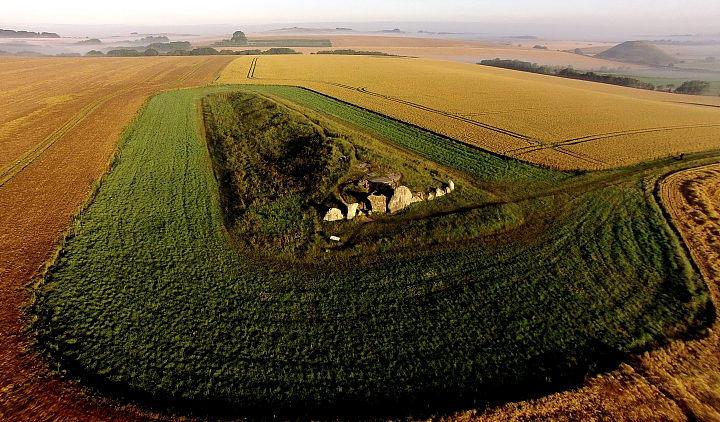
When visiting the Devil's Den I now always park in the purpose built carpark that overlooks Clatford Bottom. A few reasons for this are that it is a good starting point when visiting Clatford & Fyfield Down as it takes you right onto the downs. I do not have to leave my car on the side of the A4 where there really isn't a good easy a safe parking spot. And not least because the route to the cromlech is fantastic with views right across the downs and gives you tantalising glimpses as you approach.
The carpark is found by turning off the A4 at Manton towards Manton Hollow. Just keep following the road up the hill and turn left when it forks at the top (right is a private road anyway). This takes you into the free carpark surrounded by trees and which can be a bit muddy but never too bad.
From here you head NW along a straight track by the side of the Horse Training Circuit (behind the conifers).
I often wonder if it is ok to drive your car along here as it is a good road but have always opted for walking after all I need to lose a stone or 5!
Anyway go along the track for about 750m where it curves right when you want to go left and through a access gate.
From here on in it gets very peaceful and the noise of traffic on the A4 replaced by breeze and beautiful birdsong, even in January.
I must admit I was hoping for a bit of snow after the big freeze we have had but now there are only a few patches left in shaded areas.
After going through the gate you follow the grassy track SW and downwards into the valley. From here you can go on towards Fyfield down and the Greywhethers and the up onto the Ridgeway. The view along the valley is fantastic and on Fyfield down you can go and see the Polisher & Cup Marked stones.
If you follow the fencing on your left it will take you off the grassy track and South along another track towards Clatford Bottom. From here you can see the Devils Den nestled at the bottom of the valley.
The route gets quite steep for a short distance so watch your footing especially if its wet.
At the bottom there is a get on your left but before going through look at the jumble of sarcens in on the right. These is a lovely little group and I am sure there is more to them than meets the eye.
Go through the gat and along the footpath towards the cromlech, this section is a constant trip hazard so again watch your step. You will soon get to the gate and into the close off area in which the Devil's Den can be found.
Just before the gate there is a large sarsen by the side of the footpath. If you go over to it you will see that it has been split into three sections. I am not sure what has done this and assume it is frost action but the way it has happened looks so perfect almost man made…see what you think.
Every time I have visited this place it has been very peaceful and this visit was no exception. I spent nearly two hours here, taking photo's, eating my pack lunch and just listening to the sounds around me and with nobody else to disturb me. Lovely.
:o)
|
 
|
 
|
Huw Edwards narrates another series looking at the hidden histories of Wales through the work of the Royal Commission on Ancient and Historical Monuments. Including a look at Stonehenge's link to the Preseli Hills
|
Stonehenge centre plans unveiled Not much to add that hasn't already been said but here it is anyway:
http://news.bbc.co.uk/1/hi/england/wiltshire/8302561.stm
Proposals for a new £25m visitor centre at Stonehenge have been unveiled by English Heritage.
Plans for the centre, at Airman's Corner to the west of the stones, have been submitted to Wiltshire Council.
English Heritage, which hopes for some National Lottery funding, also wants to close the A344, which runs just yards away from the landmark.
The new centre would not be visible from the stones, but would be linked using a transit system for visitors.
The plans are "sensitive to its surroundings and to the significance of the monument", English Heritage says.
In May, the government gave the charity's proposals the "go-ahead in principle".
They are dependent both on planning permission being granted and funding being found.
English Heritage hope that some of the cash will come from National Lottery money.
Exhibitions, a cafe, shop and toilets will be housed in a pair of single-storey areas, one glass and the other timber-enclosed, which would sit beneath an undulating roof.
A four-trailer transport system, similar to that used in the Eden Project in Cornwall, would ferry visitors from the centre to the stones.
The charity's Loraine Knowles, said: "The new centre is designed to blend into the World Heritage landscape which visitors will pass through on their way to the stones."
If approved, work on the centre would begin in 2011.
The A344 and the nearby A303 road have been blamed for degrading the environment around Stonehenge.
In 2007, the government scrapped plans to build a tunnel for the A303 as it passed the area.
|
|
Showing 1-50 of 130 posts. Most recent first | Next 50 
I like nothing better that to walk around new places to discover new stoney things and to photograph them
|
|