|
|

|
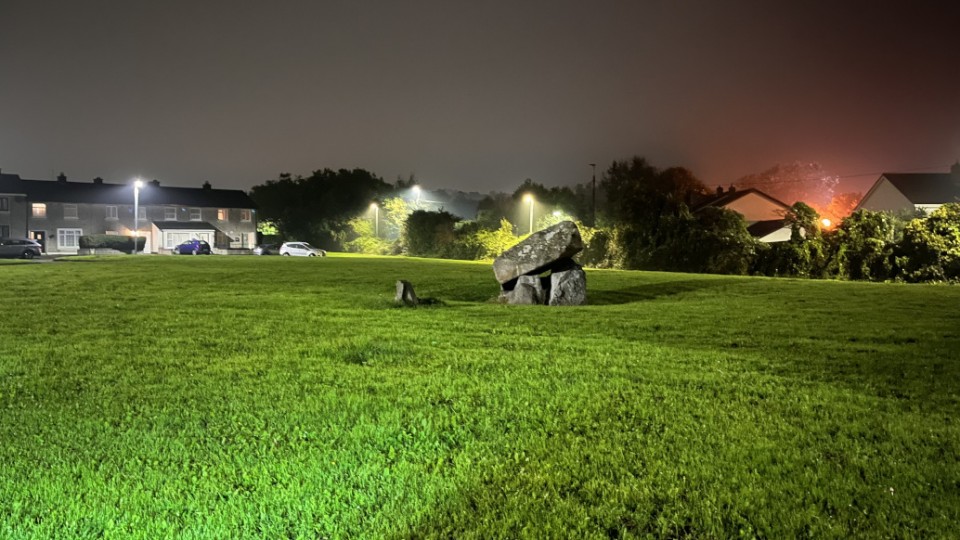
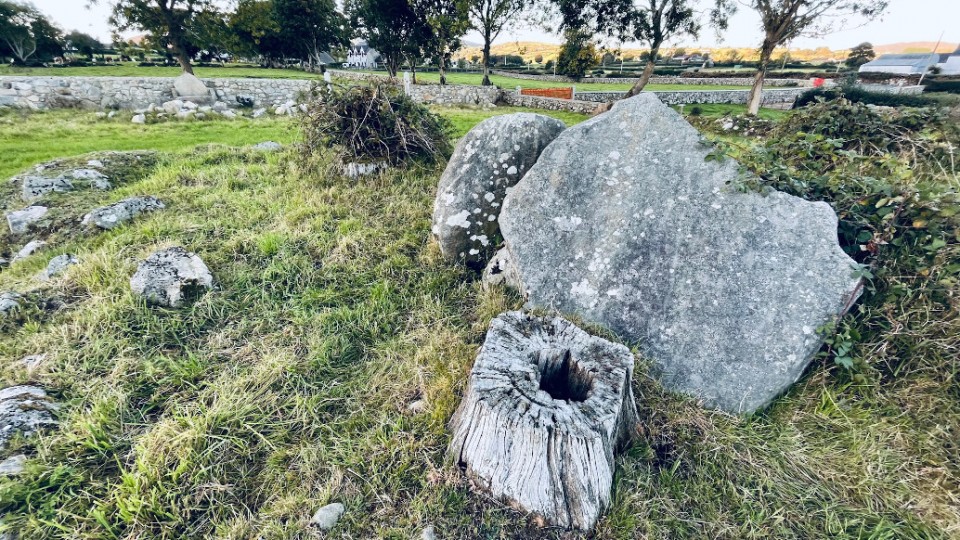
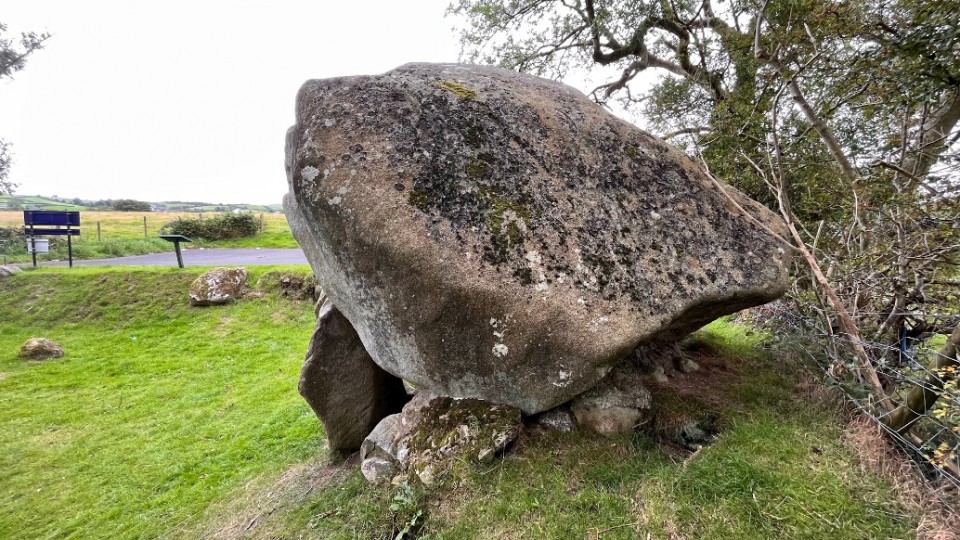
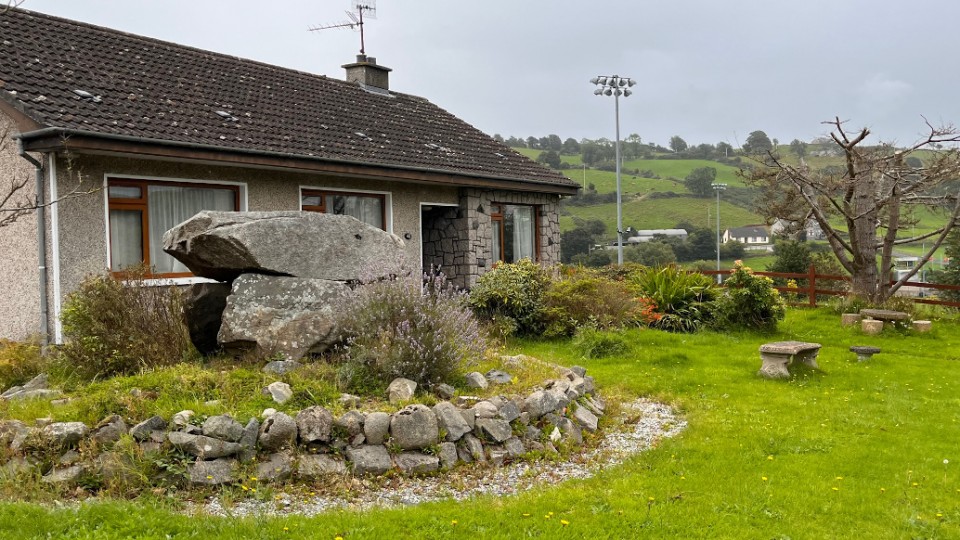
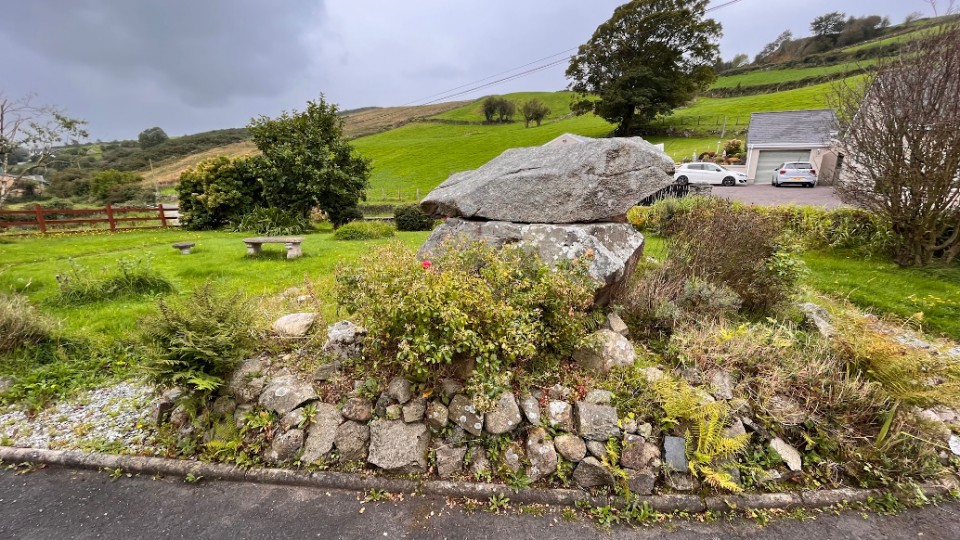
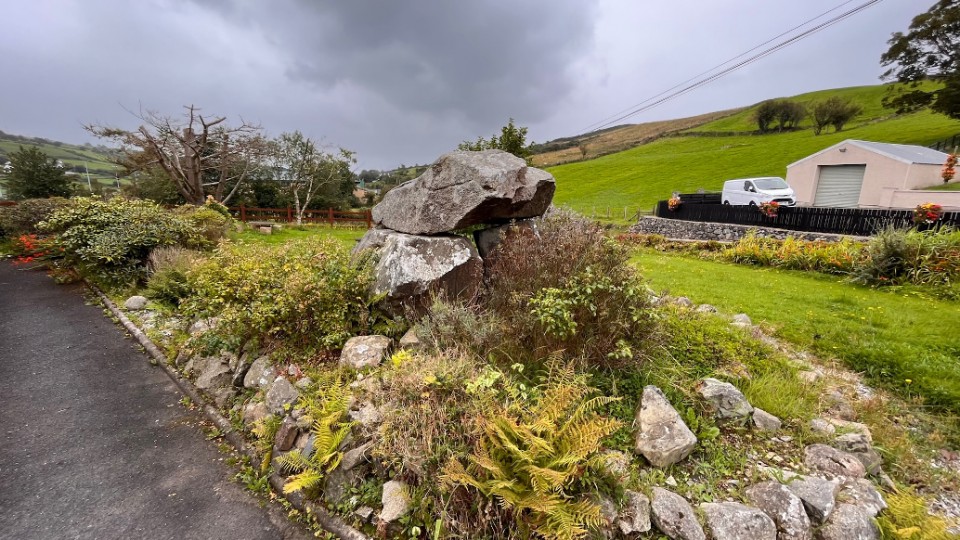
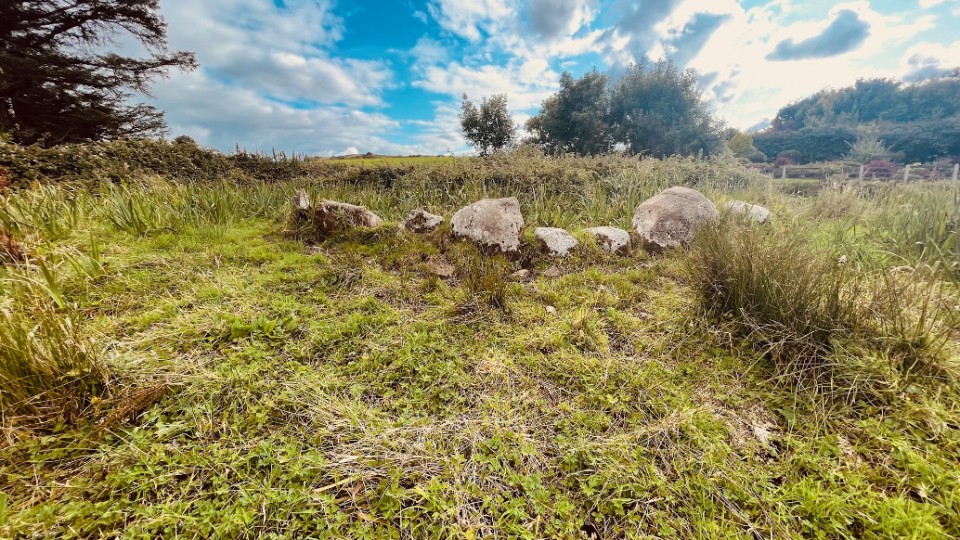
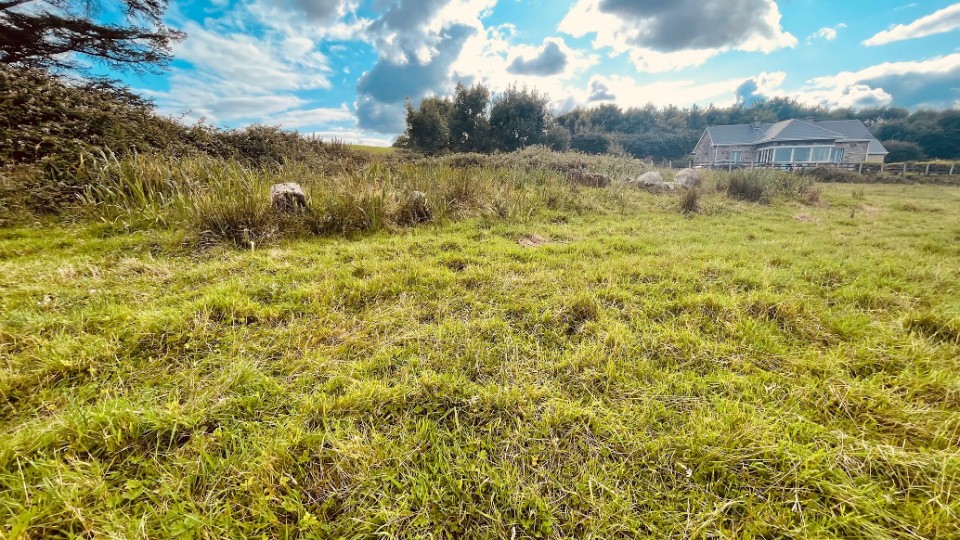
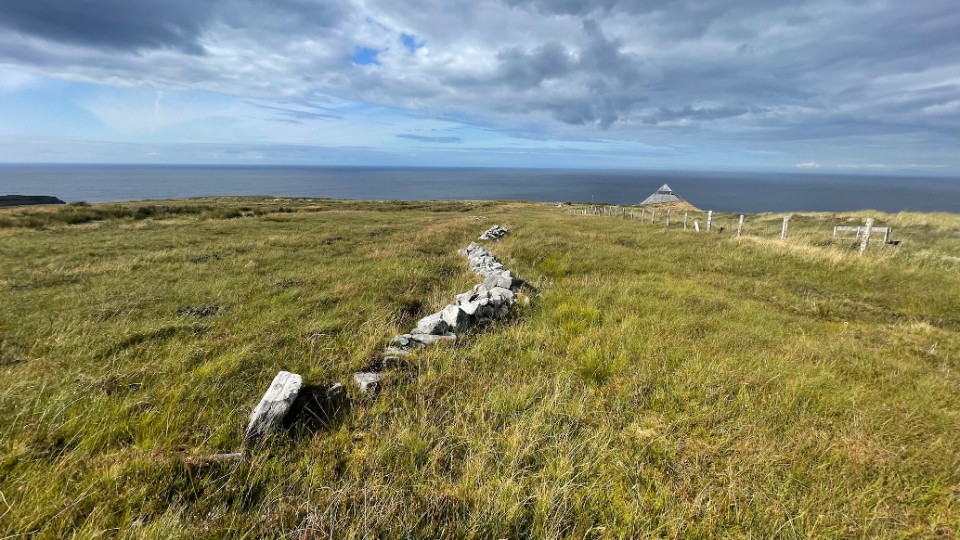
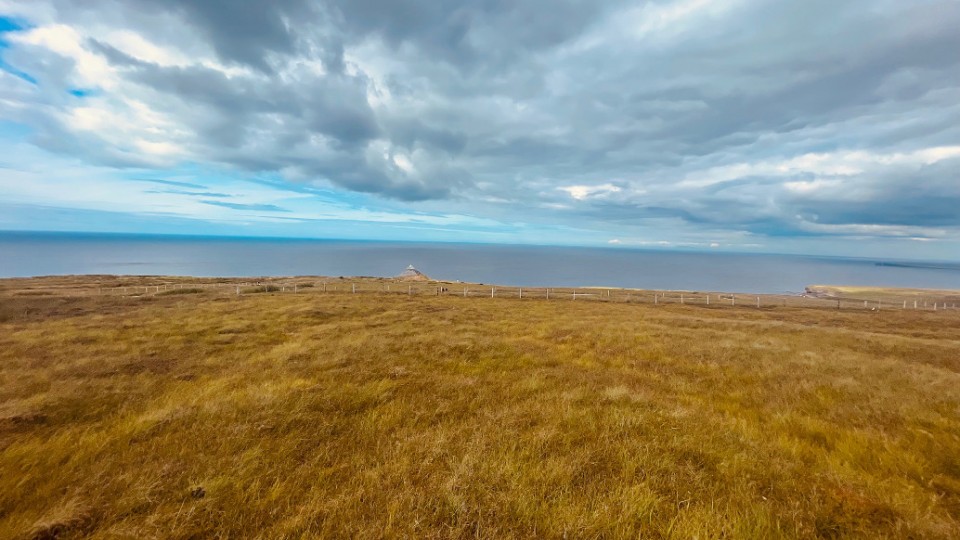
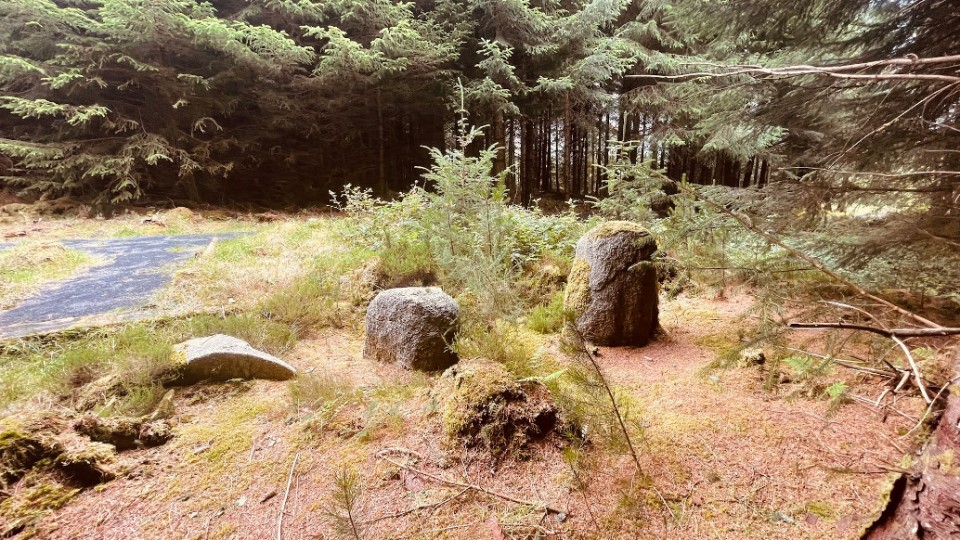
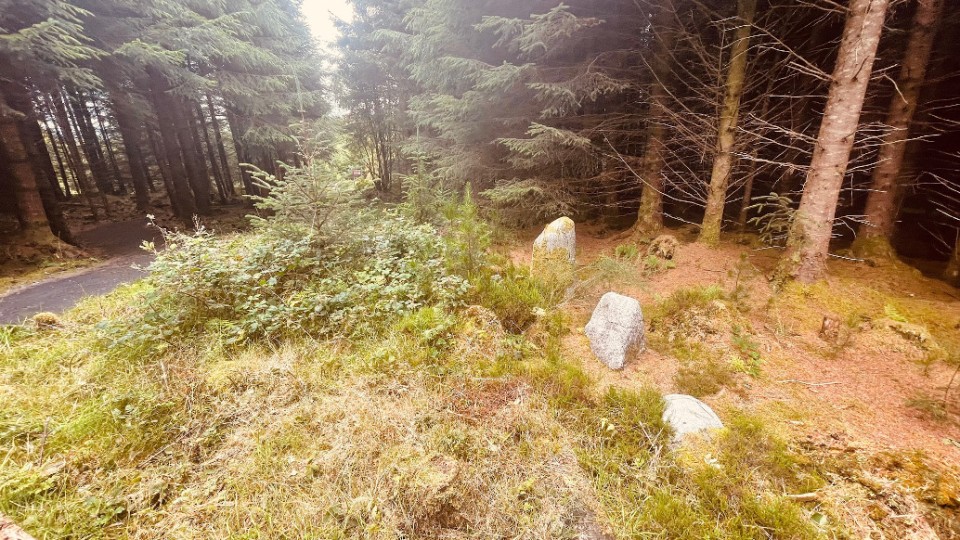
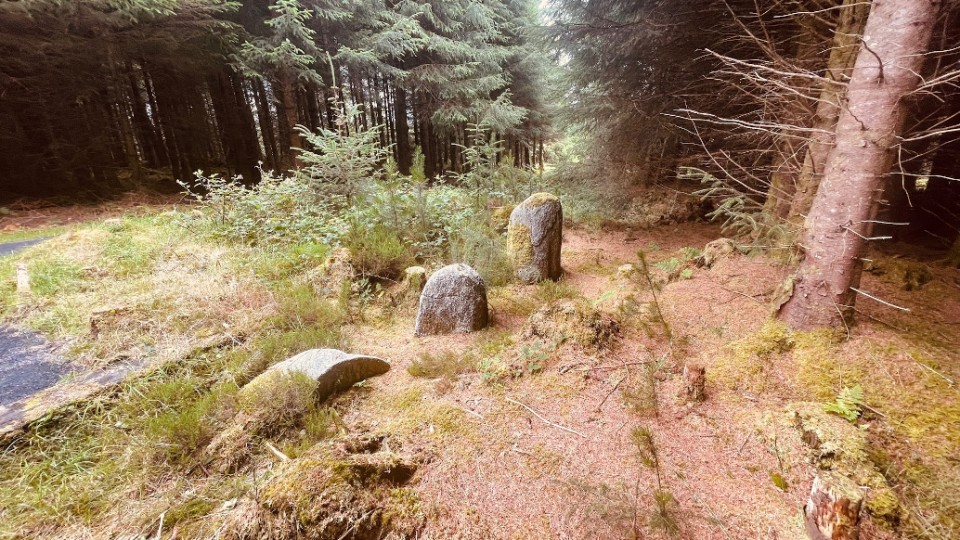
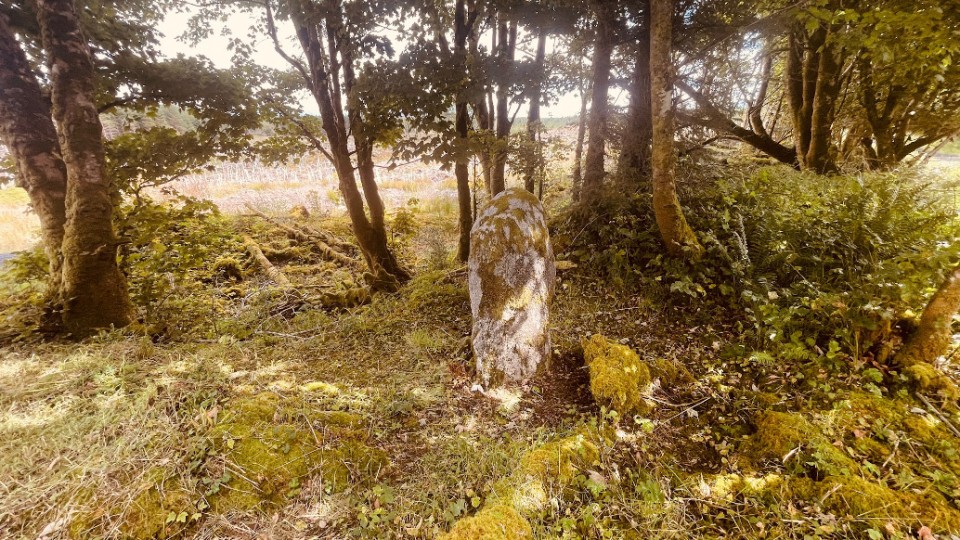
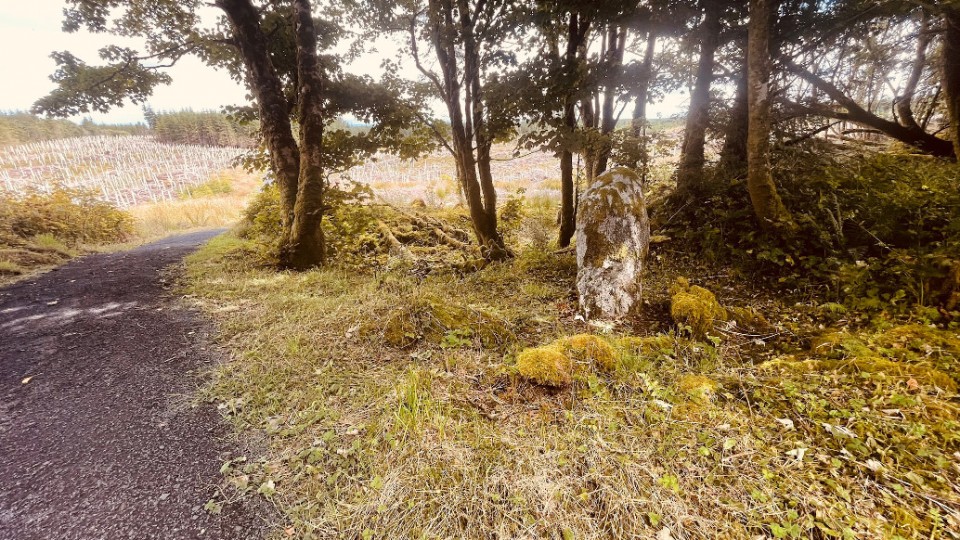
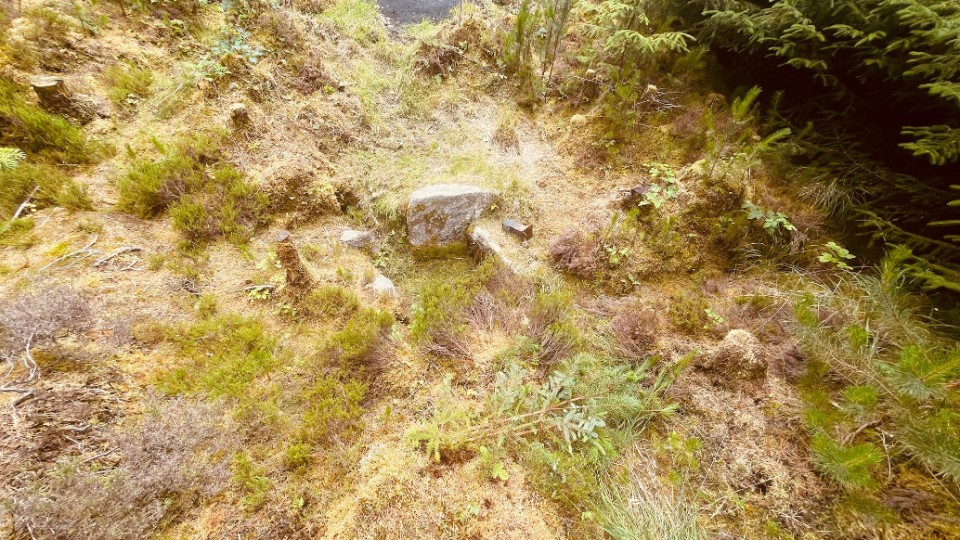
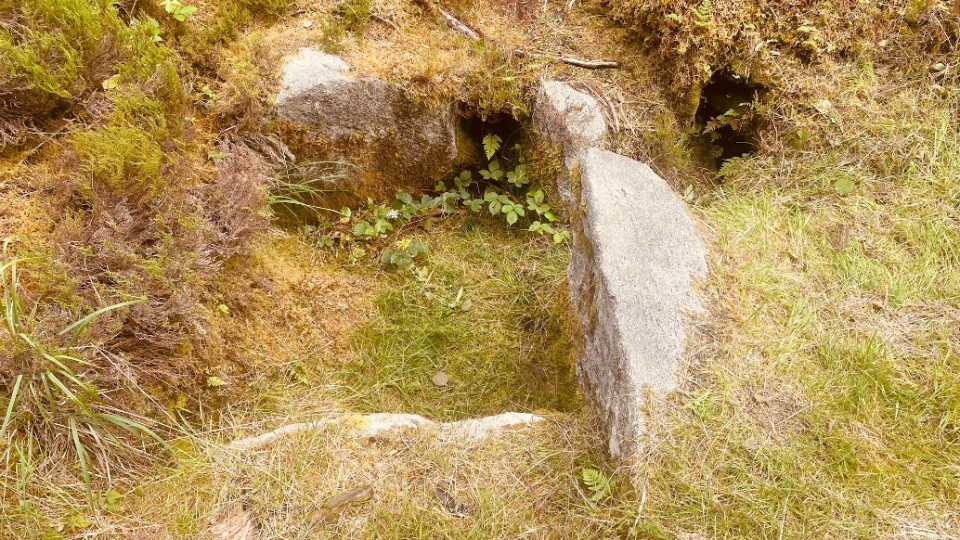
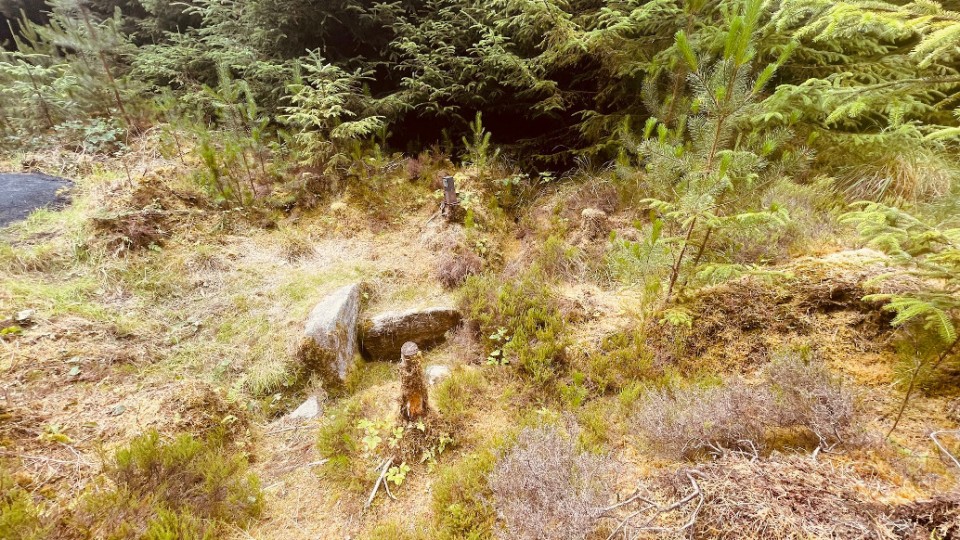
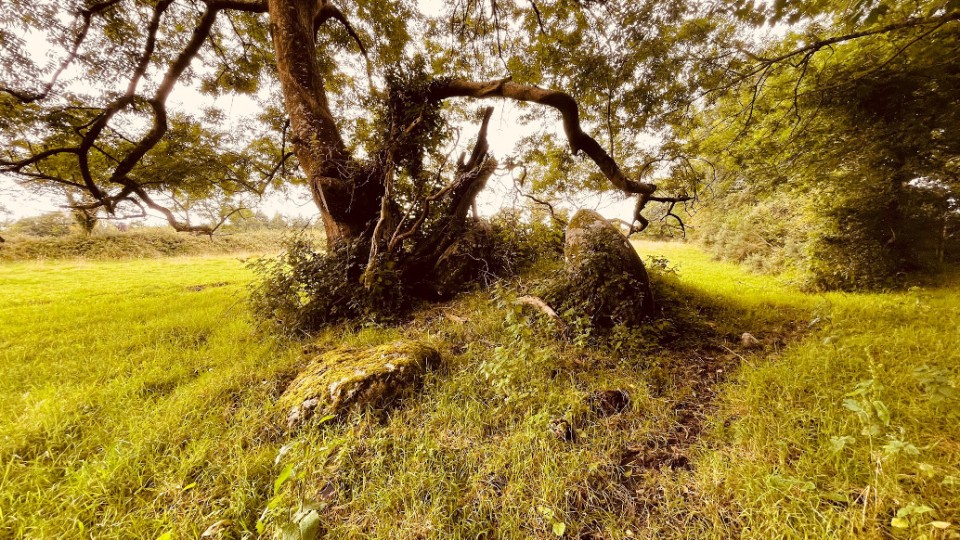
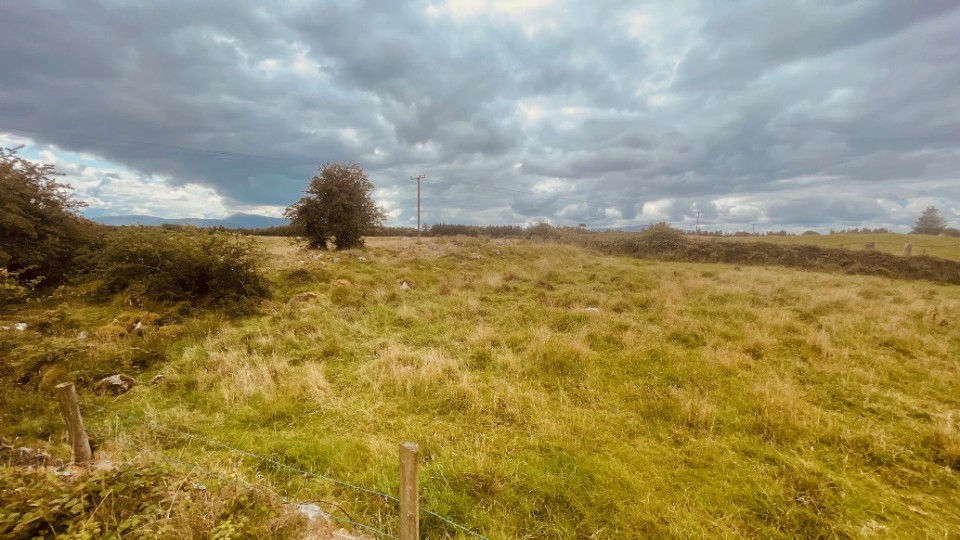
The Donegal inventory has this as unclassifed, gives the wrong co-ordinates and has a description that I can't recognise from what I saw. So maybe I was at the wrong place – well, not according to the OS map, Sheet 17.
There are 3 remaining stones that have the character of stones used in portal tombs but they could be the remains of one of the other classifications. I was on my way somewhere else when I stopped by here.
|

|
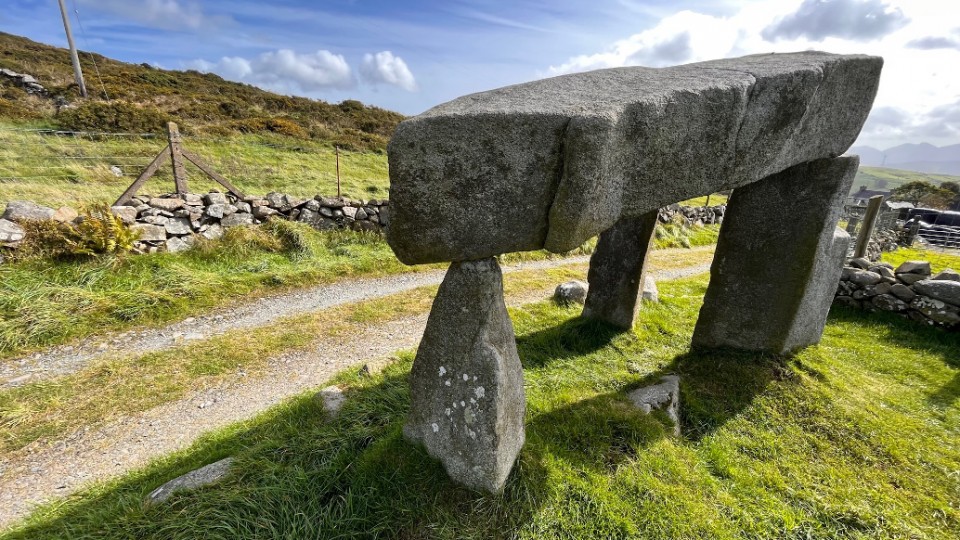
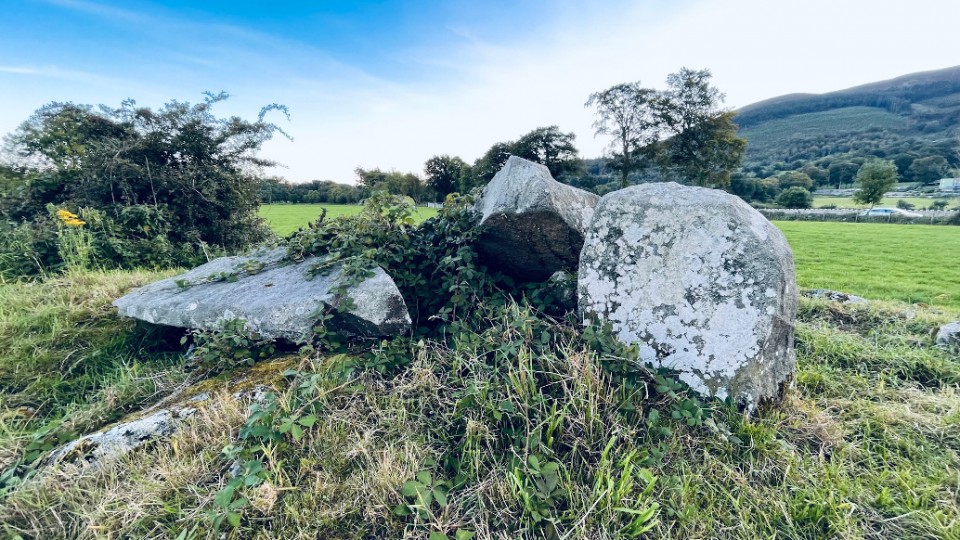
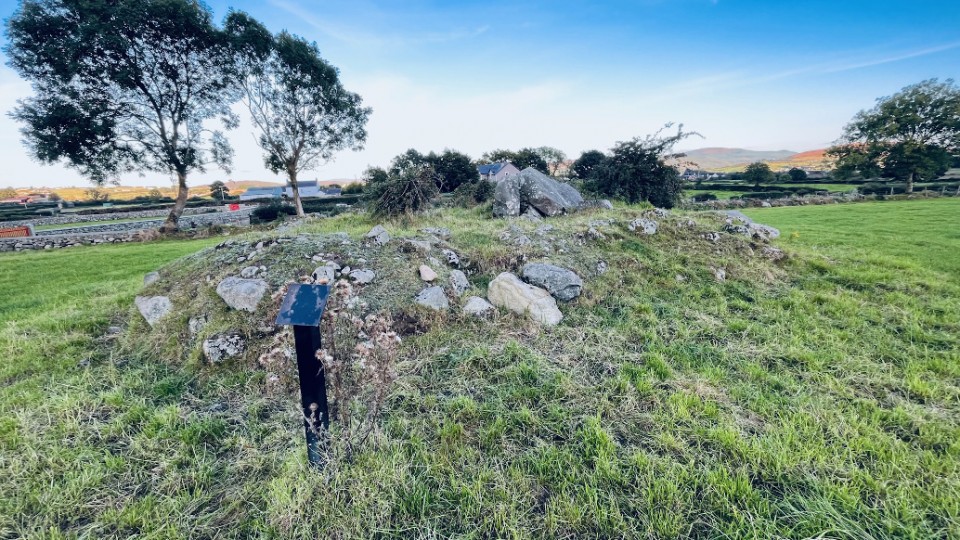
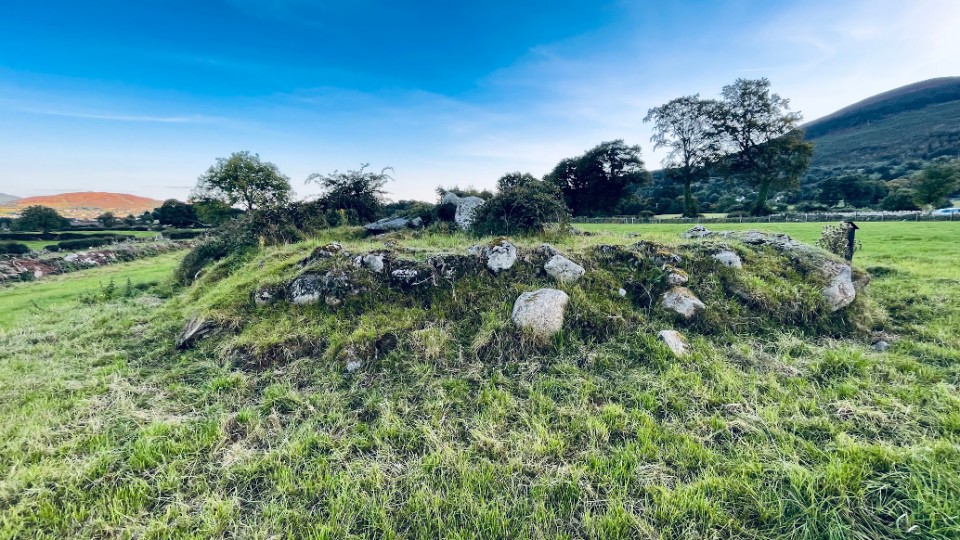
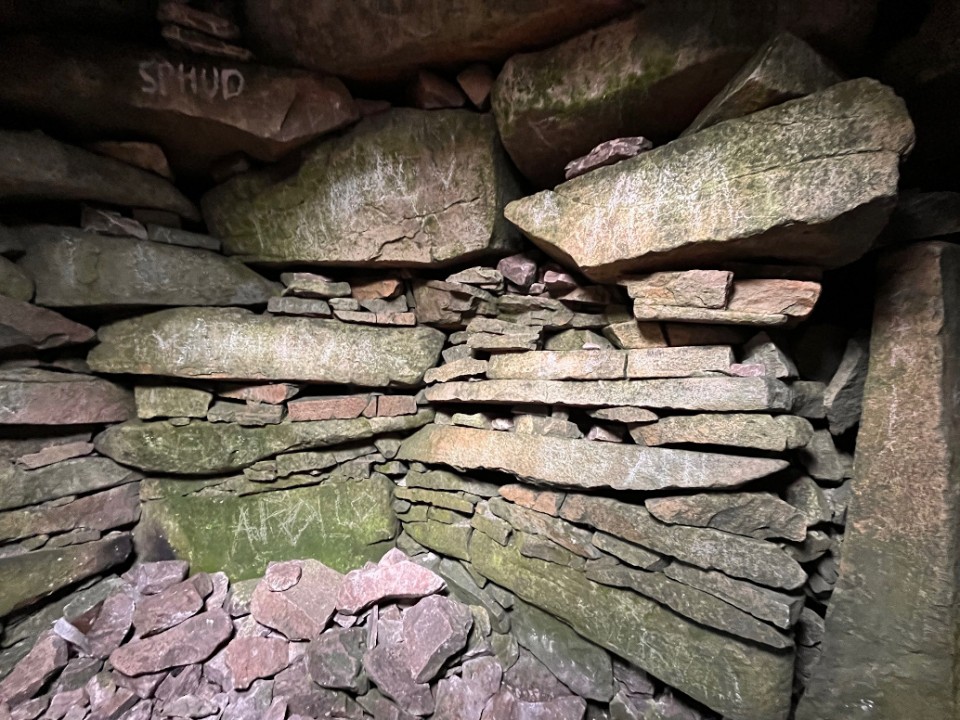
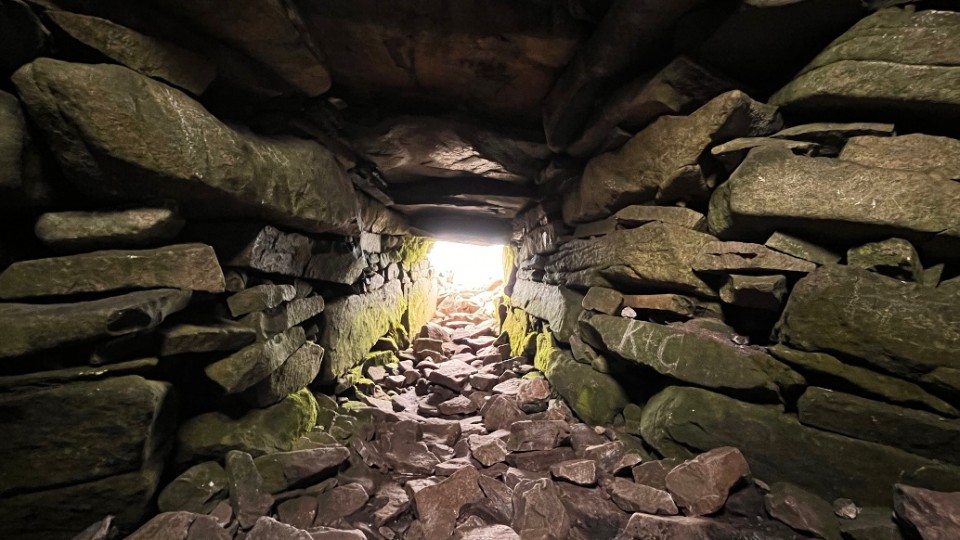
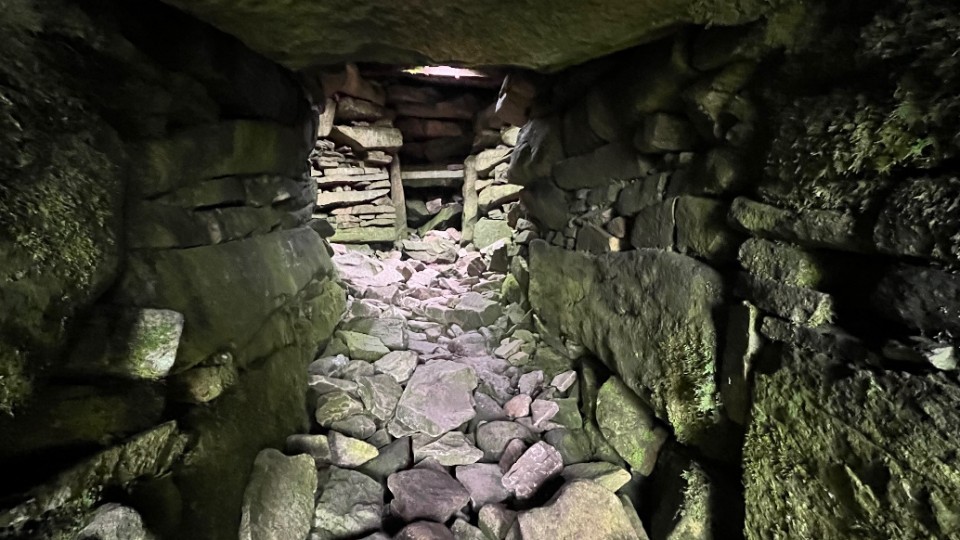
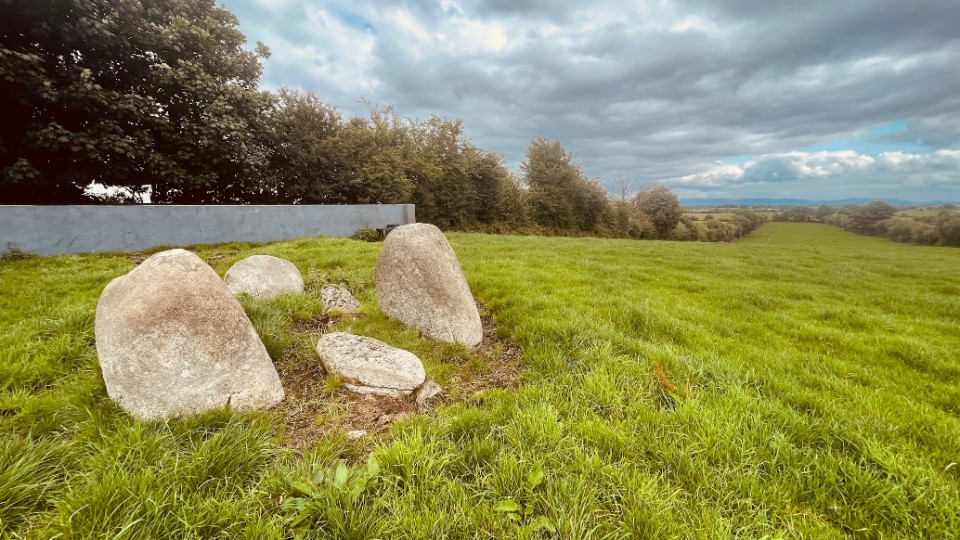
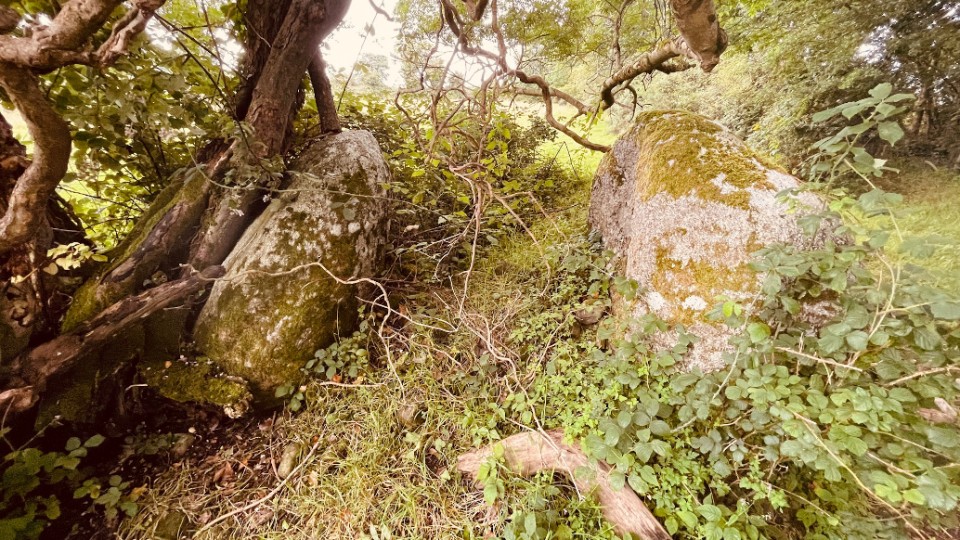
There are 5 megalithic tombs marked on OS sheet 16 in this part of north county Leitrim, all within a distance of 300 metres of each other, so I believe this merits the megalithic cemetery tag. I don't have the Leitrim Inventory so I'm guessing on 2 of the tombs, one I couldn't get close to, the other having very scant remains. By my estimation there are 3 wedges and 2 courts.
(It's worth mentioning that a local archaeologist told me that there may be more tombs in the vicinity and that I could see other tomb-like structures from a distance but didn't brave the bullocks in the fields)
Tomb 1 is the best preserved, a Burren-esque wedge tomb. Tomb 2 is what I believe to be a very ruined and overgrown court tomb. 3 is a collapsed Burren-esque wedge, 4 a reasonably preserved court (I couldn't get close but its gallery seems to be extant) and 5 a very ruined wedge.
I didn't stick around very long as the usual unfriendly Beware of the Bull(shit) sign was up.
|
     
|
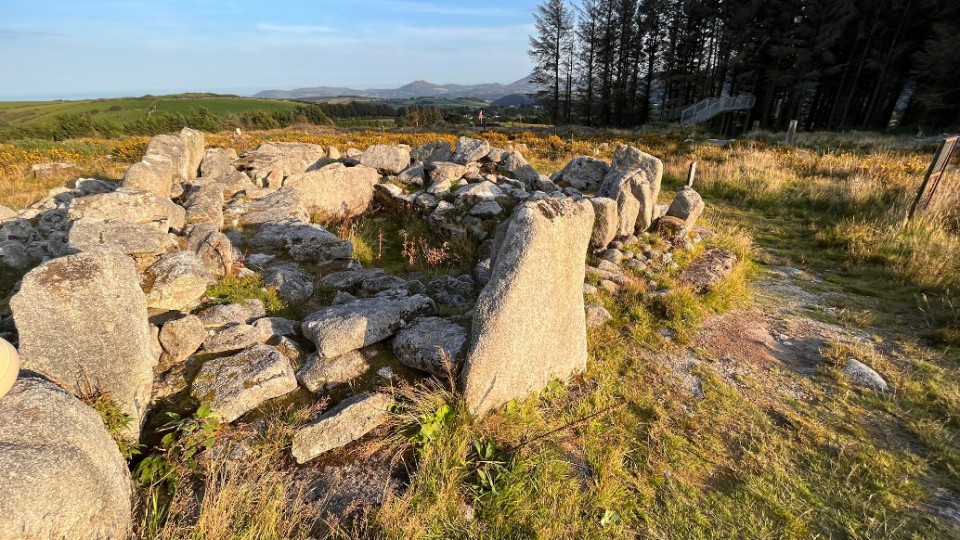
I was driving along here on my way to look for the court tomb up the road when I spotted this. Now I like a good rath so I do, but this deserves more than the regular small red circle that marks it on OS sheet 16. Given that they are the most common Irish monument (there are probably about 300 on sheet 16 alone), you could tend to ignore them – they're everywhere. This might be a costly mistake however – places like this what I presume to be a multivallate, iron-age ringfort/cashel/rath, are well worth stopping for and are quite spectacular.
The presence of Benwiskin can't be ignored here. It rises up to a not huge height of 514 metres, but does so in rapid time – no gentle rolling hills here – you get vertigo just looking up at the sheep on the 450 metre line.
The fort is a mixture of earthen embankments and dry-stone walls, quite crude in comparison to say Staigue, but much disturbance has occurred here over time. There is a ramp-like approach on the south-west side that circles around the circular fort, visible from the road, but it was hard to make out the entrance in the short time I spent here. Inside the fort itself are many collections of rubble, but as I said I didn't give this place as much time as it deserves. Will I ever return? I'd love to.
|
 
|
|
At the base of a belltower, in a modern churchyard in Ballaghnatrillick (Béal Átha an Trí Liag). If it were a cube, it would be approx a metre cubed, if you know what I mean. The bullaun is centrally placed, 15cms diameter and I don't know how deep as it was filled with rubble, seemingly deliberately.
|

|
|
|
|
Marked as a cashel and bullaun stone on archaeology.ie, I could find very little here due to the summer vegetation. Was this occupied by the people who smelted their iron in the court of the tomb up the road? We'll probably never know. :-)
|

|
|
What an amazing place! Promonotory forts are places I'd usually bypass, and I hadn't planned on going this direction until I was recommended both here, and Cloghcor portal tomb where I'd been earlier, by Martin and Joyce Enright.
Inside the fortifications in a mild gale I couldn't help but wonder at the competition and violence that forced the inhabitants to build this godforsaken fort to make their last stand.
The smallish fort itself is protected to its east by the 57 metre high hill of Knocklane. There is a narrow strip on its north side that allows easy access to the fort. South of the hill would be inaccessible to invaders except by sea and the peak of the hill itself must have been used as a lookout post.
The first (or second last) line of defence is a double ditch, split nearly in half by a causeway. The inner, deeper ditch, is about 4 metres from bottom to top. Either side of the fort are cliffs, though as with the hill, the south would have been much harder to penetrate, hence the building of a bank/wall on the north side.
Between here and the last line of defence there are many signs of habitation structures. And then come the mounds of the final last stand. After here there's nothing save a few metres of ground and then death.
A site that really caught my imagination.
|
  
|
|
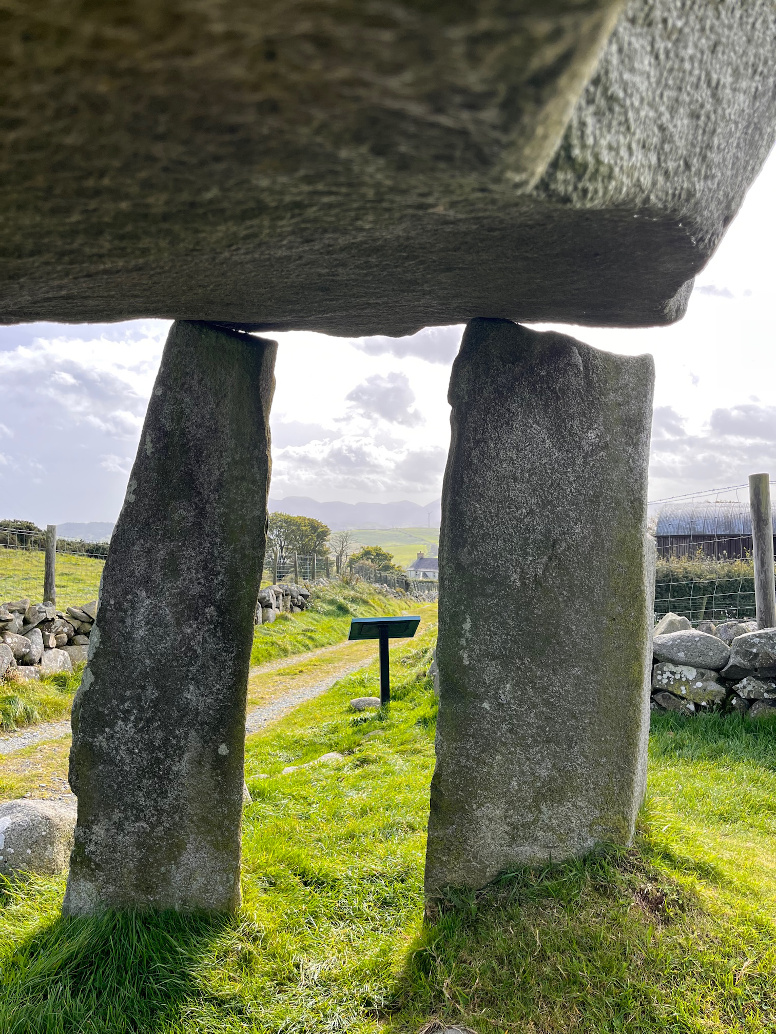
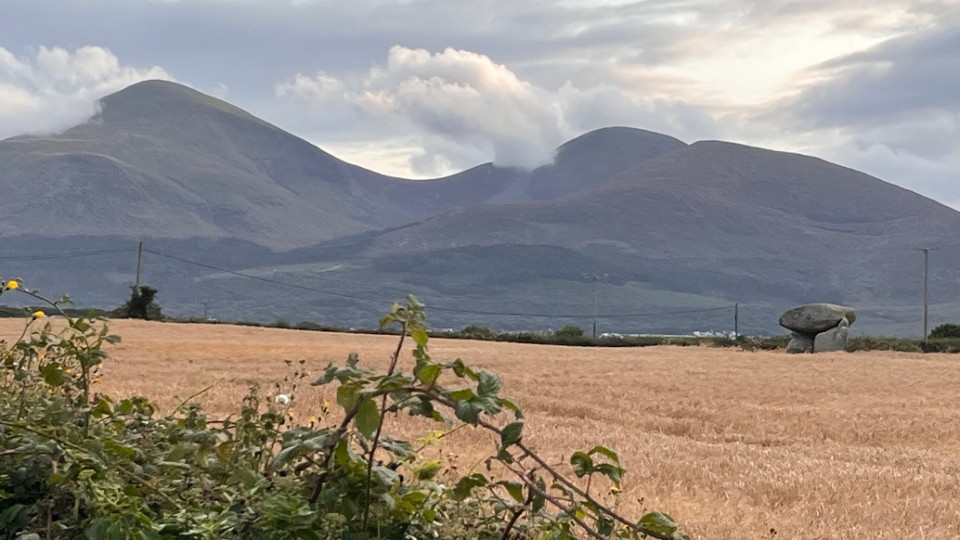
On land owned by Leo Leyden, a farmer more interested in archaeology than farming (according to his friend Martin Enright), this, though ruined, is well worth visiting. The massive portal stones, both over 2 metres high, remain upright, with the rest of the stones collapsed onto the chamber.
|

|
|
I couldn't get close to this due to livestock in the field but there seems to be quite a bit of the structure left. According to Survey of the Megalithic Tombs of Ireland, Vol V, County Sligo, it's a "… small example of the central-court type."
|
|

|
|
|
Heapstown is not as roadside a cairn as I had expected from previous reading. It's close to the road but you'll need to enter the field with the Sligo Heritage signpost and approach the cairn from there.
Heapstown brought to mind the 3 other cairns of similar size that I've visited: Ballymacgibbon, Knocknarea (Maeve's Cairn) and Cairn D on Carnbane west in Loughcrew. Most every mention of Heapstown includes the probability of it being a passage grave, but given the Cairn D experience, and the fact that the stolen material mentioned by Gladman has so far revealed no signs of a passage entrance, I'd say the possibility is way less than 50 50.
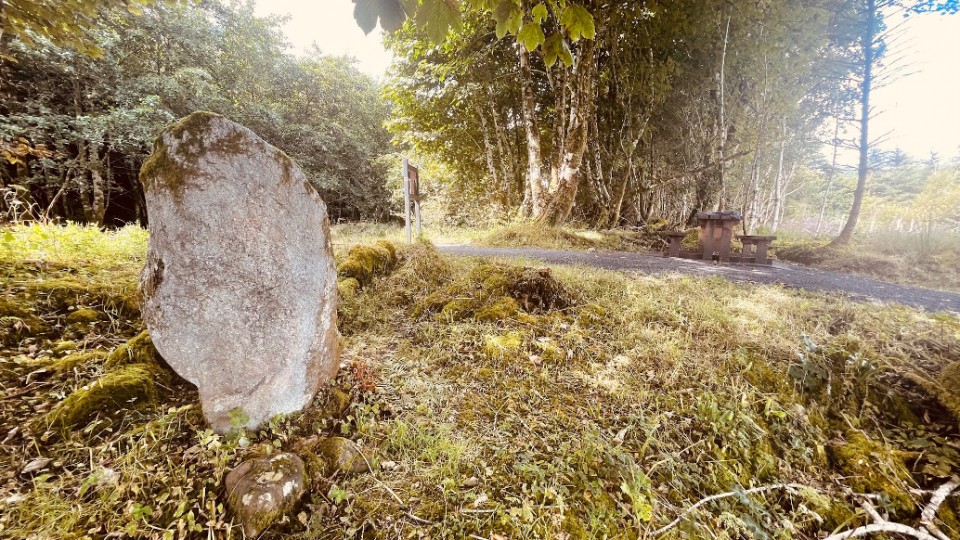
This is a massive construction though. The kerbstones on south-east side are impressive, bulky and robust and a major job to erect in themselves. The pile of the cairn must contain the field-clearance of 100 acres or more.
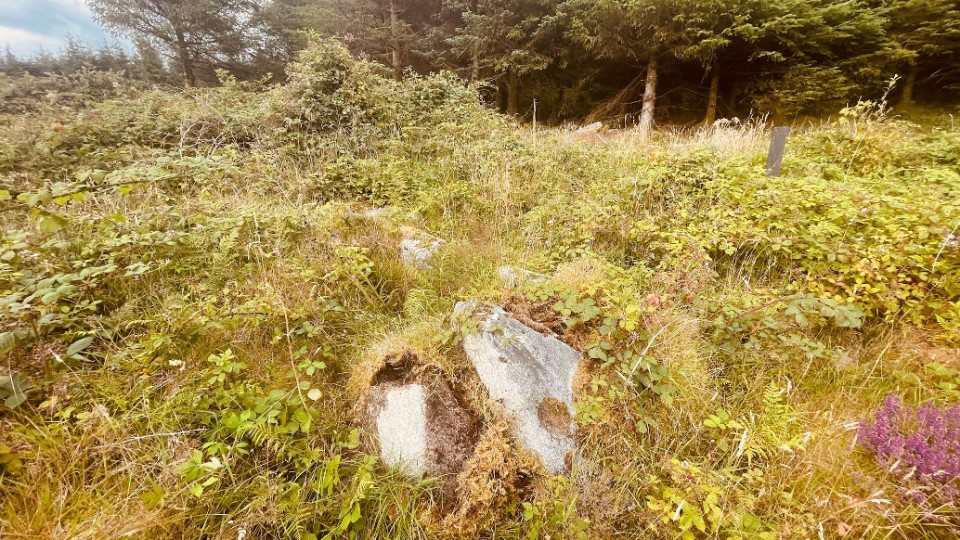
I'd love to see this monument opened up a bit, some of the vegetation cut back, revealing it in all its grandeur.
|
 
|
Right by the side of the N4 Dublin to Sligo road, about 5 kms southeast of Carrick-on-Shannon.
A small crannog, approx 10 metres in diameter and about double that distance from the shore.
|
Taxi-driving, graphic artist with a penchant for high hills and low boulders. Currently residing in Tallaght where I can escape to the wildernesses of Wicklow within 10 minutes.
|
|