|
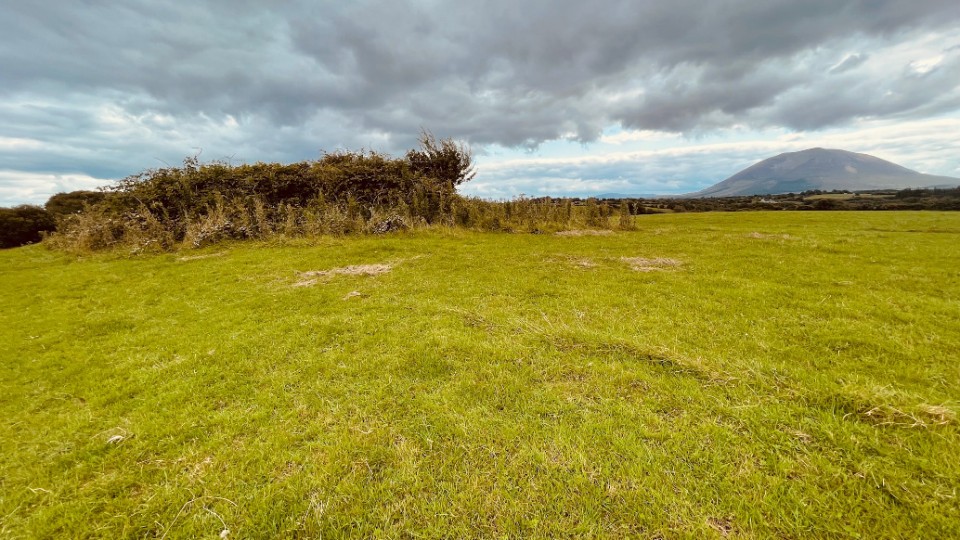
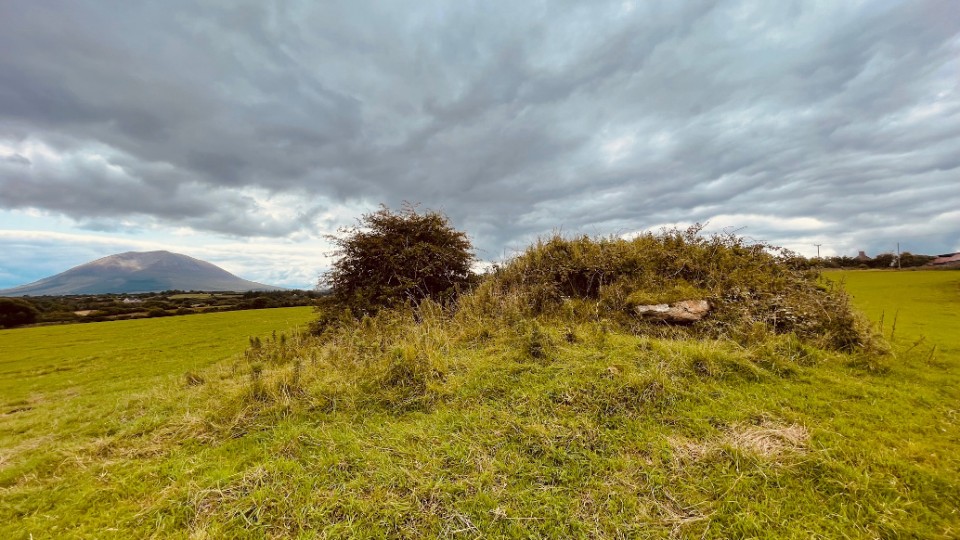
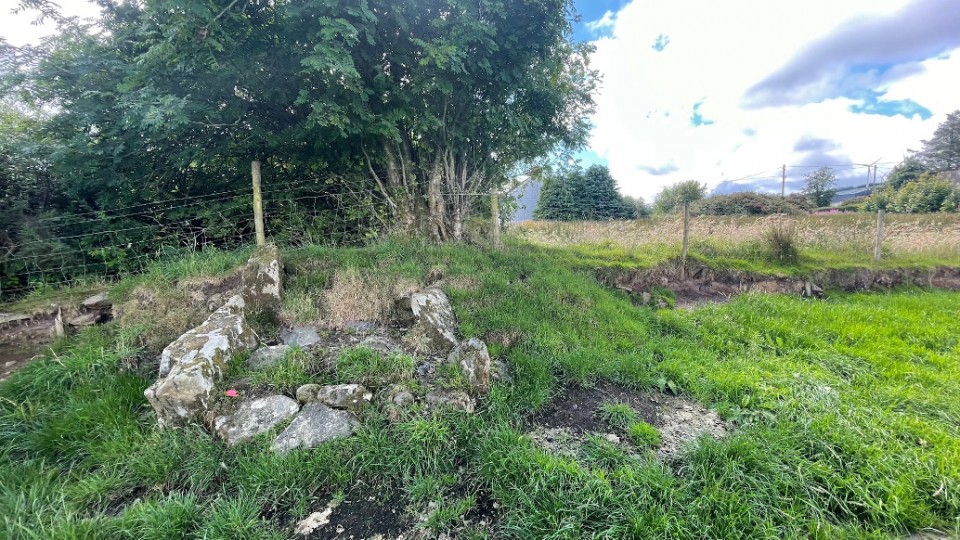
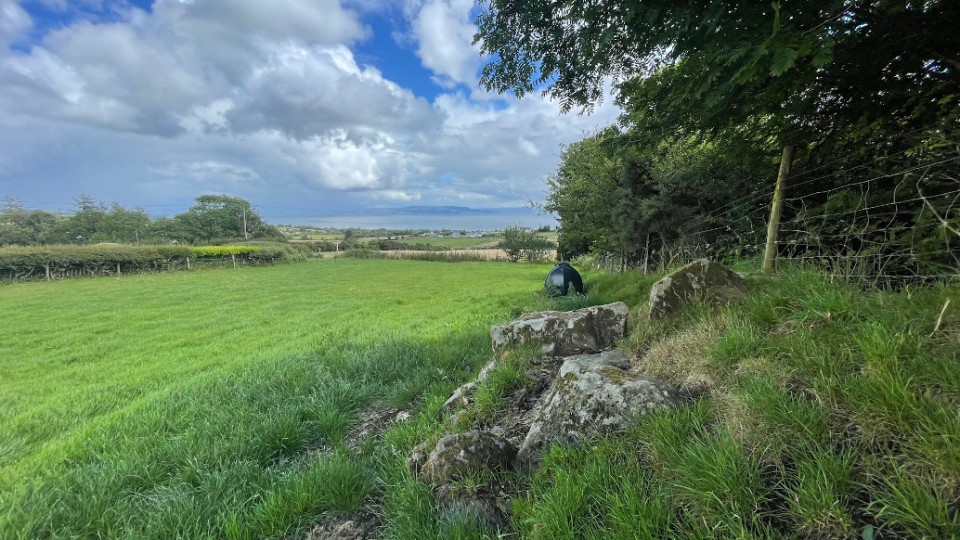
Heapstown is not as roadside a cairn as I had expected from previous reading. It's close to the road but you'll need to enter the field with the Sligo Heritage signpost and approach the cairn from there.
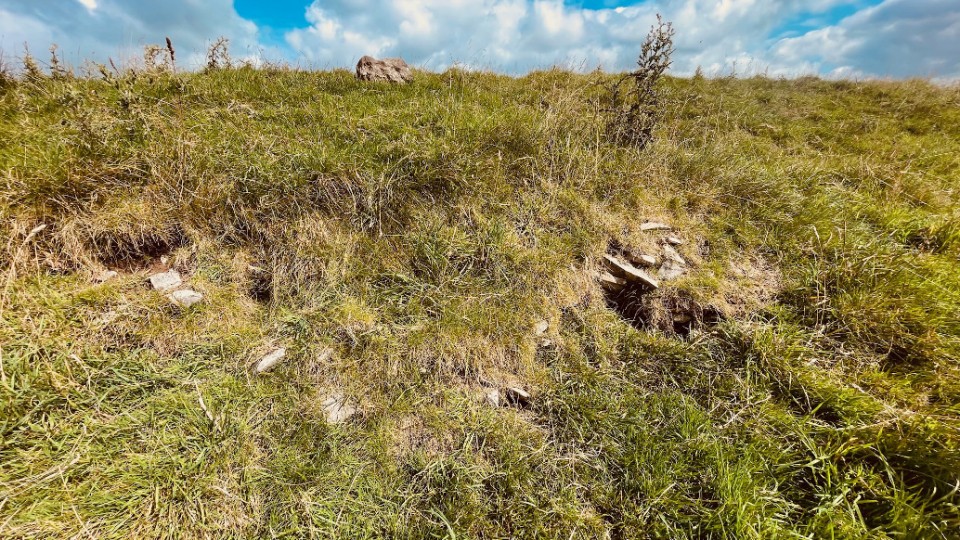
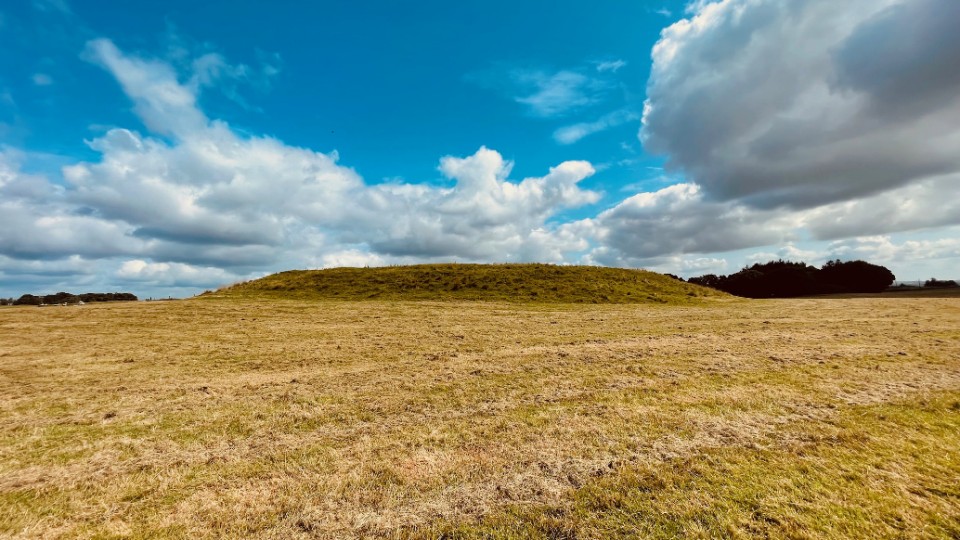
Heapstown brought to mind the 3 other cairns of similar size that I've visited: Ballymacgibbon, Knocknarea (Maeve's Cairn) and Cairn D on Carnbane west in Loughcrew. Most every mention of Heapstown includes the probability of it being a passage grave, but given the Cairn D experience, and the fact that the stolen material mentioned by Gladman has so far revealed no signs of a passage entrance, I'd say the possibility is way less than 50 50.
This is a massive construction though. The kerbstones on south-east side are impressive, bulky and robust and a major job to erect in themselves. The pile of the cairn must contain the field-clearance of 100 acres or more.
I'd love to see this monument opened up a bit, some of the vegetation cut back, revealing it in all its grandeur.
|
 
|
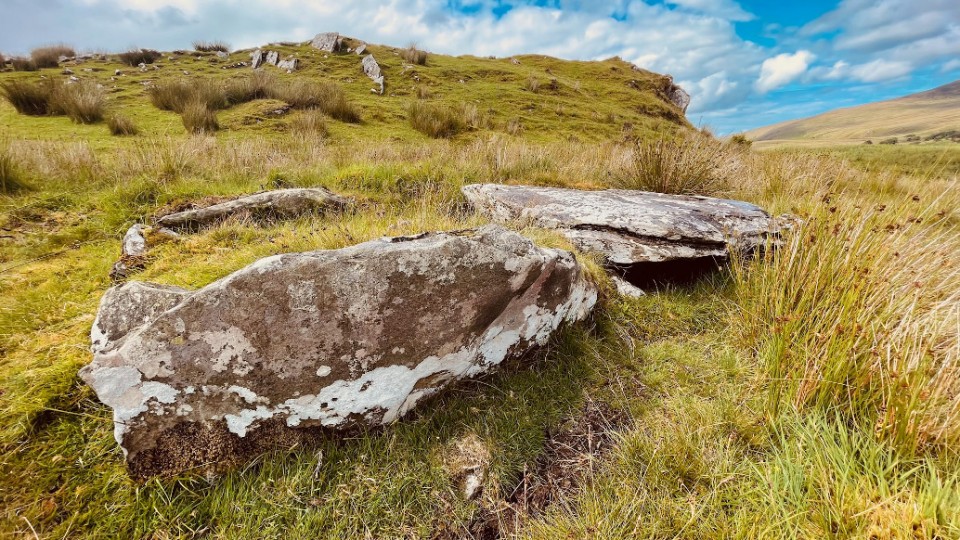
Right by the side of the N4 Dublin to Sligo road, about 5 kms southeast of Carrick-on-Shannon.
A small crannog, approx 10 metres in diameter and about double that distance from the shore.
|
|
|

|
 
|
|
|
  
|
|
|
|
|
|
At the side of the (newly widened) road in Ballinascorney, I've passed this umpteen times and never recognised it. It's quite hard to spot, but very distinct when you do. From bottom of fosse to top of mound is maybe a foot, and the bank is quite clearly visible too. It's very circular and maybe 8 metres in diameter, though cut into on the side closest to the road. I would call this a disc barrow or a ring barrow (as it is called in Monumental About Prehistoric Dublin by Tom Fourwinds, from whence I got my directions).
|
 
|
In the grounds of Tallaght Priory, beside the Friar's Walk, you will need to get permission to visit these stones.
I was surprised by the size of the bullaun stone having only seen close-up photographs with no idea of scale. It's an irregular shape conglomerate, maybe roughly two thirds of a metre squarish. The bullaun is about 20 cms wide and 15 cms deep.
Beside it is a stone described by Patrick Healy in All Roads Lead to Tallaght (South Dublin Libraries) as: "…a large granite stone with a hole through it. The hole is narrower at the ends and in the middle, somewhat like an hourglass, but is now screw-threaded as stated by O'Curry. Beside the hole is a round hollow."
I was kindly brought here by Brother Michael. Thanks.
|
| |