Decorated stones near the village of Kilmartin
|
An illustrated paper about the rock art at Ballochraggan, Nether Glenny and Over Glenny in the Menteith Hills near Aberfoyle, Stirling, Scotland.
|
With links to the new (2008-2009) project.
|

|
In their article 'Rock Carvings in the Garlieston Area' (TDGNHAS-3-LXII,1987, p. 33-9), Morris & van Hoek wrote:
"In 1986 and 1987 rock art was reported in the area just north of Garlieston for the first time. Some of it is of special interest and unusual type for the British Isles.
In all, eight sites have been located, six on the farm of Eggerness, and two on the adjoining farm of Penkiln. All are on outcrop greywacke rock. The carvings include a very big number of spirals and on two sites most of the carvings are zoömorphic. Such zoömorphic carvings are rare in Prehistoric Rock Art in Brtain. Most of the sites have been covered up completely in order to preserve the engravings." Followed by the description of the Penkiln 1-2 and Eggerness 1-4 panels.
For the panels Eggerness 5 and 6, the text continues:
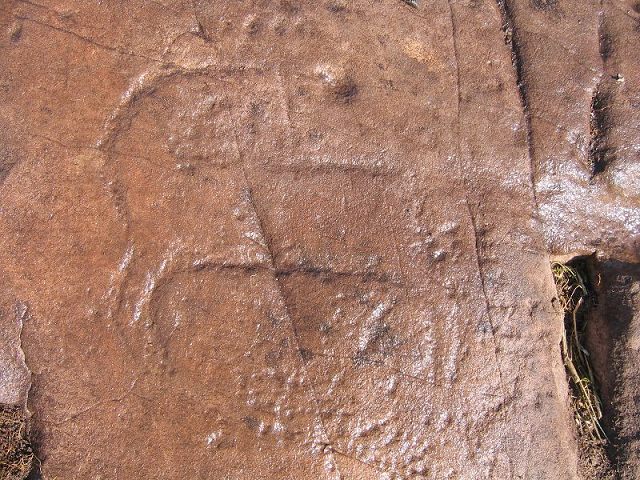
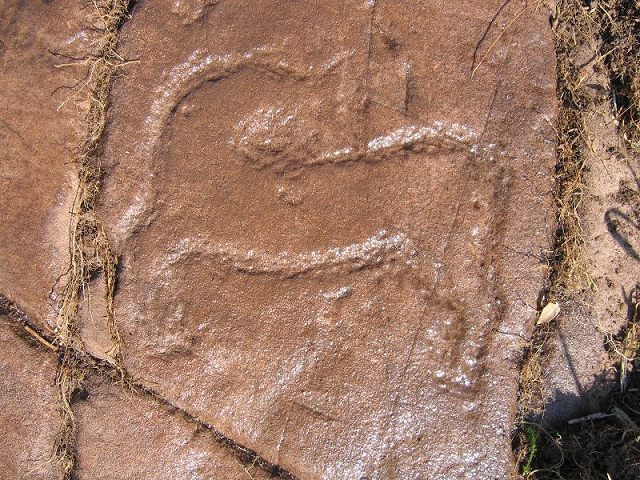
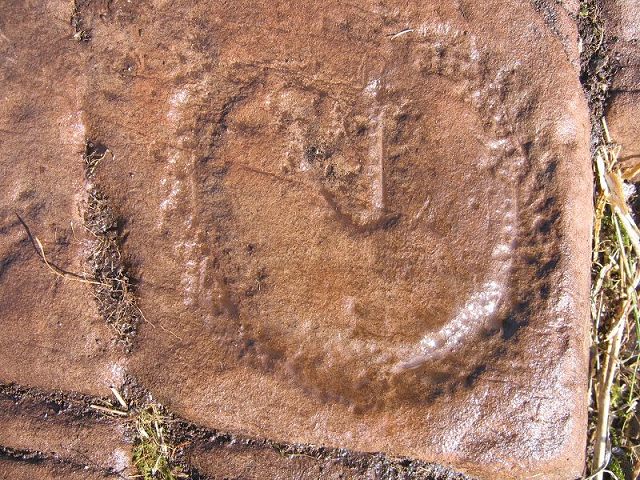
"Also situated on Eggerness are the following two sites with zoömorphic carvings. For security and agricultural reasons their locations is not given but further details, and color photographs by Mrs Wendy Ronan, have been lodged with the National Monuments Record. The sites have been re-covered with turf and neither they nor any of the sites on Eggerness should be searched for or visited without prior arrangements."
We visited the site in September 2000 but could not locate a single carving. Not only were they soundly covered, but the given gridrefs were (a bit?) out of the way also.
In May 2008, after making proper arrangements with the land- and farmowner, Suzanne Forster, Ank Brouwer, Brian Kerr and I were allowed to uncover and photograph panel 4 and 5. The friendly farmer pointed out the location of the (domino) panel-3, which is on a vertical rock wall but unreachable now due to nettles and gorse vegetation. Furthermore we located the (spirals) panel-1 but the topsoil was solidly "glued" to the very fragmented rock so we left it to avoid any damage.
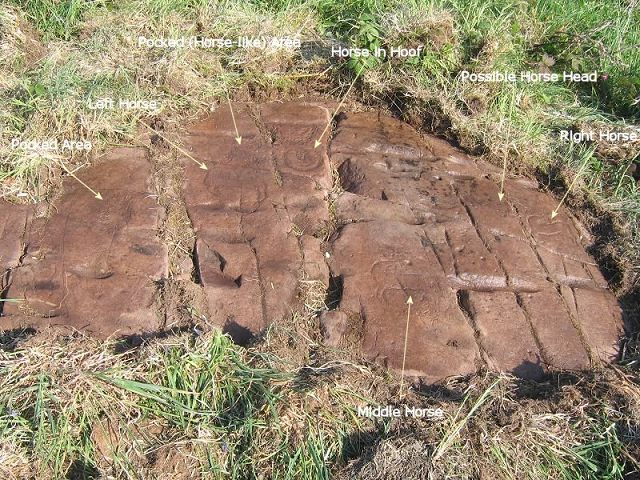
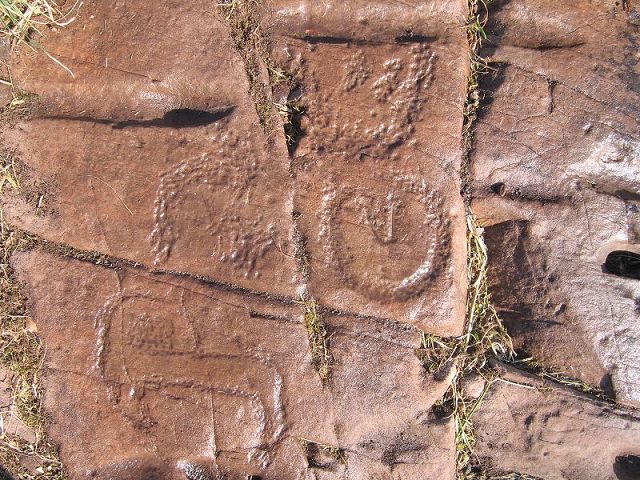
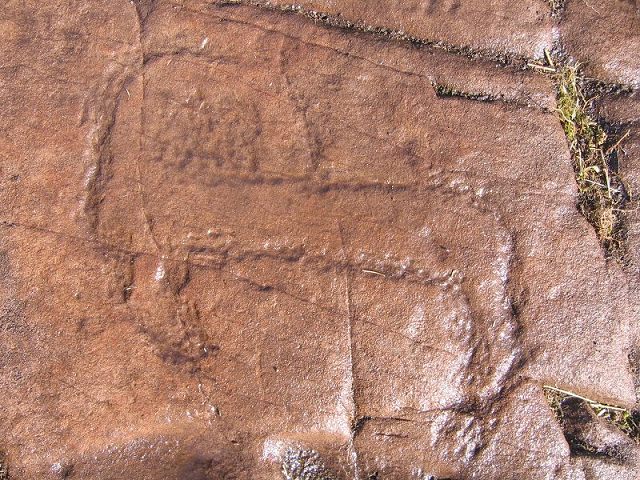
As an unexpected bonus, the farmer drove us to panel-6 with the horses. Soon we stood eye-to-eye with probably most unique carvings in the whole of the UK.
These carvings were last seen by Ronald Morris, Maarten van Hoek and Kaledon Naddair in 1986-7 and 1989.
In 1989, Kaledon Naddair discovered another horse. He wrote: "Due to temporarily removing more turf another pocked 'horse' at the top of the rock-slope was found. It holds the same posture as the other three main 'horses' (D&ES, 1989a)".
We regarded it a great privilege to record these carvings, except Kaledon's one, with the currently available technology; digital camera and the side-flash.
The visit was highlighted by the find of yet another horse, laying on its side in the hoof motif like a veal in its mothers uterus; a really moving design!
|
     
|
Photos of other Eggerness panels and thoughts about the amazing 'horse' motifs.
|
Photos in chronological order per panel.
|
An update of the collection with photos in chronological order per panel.
|
Date for Rock Art Meeting (RAM'08) set!
Hi Folks,
This year's Rock Art Meeting (RAM'08), hosted by Richard Stroud, will be held on the Sunday, the 18th of May 2008.
Here's a link to the RAM paper which will give you further information about the meeting place and targets for the day:
http://tinyurl.com/2u78be
We are looking forward to meet you all!
|
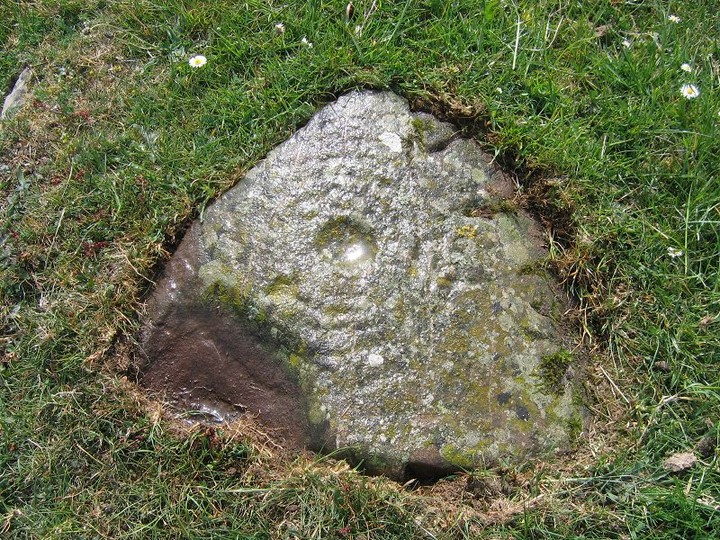
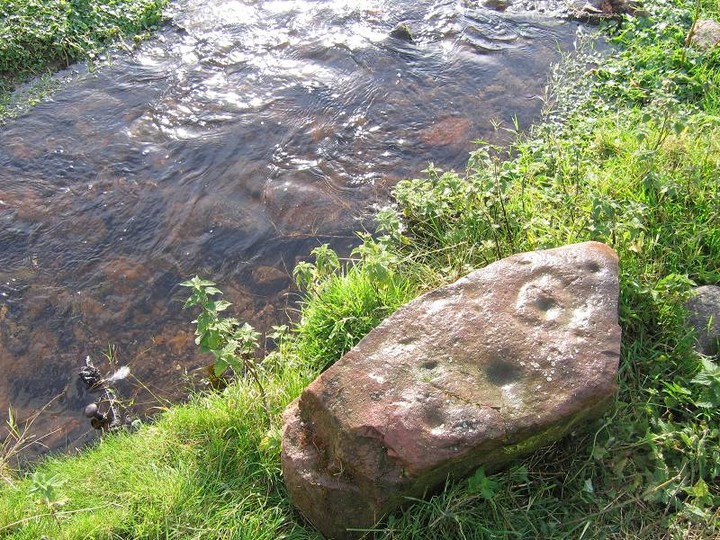
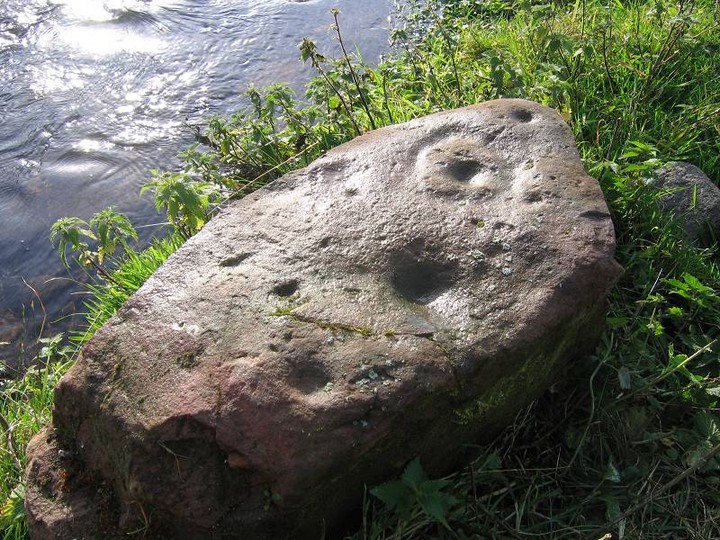
We visited and photographed this site on the 21st of September 2007 and couldn't have had a better start of Autumn.
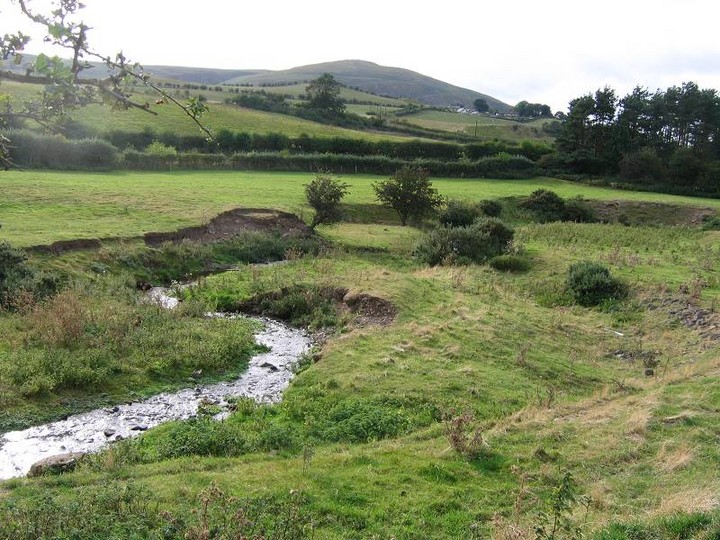
The stone, probably not in situ, lies along the most eastern bend in the Highburn, just opposite Highburn House camp site, west of Wooler.
Humbleton Hill makes a nice décor for this stray find.
|
Rockartuk is Gus van Veen & Jan Brouwer from The Netherlands.
We manage the photo website "British Rock Art Collection" (BRAC) (http://rockartuk.fotopic.net), the "British Rock Art Blog" (BRAB) (http://rockartuk.wordpress.com) and a small sub-website, the "Worldwide Rock Art Selection" (WRAS) (http://rockart.fotopic.net)
|
| |
 Log in |
Register
Log in |
Register


 Previous 50 | Showing 51-100 of 618 posts. Most recent first | Next 50
 Top of page