The Modern Antiquarian. Ancient Sites, Stone Circles, Neolithic Monuments, Ancient Monuments, Prehistoric Sites, Megalithic Mysteries

Get the TMA Images feed
juamei's Latest Posts

Latest Posts
Showing 1-50 of 458 posts. Most recent first | Next 50

Arbor Low & Gib Hill — News

Children dig into the past


Published on Tuesday 17 April 2012 09:00

Digging into the past have been pupils from primary schools around Buxton who have taken part in an archaeological project.

The dig has been taking place in a bid to uncover more about the history of the area around the henge of Arbor Low and Gib Hill situated near to Monyash.

The Arbor Low Environs Project, set to take place over the next five years, is a collaboration between archaeologists, students, volunteers and farmers.

It is being co-directed by Drs Ian and Catherine Parker Heath, independent research archaeologists and Dr Hannah Cobb of the Department of Archaeology at the University of Manchester.

Several test trenches, about a metre square, have been dug as experts try and find out more about the history of the site.


Running alongside the main dig Dr Catherine Parker Heath, of Enrichment Through Archaeology, has been ensuring that members of the local community can get involved.

http://www.buxtonadvertiser.co.uk/news/local/children-dig-into-the-past-1-4449549

Arbor Low & Gib Hill — Links

Arbor Low Environs Project


Welcome to the Arbor Low Environs Project website. This is a new project which will be exploring the landscape surrounding the henge of Arbor Low in the Peak District. The project is a collaboration between archaeologists, students, volunteers and farmers.

The project has a number of questions which it seeks to address, including how has this landscape been experienced through time? For some it seems that a monument such as Arbor Low exists in isolation, built by unknown hands at some unknown point in time in the past, for some as yet unknown reason. This project will be bringing together the various strands of what we do know and trying to develop a new, broader understanding of not only the monument but the landscape around it.

==

Unfortunately the 2012 digging season is over but they are planning 5 years of work.

Staden (Enclosure) — Fieldnotes

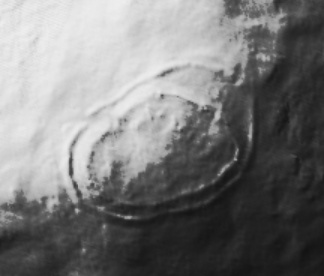
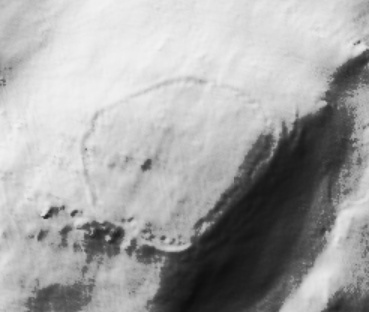
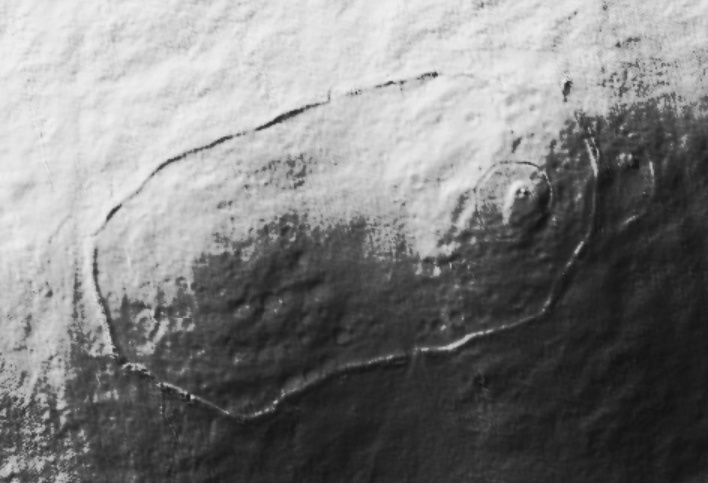
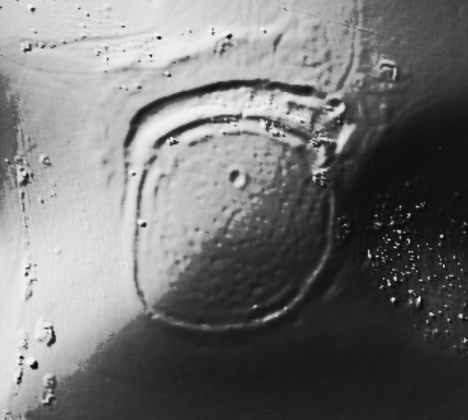
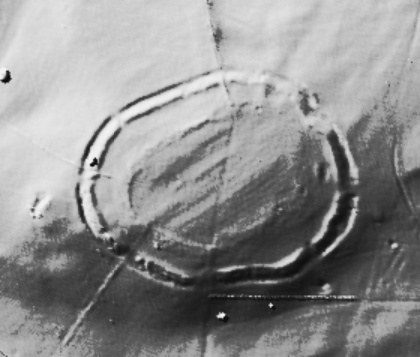
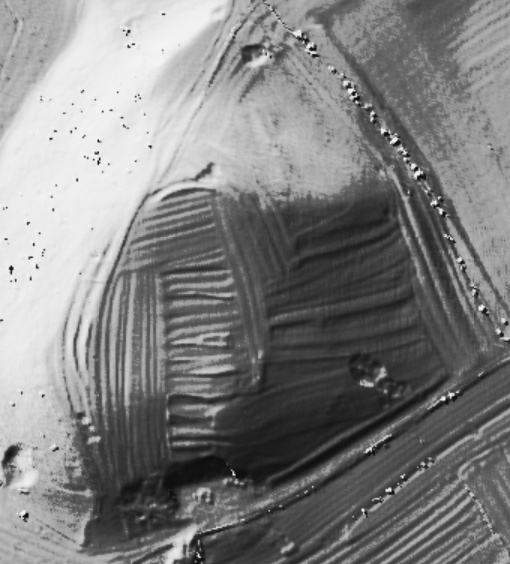
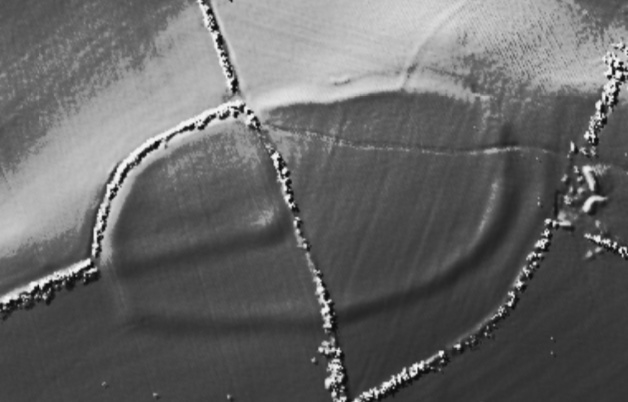
[visited 18/03/12] Well this is a delight I've been meaning to get to for a long time. Previously I'd made it to within sight (just) from the footpath and before the estate was expanded, I'd stood and stared in its general direction from a carpark. Nothing like getting up close and personal though, especially with this site which is clearly visible closeup despite its denuded state. I hadn't noticed the amazing view when I'd been near here before. We are up quite high here, so you look across Buxton in the dip, along Brown Edge and over to the gritstone hills 7 miles or so to the North.

Its a big circularish monument crossing a small shallow dry valley, together with a perculiar bank with a 90degree bend heading off to the north east. Opinion is divided but seems to be coming down in favour of an Iron age date for this. Several things about it to tend me towards that also; henges don't tend to lie across a dip, the bank & ditch seem unusually thin and defined for their height for a henge, it's circle is deformed unlike Arbor Low and the Bullring and the weird attached bank would be fairly unique. This could easily be contempory to similar sized Late Bronze Age/Iron Age enclosures nearby such as that on Eldon Hill.

Access is easyish from Dukes Drive via the caravan park, up the footpath and through the farm. As this is off the footpath, permission should be sort at the farm.

The Tong (Long Barrow) — Miscellaneous

Listed on the scheduled monuments register as the following:
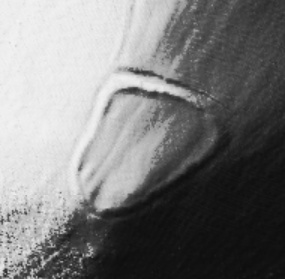
"The monument is situated on the limestone plateau of Derbyshire, north of Wye Dale, and includes a Bronze Age bowl barrow and a Neolithic long barrow within a single constraint area. The bowl barrow is a roughly circular mound with a diameter of c.15m and a height of c.1m. It is superimposed on the south-eastern end of the long barrow which is c.0.5m high and measures c.40m long from north-west to south-east and ranges from c.20m at the wider, south-eastern end to c.10m at the narrower, north-western end. There has been no definitely recorded excavation of the monument but both barrows have been identified by their form and by their similarity to other known examples, by which the monument can be dated to the Neolithic and Bronze Age periods. Both barrows have been somewhat disturbed by stone robbing, either for walling at the time of the Enclosures or to feed the limekiln in the adjacent field. The drystone wall crossing the northern edge of the monument is excluded from the scheduling but the ground underneath is included."
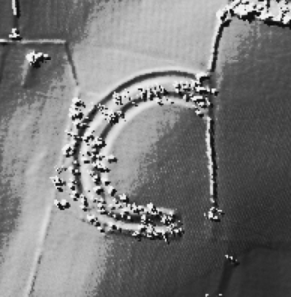
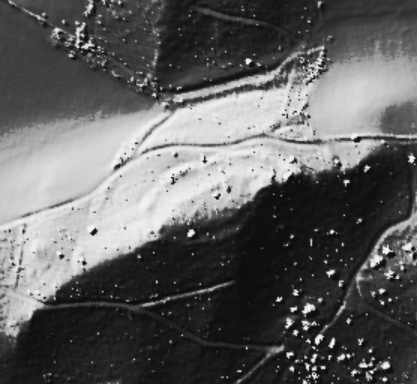
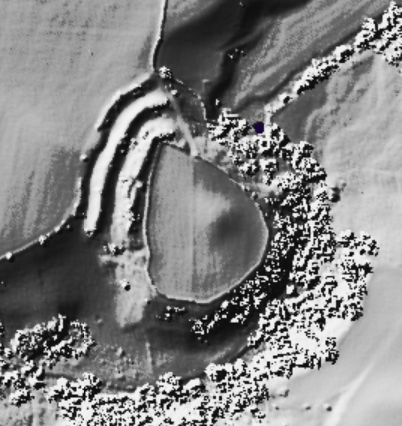
Another Peak District bronze age insertion on an older neolithic barrow.

Pike Low (Standing Stone / Menhir) — Images (click to view fullsize)

<b>Pike Low</b>Posted by juamei

Pike Low (Standing Stone / Menhir) — Fieldnotes

[visited 29/1/12] What on earth happened at the top of this hill? I bet 300 years ago there was a ridge, with a nice big barrow and a track next to it. Now there's a dirty gash of a road, a weird standing stone and what looks like the remains of a quarry. The stone, to me, looks modern, way too square for my tastes anyway. I couldn't even make out the outline of the barrow, if this was done by "excavators" they really worked this one over. If it is a quarry, the stone is probably from that phase of destruction.

Access is a short walk from a layby either side of the ridge. Once I got close I couldn't even be bothered to get into the field so just climbed the 3m verge of the road to get moderately close.

[edit] PS Good views though.

Ginclough (Standing Stone / Menhir) — Images

<b>Ginclough</b>Posted by juamei<b>Ginclough</b>Posted by juamei<b>Ginclough</b>Posted by juamei

Ginclough (Standing Stone / Menhir) — Fieldnotes

[visited 29/1/12] This is to all intents and purposes a boulder by the side of a busy road with some views. If the road and the wall weren't here, it would still be a boulder, but at least you'd get some lovely views and nice surroundings. Is it Prehistoric though? Its certainly a different shape and feel to the Murder Stone and Whaley Bridge stone less than 5 miles away. With a different positioning in the landscape too. However, could quite easily be a waymarker for the track the main road turned into.

Access is for the stupid. There is no public parking in Ginclough, so you either have a longish walk (rubbish reward ratio), perch on the side of a busy fast road or do what I did and reverse into the track next to the stone from the main road. The benefit of which means no stiles and a 10 second walk.

Murder Stone (Standing Stone / Menhir) — Images

<b>Murder Stone</b>Posted by juamei<b>Murder Stone</b>Posted by juamei<b>Murder Stone</b>Posted by juamei<b>Murder Stone</b>Posted by juamei<b>Murder Stone</b>Posted by juamei<b>Murder Stone</b>Posted by juamei<b>Murder Stone</b>Posted by juamei<b>Murder Stone</b>Posted by juamei

Murder Stone (Standing Stone / Menhir) — Fieldnotes

[visited 29/1/12] What a glorious little stone with an equally glorious view. Its a similar profile to the near-by Whaley Bridge stone and sits in a similarish position, this one having a wider view. Its on a little knoll next to the footpath, so you may have to do a quick ninja run to get right next to it.

It's yet another shouldered head of valley stone as well, this one made me seriously think there could be something in the stone representing an ancestor idea. Give it a biodegradable head and you've got a symbol that can look over your land, that can be seen from a fair way away.

Access should be easy, there are no stiles from the road, but there is a shut gate into the field then a short steepish climb. There is a space for a car to park just up the road from the farm, I however headed over from kettleshulme via the footpaths. Again this should be straight forward, just aim for the one that comes out nearest the farm, not the one the other side as this takes you through a swamp.

Eldon Hill Enclosure — Images

<b>Eldon Hill Enclosure</b>Posted by juamei<b>Eldon Hill Enclosure</b>Posted by juamei

Eldon Hill Enclosure — Fieldnotes

[visited 8/1/12] Without a GPS and with blanket mist, I found this by educated luck, basically heading downhill in the right direction from the main barrow. Its a fairly small enclosure, presumably designed to keep cattle penned in as the high land immediately next to it would have made defensive use very difficult. The banks that are left look to be in good condition, though I didn't walk the whole thing as I was getting rushed for time by this point.

Access is the same as the rest of Eldon Hill.

Eldon Hill (Round Barrow(s)) — Images

<b>Eldon Hill</b>Posted by juamei<b>Eldon Hill</b>Posted by juamei<b>Eldon Hill</b>Posted by juamei<b>Eldon Hill</b>Posted by juamei

Eldon Hill (Round Barrow(s)) — Fieldnotes

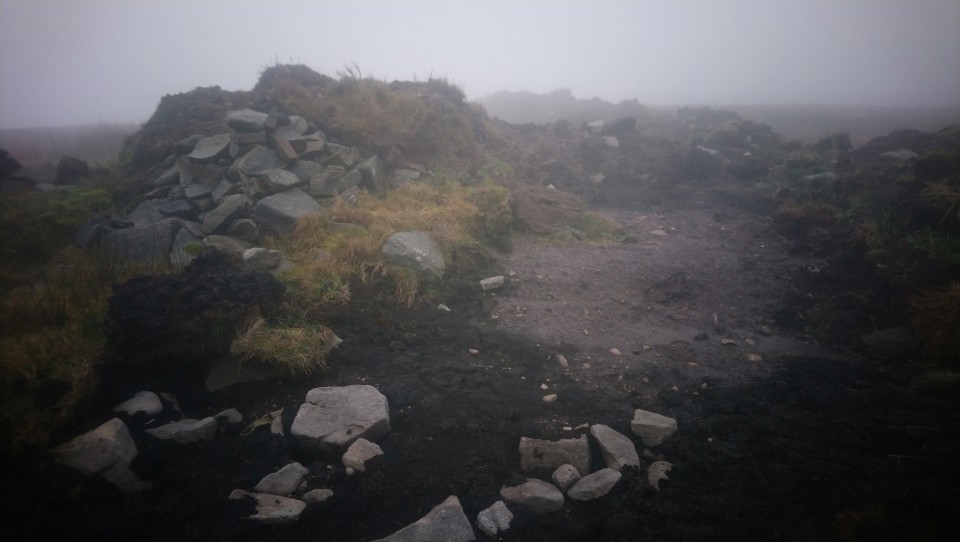
[visited 8/1/12] I came up here in blanket mist, with visibility down to 40-50 metres, but I still found both definate barrows on top of the hill.

First the small "later" barrow to the East, clearly defined and reminiscent of some in the cairn fields in the more southern and eastern moors of the peaks. In the mist watch out for mine workings and just head to the high bit at the East end of the hill. Not worth the trip on its own I have to say, but worth seeing if you are up here.

Secondly I headed for the bigger barrow, keeping in mind it was on the only high point to the West, I tried to keep on the highest points and headed off into the gloom. Via an accidental detour halfway down the slope towards Eldon hole, I found the bigger barrow. This is another good sized barrow in the Northern peaks, of a similar size to Cow low, Lord's seat et al. The obligatory massive hole in the middle didn't disapoint, but the much more recent cairn on top was a sad sight for me. I presume because of the hole and maybe the quarry, walkers felt marking this point in the mist is necessary. To be fair to them, it certainly helps find it!

Via Eldon Hill enclosure I made the obligatory trip to Eldon Hole. A scary open wound into the centre of the earth, no wonder this hill was once called Elvedon Hill. This is definately an entranceway into the nether realm.

Access is across a few fields. I parked near the top of Winnets Pass which is a 40 minute trip to the top of the hill. You could probably park near Perryfoot and come at it from that direction. Stiles abound from either way, but its pretty firm under foot.

Ludworth Intakes (Cairn(s)) — Images

<b>Ludworth Intakes</b>Posted by juamei<b>Ludworth Intakes</b>Posted by juamei<b>Ludworth Intakes</b>Posted by juamei<b>Ludworth Intakes</b>Posted by juamei<b>Ludworth Intakes</b>Posted by juamei

Brown Low (Round Barrow(s)) — Images

<b>Brown Low</b>Posted by juamei<b>Brown Low</b>Posted by juamei

Chisworth (Cup Marked Stone) — Images

<b>Chisworth</b>Posted by juamei<b>Chisworth</b>Posted by juamei<b>Chisworth</b>Posted by juamei<b>Chisworth</b>Posted by juamei<b>Chisworth</b>Posted by juamei

Chisworth (Cup Marked Stone) — Fieldnotes

[visited 27/11/2011] Relatively high effort to reward ratio this one, but worth it in my opinion. The stone is located within 5 paces off the bridleway and easy to spot. It is quite small and most of the cups are easy to work out despite being small themselves. Some would probably be classified as microcups if such a classifiaction were made.

It seems in a weird location, with nothing else within a mile or so apart from the Picking rods, though who knows what else is hidden on this high and barren place. Certainly there are walls which look very old up here (SK007907 ish for example), so I wouldn't be surprised if this plateau was farmed in the Bronze Age. The high grounds containing nearby barrows (Ludworth Intakes & Cown Edge) are visible, though I couldn't make out the barrows.

Access was ok, but very muddy and required me to cross 2 stiles. I parked near Pistol farm and headed along the tracks via Far Slack farm to the Bridle path which the stone is just off. A word of warning, I annoyed two "fierce" labradors at Far Slack farm who decided to chase me off their territory. As there was no owner in sight, I legged it to the stile at the bridle path. I'm sure they wouldn't have attacked, but caution seemed prudent. On the way back to the car I took the more direct footpath which was more uneven but quicker.

Ludworth Intakes (Cairn(s)) — Fieldnotes

[visited 27/11/2011] Mangled and abused but still standing defiant in the corner of a field (or 3). Someone, presumably the combination of treasure hunters and excavators in the 18th century, have removed the centre of the cairn, but you can still get a sense of quite how large this beast was. The views to the North are worth the effort even if you didn't fancy seeing a cairn. Nice to know this lies on a boundary even now. Chisworth is probably visible if you had someone stood near it to pick it out.

Access is on a footpath from the nearest road to the South past Brown low and is over a stile or two. You'll also need to navigate a field of long horned cattle.

Brown Low (Round Barrow(s)) — Fieldnotes

[visited 27/11/2011] I had conflicted thoughts about this one. On the one hand its a sad site, unvisitable as it's enclosed in a walled copse of trees, on the other, its well protected from the modern world and is unlike to suffer damage at any point except for tree roots. I walked as much of the wall as I was legally able, but there was no obvious way in for a sneak and I couldn't work out which house / farm I should approach to ask permission to visit. Maybe I'll be back for a closer look one day.

Access is from the other side of a barbed wire fence and wall and via a stile from the nearest road.

Ludworth Intakes (Cairn(s)) — Miscellaneous

The HER says
"A large barrow at Ludworth Intakes was destroyed by 'treasure- hunters' when it became known it was to be excavated. According to information volunteered, ashes, bones, etc. were found and also a cinerary urn which was broken and its contents lost. The barrow was alleged to have been divided into three paralled circles one within the other, the centre one containing the urn. "

Its not destroyed, just mangled like a lot of barrows about these parts.

Ludworth Intakes (Cairn(s)) — Links

Derbyshire HER entry


Eldon Hill Enclosure — Miscellaneous

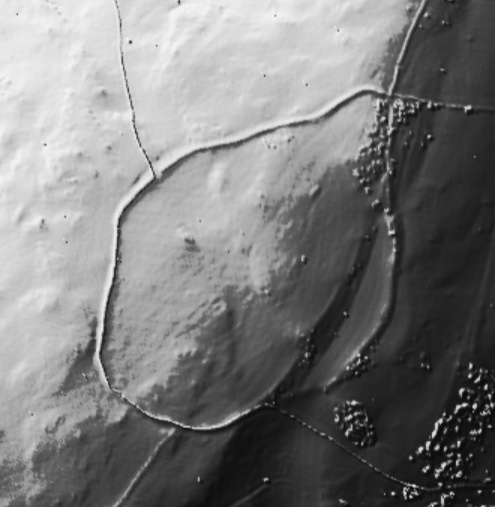
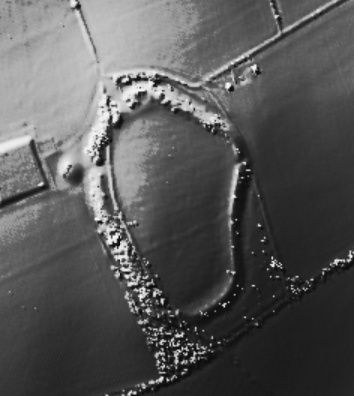
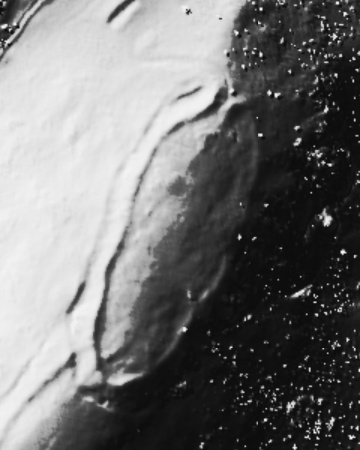
The SMR has this listed as "A Late Bronze Age or Early Iron Age palisaded hilltop enclosure lying on a gently sloping shelf to the south of the summit of Eldon Hill. The enclosure forms an irregular 'D' shape and is defined by a clearly visible stony bank."

I'd go for stock enclosure as opposed to habitation purely because this site is undefendable being abutted by higher ground to the North.

Stonehenge and its Environs — News

Mike PItts reviewing the Heelstone - Pit news


Let's have a dispassionate look at the latest Stonehenge news. The Stonehenge Hidden Landscape Project (University of Birmingham and the Ludwig Boltzmann Institute for Archaeological Prospection) continues its geophysical survey. So what's new?

The press release is titled "Discoveries provide evidence of a celestial procession at Stonehenge", which is pretty much what all the journalists who reported it said (often just copying the release). It includes a "podflash" interview with Vince Gaffney, and there is a video visualisation of the theory here.

The Independent really went to town, using words like "extraordinary" and "massive", suggesting the discoveries might "turn the accepted chronology of the Stonehenge landscape on its head", and that "Stonehenge site's sacred status is at least 500 years older than previously thought". The project as a whole is going to "transform scholars' understanding of the famous monument's origins, history and meaning". Golly.

I couldn't see where all this came from, so I contacted the Birmingham University press office, who very kindly gave me these geophysics plots. As no other news media anywhere as far as I can see has used them, I thought it would be helpful to post them here. Then we can see what is being talked about.

I mostly leave it to others to look at these plots and comment on the interpretations (please do). What I will do here is describe what Birmingham team found, and add a bit of context.

They pick on two geophysical anomalies, which they call pits, just south of the northern line of the Cursus:

Click through to see the pics

http://mikepitts.wordpress.com/2011/11/29/view-from-the-heelstone/

Bull Ring (Henge) — Images

<b>Bull Ring</b>Posted by juamei<b>Bull Ring</b>Posted by juamei<b>Bull Ring</b>Posted by juamei<b>Bull Ring</b>Posted by juamei
Showing 1-50 of 458 posts. Most recent first | Next 50
Default Location: Bullring

Likely activities: Wandering, computering, fathering

Identifying physical deformities: Long hair, likes to wear black, unkempt facial hair

Identifying mental deformities: Belligerence, stone stroking, smiling

Peculiar Listening habits: Radio5, trad goth, drum and bass, dubstep, noise

Least likely to say: lets bosh a road through that henge

Most likely to say: oi stop boshing a road through that henge

Favourite website: Heritage Action

My TMA Content: