|
 Log in |
Register Log in |
Register
|

|
|

Carnedd LlewelynCairn(s)
|
||||||||||||||||||||||||


 0 discussions


 Show map (inline Google Map)
|
|
|
Images (click to view fullsize) |
 Add an image Add an image |
Photographs: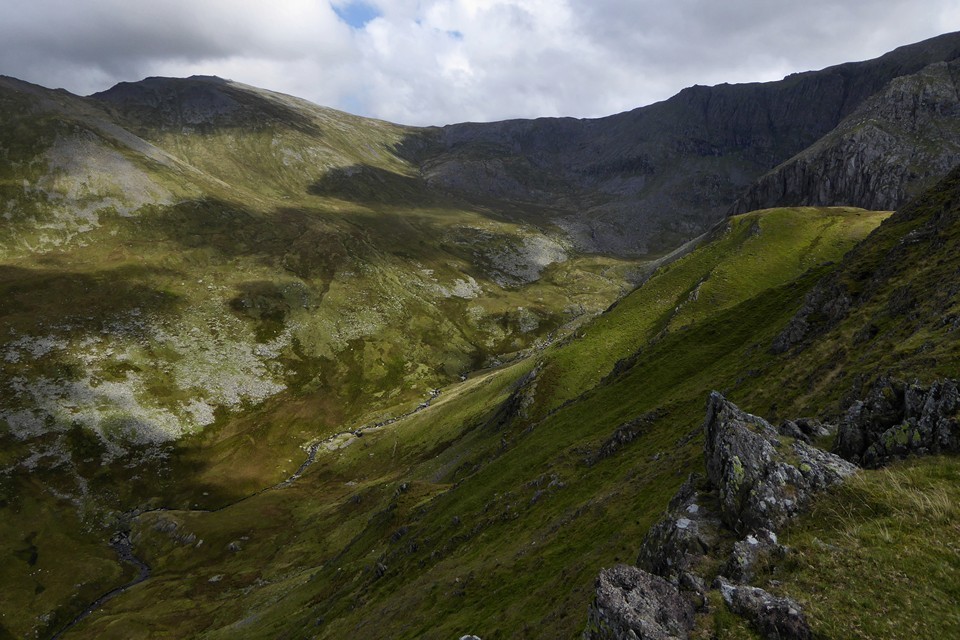
 Artistic / Interpretive: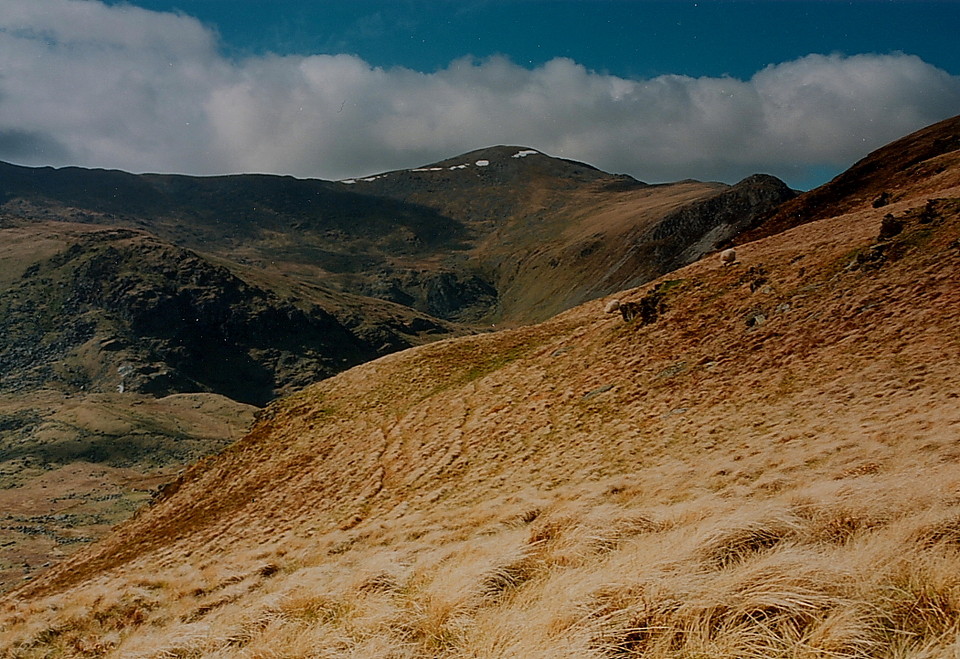
|
Fieldnotes |
Add fieldnotes |
|
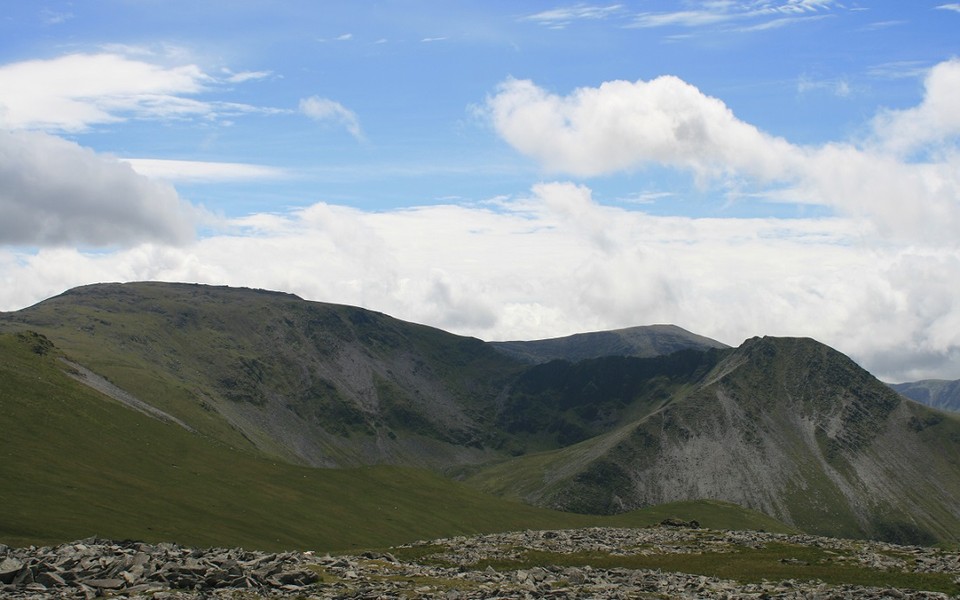
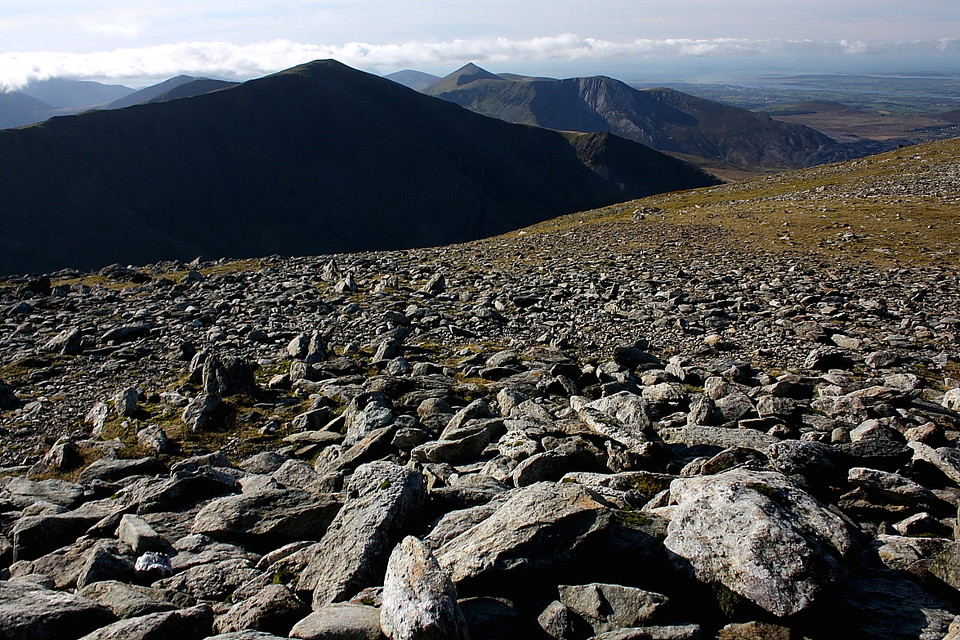
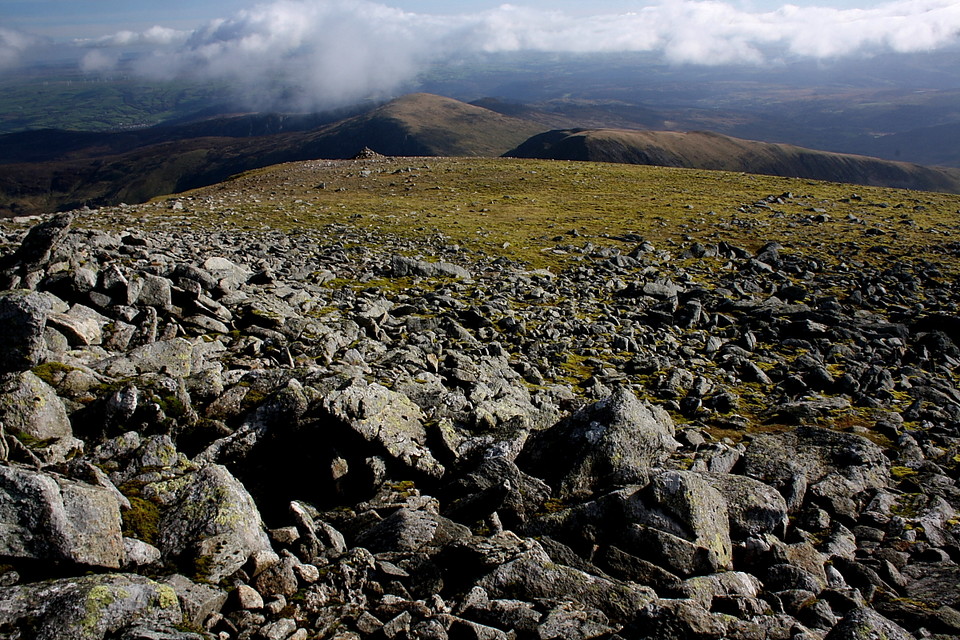
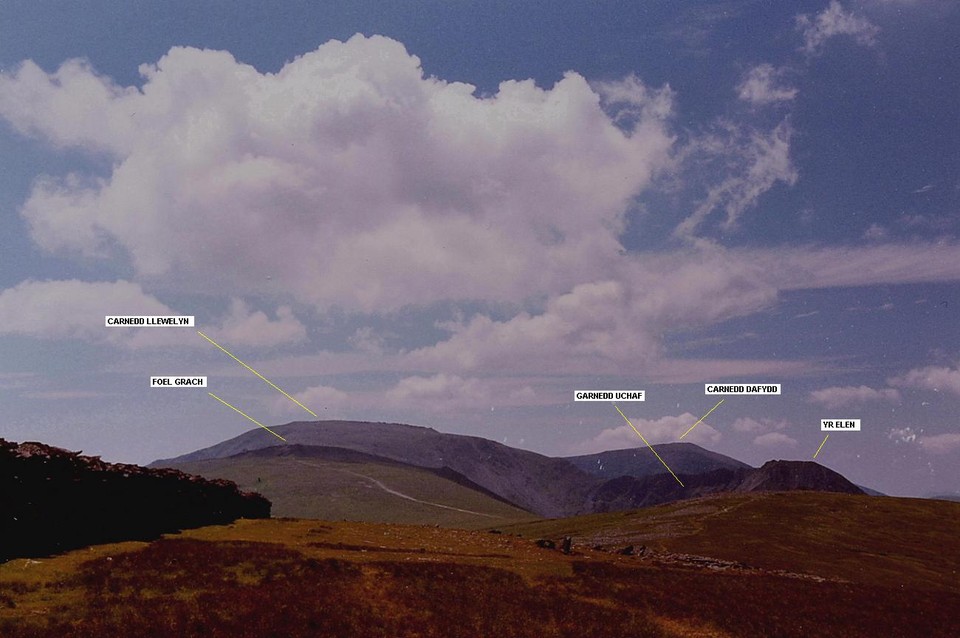
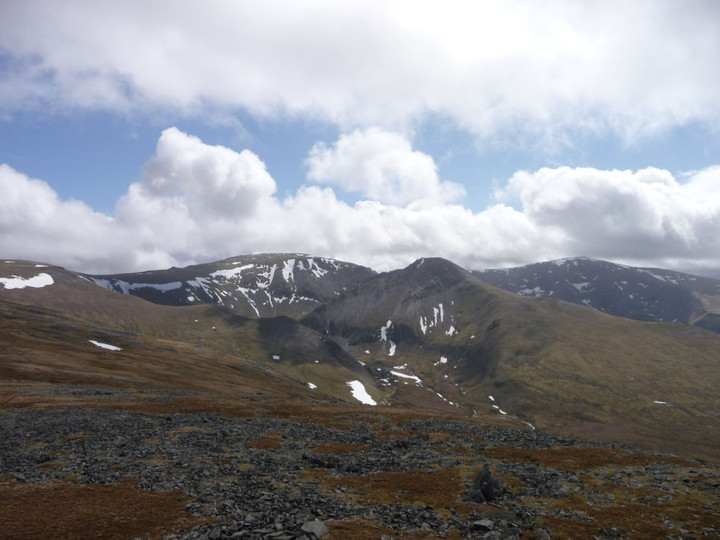
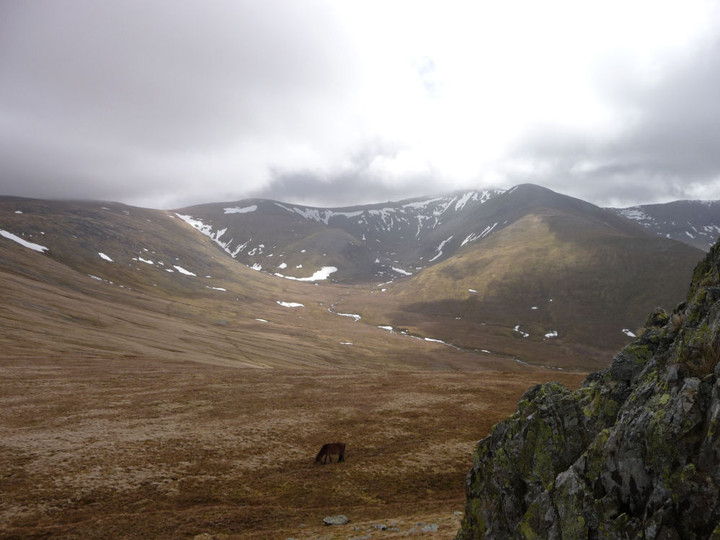
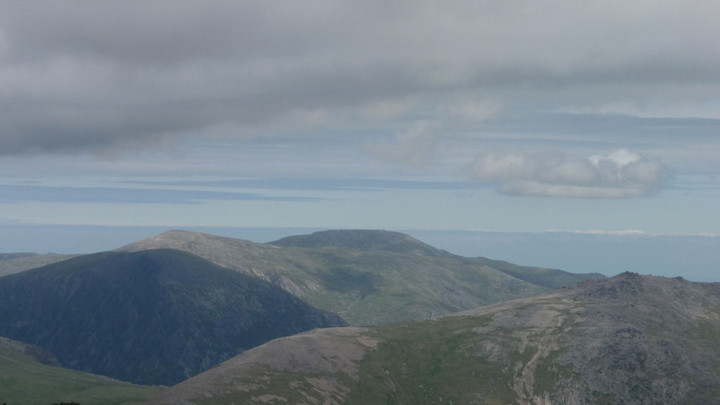
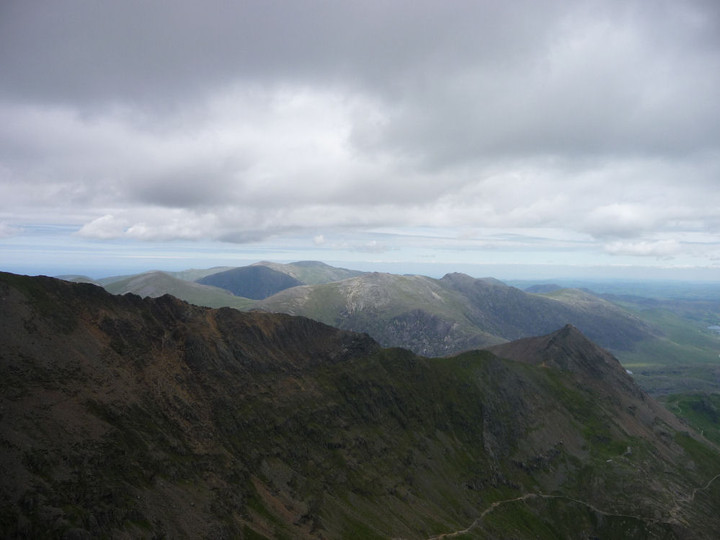
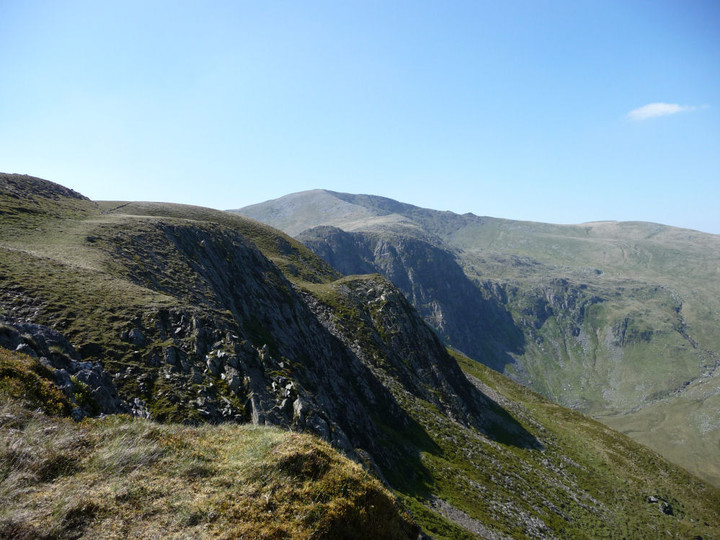
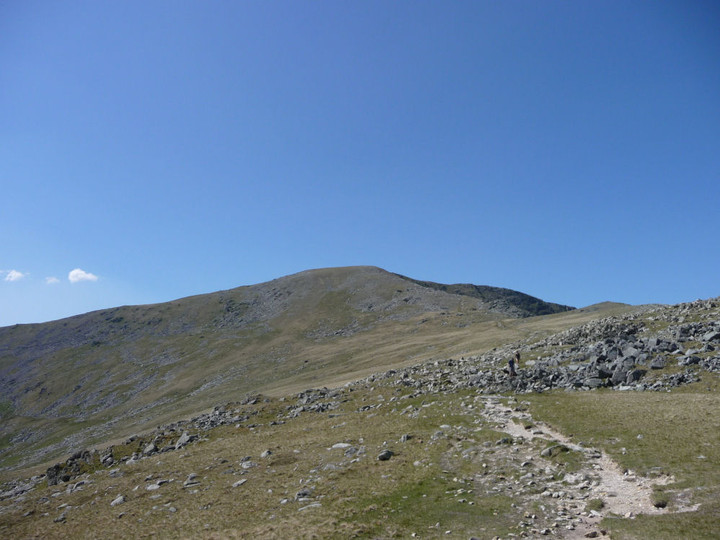
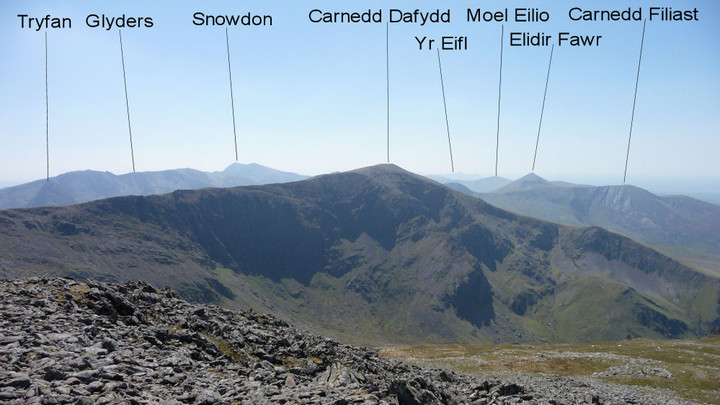
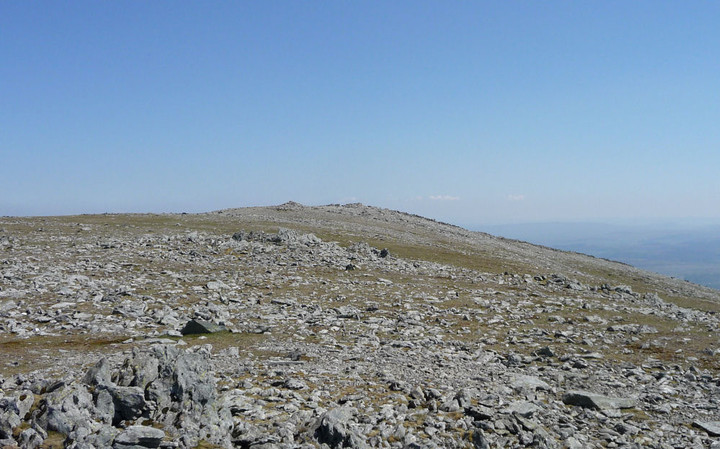
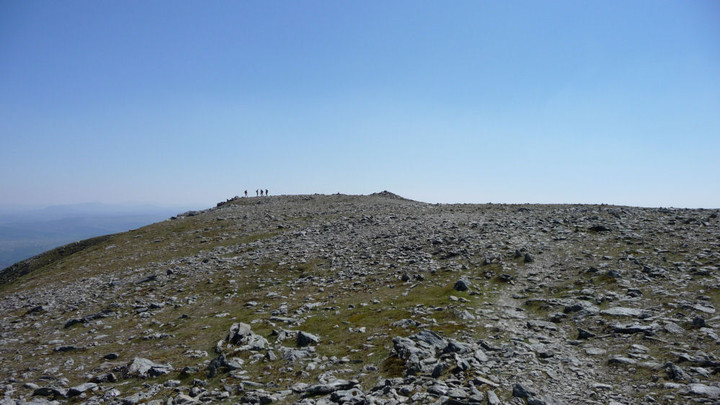
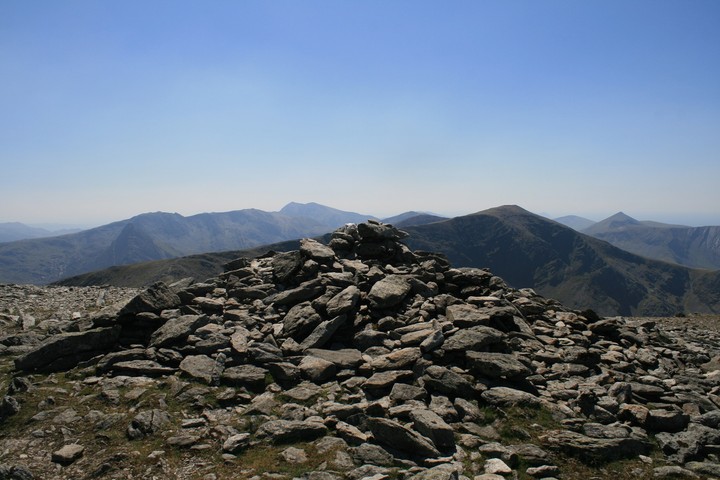
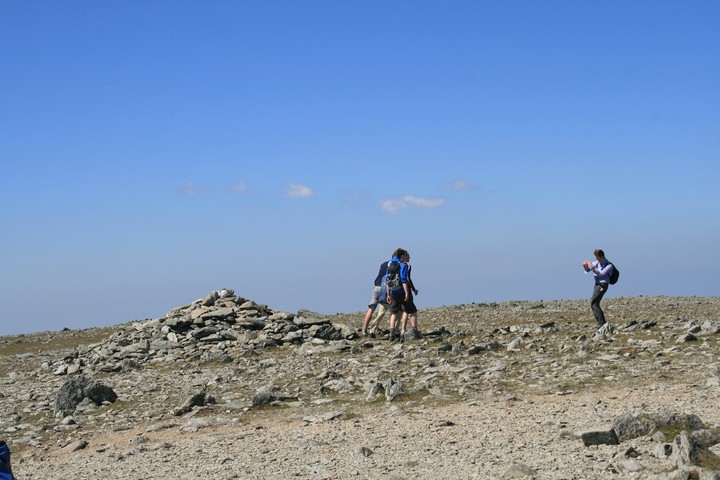
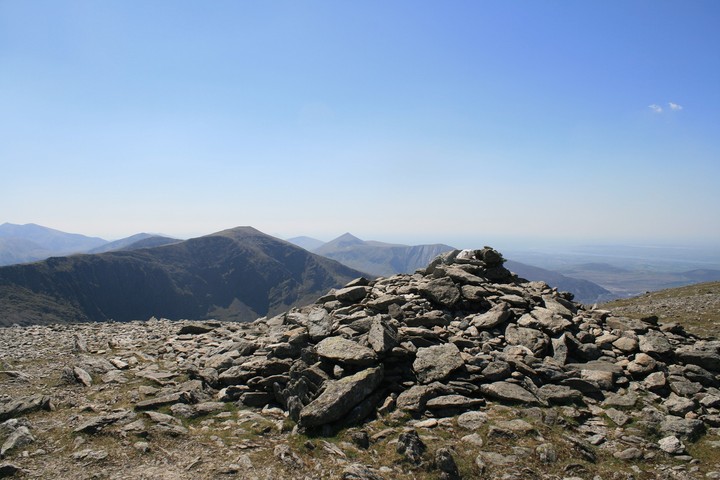
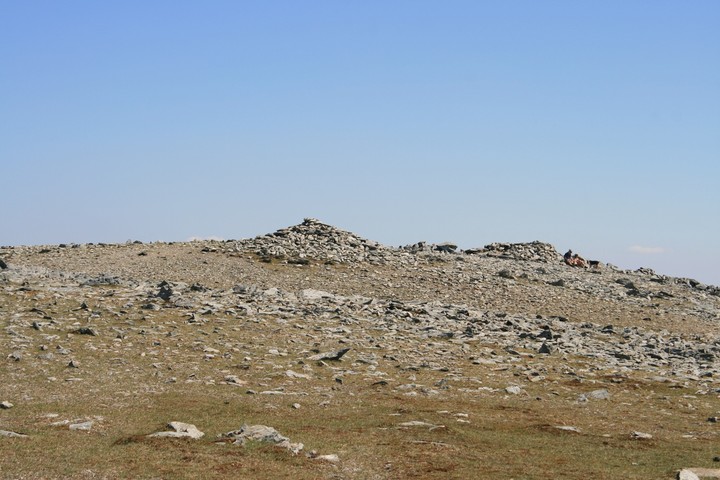
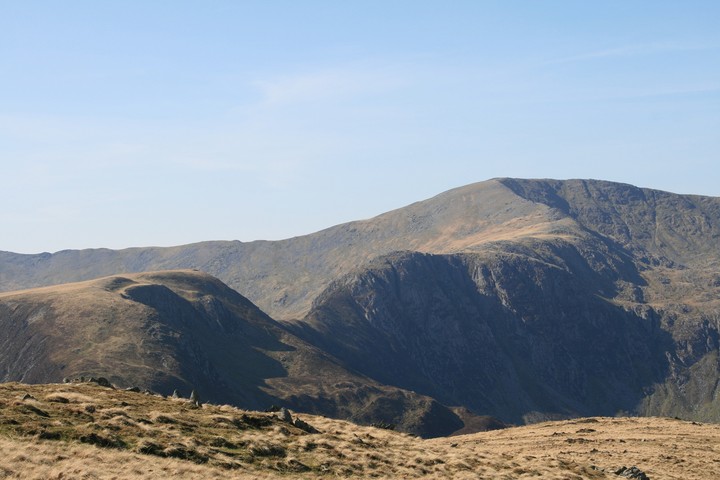
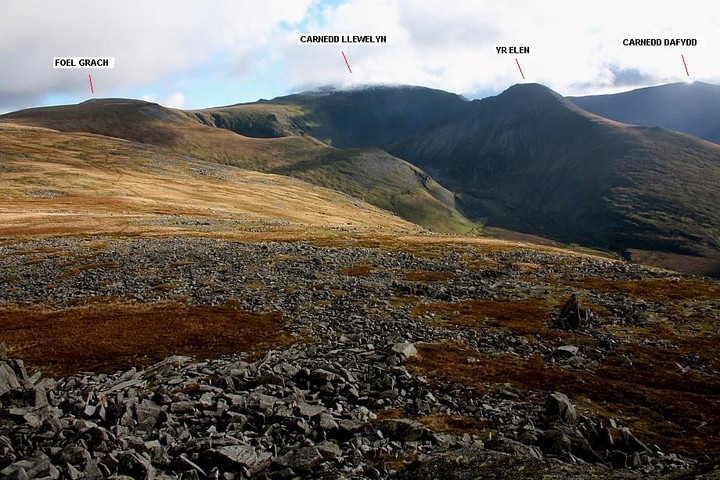
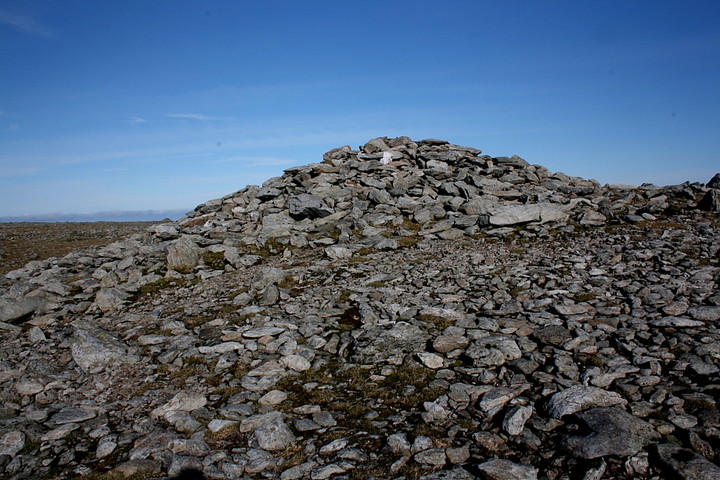
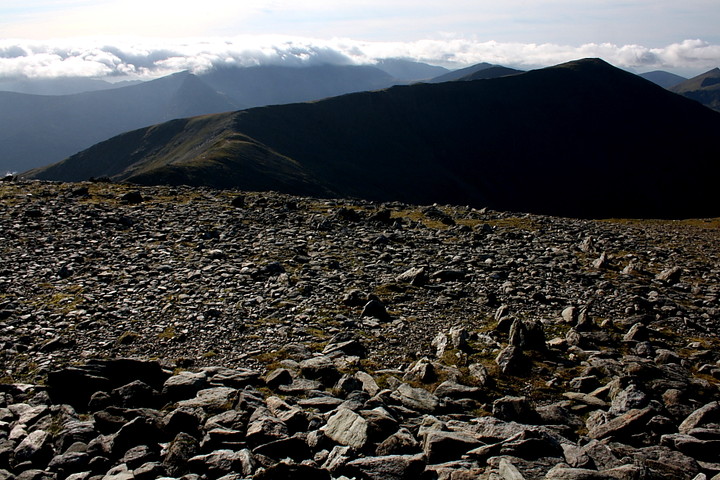
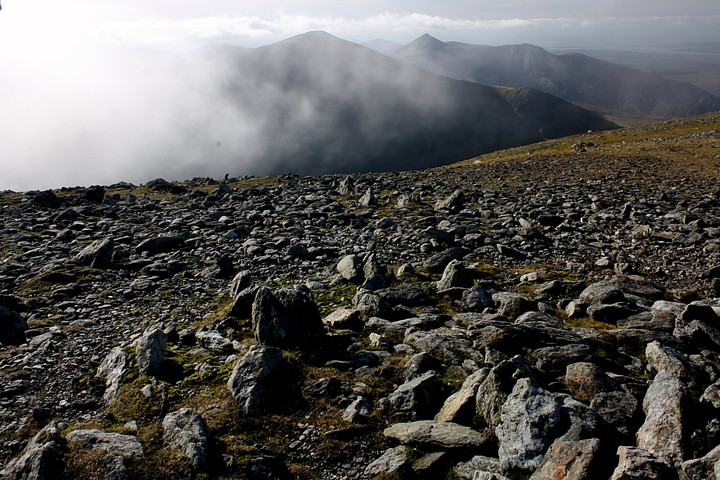
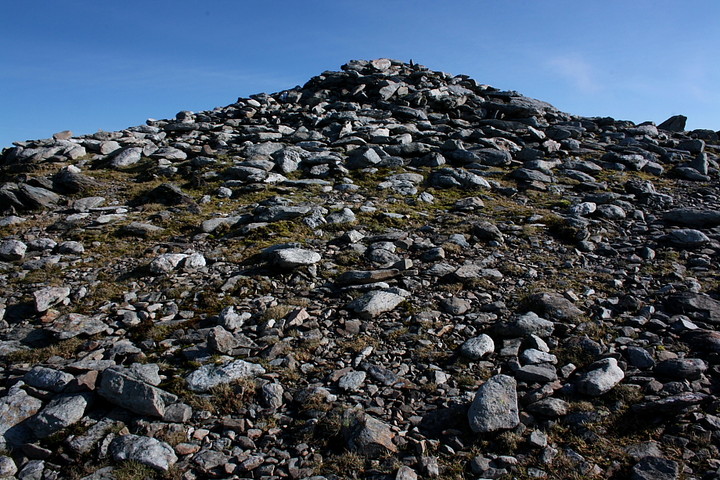
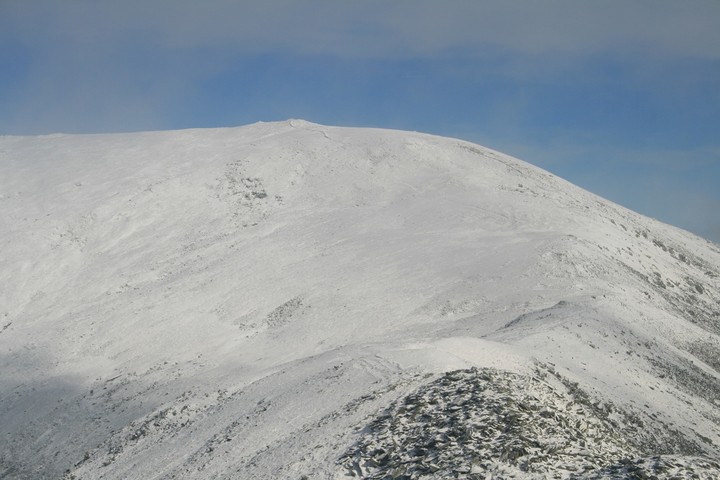
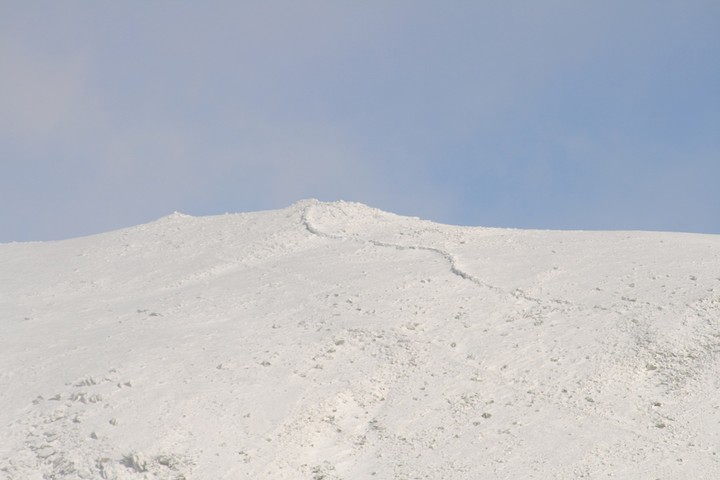
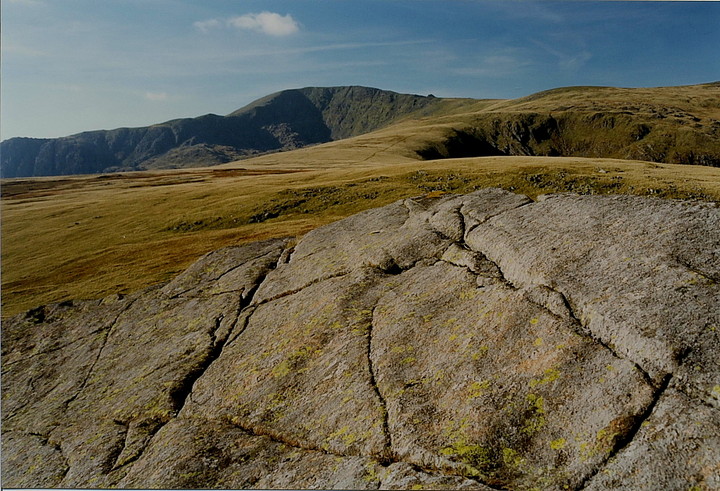
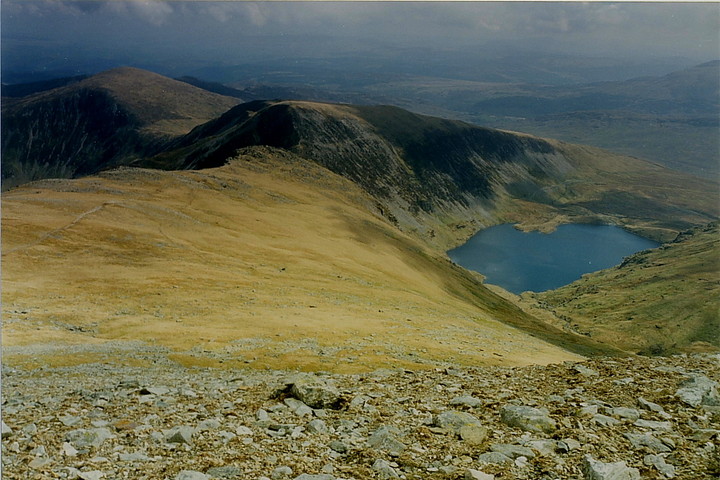
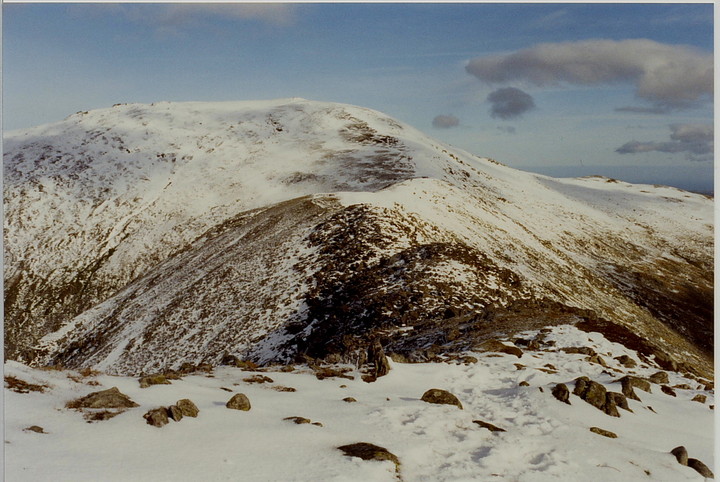
The summit plateau, even more than Foel Grach’s, is a lunar landscape of shattered rock. Although it’s busy, there’s plenty of room to find a patch of solitude away from the cairn and wind shelter. On a day when Snowdon is doubtlessly teeming with hundreds of people, this lofty peak is a much better prospect. The views are simply staggering, from Carnedd Moel Siabod and Moelwyns, across to the Glyderau where Tryfan steals the show from the loftier Glyder Fawr and Glyder Fach. Directly ahead of us Carnedd Dafydd fills the foreground, while the Snowdon massif itself looms beyond. Y Garn and the conical summit of Elidir Fawr complete the vista of 3,000 foot peaks before us. I would defy anyone to come here and not be moved by such a scene. I resist the urge to fall to my knees in wonder (too many pointy rocks for genuflecting). At a gap in the stream of people at the cairn, we make a break for it and snatch a few pictures before the next visitors arrive for their photo opportunity. Much as I like quiet and unfrequented tops, it’s difficult to complain about other people here, as every one of them has had to make an effort to reach this high spot. No rack and pinion railways up here. This post appears as part of the weblog entry Carnedd Llewelyn Beauty Born – 26 May 2012
|
 Posted by thesweetcheat
6th June 2012ce |

|
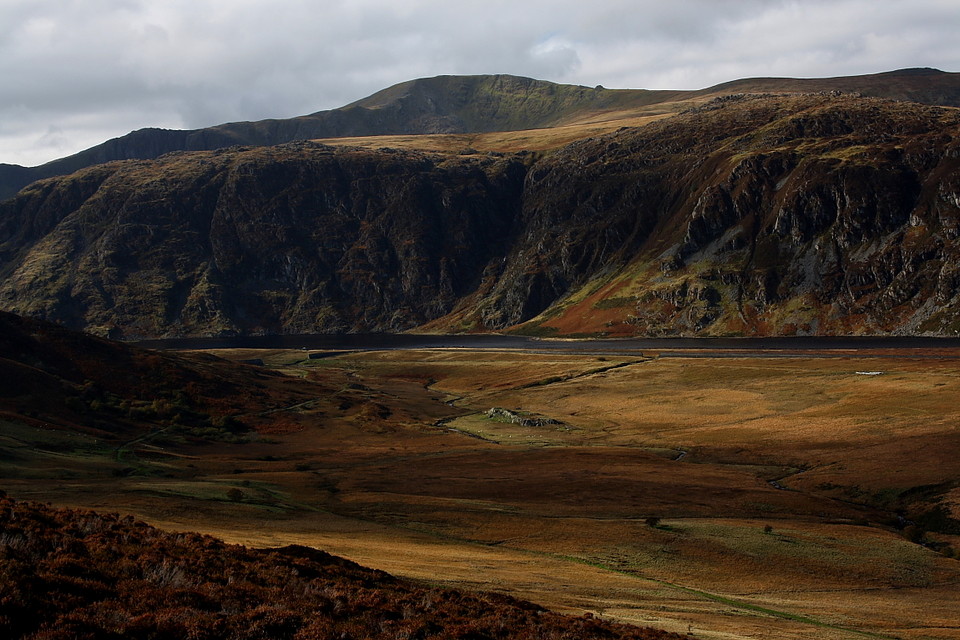
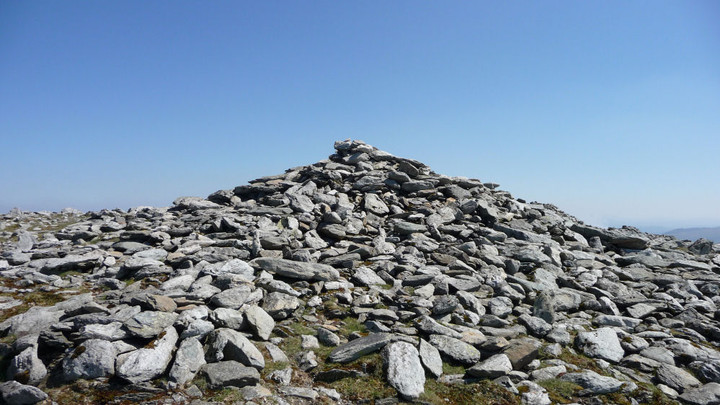
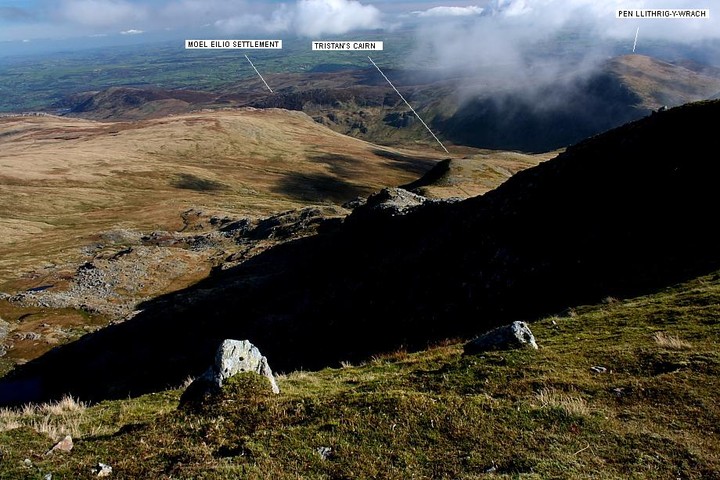
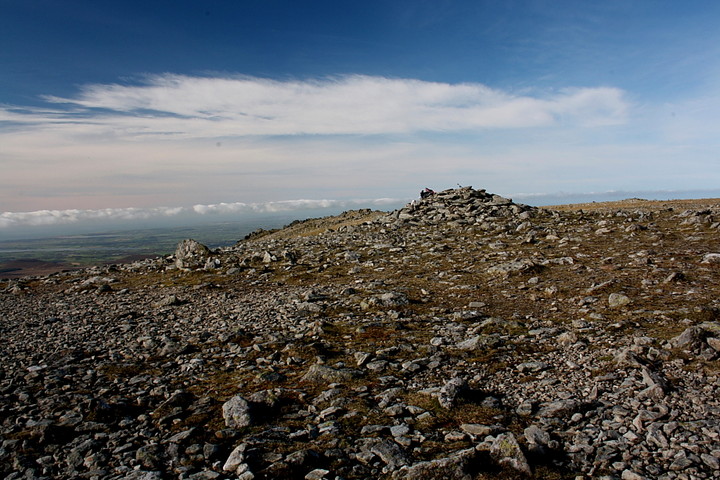
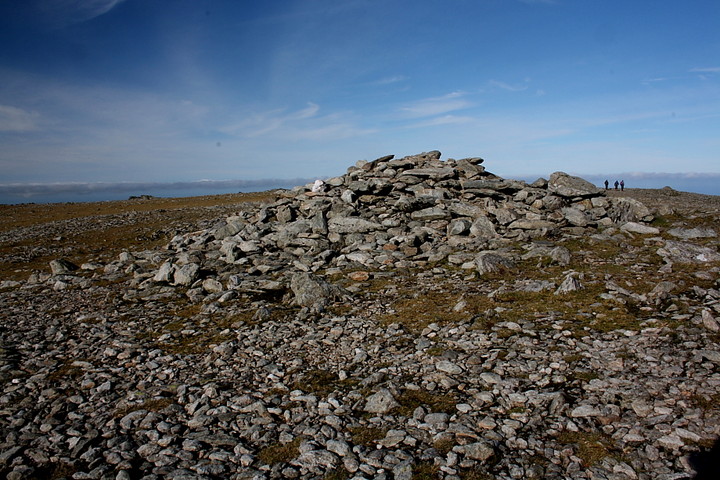
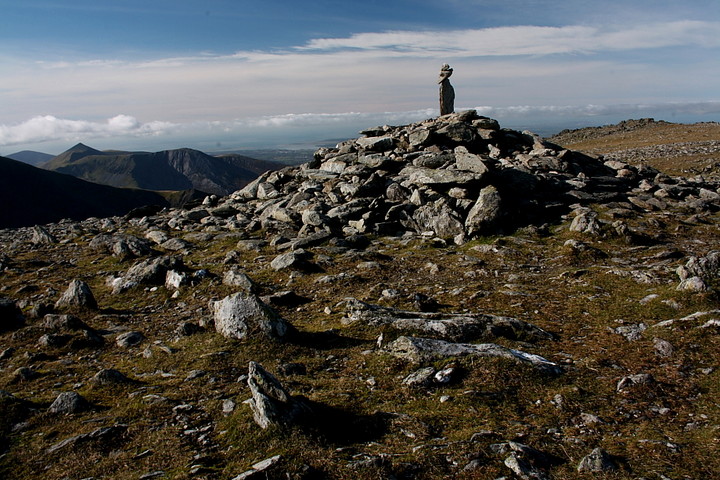
We ascended the Carneddau via the twin lakes of Dulyn and Melynllyn. Whilst sheltering from the absolutely ferocious winds we consumed some butties in the refuge on Foel Grach. En route from Grach to Llewelyn we stood and admired Yr Elen for a while whilst momentarily out of the wind. Ive seen her through the winter mist from Dafydd but this is the first time I've seen her from above, and she is very pretty. But tearing our selves away we carry on towards the third highest mountain in Wales and England, and therefore the highest cairn in Wales and England. The mountain top is a wide area as big as a football pitch, strewn with wind and frost tormented rock formations that strangely reminded me of Gaudi's Sagrada Família in Barcelona. Everywhere is covered in shrapnel from these rocks leaving us in no doubt where all the material for the cairn came from, none of this carrying stones from miles away, there's enough material here for half a dozen Loughcrew type chambers, and wouldnt that be very cool. So why such a comparatively small cairn, ten meters from the cairn is a wind shelter, perhaps they took these stones from the cairn, surely the cairn on Llewelyn can't have been smaller than Grach's or Dafydd's, or just perhaps the preeminent mountain top was enough, pole position is pole position it doesn't have to be bigger because it's already on top as it were. But if a beard clothed giant were interred here you'd expect a bigger cairn, wouldn't you. There was quite a lot of people up here, some were definitely not suitably attired, but what is suitably attired on such a hot day, i'm used to wrapping up warm and hiding from the rain. It was time to go, still many miles to cover, we sadly bid adieu to Carnedd Llewelyn and made our way down to Tristans cairn then further down to Craig yr Ysfa, the narrow ridge between Pen yr Helgi du and Pen Llithrig y Wrach, going down on to the ridge and back up the other side was not too taxing but it was certainly no walk in the park, but it was absolutely the best part of the walk, apart from the moment when Alken stumbled whilst fumbling with his camera, "whoa whoa whoa" said I. Legs shaking and muttering the occasional swear word we made it, now for a scramble off the mountain at Bwlch y tri Marchog and a long walk along the Cwm Eigiau and the reservoir. Staggering, in more than just one way. |
 Posted by postman
28th May 2012ce |
|
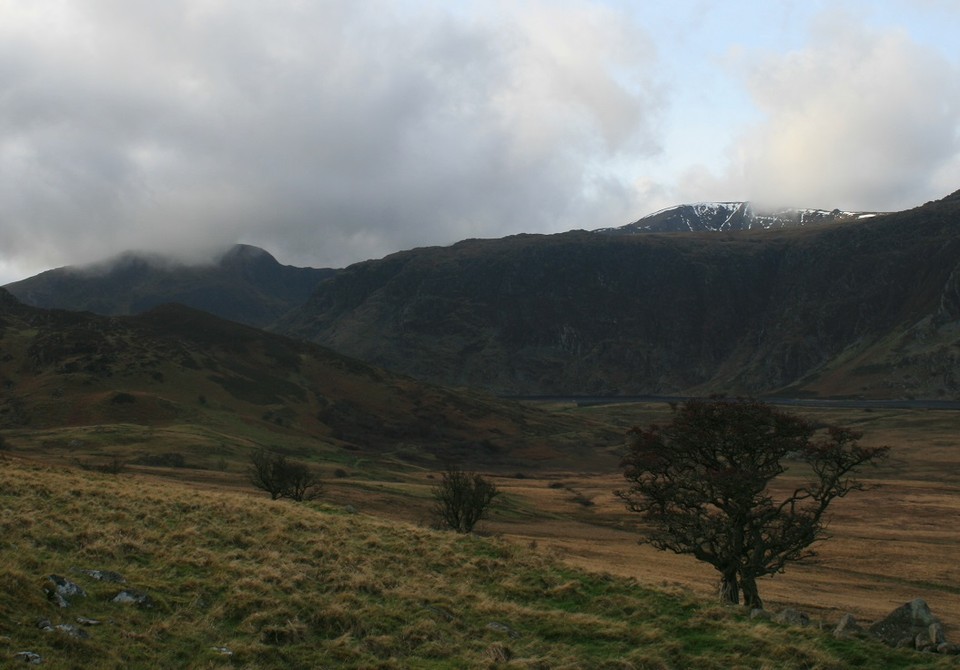
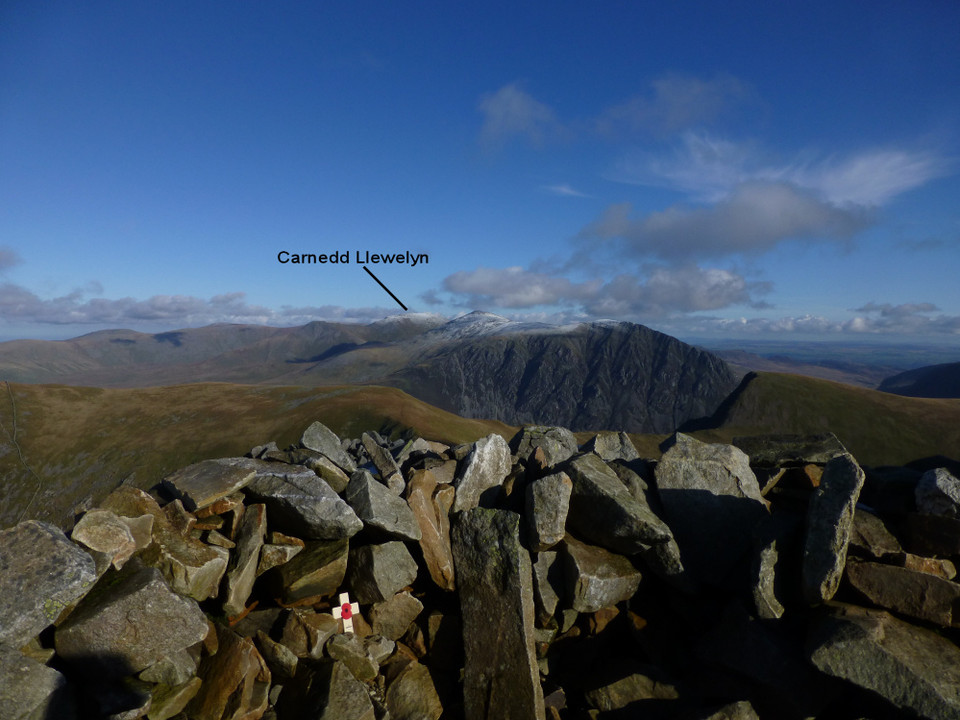
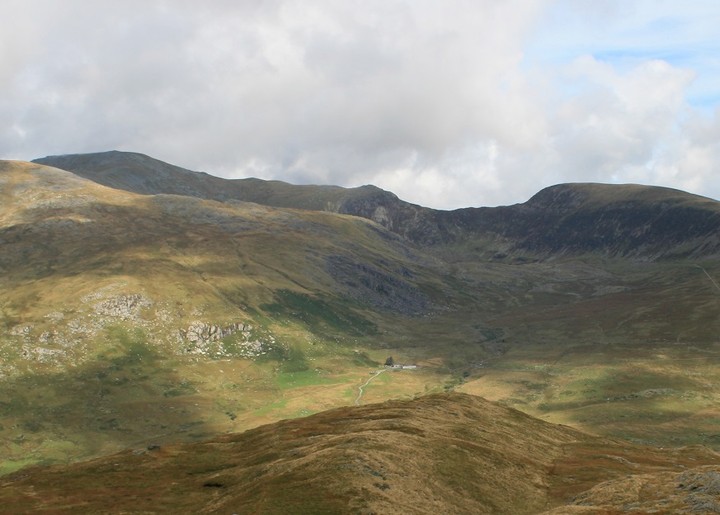
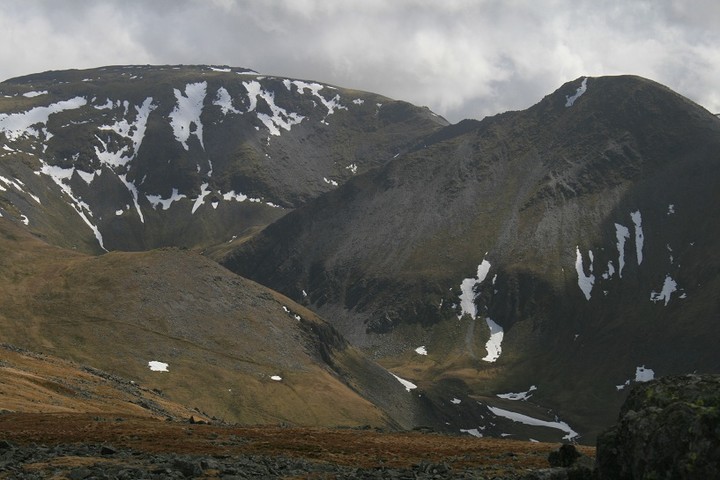
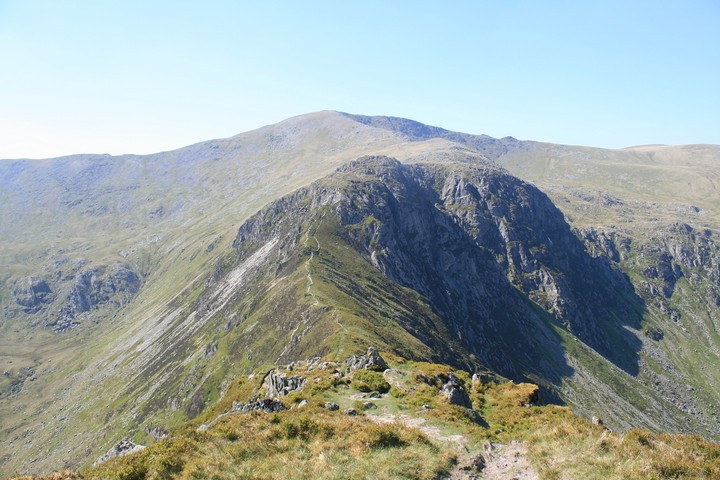
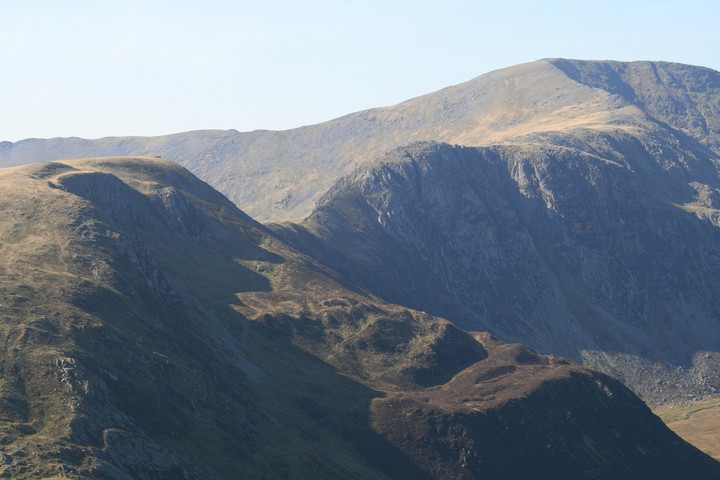
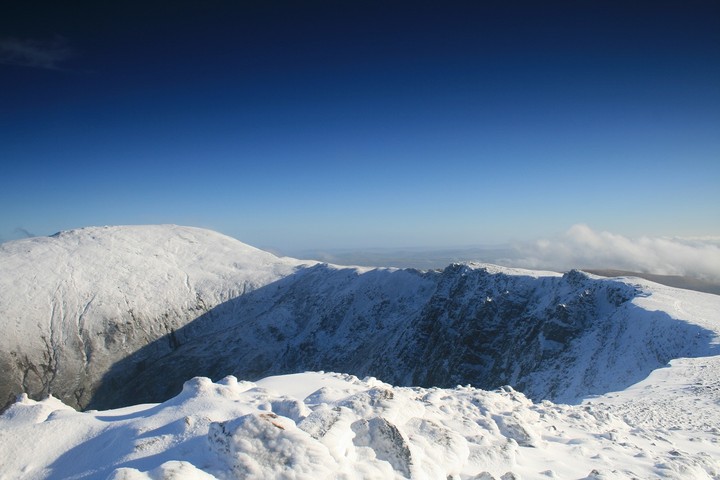
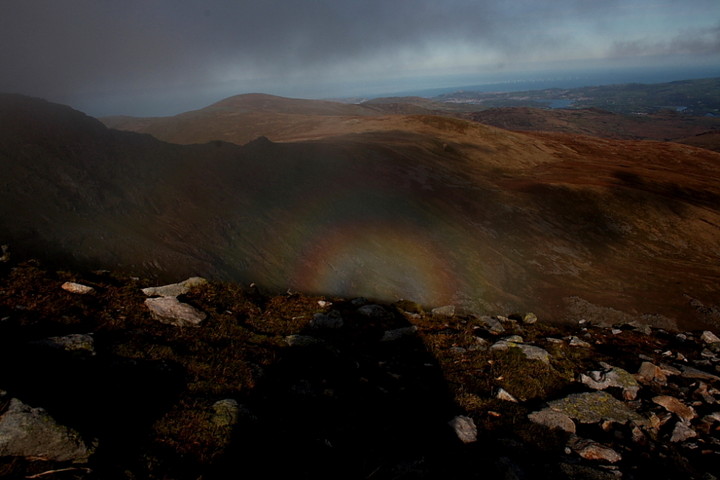
As alluded to in previous fieldnotes, it is perhaps somewhat ironic that the great, domed summit plateau of Carnedd Llewelyn is not crowned by a monument more 'worthy' of the position.... particularly bearing in mind the association with the Princes Llewelyn (never been quite sure which was given the honour, if not both?) and the much more substantial cairn gracing Foel Grach, below to the north. But there you are. The Bronze Age peoples of Snowdonia did behave in strange and wondrous ways, did they not? And, of course, the Carnedd Llewelyn cairn has undoubtedly suffered far more erosion from the boots of walkers than the much more obscurely sited Foel Grach monument, not only surmounting the highest peak of Y Carneddau, but also standing at the 'crossroads' of four of the range's main ridges. Yeah, it was a suitable spot, all right. I reckon most aficionados of the mountain would agree that the most exciting route to the summit is via Pen Yr Ole Wen, the most taxing probably the very long approach from Bont Newydd to the north. Another possibility, however, is a high level circuit of Cwm Eigiau. I arrived by way of the northern arc of this last option this time around, via a very worthwhile diversion to Foel Grach en-route, descending in more or less the same manner. Carnedd Llewelyn's Bronze Age cairn surveys a brutal landscape of rock. Gone are the grassy, whaleback ridges of the northern Carneddau, the main ridge, connecting the sentinel peak to its neighbour, Carnedd Dafydd, narrow and precipitous in comparison, anticipating Tryfan and Y Glyderau across the Ogwen valley. Ha! This truly is a warrior's grave, a spot suitable for martial heroes hewn out of the metaphorical granite. Hell, for Arthur himself, even. Never mind Llewelyn. All is on a grand scale... save the cairn itself... the towering crags of Ysgolion Duon ('The Black Ladders') visible across Cwm Llafar to the south west, the be-cairned summit of Carnedd Dafydd rising above; the vistas stretching to all points of the compass, none more so than toward a veritable tsunami of cloud pouring over Tryfan to periodically engulf me, sat upon this stone pile, in clammy, opaque vapour. I feel terribly vulnerable (Carnedd Llewelyn is notoriously difficult to navigate from in mist, so please have your compass bearings to hand), yet paradoxically more alive than I've probably ever been, at least in recent memory. The cloud suddenly disperses, as if a drawn up by an unseen, giant hand, leaving a 'Brocken Spectre' of myself in the void above Ffynnon Llyffant. It is a special moment. Yeah, clearly it's not the size, but where you put it that counts. At least in respect of Bronze Age cairns.... Another possible funerary cairn - Tristan's - (again attributed much folklore) lies below, to the south-east, above the source of the Afon Llugwy. There is a further, more certain example gracing the summit of Pen Llithrig Y Wrach, beyond Pen Yr Helgi Du. These monuments lie upon the second half of the Cwm Eigiau skyline route. However I do not have the stamina today - and probably will never have again - so consequently must return the way I have come. In many respects this is a blessing in disguise since I'm thus able to truly chill out (tell me about it... it's freezing) upon this fabulous mountain top for an extended period. Nothing to do but simply use my senses. There is an awful lot to perceive, it has to be said. Little details, like the cairn footprint suggesting an orientation toward Carnedd Dafydd... to pondering the biggest questions of all. According to author Terry Marsh (as related within his guide 'The Mountains of Wales') there exists in Los Angeles (of all places) a religious sect which believes that Carnedd Llewelyn is one of nineteen 'holy mountains' throughout the world to endow the visitor with 'cosmic energy' enabling him/her to give enlightenment and unselfish service to mankind. Hmm. I'll keep an open mind in that respect.... and would like to find out who they are and on what basis they think that.... but I have to admit a visit to Carnedd Llewelyn is memorable, to say the least. Probably need to work on the altruism, though. |
 Posted by GLADMAN
31st December 2011ce Edited 31st December 2011ce |
|
At 3,490ft the burial cairn upon this, the sentinel peak of The Carneddau, must be the highest surviving Bronze Age site in England and Wales, with those upon nearby Carnedd Dafydd coming in a close second..... seeing as the cairn which apparently once crowned the summit of Yr Wyddfa, Snowdon (presumably also Bronze Age in origin) has been obliterated by the tourist railway. A major trek from any point of the compass, to be honest the cairn does not take centre-stage upon arrival at this brutal, rocky plateau, unlike some of Wales' 'lesser' so endowed peaks. Of course this is not to do such a sacred monument an injustice - simply a recognition that no man-made structure could possibly compete with the soaring buttresses and rocky chasms of this most dramatic of dramatic landscapes in terms of visual drama. In short, I believe the simple fact that the cairn is here at all was sufficient comment at the time of internment, like the dominant wolf manoeuvring to claim the high ground overlooking the pack. The people knew the score. It is tempting to view the great northern ridge approaching Carnedd Llewelyn - via numerous burial cairn-topped subsidiary peaks, including Drum and Foel Grach - as a great processional way, but perhaps this is unrealistic in view of the terrain. The Stonehenge Avenue it is not. Those who may wish to make the pilgrimage to the summit will find the route via the access road to Ffynnon Llugwy the most straightforward. Note that this is no place to be in mist, however, as I can well testify.... Take the right precautions and it will be a day no pilgrim will ever forget. |
Posted by GLADMAN 6th October 2009ce Edited 6th October 2009ce |
Folklore |
Add folklore |
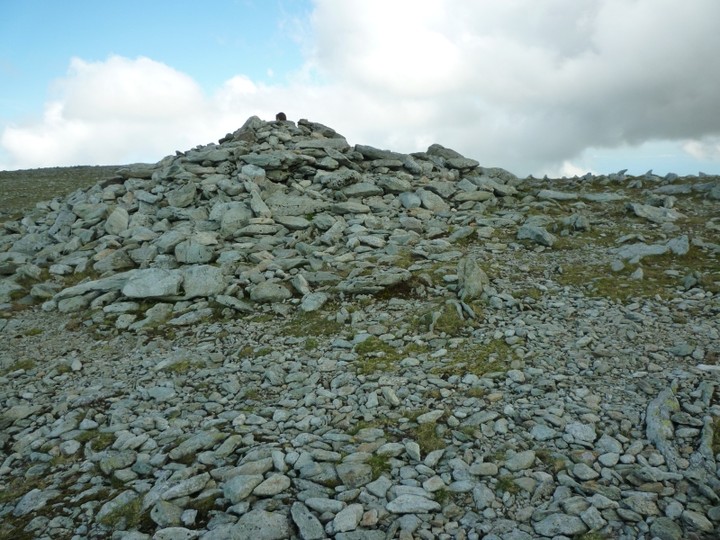
Carnedd Llewelyn is topped by a Bronze age cairn. It's about 8m in diameter and up to 1.5m in height, according to Coflein, and the county boundary passes through it.According to local tradition, a giant named Rhitta, the terror of the surrounding country, clothed in a garment woven from the beards of the enemies he had slain, was formerly the sole inhabitant of Carnedd Llewelyn.p132 of 'Notes of Family Excursions in North Wales', by J. O. Halliwell, 1860. This is like Geoffrey of Monmouth's 12thC story: "[King Arthur] told them he had found none of so great strength, since he killed the giant Ritho, who had challenged him to fight, upon the mountain Aravius. This giant had made himself furs of the beards of kings he had killed, and had sent word to Arthur carefully to cut of his beardand send it to him; and then, out of respect to his pre-eminence over other kings, his beard should have the honour of the principal place. But if he refused to do it, he challenged him to a duel, with this offer, that the conqueror should have the furs, and also the beard of the vanquished for a trophy of his victory." (from Aaron Thompson's version, here: http://www.yorku.ca/inpar/geoffrey_thompson.pdf ) So maybe the cairn is the resting place of Ritho then? But if it's actually of Llewelyn the Great (Llywelyn ap Iorwerth), then that would be a fitting spot for him, too. |
 Posted by Rhiannon
24th July 2007ce Edited 24th July 2007ce |
Miscellaneous |
Add miscellaneous |
|
Coflein says this of Carnedd Llewelyn's cairn: 'Burial cairn, probably Bronze Age, in a prominent position on the summit of Carnedd Llewelyn. Stone built circular cairn, measuring c. 8m in diameter and up to 1.5m in height.' So, not the largest cairn you'll ever see - although no doubt it's suffered a lot over the years - but then again, being up here, it doesn't have to be, does it? |
Posted by GLADMAN 21st August 2010ce Edited 21st August 2010ce |
 Top of page