|
 Log in |
Register Log in |
Register
|

|
Eire
|


 91 discussion topics


 Show |
 |
|
|
Counties:
|
84 sites
County Carlow County |
2 posts
87 sites County Cavan County |
7 posts
142 sites County Clare County |
|
15 posts
433 sites County Cork County |
5 posts
85 sites County Donegal County |
5 posts
133 sites County Dublin County |
|
6 posts
64 sites County Galway County |
8 posts
141 sites County Kerry County |
1 post
68 sites County Kildare County |
|
43 sites
County Kilkenny County |
1 post
23 sites County Laois County |
1 post
68 sites County Leitrim County |
|
4 posts
143 sites County Limerick County |
15 sites
County Longford County |
2 posts
79 sites County Louth County |
|
107 sites
County Mayo County |
5 posts
194 sites County Meath County |
40 sites
County Monaghan County |
|
31 sites
County Offaly County |
45 sites
County Roscommon County |
3 posts
152 sites County Sligo County |
|
3 posts
193 sites County Tipperary County |
1 post
92 sites County Waterford County |
3 posts
57 sites County Westmeath County |
|
44 sites
County Wexford County |
220 sites
County Wicklow County |
News |
 Add news Add news |
From ringfort to ring road: The destruction of Ireland’s fairy fortsSome of these ancient mounds date back to 3000 BC, but many are buried under motorways Manchán Magan As our faith in fairies has receded in recent years, the fate of Ireland’s 32,000 remaining fairy forts has become increasingly perilous... continues... |
 Posted by ryaner
14th March 2021ce |

Why have thousands of archaeological sites ‘disappeared’?While the archaeologists have been busy finding new monuments of interest, the State has been busy facilitating their systematic removal Mon, Dec 9, 2019, 05:00 Mark Clinton According to the legal definition, there are five alternative criteria under which a monument qualifies as a national monument... continues... |
Posted by ryaner 11th December 2019ce |
Sixty Bronze Age bodies found on land owned by former Taoiseachhttps://www.independent.ie/irish-news/news/sixty-bodies-from-bronze-age-found-on-taoiseach-liam-cosgraves-former-land-37770727... continues... |
 Posted by tjj
31st January 2019ce |
History of Ireland in 100 0bjects on postage stampshttp://100objects.ie/stamps/ An Post’s Ninth Definitive Stamp Series, A History of Ireland in 100 Objects, a selection, began life as an original series by Fintan O’Toole of The Irish Times... continues... |
Posted by tjj 28th May 2018ce Edited 28th May 2018ce |
Bear bone discovery pushes back date of human existence in Ireland by 2,500 yearsScientists were astounded when tests showed the fragment, from a butchered brown bear, confirmed that humans were active in Ireland 2,500 years earlier than previously suspected... continues... |
Posted by ryaner 22nd March 2016ce |
Ancient remains found in Midlands bogAn ancient bog body has been discovered at a midland bog where a similar find was made two years ago. The remains were found by a Bord na Móna worker at Rossan Bog on the Meath/Westmeath border on Saturday morning... continues... |
Posted by ryaner 16th September 2014ce |
Review of Rewriting the (Pre) history of Ulster - Dr Rowan McLaughlinThis is a write-up of a talk given by Dr Rowan McLaughlin regarding how the 4000+ developer produced RC dates since 2001 in Ireland basically rewrite whole swathes of how we perceive the prehistory of Ireland. http://rmchapple.blogspot.co... continues... |
 Posted by juamei
29th June 2014ce |
World's oldest bog body hints at violent pastCashel Man has had the weight of the world on his shoulders, quite literally, for 4,000 years. Compressed by the peat that has preserved his remains, he looks like a squashed, dark leather holdall... continues... |
Posted by ryaner 25th September 2013ce Edited 29th September 2013ce |
Co Laois bog body is world's oldestNew tests on the remains of a preserved body found in a Co Laois bog have revealed that it is the oldest bog body ever discovered in the world. The body was found by a Bord na Móna worker milling peat in 2011. It was initially believed that the remains were those of a young female which were around 2,500 years old... continues... |
Posted by ryaner 3rd August 2013ce |
Archaeologists warn against delisting of post-1700 historical structureshttp://www.irishtimes.com/newspaper/ireland/2011/0916/1224304193570... continues... |
 Posted by bogman
16th September 2011ce Edited 16th September 2011ce |
|
Stone Circles This quarter's 'Archaeology Ireland' has a three page feature on Stone Circles, by Muiris O'Sullivan and Liam Downey. "The architecture and orientation of stone circles were inherently symbolic, reflecting in a fundamental way a sense of spirituality and belief in the otherworld..." So there you are. |
 Posted by gjrk
15th March 2011ce |
Newbuildings time team to excavate ancient RathLondonderry Sentinel By Olga Bradshaw - 21st January 2009 MEMBERS of Newbuildings and District Archaeological and Historical Society are eagerly awaiting the results of a new survey scheduled to take place this week, to discover what lies beneath a rath which has been discovered in the village... continues... |
 Posted by moss
22nd January 2009ce |
Grassy mounds our earliest breweries, claim archaeologistsby Sarah Stack (Irish Examiner 11 August 2007) 'Bronze age Irish men were as fond of their beer as their 21st century counterparts, it was claimed yesterday. Two Galway archaeologists have put forward a theory that one of the most common ancient monuments around Ireland may have been used for brewing ale... continues... |
Posted by gjrk 13th August 2007ce Edited 30th September 2008ce |
|
Ireland not ruled out as Atlantis by museum Contrary to press reports in August, the National Museum of Ireland did not rule out that Ireland could have been Atlantis (Full text). The previous reports were apparently the result of quoting out of context. There is a new website for the theory now, AtlantisInIreland.com, which includes a blog and an invitation to a real time debate. |
Posted by odysseus 11th December 2004ce Edited 13th December 2004ce |
Irish Times: Historic sites Bill likely to face legal challengeDaniel McConnell The Irish Times 17 June 2004 Opponents of newly-published legislation, which will give the Government power to proceed with road projects which interfere with national monuments after archaeological works are carried out, have threatened to challenge the legislation in the courts... continues... |
Posted by otuathail3 19th June 2004ce Edited 22nd June 2004ce |
Irish Independent: 'Ill-conceived' bill threatens heritage sitesIrish Independent 17.06.04 Save Tara! IMPORTANT archaeological sites, including Ireland's oldest Viking settlement, will be threatened if the Government's proposed amendment to the National Monuments Bill is passed, heritage activists said yesterday... continues... |
Posted by otuathail3 19th June 2004ce Edited 12th April 2006ce |
Irish Examiner: Cullen 'failing to protect heritage sites'Irish Examiner 17/06/04 By Jim Morahan HERITAGE groups yesterday accused Environment Minister Martin Cullen of failing to protect national monuments... continues... |
Posted by otuathail3 19th June 2004ce Edited 22nd June 2004ce |
Labour describes Monuments Bill as 'official vandalism'TaraWatch Irish Times Marie O'Halloran 18.06.04 A Bill to allow for the completion of the M50 motorway at Carrickmines will legalise "official vandalism" of national monuments, the Labour Party's environment spokesman has claimed... continues... |
Posted by otuathail3 19th June 2004ce Edited 12th April 2006ce |
Monuments Bill 'legal vandalism' claims LabourMonuments Bill 'legal vandalism' claims Labour Irish Independent 18.06.04 continues... |
Posted by otuathail3 19th June 2004ce Edited 12th April 2006ce |
Folklore |
Add folklore |
|
With the steamy hot weather over with for the time being and the rainy season upon us once more, I found myself indoors, taking strange turns on YouTube and I finally arrived here. https://youtu.be/FIrYD7djFH8 Passage graves were "aerial bombardment shelters for the Telepaths", while souterrains were blast shelters for the lower orders. All the other members of Ben McBrady's secret ancient order of Ancient Druids are dead, so only Ben McBrady can pass on the real history of Ireland. Apologies if this has been posted before... but I had never seen this treasure before. 50 minutes of your time... Unmissable! |
 Posted by Howburn Digger
8th August 2019ce |

|
Old traditions, crumbling with time.. I suspect that this news comes in defence of folklore which in turn preserves the archaeological monuments by superstition or 'piseogs' to use the rather lovely Irish word......... Superstitions may seem strange and baseless, but somehow they have clung on for thousands of years. Are they a sign of respect for the past and if so just how much longer might they last? WHEN I WAS growing up, there was a ring fort at the end of our road. We were warned not to play there. It was accepted that fairy forts contained some mystique or potential for harm. Our parents were probably told the same by their parents, and so on through the generations. But has belief in science and technology replaced faith in superstitions? Perhaps not. Dara Molloy, a former Roman Catholic priest based on Inis Mór, is in demand to perform Celtic rituals and blessings. When we spoke last week, he was at a wedding ceremony in which he used blessings dating from what he terms "Celtic Christianity". It involves the tying of knots and sprinkling of water from a nearby well. These practices predate the Roman Catholic Church, he says, and are more in keeping with old Irish customs and beliefs. "We held on to a lot of traditions but they were pushed to the margins of the church," he says. "People still visit holy wells, climb Croagh Patrick or go to Lough Derg, but many other Irish customs and traditions didn't carry on and some local priests were instrumental in encouraging them to be abandoned." Molloy says when he first moved to the Aran Islands 25 years ago, he was struck by the reverence the locals had for ancient sites and monuments. "Neighbours of mine on Inis Mór who were born and raised on the island had never been up to the hill fort of Dún Aengus," he says. "One of the reasons given was that their parents wouldn't let them. They said the place was lived in by the sióga or other world folk. Nowadays some young locals want to have their weddings up there because they believe the energy of the sióga is there. The belief hasn't been lost. It is just used differently. I have witnessed young adults who want to go to Dún Aengus and sleep there overnight to get the feeling that is up there." That feeling may relate to the fact the site has been used by locals for centuries as a place of gathering or safety. Piseogs [superstitions] are still heeded on the islands too, says Molloy. That is why a red-haired woman who turns up at a door on New Year's Eve is unlikely to be shown indoors. "It would be a bad omen for the coming years," he says. Colm Moloney, managing director of Headland Archaeology, says much has been lost in recent years in relation to Irish folklore. "My own childhood revolved around my dad, who spent a lot of his time walking his greyhounds (and his children) around the landscape of east Cork. Every hill, river, nook and cranny had a story attached to it and he told them so well it was captivating," he says. "Modern Ireland does not readily facilitate this kind of activity. Landowners have a problem with people wandering across their land and kids have so much to distract them, it is near impossible to get them outside." Moloney says much of our folklore is in danger in the hands of the current generation. "The Irish psyche has changed. The respect that was there for the past is losing ground. Our knowledge and links to the past through oral traditions were what made us unique." There have been reports recently that a farmer destroyed a ring fort in Co Cork. This would not have occurred a decade ago, he says. Folklore often existed to protect the built heritage and vice versa. "Every country boy knew the traditions associated with ring forts," he says. "If you touched the fairy forts something very bad would happen to you. This tradition and similar kinds of piseog resulted in the preservation of archaeological monuments across the country, probably for thousands of years. "This is a frightening development, where 30 sq m of farmland is of greater value than a monument that may have stood on that spot for 1,200 years." EMILY ROSS http://www.irishtimes.com/newspaper/features/2011/0104/1224286698278.html |
Posted by moss 4th January 2011ce Edited 4th January 2011ce |
The Fairy MusicTHE evil influence of the fairy glance does not kill, but it throws the object into a death-like trance, in which the real body is carried off to some fairy mansion, while a log of wood, or some ugly, deformed creature is left in its place, clothed with the shadow of the stolen form. Ancient Legends, Mystic Charms, and Superstitions of Ireland By Lady Francesca Speranza Wilde A huge collection of folklore and folk-magic from Oscar Wildes' mother. View online at Google Books, Sacred-texts Com, or download this collection for your iPhone or iPod. |
 Posted by Chance
19th July 2010ce |
Links |
Add a link |
Ogham StonesNew Publication: Before people in Ireland started writing in manuscripts made of vellum they wrote on other materials, primarily stone, in a writing system called ogham. Our earliest ogham inscriptions on stone are dated on linguistic grounds to between the 4th and the 7th century AD. Over 400 known examples of ogham stones and fragments of various shapes and sizes have survived, each with their own unique biography or story. The publication explores the writing form; where it can be found; and how we can #PassItOn to future generations. |
Posted by ryaner 30th November 2021ce |

The Heritage Council - Prehistoric Rock Art in IrelandIrish rock art is the subject of a new, richly illustrated booklet published by the Heritage Council. Written by archaeologist, Clare Busher O’Sullivan, ‘Rock Art’ explores the art form; where it can be found; what it means; and how it can be protected. |
Posted by ryaner 22nd November 2020ce Edited 22nd November 2020ce |
Irish National Folklore Collection[T]he National Folklore Collection UCD, [is] an institute recognised as one of Europe’s largest archives of oral tradition and cultural history. Visitors to the Collection are invited to explore a large selection of books, manuscripts, audio recordings, videos and photographs, drawings and paintings dealing with Irish life, folk history and culture. |
Posted by ryaner 6th December 2017ce |
Voices from the DawnThe folklore of Ireland's ancient monuments |
Posted by ryaner 13th August 2012ce |
Megalithic Monuments of Ireland.comsite index |
 Posted by wideford
25th June 2011ce |
Megalithomania"Megalithomania is the story of one man's journey across 10 years (and counting) around the stones of Ireland. Tom Fourwinds' site is a catalogue of over 2200 sites, containing more than 10,000 photographs of Irish sites, and is a testament to his stamina and zeal." Alan S. http://heritageaction.wordpress.com/2011/03/28/web-focus-on-megalithomania/ |
 Posted by Littlestone
28th March 2011ce Edited 9th June 2011ce |
Ordnance Survey IrelandMap viewer for Ireland - there are historical maps too. |
 Posted by Rhiannon
15th September 2010ce Edited 15th September 2010ce |
Newgrange, Boyne Valley, IrelandNewgrange with Knowth and Dowth are the major sites of the Boyne Valley World Heritage Site. Images and information on Newgrange itself with visitor and tour information. |
 Posted by knowth
16th June 2010ce |
A Road on the Long RidgeA Road on the Long Ridge - In search of an Ancient Highway on the Eiscar Riada by Hermann Geissel. This is a free pdf book based on the TG4 program about a journey on the Eiscar Riada or Sli Mor from Dublin to Galway. It is a great read and he also proposes that Early Christain sites were constructed beside the road for access etc. It could also be argued that perhaps some of these were based on early prehistoric sites and therefore sites were located near the road. It also has a section on Croghan Hill and it mentions the alignment of the Hill of Uisneach - Croghan Hill on Winter Solstice Sunrise. |
 Posted by bawn79
19th June 2007ce Edited 19th June 2007ce |
British ArchaeologyArticle from November/December 2005: "Ireland's road network is experiencing an astonishing development, with sometimes controversial implications for the country's rich and largely unexplored rural heritage. Dàire O'Rourke, senior archaeologist at the National Roads Authority, says a new code means everyone will benefit." |
Posted by Rhiannon 3rd February 2006ce Edited 3rd February 2006ce |
Megalithic Ireland as the inspiration for Plato's AtlantisNews and discussion about the book Atlantis from a Geographer's Perspective: Mapping the Fairy Land, by Ulf Erlingsson. A short video presents some of the intriguing details from the book. The author considers that Plato's Atlantis was a utopia, but shows that with a probability of over 99.98%, Plato based the description of Atlantis' geography on Ireland. |
Posted by odysseus 18th February 2005ce Edited 19th February 2005ce |
Mythical Ireland - new light on the ancient pastAn exploration of Newgrange, Knowth, Dowth, Tara, Loughcrew and other ancient sites of Ireland in the context of art, astronomy, mythology and archaeology. |
Posted by mythicalireland 19th March 2004ce Edited 29th September 2004ce |
Mythical IrelandSpirals, lozenges and concentric circles in one of the world's hubs of megalithic art. Knowth, Dowth, Newgrange and Fourknocks sun-lit in their full glory! |
Posted by Annexus Quam 10th March 2001ce Edited 20th May 2005ce |
Latest posts for Eire |
Showing 1-10 of 13,967 posts. Most recent first | Next 10 
Slievecorragh (Cairn(s)) — Miscellaneous |
|
From 'Volpaire' on Google Maps Dan Clancy was a local man who grew up on Slievecorragh and often walked its slopes with his family. Dan and his many siblings spent many happy childhood days there, and often went up in the evening to watch the sun set. Clancy later emigrated to New York, where he was diagnosed with terminal cancer. He passed away in 2004 at the young age of 31. Following his death, his brother Andrew – a sculptor – created the chair as a memorial to Dan. Andrew Clancy, is said to have based it on one in the family kitchen. There are many teddy bears left on the chair by hikers and those wishing to commemorate him. The ring on the chair and the original teddy bear were donated by Clancy’s partner in New York. |
Posted by ryaner 19th April 2024ce |
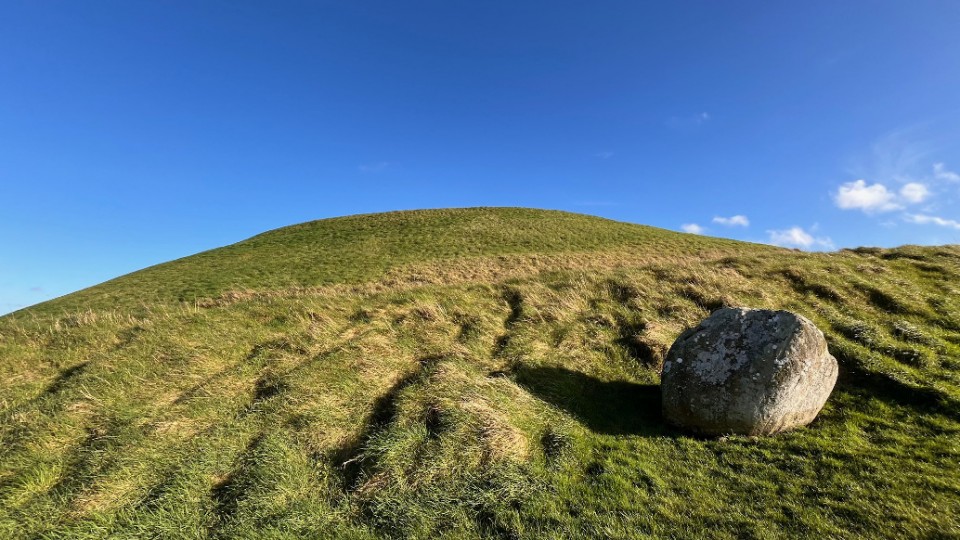
The Great Circle (Stone Circle) — Images (click to view fullsize) |
|
Posted by ryaner 23rd February 2024ce |
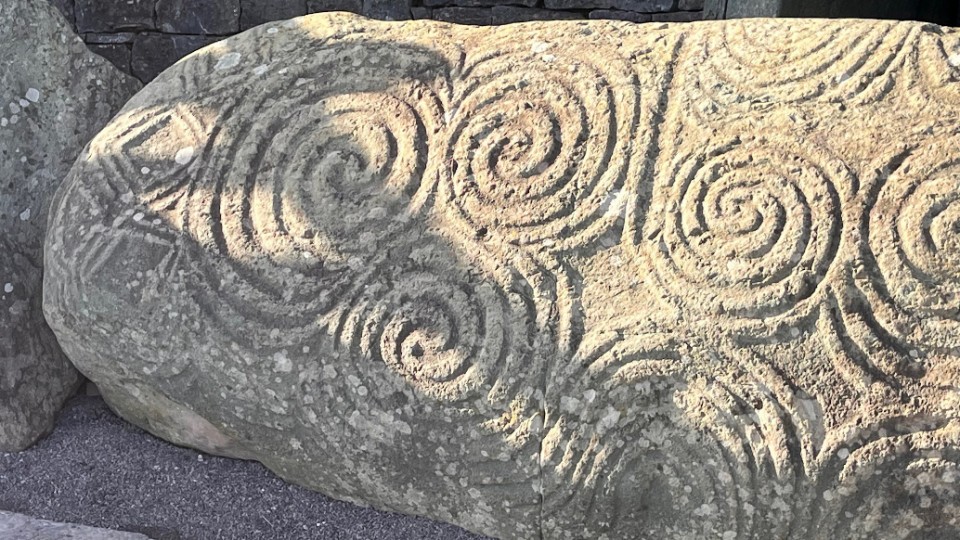
Newgrange (Passage Grave) — Images |
|
Posted by ryaner 23rd February 2024ce |
County Kerry — News |
Remains of ‘lost’ bronze age tomb discovered in County Kerry in IrelandAltóir na Gréine stood for approximately 4,000 years on Dingle peninsula before vanishing in 19th century. More info : https://www.theguardian.com/world/2024/jan/18/bronze-age-tomb-discovered-county-kerry-ireland |
 Posted by drewbhoy
19th January 2024ce |
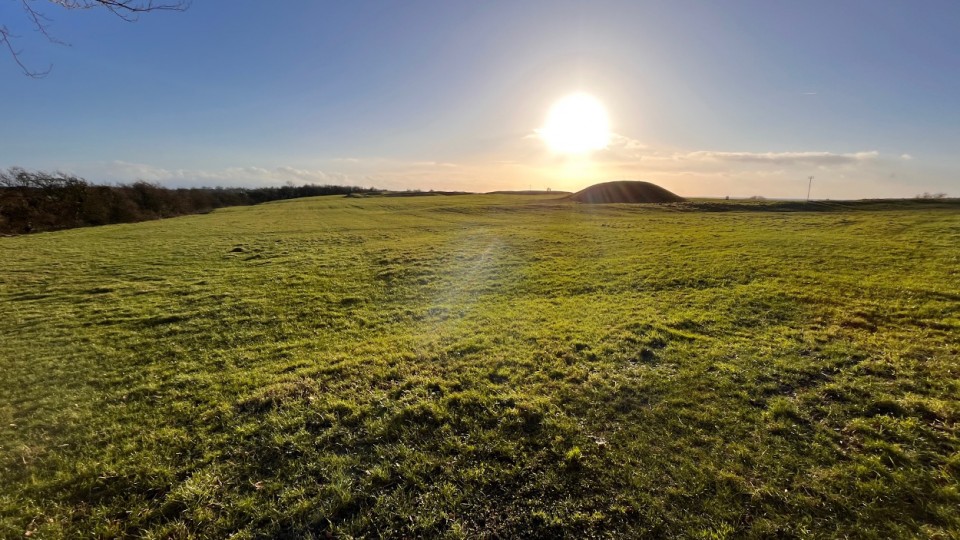
The Mound of Hostages (Passage Grave) — Images |
|
Posted by ryaner 29th December 2023ce |
Carrowkeel-Keshcorran Complex — News |
Heartbreaking' damage done to Neolithic passage tombDamage done to an ancient Neolithic passage tomb in Co Sligo has been strongly condemned. Photographer Ken Williams visited the site over the weekend and took photographs of words and shapes scratched into stones at the tomb which is over 5,000 years old. More: https://www.rte.ie/news/regional/2023/1016/1411157-carrowkeel-graffiti/ |
Posted by ryaner 16th October 2023ce |
Drumnigh (Artificial Mound) — Images |
  
|
Posted by ryaner 30th September 2023ce |
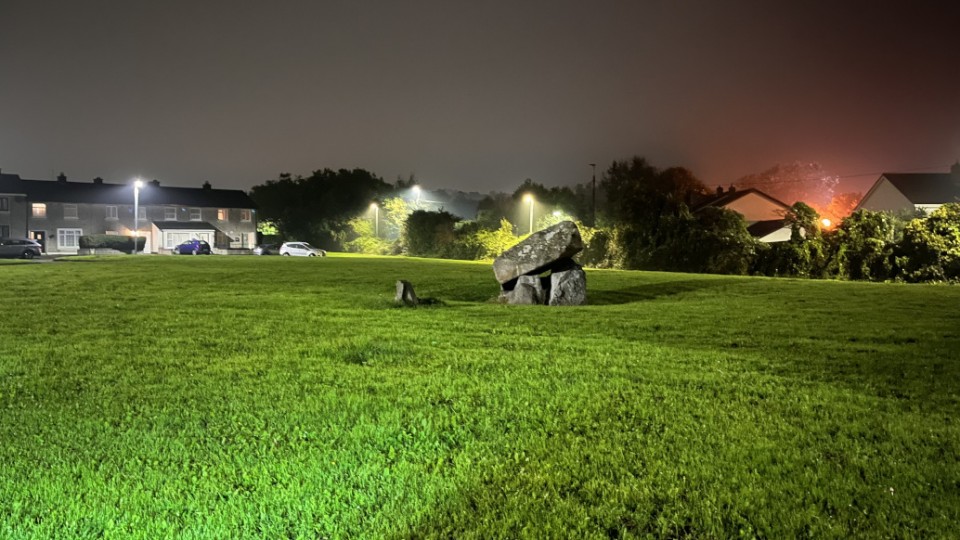
Ballybrack (Dolmen / Quoit / Cromlech) — Images |
|
Posted by ryaner 18th September 2023ce |
Showing 1-10 of 13,967 posts. Most recent first | Next 10
 Top of page