This site is of disputed antiquity. If you have any information that could help clarify this site's authenticity, please post below or leave a post in the forum.
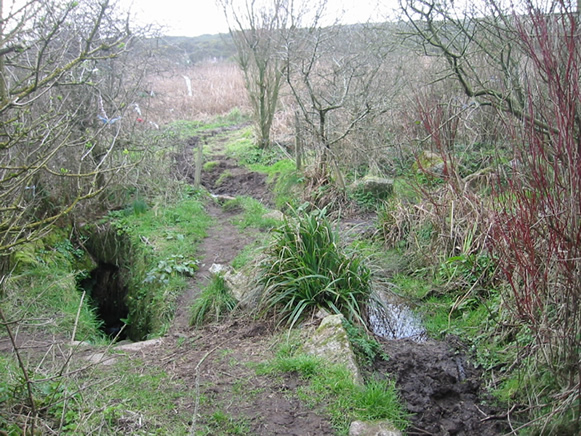
Reached by taking an overgrown track leading westward onto Tredinney Common from the Iron Age settlement at Carn Euny near Brane, two miles west of Sancreed. As this path begins to widen, after about 100 yards, the well is immediately on the left.
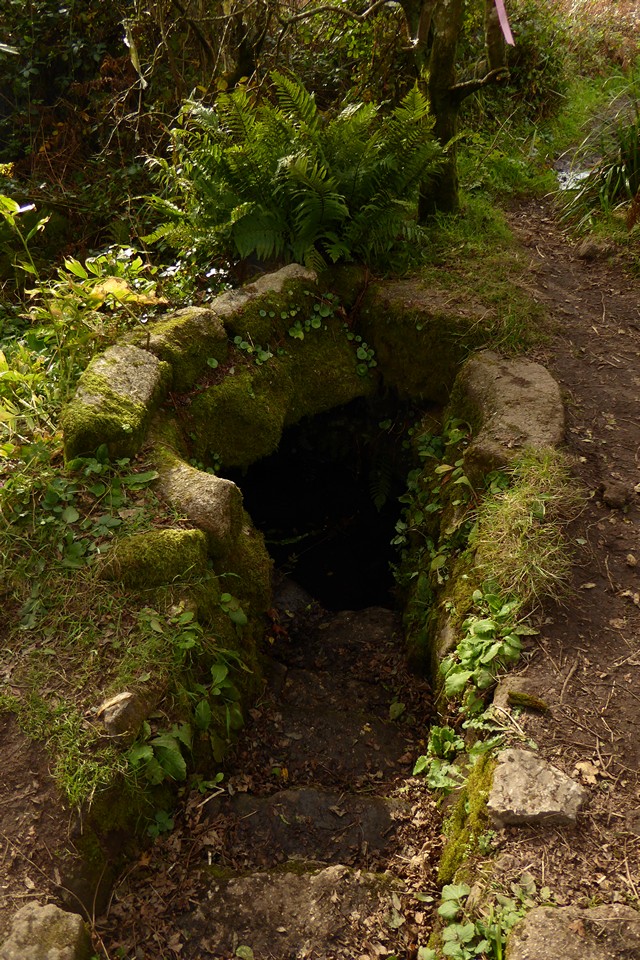
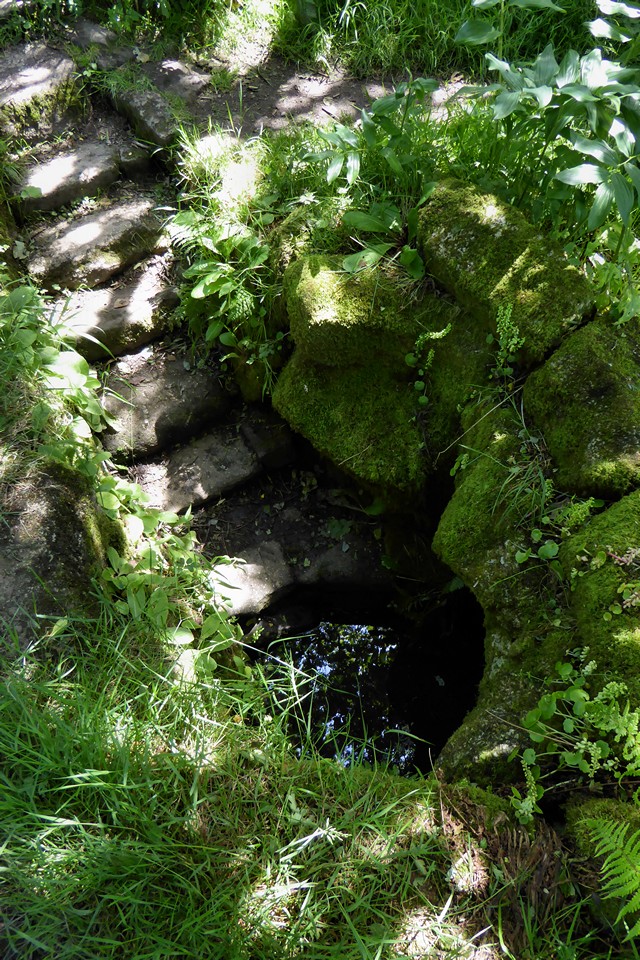
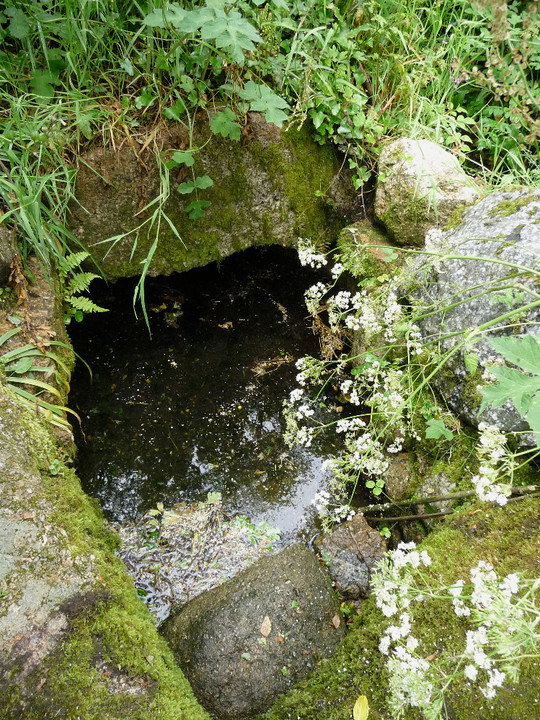
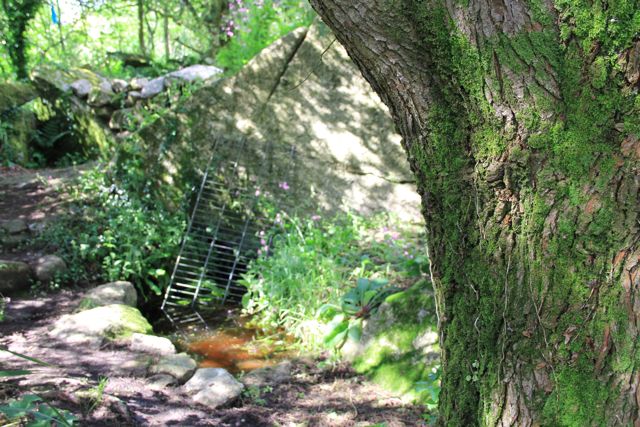
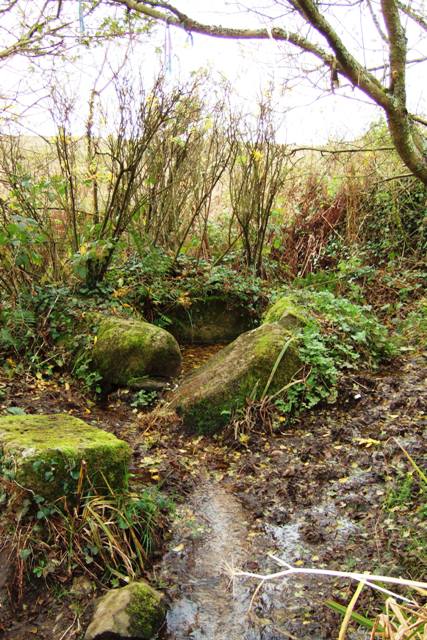
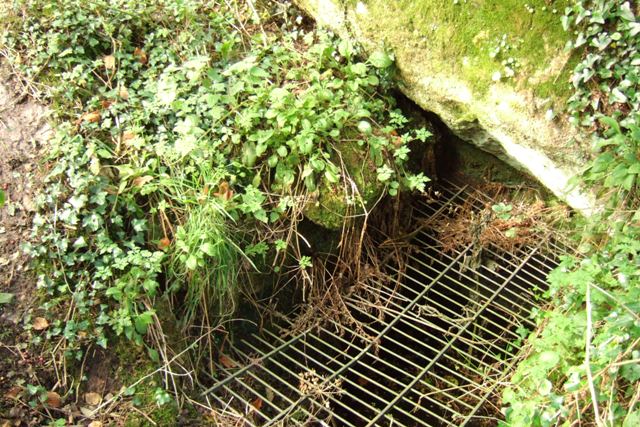
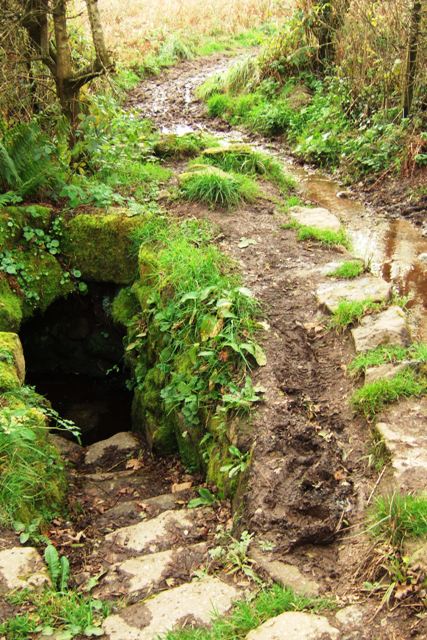
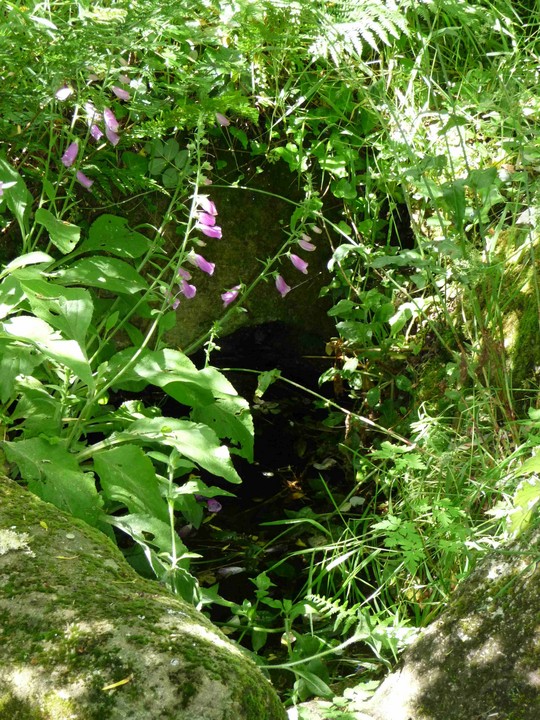
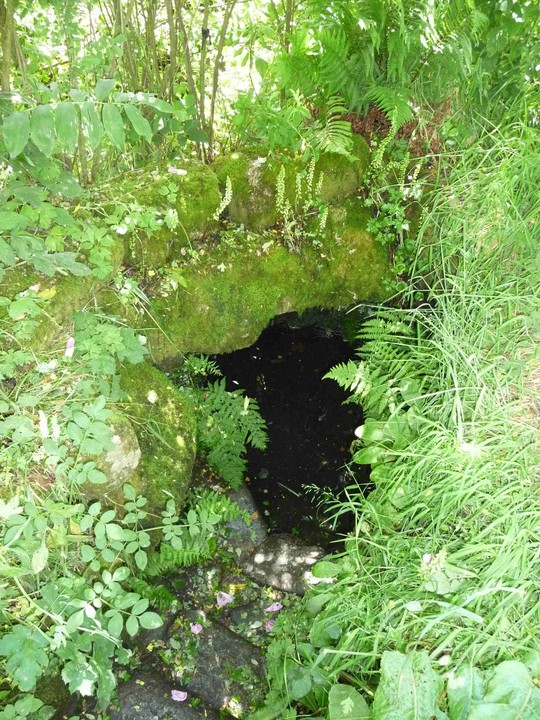
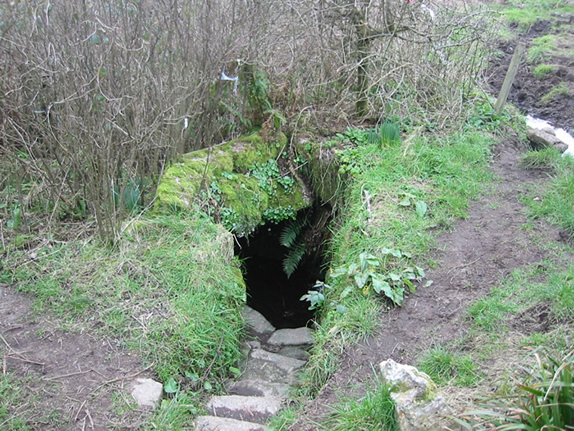
It consists of a flight of steps leading down to a clear spring in a stone lined recess with a large granite capstone.
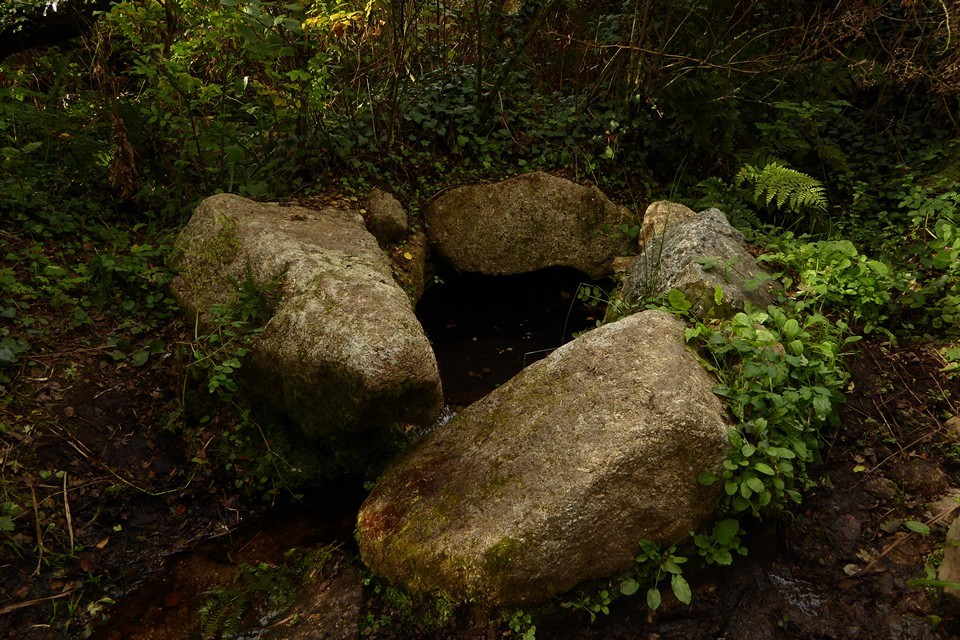
Another smaller well lined with four large granite slabs lies a few feet to the north west and carved stones from the chapel which once stood here may be seen in the surrounding undergrowth.
Services were held at the well chapel during the 18th century and the site has only been neglected since then. The stonework of the well is still in a good condition.
Hither, on the first Wednesday in May, are still annually brought crippled or maimed children. At that period a bath is formed in front of the well by stopping up the course of the little stream with pieces of turf. Each child is stripped, and then made to drop a pin into the well itself, previously to being immersed three times in the bath. My informant, a native of the parish, told me that he had hardly, if ever, known the process to fail in giving relief. He also told me that the well was sometimes called the Giant's Well, - a title that seems inconsistent with the attribution of such great virtues.
At Chapel Uny will be found a copious spring of as clear water as was ever seen. The only remains that can be identified, as having belonged to its ancient chapel, are a few dressed stones near the well. These, from their shape, would seem to have formed part of an arched door or window.
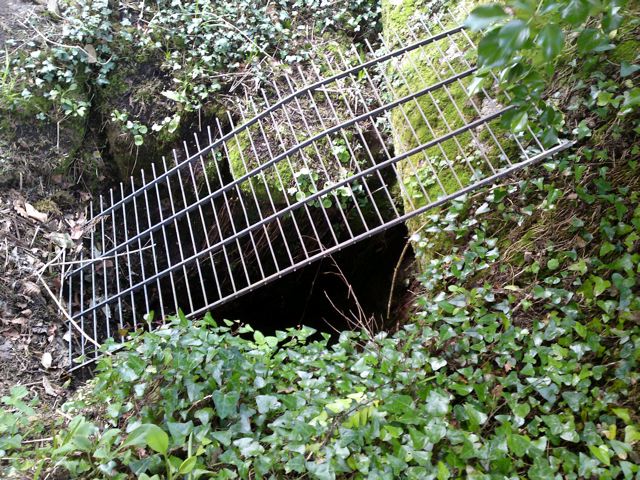
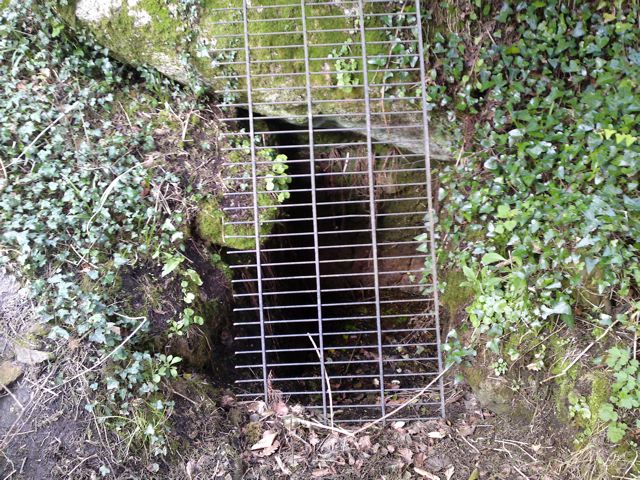
Near by there is also a large circular Fogou, or artificial cavern, walled on both sides and partly covered with long slabs of moorstone. The Holy Well is, hoever, the most celebrated object in this vicinity; a few years ago, it was resorted to on the first three Wednesdays in May by scores of persons who had great faith in the virtue of its waters, which were considered very efficacious for curing most diseases incidental to childhood, and many ricketty babes are still bathed there at the stated times when the spring is believed to possess the most healing powers.
Belonging to this well and its neighbourhood there is a somewhat curious story, which we will relate just as it has often been told us by old people of the West Country.
"This famous well is in the parish of Sancreed, not far from the Land's End. The water wells forth, but the building which once covered it is demolished. Dr Borlase says (Nat. Hist. of Cornwall, p.31. Date AD 1757) that 'as a witness of its having done remarkable cures, it has a chapel adjoining to it, dedicated to St. Eunius, the ruins of which, consisting of much carved stone, bespeak it to have been formerly of no little note. The water has the reputation of drying humours as well as healing wounds.'
He adds that, 'the common people (of this as well as other countries) will not be content to attribute the benefit they receive to ordinary means; there must be something marvellous in all their cures. I happened, luckily, to be at this well upon the last day of the year, on which, according to vulgar opinion, it exerts its principal and most salutary powers. Two women were here who came from a neighbouring parish, and were busily employed in bathing a child. They both assured me that people who had a mind to receive any benefit from St. Euny's well, must come and wash upon the first three Wednesdays in May. But to leave folly to its own delusion, it is certainly very gracious in Providence to distribute a remedy for so many disorders in a quality so universally found as cold is in every unmixed well water.'
Dr. Paris describes it as it was some sixty years ago. The ruins of a chapel or baptistery were observable near, and the water of the well was then supposed to posess many miraculous virtues, especially in infantile mesenteric disease. They were dipped on the three first Wednesdays in May, and drawn through the pool three times against the sun and three times on the surrounding grass in the same direction. (Guide to Mount's Bay, etc. p.82).
This well, according to this distinguished physician and chemist, like Madron, does not contain any mineral impregnation, but must derive its force and virtue from the tonic effects of cold, and from the firm faith of the devotees. The credulous still go here to devine the future in the appearance of the bubbles which a pin or pebble sends up.
'Two or three carved stones are all that remain of the old structure; and at the stated times when the well is sought for divination and cure, a bath is formed by impounding the water by turves cut from the surrounding moor. The country people know it as the Giant's Well.' -- T.Q.C.
Now it is simply an open spring, all remains of the building are gone, and the site obliterated. The water is not used for any special purpose, and the well is only remembered for its past importance.
From 'Ancient and Holy Wells of Cornwall' by M and L Quiller-Couch (1894).
Spriggans from nearby Bartinney Downs substitute a child with one of their own? Or just plain child abuse. Make your mind up with the song at http://www.sacred-texts.com/neu/eng/prwe/prwe033.htm
Hunt's 'Popular Romances of the West of England' (1886).
Here's an extract that mentions the ritual at the well which Janey attempts to get rid of the changeling.
On the three first Wednesdays in flow'ry May
She plunged it deep at the dawn of day--
Pass'd it slowly three times against the sun,
Went three times round,--and when all was clone,
The imp of a child roar'd aloud for fun.
No tongue can tell
The trouble it gave her
To dip the shaver,
And work the spell.
 Log in |
Register
Log in |
Register


 0 discussions


 Show map (inline Google Map)
 Add an image
 Posted by Rhiannon
 Top of page