|
 Log in |
Register Log in |
Register
|

|
|

Lambourn SevenbarrowsBarrow / Cairn Cemetery
|


 Show map (inline Google Map)
|
|
|
Images (click to view fullsize) |
 Add an image Add an image |
Photographs: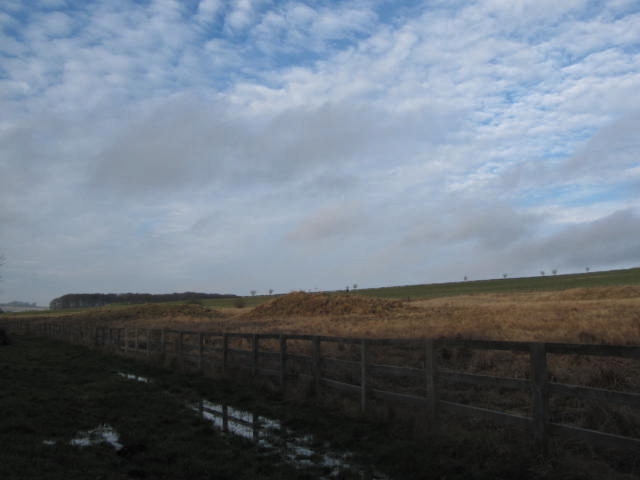
 Maps / Plans / Diagrams: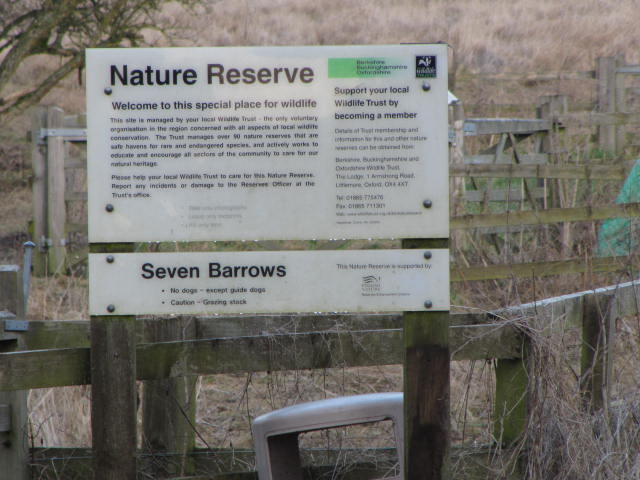
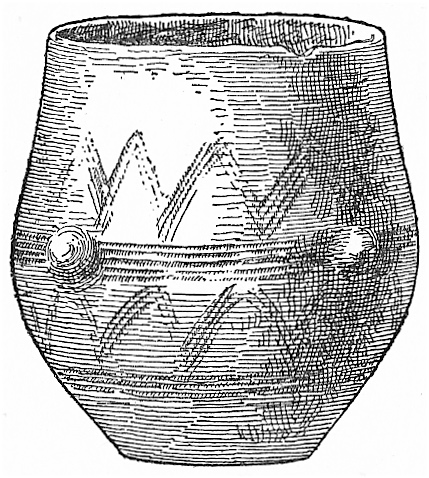
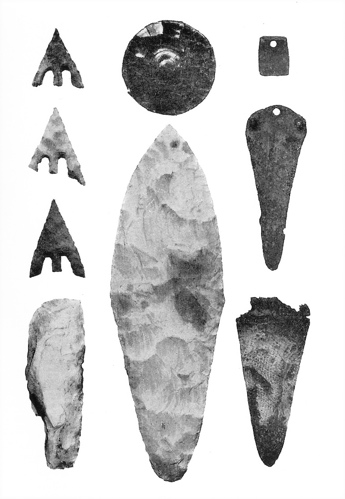
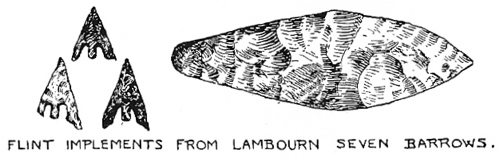 Artistic / Interpretive: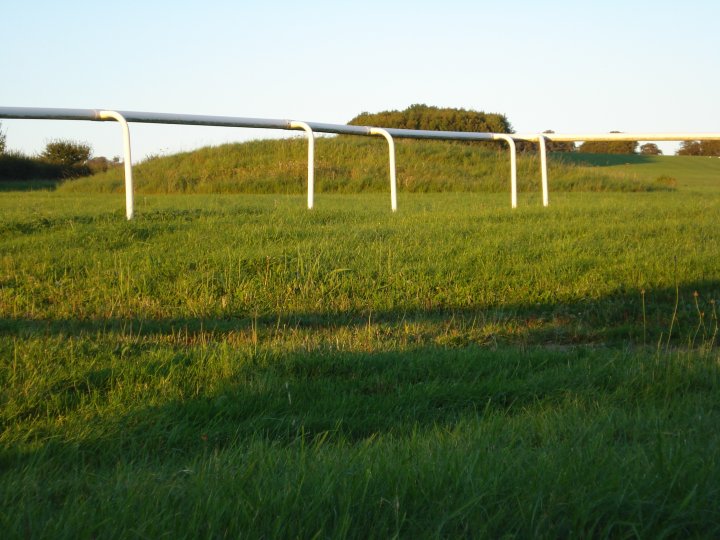
|
Fieldnotes |
Add fieldnotes |
|
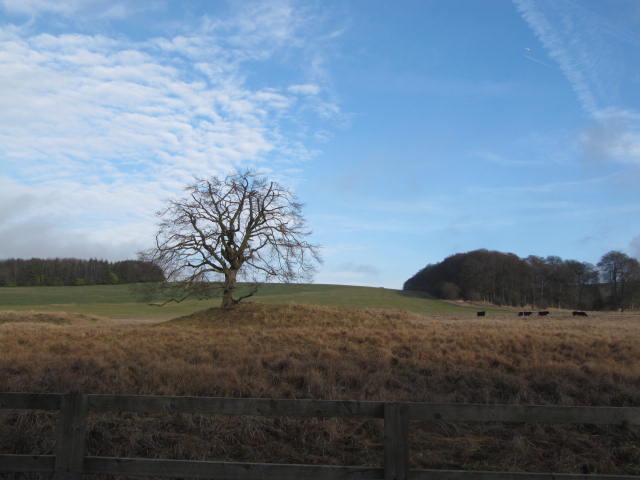
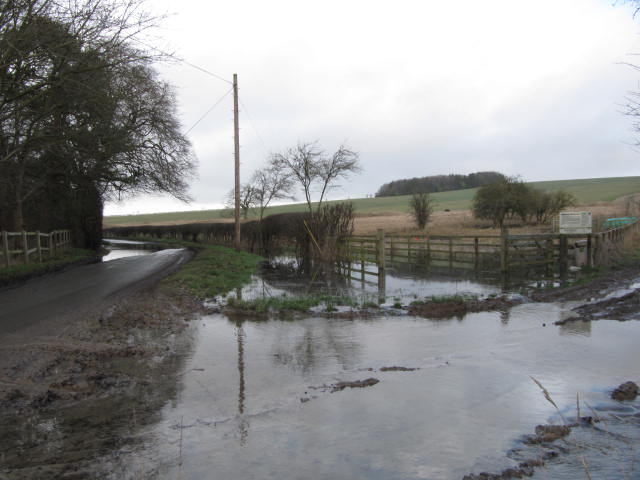
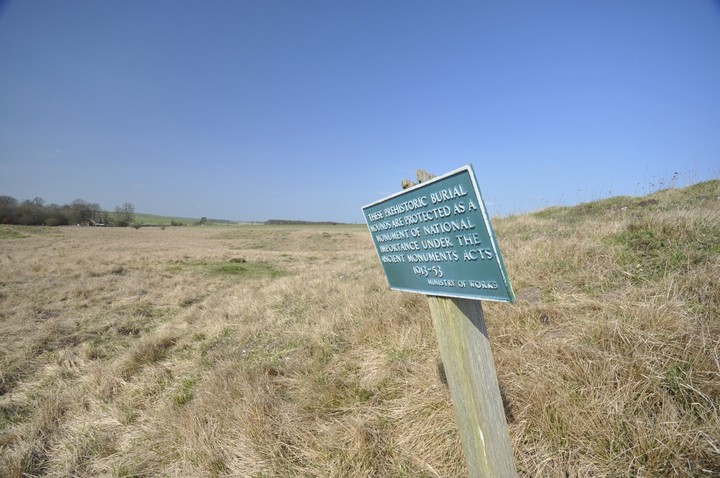
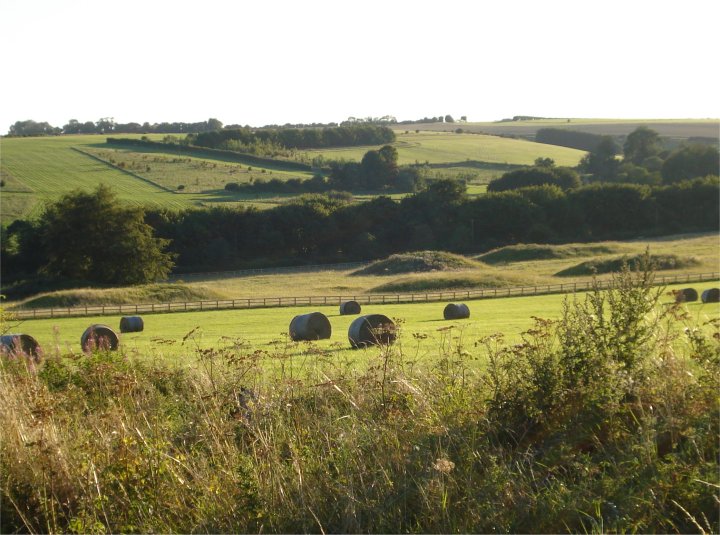
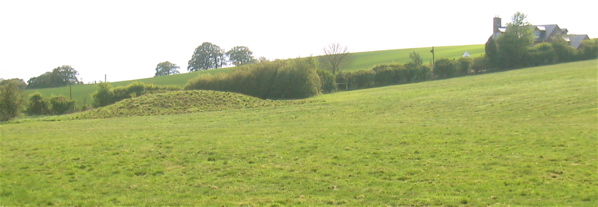
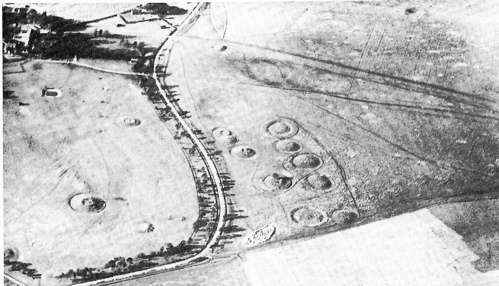
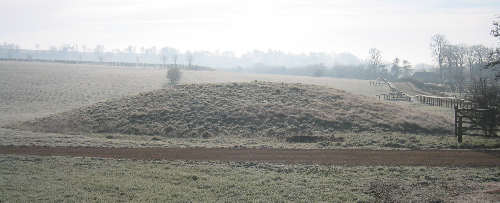
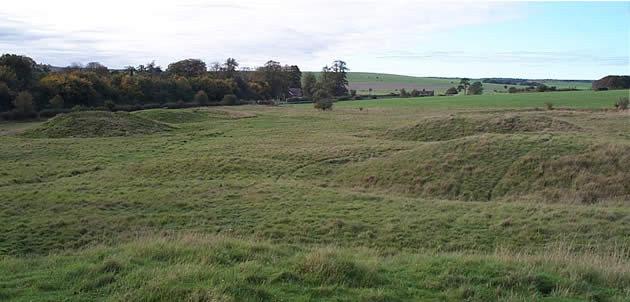
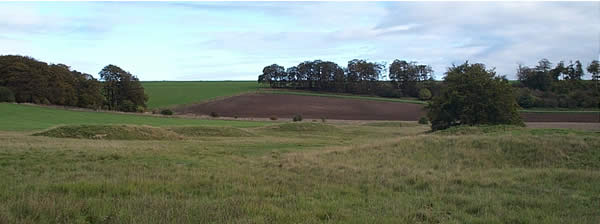
Today, with an interlude of winter sun for about an hour. A circular (triangular) walk from Upper Lambourn using OS map 170. Set off late morning along a surprisingly unmuddy byway as far as Postdown’s Farm from where we had to do some road walking. Clear signs of recent flooding, the adjacent fields were lake-like in places – we passed a couple of large round barrows on our left as we walked towards Seven Barrows Nature Reserve. The road was badly flooded by the entrance to the nature reserve and the entrance impassable on foot without wellies, fast flowing water running off into a nearby field (must be springs around here to cause to the water to flow such). We managed to jump across a water filled ditch and scramble under some blackthorn hedging to get a better look at the seven (possibly eight) barrows. The landscape is astonishing – apparently 26 barrows in all dating back to 2200BC. We didn’t actually count the ones we saw besides the seven in the nature reserve but there were several. The sense of walking through an important Bronze Age cemetery was tangible. We continued on foot along the road past Seven Barrows House and took the track towards Uffington to look for the long barrow shown on the OS map. Not much left and it would be easy to walk past if you didn’t know it was there as absorbed into a beech plantation – two fine stones remain though. Picked up another muddy byway back to Upper Lambourn and happily came across the Hangman’s Stone just before the track back down to the village. A small standing stone approximately a metre high – probably a boundary stone. |
 Posted by tjj
6th January 2013ce |

|
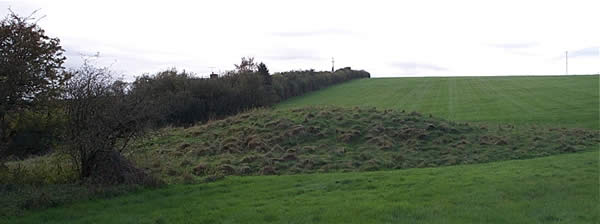
'Drive by' visit 13.11.11 On an unseasonably warm and sunny November afternoon it was a pleasant drive past the famous Barrows and with the summer vegetation now low the Barrows stood out even more than ever. Yellow / brown islands in a sea of lush green. It is often the case with Barrows that they are best viewed from afar rather than close up. If I had had time I would have liked to have stopped but with Karen not feeling very well I had to settle for a 'drive by' view. Still, it was a very pleasant sight. |
Posted by CARL 15th November 2011ce |
|
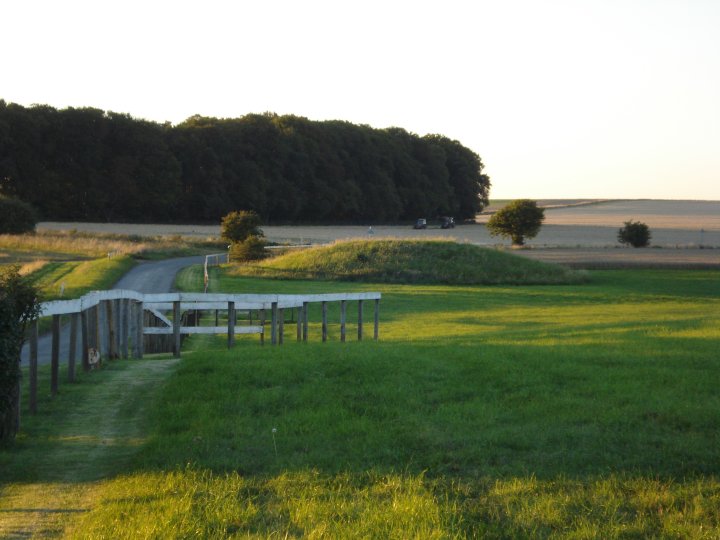
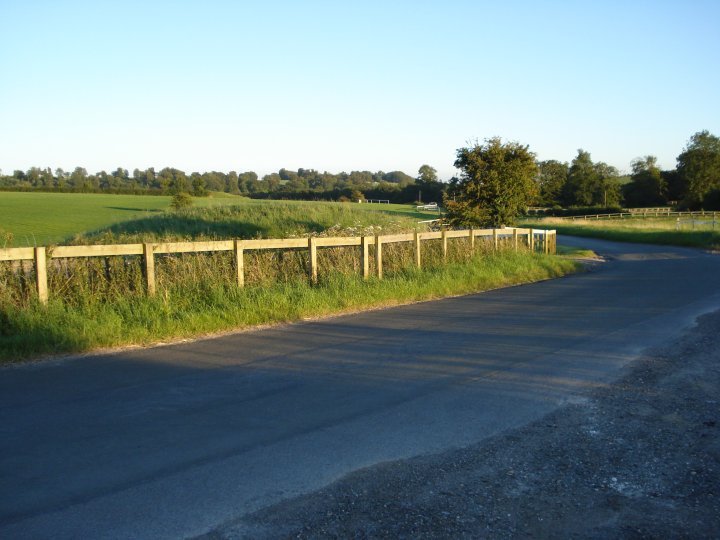
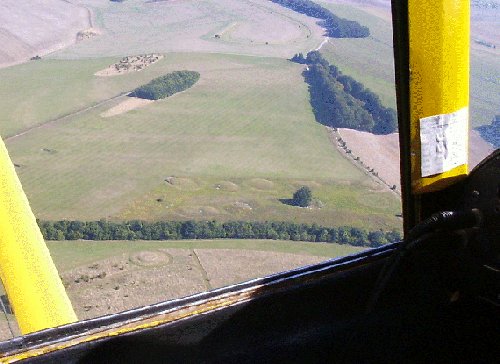
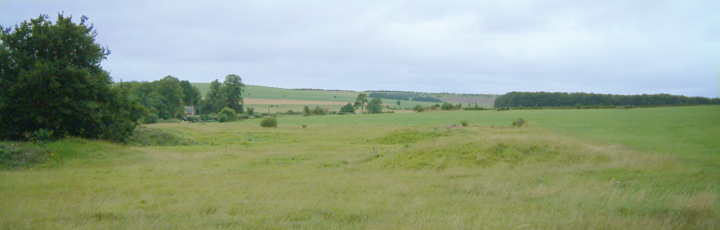
Visited 31.7.10. This is one of those sites I have been meaning to visit for the last couple of years and have at last finally succeeded. Very easy to find, signposted from Lambourn village. I turned into the small track signposted 'nature reserve' and parked at the small parking area. The barrows are now right next to you in a fenced field / nature reserve which is accessed through a gate. The grass was high but the barrows were easily identified. I am sure they would look even more pronounced during the winter months. To have a better view of the barrows I walked up the track leading up the hill to the woods. From here you had a bit of a 'birds eye' view of the barrows - barrows often look better from afar rather than up close. This is a great place to visit and reminded me of the various barrow cemeteries you see around the Avebury / Stonehenge area. Well worth a visit and very, very easy to access. |
Posted by CARL 3rd August 2010ce |
|
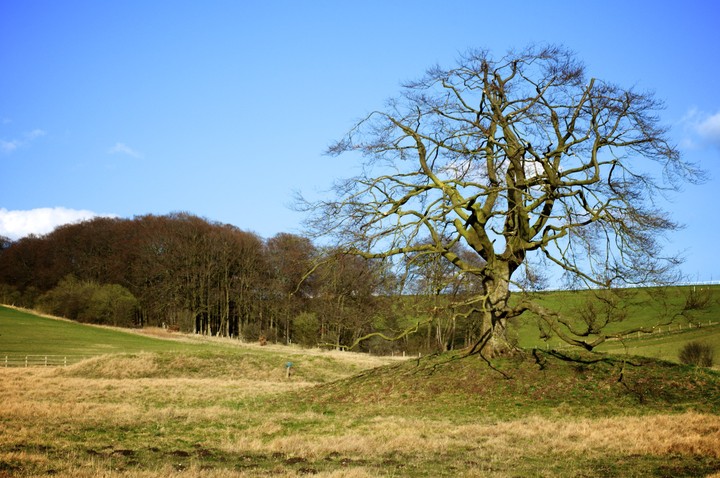
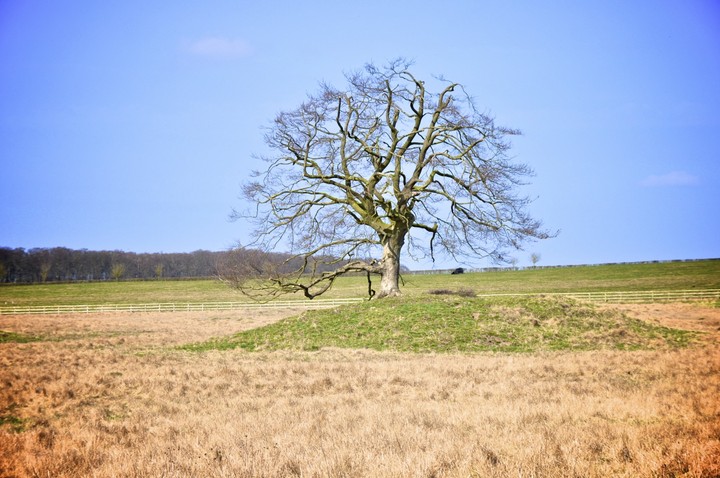
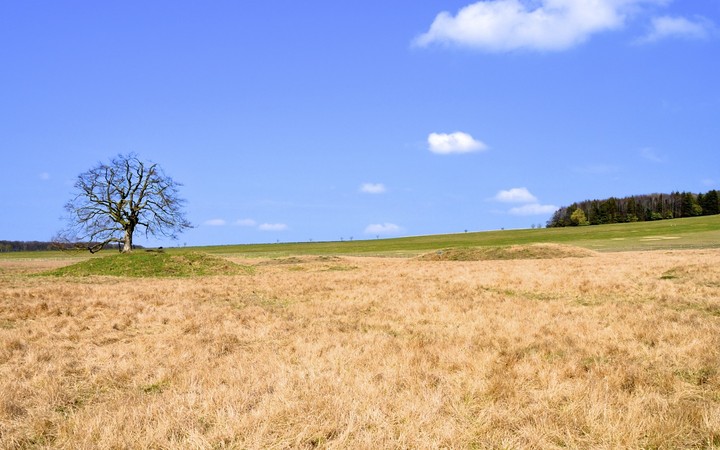
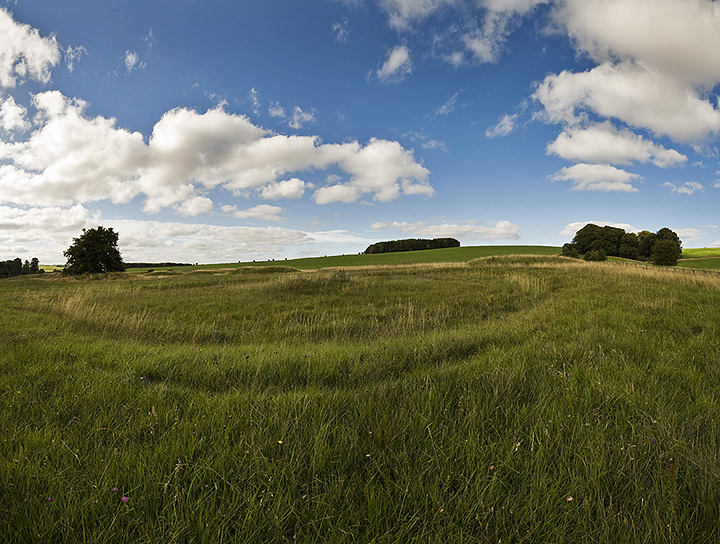
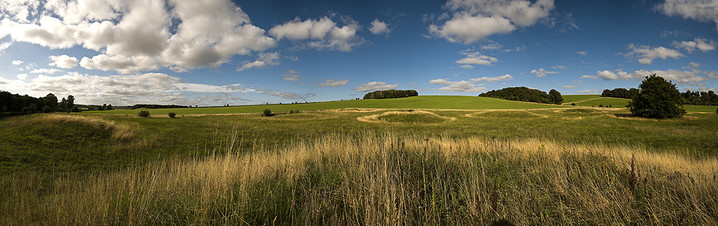
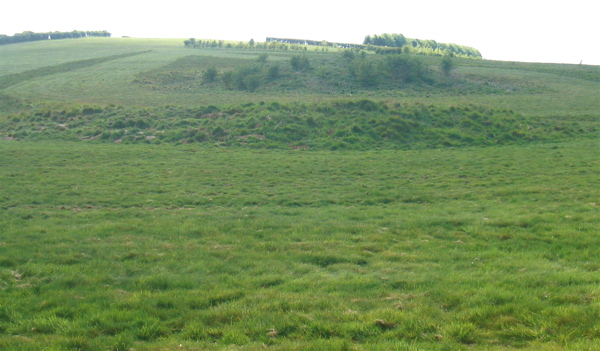
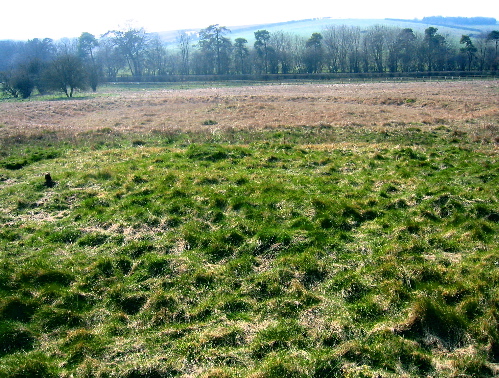
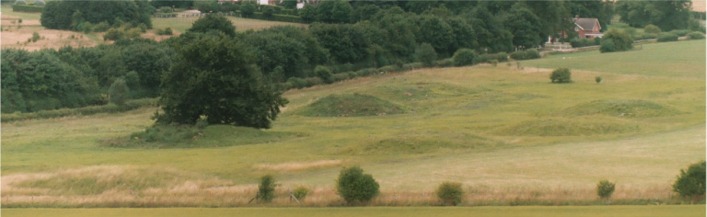
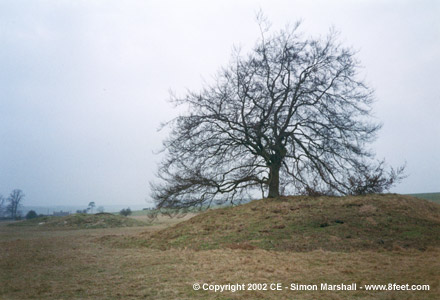
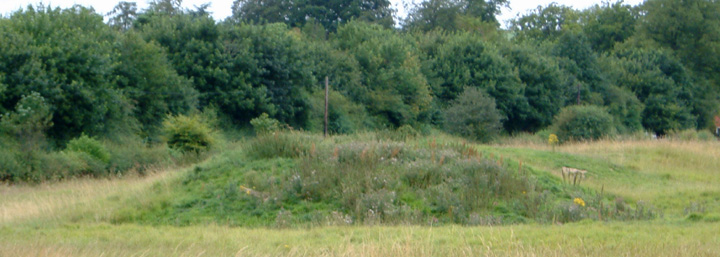
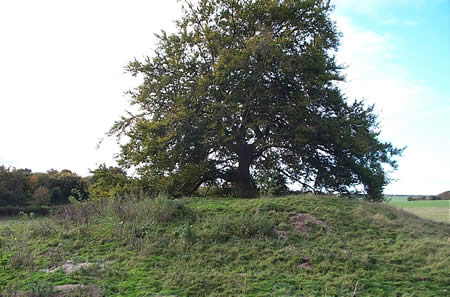
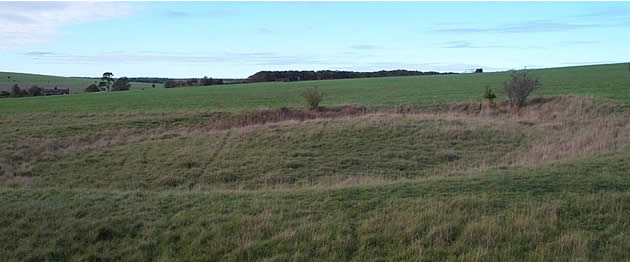
I wasn't really expecting the barrows to be so low in the landscape. They're kind of in a dip with very little view - so I guess the view is all focused on them (although trees have been planted one side of the road, so I don't know what the view that way would be). They seem to follow the lie of the valley. I read Wysefool's suggestion that maybe a now-lost spring here was the reason for their location. (although what about the significance of his beloved nearby long barrow?) But in support I can tell you that I didn't dare drive my car up the track to the small car park, because there was a huge patch of deep mud I was scared to get it stuck in - surely the only mud in the whole county on this baking Sunday, so maybe there's still something springish here. There's a kissing gate into the field, which is a nature reserve, and currently full of rough vegetation that you have to kind of wade through. I spent a lot of time looking at all the weird plants (dropwort, quaking grass, knotted clover, I won't go on) but my best moment was when I suddenly realised I was looking at a disc barrow, its shape suddenly leapt out at me. It was extremely serene here and I lounged under a beech tree on one of the barrows. The only noise was the occasional passing car and the sound of hundreds of crickets like tiny machine guns constantly firing away. |
 Posted by Rhiannon
28th June 2010ce Edited 29th June 2010ce |
|
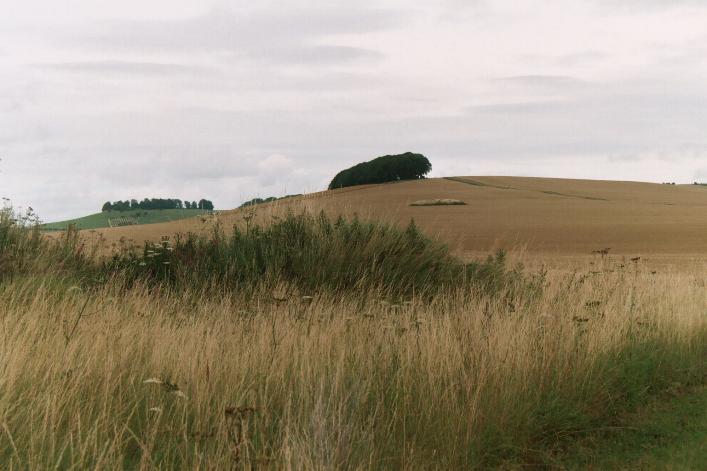
The L7B site is a major site in the area, in my opinion as great as White Horse Hill or Waylands Smithy for archaeological interest. Although not seven in number (more like 30 plus!) it is a major bronze age barrow cemetry, akin to normanton et al. I recommend that visitors to the site should also look at some other areas of interest nearby: 1) the remains of a neolithic long barrow (as marked on the OS map 'Explorer 170 - Abingdon, Wantage and the Vale of White Horse') just on the edge of a small copse NW of the main site. Some sarsen stones remain (please, please leave them there for others!) and the 'hump' of the remains of a long barrow can still be seen. This continuity of a sacred burial site (neolithic through to bronze age - covering a good 1000 years or more) is simply amazing. The hill marked on the OS map adjacent to the long barrow site is still called 'crog hill'. This is an iron age (celtic) word which means 'hill, mound or tumulus' (Crug). Indicating that with the arrival of the iron age, the celtic peoples recognised the place as a place of the dead and this placename has survived right through to the modern day. Again, simply amazing! 2) A nearby approach road to the area (B4001) as it crosses over the ridgeway and past Sparsholt firs (the big radio tower). Has a very well preserved barrow adjacent to it (marked on the OS map). It is just inside the trees there, and its edge would have crossed the tarmac'd road. Although the main hump of the barrow is well worn, you can still see the circular bank and ditch around its circumference. The area has been recently fenced off by the local landowner (September 2003). From this view point, you can look down into the L7B area. Carrying further along the straight tarmac'd road here are a few other breaks of beech trees. Some appear to contain possible barrow sites - make your own mind up if you visit. 3) Between postdown house and sevn barrows house on the other side of the road from the main site, are more barrows worth exploring. Also further past the site on the road between 'scary hill' and 'sparsholt down' are even more barrows. Study the OS map and take a look. All in all L7B has many sides to explore in terms of neolithic, bronze and iron age interest. Take time to visit the centre of the site, but also explore the environs, they are interesting too! |
 Posted by wysefool
3rd November 2003ce Edited 4th November 2003ce |
|
Four days into the New Year, and the miserable weather finally broke, providing a classically sunny winter's day. "Lambourn Sevenbarrows," exclaimed the delightful Jane, at the other end of the phone. "Be with you in half an hour." Cue frantic scramble for a roll of B/W film, only managing to produce a very old roll of PanF. 'Bit chancy,' I thought. 'Give it a shot, though.' What a corking site it turned out to be; very powerful, yet utterly charming at the same time. I had expected it to be sited on the top of a high ridge, but instead it's nestling in a small dell, the downs and ridges rising up all about. I spent most of my time amongst the main group of barrows, while Jane wandered up the hillside for a more all encompassing view. Having been to see 'The Two Towers' the previous day, Tolkien's characters were still filling my mind, and, albeit rather fancifully, I could easily visualise the Rohirrim assembled amongst the barrows in the cold winter light, come to honour their dead warriors. In fact it felt very much like a neolithic 'Valley of the Kings', despite being a very well-used site indeed, not just for single inhumations. There is something very centering and special about this place, and seeing it for the first time in midwinter was very evocative; something to be recommended. I note that JC says it's a fine place for a picnic, when the wildflowers are blooming in abundance. Can't wait for May, then . . . By the way, 'The Two Towers' is a jolly good movie, so go and see it; and if my photos don't turn out, at least I've had the benefit of a merging of experiences. Did Tolkien ever vist Lambourn Sevenbarrows? |
 Posted by treaclechops
31st August 2003ce |
|
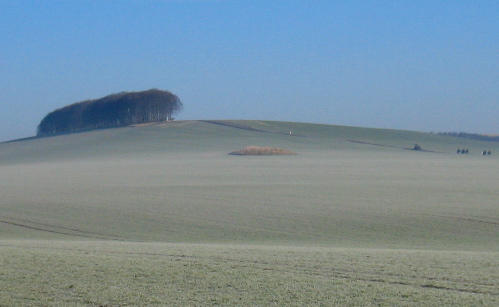
26 July 2003 Fascinating site. Such a mixture of different sized and shaped barrows. And not set out in any pattern, yet seeming to fit together somehow…. Or maybe that's just me. For some reason I can't quite put my finger on, photographs of this site have always particularly appealed to me. And I wasn't disappointed. It nestles near the bottom of the eastern side of a wide yet sheltered, gently sloping valley. I wouldn't personally use the word 'dell' as Treaclechops did in her fieldnotes, it seems more 'open' to me than what I would call a dell. No matter. A very pleasant place. After spending 20 minutes or so walking up and down between the barrows I took a few photos from various angles, but didn't feel they were really 'working'. I meandered along the track up the hill past the barrows, but still couldn't find a view I was happy with, so I wandered back. Studying the mounds for a few moments I looked around and behind me noticed that the very far corner of the field on the other side of the track gets up quite high. The elevation looked like it might give a good shot with a big lens on, so nipping across a handy and sizeable gap in the fence, I strode round the edges of the field pausing only to pick up and study the odd bit of interesting looking flint. I soon gave that up when I realised just how many bits there were and matched that up with my lack of experience of worked flint! Before I knew it I was in the top corner of the field and, fitting my 300mm lens, I had he shot I wanted…. Very satisfying! I've posted it here. This post appears as part of the weblog entry Glos 'n' Oxon, Picnic People & Stomping in the Sun – Part 2
|
 Posted by Moth
1st August 2003ce Edited 1st August 2003ce |
| For the two weeks I have had off work, I waited for a decent day's weather to visit this place. At last it came. Treaclechops and myself had this extensive place to ourselves, the weak winter sunshine low on the horizon creating sculptural shadows on the barrows and revealing the final traces of other ploughed-over barrows in nearby fields. It was too cold to paint, so I fired off a couple of pencil sketches (difficult in thermal gloves). This was one helluva necropolis at one time, and I guess it still is. After all the shite and dutiful detritus of the 'festive season', what I needed was peace. I found it here. |
 Posted by Jane
5th January 2003ce |
Folklore |
Add folklore |
| Two of the longest ley lines in the UK cross close to the Lambourn Seven barrows - the St Michael ley line which courses across England from Carn Les Boel, Cornwall to Hopton on the Norfolk coast and the Belinus ley line, which courses from the Isle of White to Inverhope on its way to the Faroe islands. Both ley lines have serpentine earth energies assoicated with them, one is male and the other is female and these energies were known to ancient Chinese geomancers as Lung Mei, the Dragon's Breath. |
Posted by Maria 2nd May 2003ce Edited 2nd May 2003ce |
Miscellaneous |
Add miscellaneous |
| It should be noted that the Seven Barrows area is probably more extensive than noted here. Surveys conducted around Lambourn have shown that there are significant numbers of barrow types extending northwards from Lambourn along the Wantage Road on both sides of the valley (these can be seen in the Google Earth images as cropmarks). It would seem that the valley that goes from Lambourn and out to Seven Barrows was a major cemetery. |
 Posted by stoer
17th February 2010ce Edited 18th February 2010ce |
Links |
Add a link |
Lambourn Seven Barrows - Youtube |
 Posted by wickerman
6th December 2012ce |

Seven Barrows Streetview |
 Posted by ginger tt
25th March 2010ce |
 Top of page