|
 Log in |
Register Log in |
Register
|

|
|

Treryn DinasCliff Fort
|


 Show map (inline Google Map)
|
|
|
Images (click to view fullsize) |
 Add an image Add an image |
Photographs: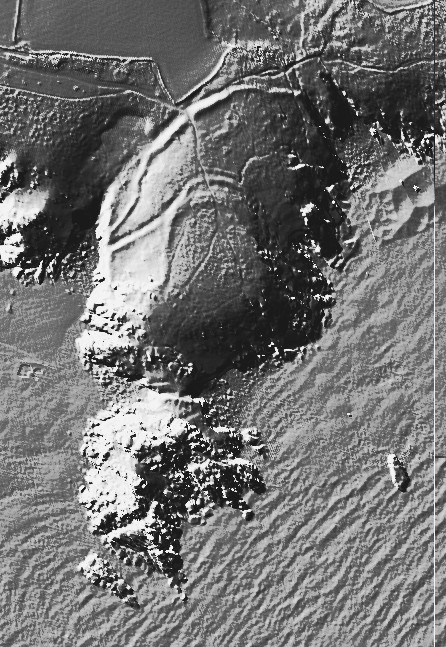
 Artistic / Interpretive: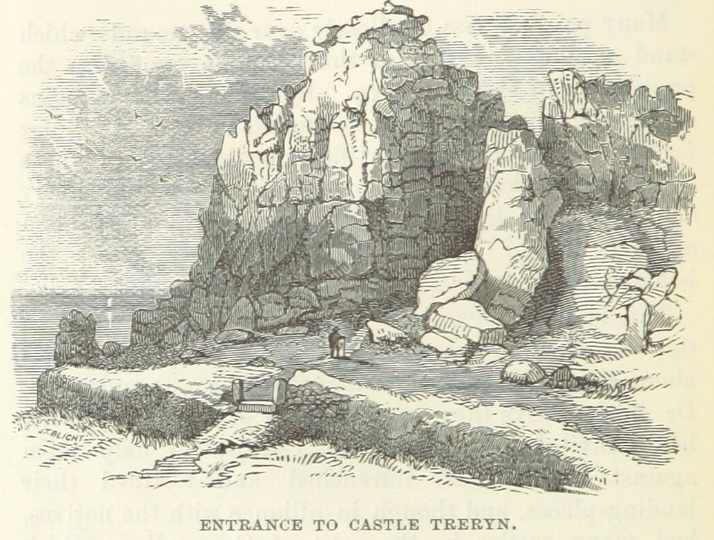
|
Fieldnotes |
Add fieldnotes |
|
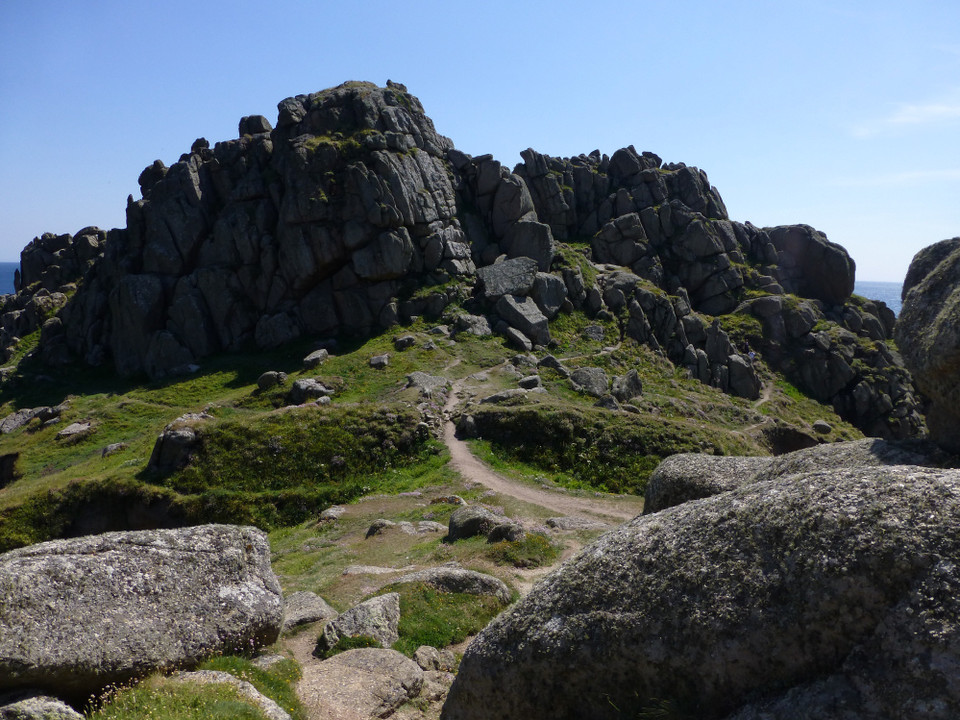
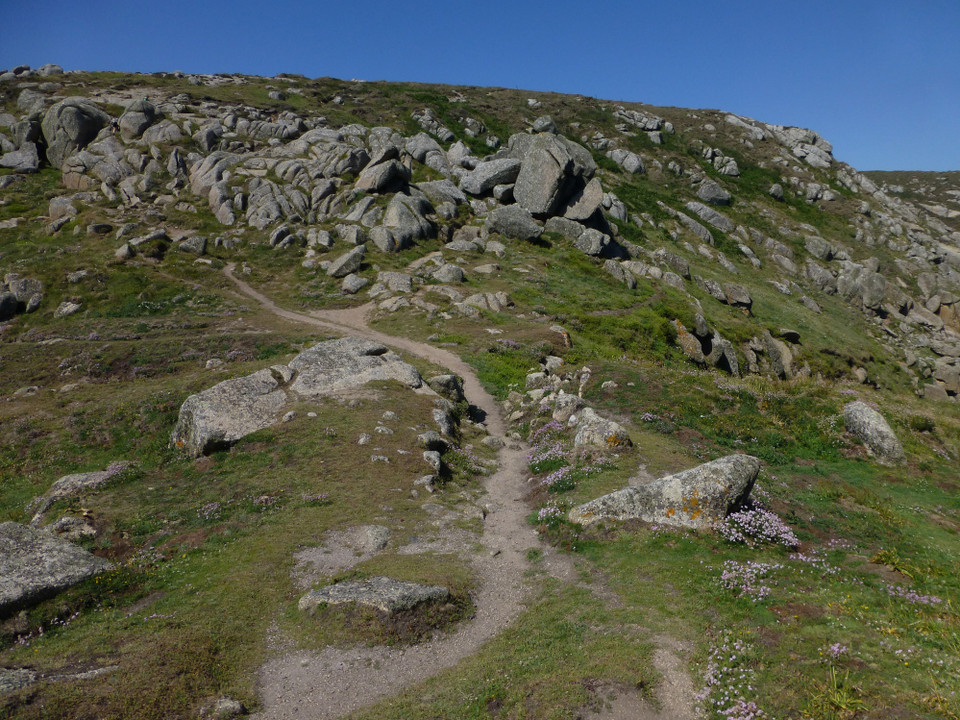
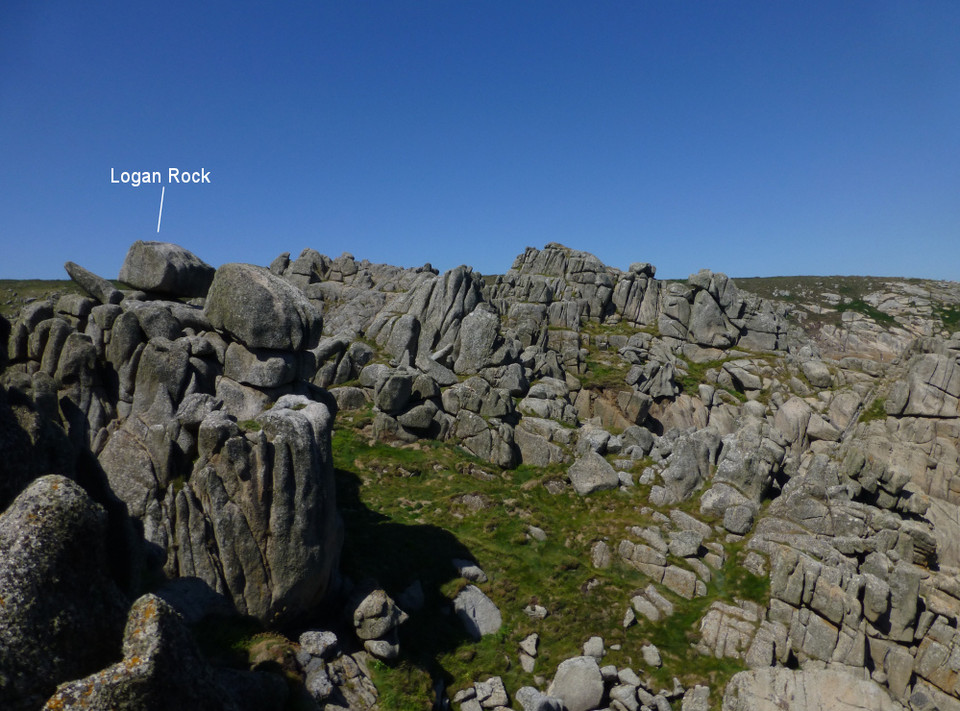
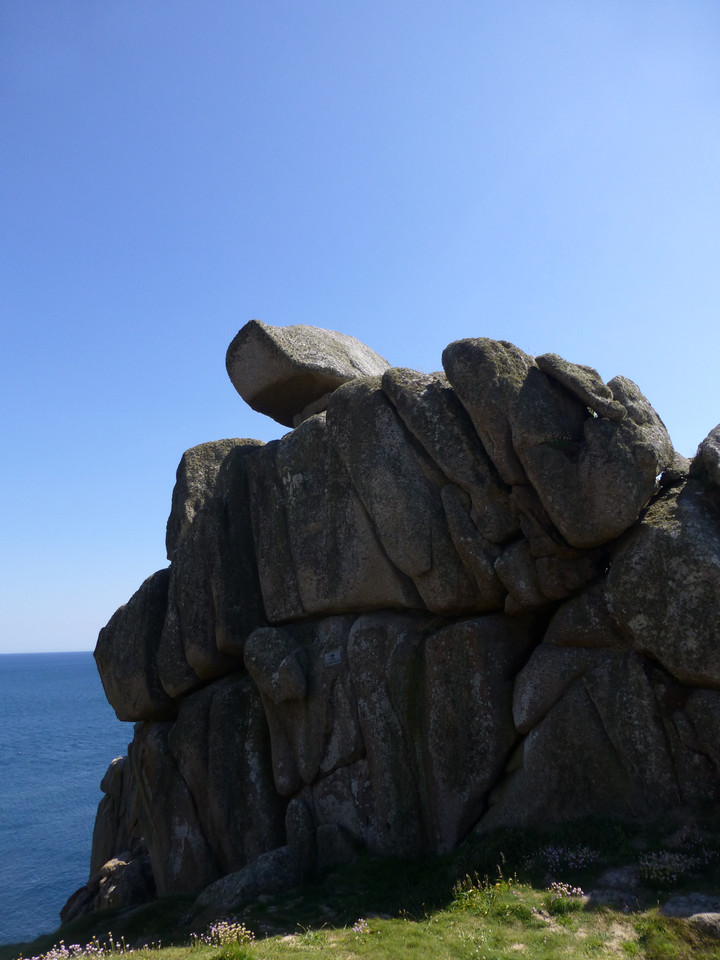
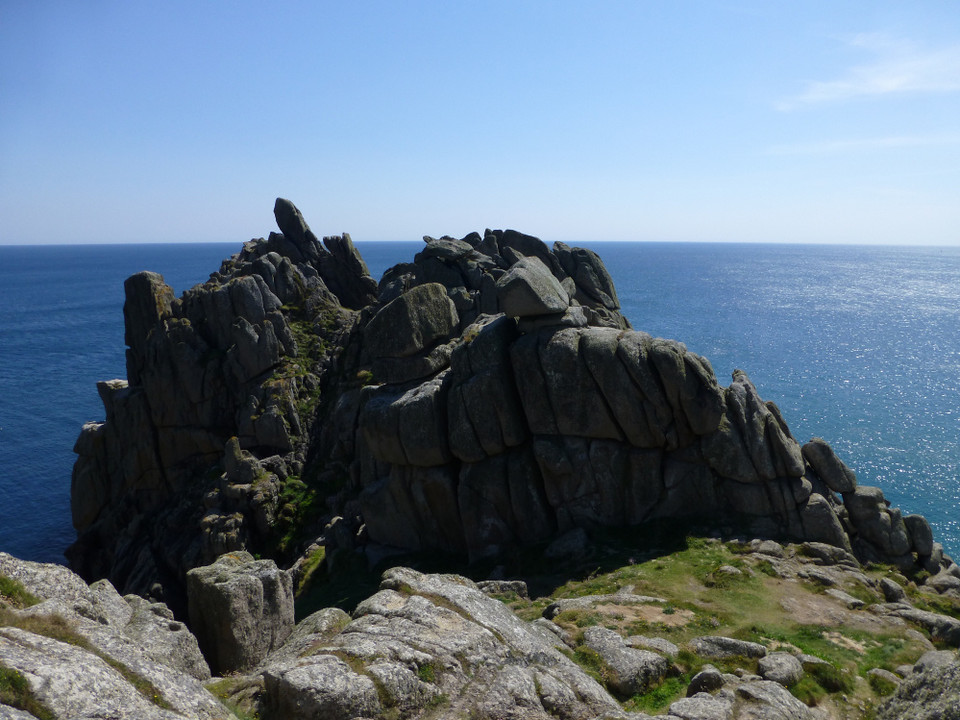
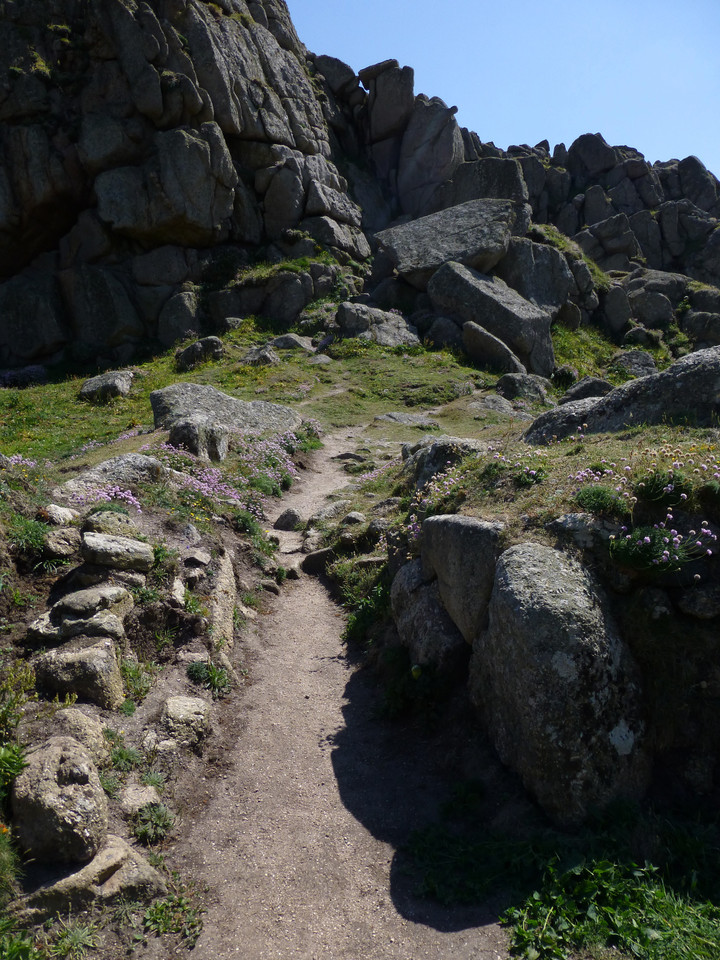
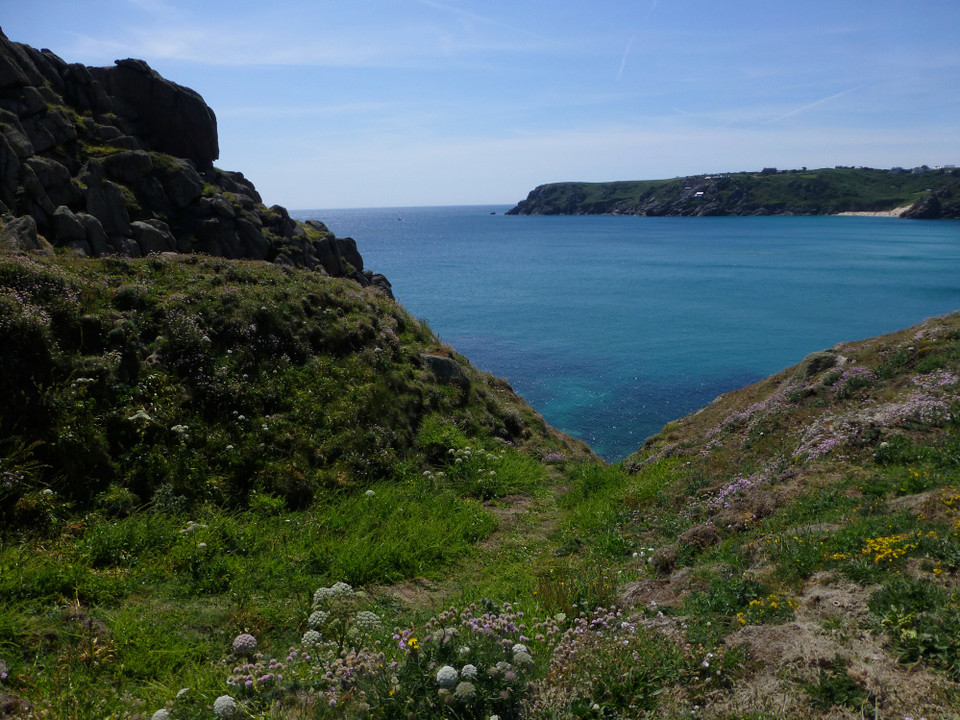
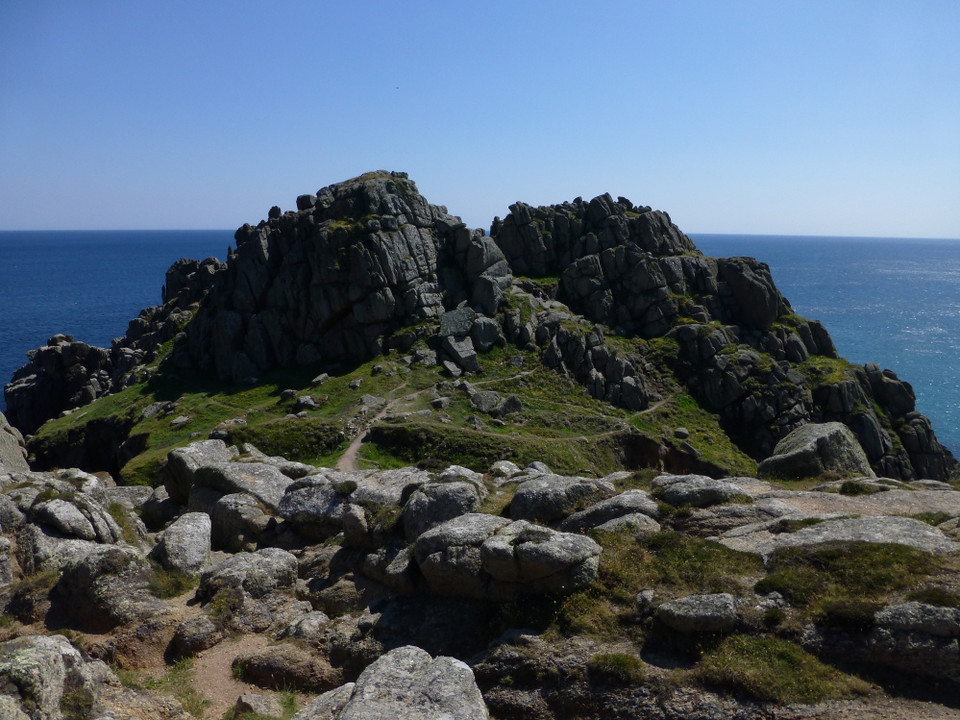
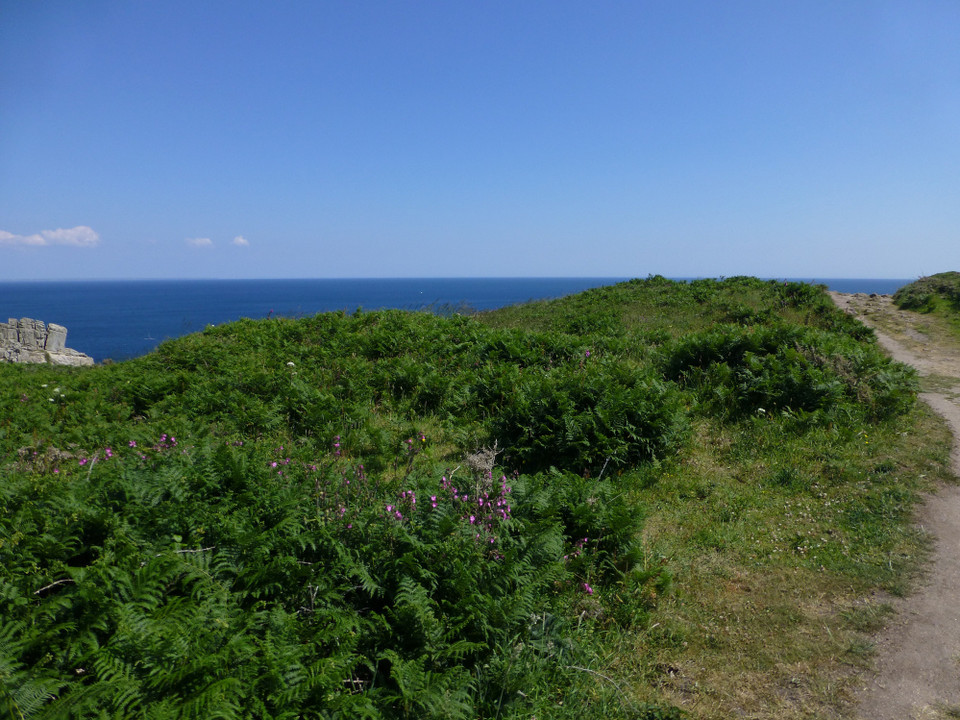
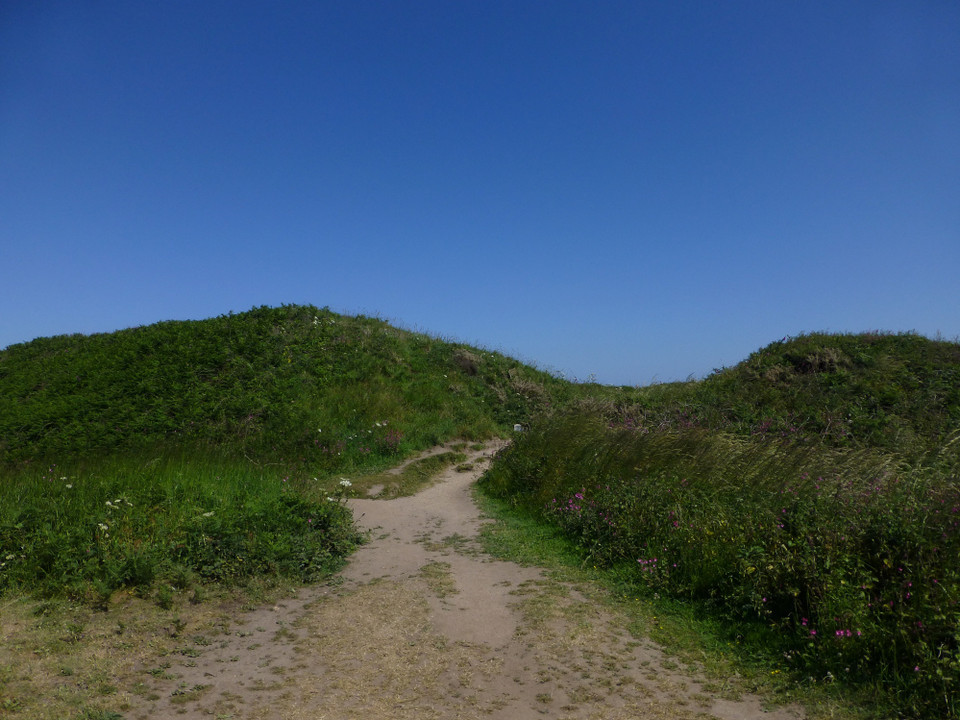
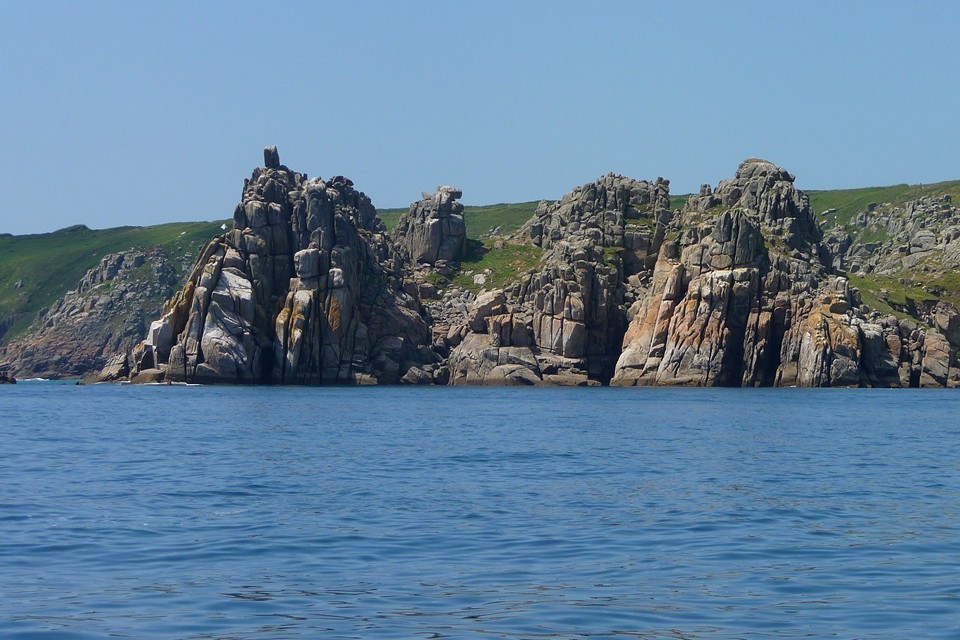
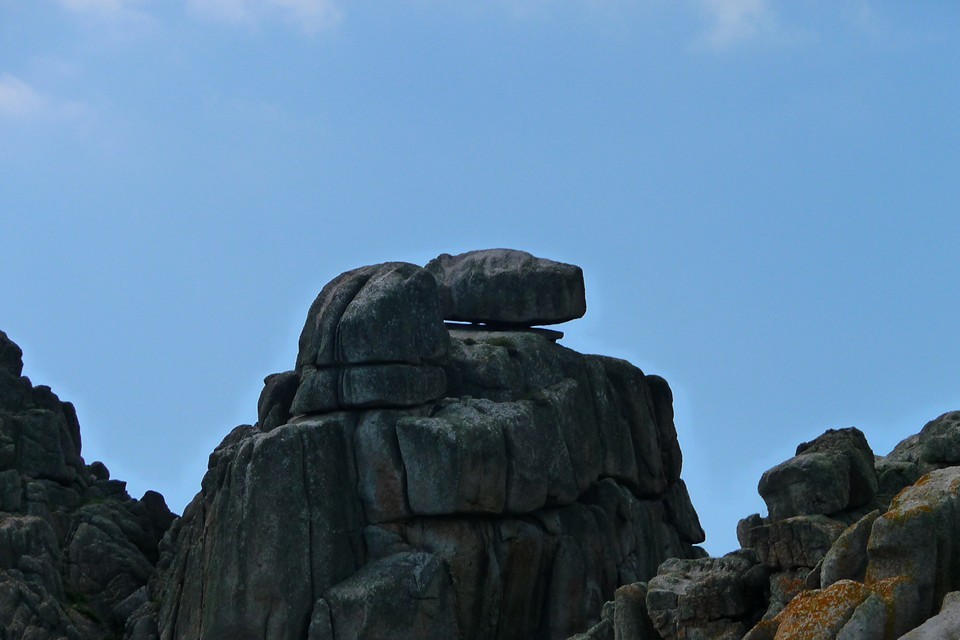
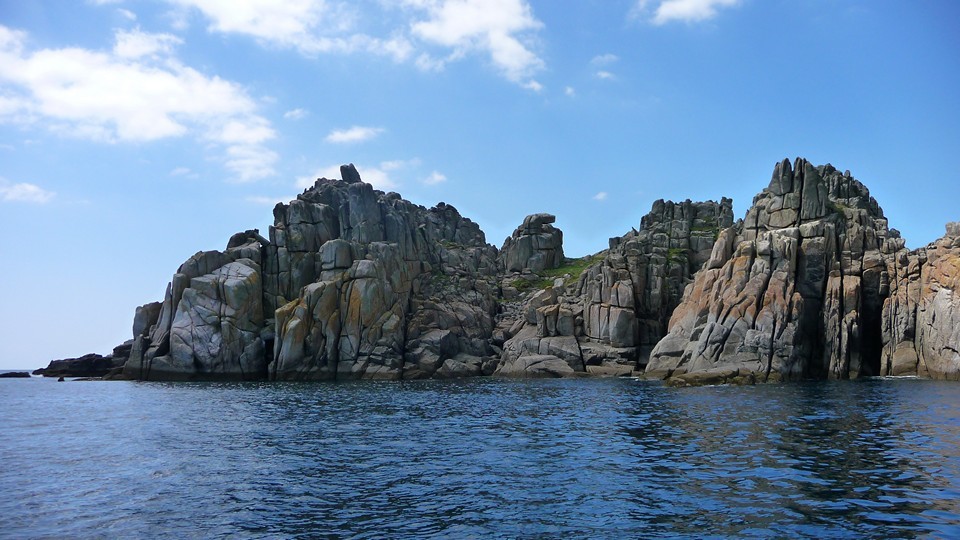
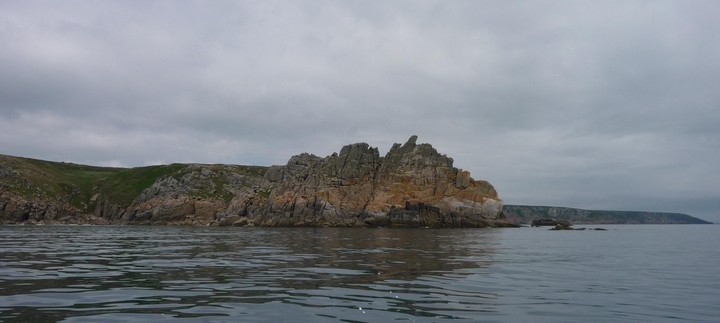
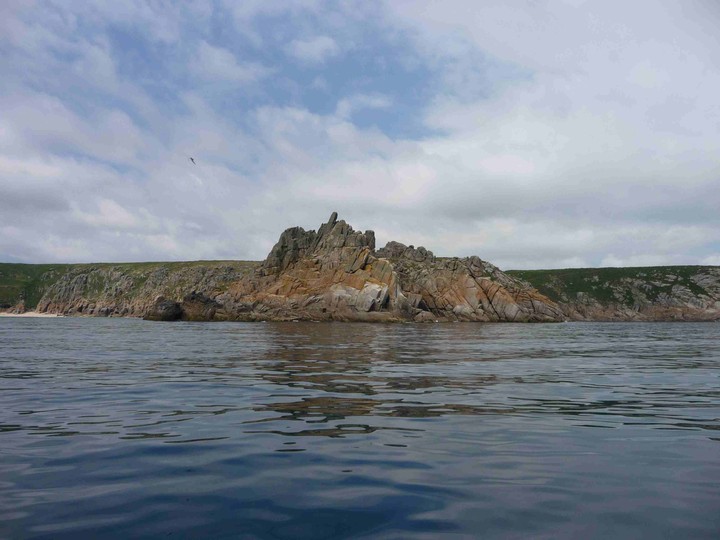
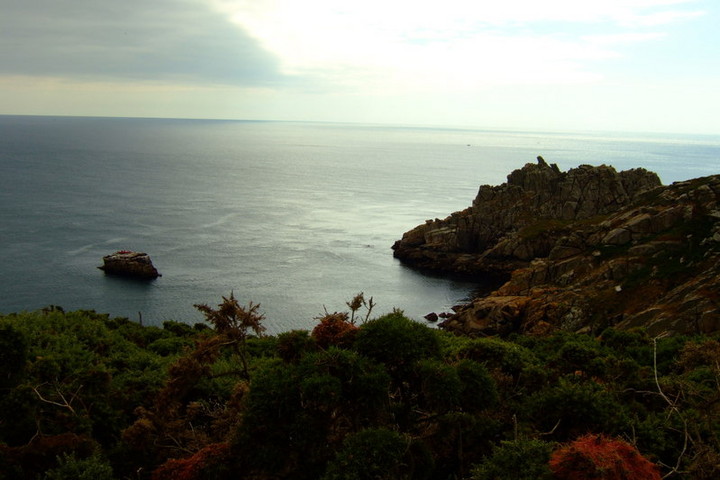
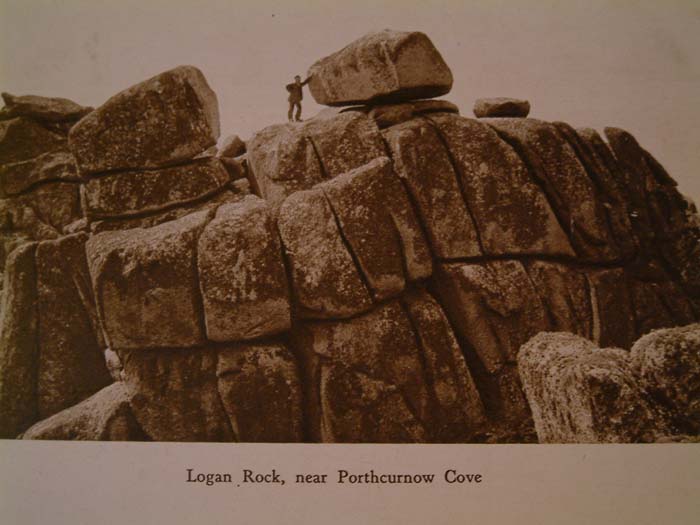
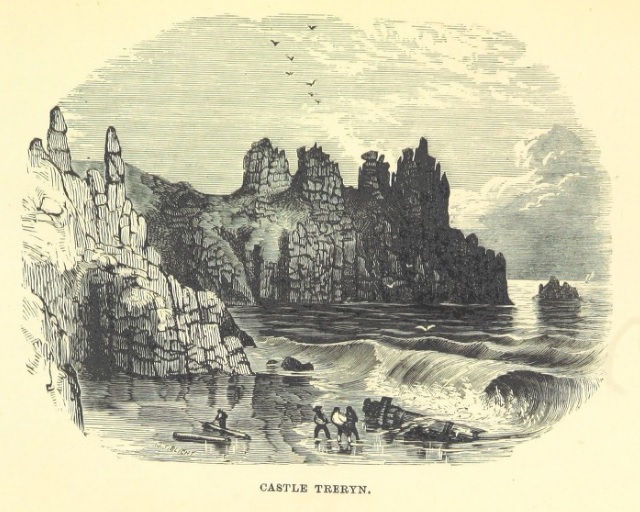
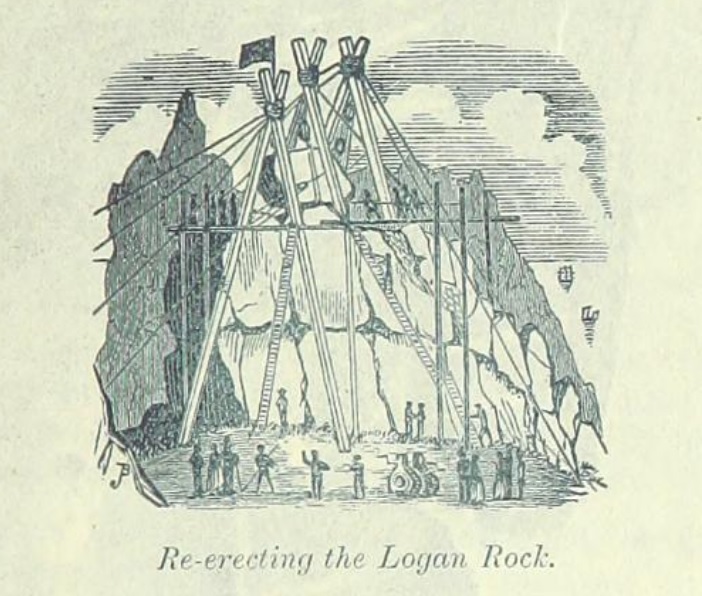
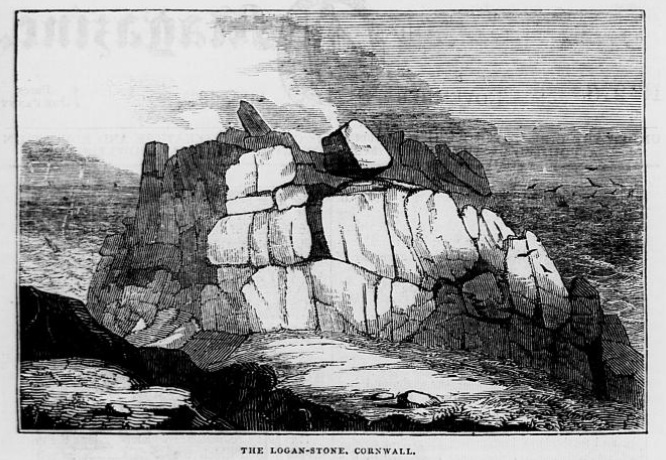
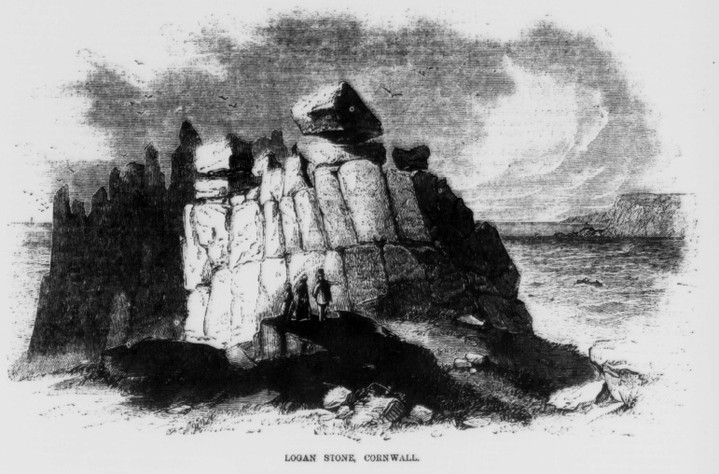
24 June 2014 The walk along the coast path from Carn les Boel is lovely one, rugged cliff tops dropping away to the blue-green below. At Gwennap Head basking sharks can sometimes be seen, but we don't have that privilege today. It's an up-and-down section of path, dropping down to the tiny sandy beach at Porthgwarra (tea-shop), back up to exposed cliffs before a further drop to St Levan's Well above Porth Chapel. The well is worth a stop off, in its unusual position half way up the cliffs. From here it's a brief foray into tourist central near the famous Minack Theatre and the thronged beach at Porthcurno. From the cliffs above the Minack there is a great view of the day's final objective, the impossibly craggy headland of Treryn Dinas (pronounced "Treen"). We last came here about eight years ago, I only have a few crappy pictures and am keen to return - since then we've only seen the headland from a couple of boat trips, which reinforced just how startlingly rocky the site is. Along with its companion on the north coast, Gurnard's Head, this is the most impressive of the West Penwith cliff forts. The defences are quite something. The outermost consist of a single, huge earthwork bank, several metres high in places. South of this is a flat area, quite overgrown now, before the central defences appear quite some way further south. These are formed of three lines of banks and ditches, much smaller in size than the outer rampart, but still providing a series of obstacles for any unwanted guests to negotiate. Beyond these, the ground slopes downwards towards a band of craggy granite outcrops. A sort-of path runs through the centre of these, taking the visitor along a ever-narrowing channel between the rocks. There is an easier route round to the west, but it would be interesting to know which was the original way in - perhaps one was the tradesman's entrance. Once you've semi-scrambled over these, you are confronted with the narrowest point of the headland, where a ditch fronts another well-defined stone rampart, the innermost of the defences. Stone facing still lines the entrance through the centre of the bank. A circular round house (perhaps a guard house) originally existed at each end of this, but one has largely eroded away now. Beyond this final earthwork, the tip of the headland is a wonder of jagged towers of granite. One of these is topped by the famed "Logan Rock", a rocking stone once toppled by sailors of the Royal Navy and re-erected at their expense following a public outcry. Quite right too. I have a good scramble about in the rocks, although I don't manage to find a way up to the Logan Rock itself - I'm sure a longer visit would provide the answer to how to get up there, but it's quite exposed in places and the wind whips around the rocks, even on this sunny June day. It's an amazing place here. Once beyond the innermost rampart, there's little that would suggest a nice place to live though. My speculative guess is that any occupation here took place further inland, within either the safety of the enormous outer earthwork or the central rows. Which leaves the question of why build a strongly defended rampart across the rocky tip of the headland. Perhaps someone important had their home here, or perhaps the headland was kept free of riff-raff for the inevitable "ritual purposes". My usually sceptical self can certainly imagine that here, as the wind gusts around the stone towers and the focal point of the Logan Rock itself, perched above it all. |
 Posted by thesweetcheat
31st August 2014ce Edited 31st August 2014ce |
Folklore |
Add folklore |
From all I have seen myself of that kind, or read, or heard of, I know not a more singular [Rocking Stone] than that which I am describing. It stands at Castle Treryn, a promontory, consisting of three distinct piles of rocks, near the southermost part of the Land's End. On the western side of the middle pile, in a very elevated situation, lies this immense stone, so evenly poised, that a hand, nay a finger, may move it.As my favourite podcaster says, "Be careful what you wish for." I'm glad they put it back up though; I think very fondly of my visit to see it and would recommend it to anyone. From E.D. Clarke's 'Tour through England and Wales in 1791.' |
 Posted by Rhiannon
30th June 2023ce Edited 1st July 2023ce |

... we reach the little village of Treen, the inhabitants of which seem to be nearly all either guides to, or entertainers of, visitors to the Logan Rock, or, as its name was always formerly, the Logan Stone. This block of granite weighs about ninety tons, "yet any one, by applying his shoulder to the edge, and favouring the vibrations, can easily cause the stone to log through a very sensible angle."Rambles in Western Cornwall by the Footsteps of the Giants by J O Halliwell-Phillipps (1861). |
Posted by Rhiannon 8th August 2013ce Edited 8th August 2013ce |
Old traditions say that the headlands of Castle Treen, or rather Trereen, on which the Logan Rock carn and adjacent crags stand, was raised out of the sea by enchantment. This portion of the stronghold, enclosed by the inner line of defence, running directly across the isthmus, is generally spoken of as The Castle, and that between it and the outer or landward embankments is usually called Treen Dynas.From Traditions and Hearthside Stories of West Cornwall by William Bottrell (1873). Immediately afterwards is a long (long) story about the giants of Castle Treen. And something about the fairies there too. And finally, about the witches that used it as a flying-off point. Pretty crowded spot. |
Posted by Rhiannon 21st November 2012ce Edited 21st November 2012ce |
More on the 'key' of the castle:On an almost inaccessible granite peak seaward of the pile of rocks known as Castle Treryn (pronounced Treen), once the haunt and meeting-place of witches, on the summit of which is perched the far-famed Cornish logan-rock, is a sharp peak with a hole in it, large enough to insert a hand. At the bottom lay an egg-shaped stone, traditionally called the key of the castle, which, although easily shifted, had for ages defied all attempts at removal. It was said that should any one ever succeed in getting it out, Castle Treryn - in fact the whole cairn - would immediately disappear. It was unfortunately knocked out by the men who replaced the logan-rock, thrown down by Lieutenant Goldsmith. Its position was often altered by heavy seas, and from it the old folk formerly foretold the weather.From p104 in Cornish Folk-Lore. Part II [Continued] M. A. Courtney The Folk-Lore Journal, Vol. 5, No. 2. (1887), pp. 85-112. |
Posted by Rhiannon 17th November 2006ce |
Elsewhere in his 'Popular Romances...' Hunt mentions the regrettable incident alluded to by Mr H in his post. You can imagine the laddish larking about which led up to the stone being pushed off.Up to the time when Lieutenant Goldsmith, on the 8th of April 1824, slid the rock off from its support, to prove the falsehood of Dr Borlase's statement, that "it is morally impossible that any lever, or, indeed, force, however applied in a mechanical way, can remove it from its present position," the Logan Rock was believed to cure children, who were rocked upon it at certain seasons, of several diseases; but the charm is broken, although the rock is restored.Well at least Goldsmith was made to replace it! |
Posted by Rhiannon 24th February 2005ce Edited 8th August 2013ce |
Yet another story associated with the promontory! How much folklore can one tiny place contain? This is from 'The Small People's Gardens' in Hunt's 'Popular Romances of the West of England' (online at http://www.sacred-texts.com/neu/eng/prwe/index.htm).If the adventurous traveller who visits the Land's End district will go down as far as he can on the south-west side of the Logan Rock Cairn, and look over, he will see, in little sheltered places between the cairns, close down to the water's edge, beautifully green spots, with here and there some ferns and cliff-pinks. These are the gardens of the Small People, or, as they are called by the natives, Small Folk. [...] To prove that those lovely little creatures are no dream, I may quote the words of a native of St Levan: |
Posted by Rhiannon 24th February 2005ce Edited 24th February 2005ce |
| MA Courtney published a book called "Cornish Feasts and Folklore" in 1890. In it he says of the key of the castle being in a sharp peak on the summit. He then adds that it was knocked down by the men who replaced the logan stone after it was pushed off the rock by Lieutenant Goldsmith in 1824. |
 Posted by Mr Hamhead
19th July 2004ce Edited 19th July 2004ce |
Treryn fort is mentioned in 'Popular Romances of the West of England' by the Victorian Robert Hunt.The giant's castle at Treryn, remarkable as a grand example of truly British Cyclopean architecture, was built by the power of enchantment. The giant to whom all the rest of his race were indebted for this stronghold was in every way a remarkable mortal. He was stronger than any other giant, and he was a mighty necromancer. He sat on the promontory of Treryn, and by the power of his will he compelled the castle to rise out of the sea. It is only kept in its present position by virtue of a magic key. This key the giant placed in a holed rock, known as the Giant's lock, and whenever this key, a large round stone, can be taken out of the lock, the promontory of Treryn and its castle will disappear beneath the waters. There are not many people who obtain even a sight of this wonderful key. You must pass at low tide along a granite ledge, scarcely wide enough for a goat to stand on. If you happen to make a false step, you must be dashed to pieces on the rocks below. Well, having got over safely, you come to a pointed rock with a hole in it; this is the castle lock. Put your hand deep in the hole, and you will find at the bottom a large egg-shapped stone, which can be easily moved in any direction. You will feel certain that you can take it out,--but try! Try as you may, you will find that it will not pass through the hole; yet no one can doubt that it once went in. He also recorded the following: Treryn Castle, an ancient British fortress, the Cyclopean walls of which, and its outer earthwork, can still be traced, was the dwelling of a famous giant and his wife. I have heard it said that he gave his name to this place, but that is, of course, doubtful. This giant was chief of a numerous band, and by his daring he held possession, against the giants of the Mount, of all the lands west of Penzance. Amongst the hosts who owned allegiance to him, was a remarkable fine young fellow, who had his abode in a cave, in the pile of rocks upon which the Logan Rock stands. This young giant grew too fond of the giantess, and it would appear that the lady was not unfavourably inclined towards him. Of their love passes, however, we know nothing. Tradition has only told us that the giantess was one day reclining on the rock still known as the Giant Lady's Chair, while the good old giant was dosing in the Giant's Chair which stands near it, when the young and wicked lover stole behind his chief and stabbed him in the belly with a knife. The giant fell over the rocks to the level ridge below, and there he lay, rapidly pouring out his life-blood. From this spot the young murderer kicked him into the sea, ere yet his life was quite extinct, and he perished in the waters. Robert Hunt's book is available online at http://www.sacred-texts.com/ |
Posted by Rhiannon 14th July 2004ce Edited 14th July 2004ce |
Miscellaneous |
Add miscellaneous |
Clearly this was once a massive tourist attraction for the area - everyone writing about their travels to Cornwall seems to have visited. It doesn't seem to have had many TMA visitors? But this report is just like a fieldnote.Castle Treryn is supposed to have been an ancient British fortress, though, at first sight, it appears to be merely a shapeless pile of rocks, never arranged or touched but by the hands of nature.From volume 1 of William Maton's "Observations relative chiefly to the natural history, picturesque scenery, and antiquities of the western counties of England, made in the years 1794 and 1796." |
Posted by Rhiannon 22nd August 2013ce Edited 22nd August 2013ce |

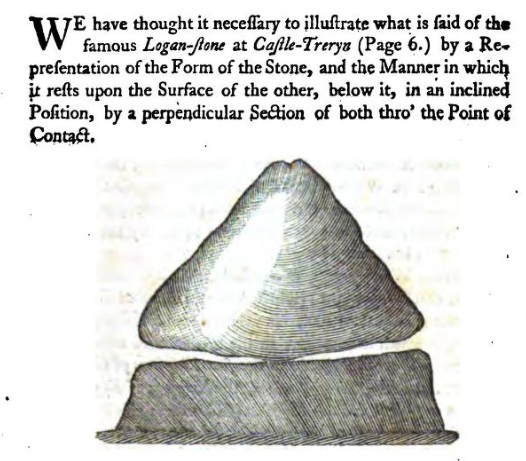
In the Parish of St. Levin, in this County, there is a Promontory, called Castle-Treryn. This Cape consists of three distinct Groupes of Rocks. On the Top of the middle Groupe of Rocks, (which we climbed with some Difficulty and Hazard) we there observed the most wonderful Logan-stone, perhaps, in the World; one of our ingenious Companions took the Dimensions of it, and computed the solid Content, which amounted to about 95 Tons; the two inclined Sides somewhat resemble the two Roofs of a House, meeting in a sort of obtuse Ridge upon the Top. The lower Part of the Stone is a large plain Base, near the Middle of which, projects a small Part on which it rests, which Part seemed to be of a round Form, and not to exceed more than 18 or 20 Inches in Diameter. The lower Part of this too, was somewhat convex'd, by which Means, as it was equally poised on this Part, it became easily moveable upon the large Stone below, the Position of which was most of all wonderful, as the Surface on which the Logan-stone rested was considerably inclined; so that at first Sight, it seemed as it were easy to heave the Logan-stone off, but on Tryal, we found, that we could produce no other Motion than that of Libration, the Power of one Man being only sufficient to move it up and down about half an Inch. It is so high from the Ground, that no one who sees it, can conceive it could be lifted up to the Place where it now rests. It makes a natural Part of the Crag on which it at present stands, and always seems to have belonged.From The Natural History of England by Benjamin Martin (1759). |
Posted by Rhiannon 18th November 2012ce |
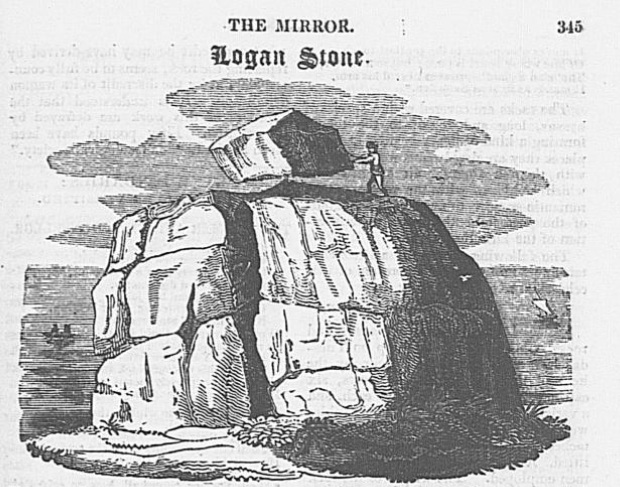
The public attention has, for the last six months, been much attracted to the celebrated Logan Stone, in Cornwall; not so much on account of its presenting a great natural curiosity, but from the circumstance that in April last, an officer of the British Navy on the Preventive Service, Lieutenant Goldsmith, with his men, threw it down from its time-honoured seat, and the same gentlemen having, within the last few days, replaced it in its former situation - a task of no ordinary difficulty.From 'The Mirror of literature, amusement, and instruction' for November 13th, 1824. |
Posted by Rhiannon 29th August 2012ce Edited 29th August 2012ce |
A description from the pre-toppled days of the Logan Stone. I think it's probably really folklore as the story of the 'peasants' seems a bit of a local tale to support the untoppleyness of the stone... I may venture to say, from all I have seen myself of that kind, or read, or heard of, I know not a more singular one than that which I am describing.Oh right. So after all that you'd actually like to see the big splash, very good. from p115 of Tour Through the South of England, Wales, and Part of Ireland, Made During the Summer of 1791, by Edward Daniel Clarke (online at Google Books). |
Posted by Rhiannon 28th May 2007ce Edited 29th May 2007ce |
|
Borlase boldly said that it was 'morally impossible that any lever, or indeed force (however applied in a mechanical way)' could topple the rocking Logan Stone that was on the western side of the middle group of rocks here. However, on the 8th April 1824, Lieutenant Goldsmith, who was in command of an armed vessel off the coast, decided that 'nothing could be impossible to the courage and skill of British seamen'. So by 'a continued application of [the] united strength' of himself and twelve men, they eventually slid it off its base. "The sensations of all the neighbourhood were entirely at variance from those of the gallant officer; fears were even entertained for his life". Luckily (so I understand?) Davies Gilbert (editor of the 'Parochial History of Cornwall' and 'sometime President of the Royal Society') had a quiet word with the Lords of the Admiralty, suggesting that he could help raise some money, and that the Admiralty might lend some capstans, blocks and chains from the Plymouth dock-yard, and Mr Goldsmith would have to help to put the stone back up again. On the 2d of November, in the presence of thousands, amidst ladies waving their handkerchiefs, men firing feux-de-joye, and universal shouts, Mr. Goldsmith had the satisfaction and the glory of replacing this immense rock in its natural position, uninjured in its discriminating properties.From a review of Gilbert's book, p273 in the 1838 Gentleman's Magazine. |
Posted by Rhiannon 15th April 2007ce |
|
Mentioned by Craig Weatherhill, in "Cornovia: Ancient Sites of Cornwall & Scilly" (Cornwall Books - 1985, revised 1997 & 2000) - "The magnificent headland was defended by one of Cornwall's finest Iron Age cliff castles. The outer defence is a deep ditch fronting colossal earth rampart 6.5m high and 275m long. 60m beyond this are two slighter ramparts and ditches. The outermost of those reaches a height of 2.0m, and the outer edge of its ditch has a faint counterscarp. The inner bank, originally stone-faced, makes use of a low ridge. The fourth and final line of defence is another deep ditch, backed by a heavy masonry wall, crossing the extremely narrow neck of the headland's tip. The inturned entrance retains its gate jambs, and behind it lie traces of two round houses. He appearance of the site suggests that there were two or three phases of construction." Just off the coastal footpath, on National Trust openland. |
 Posted by pure joy
2nd November 2003ce Edited 2nd November 2003ce |
 Top of page