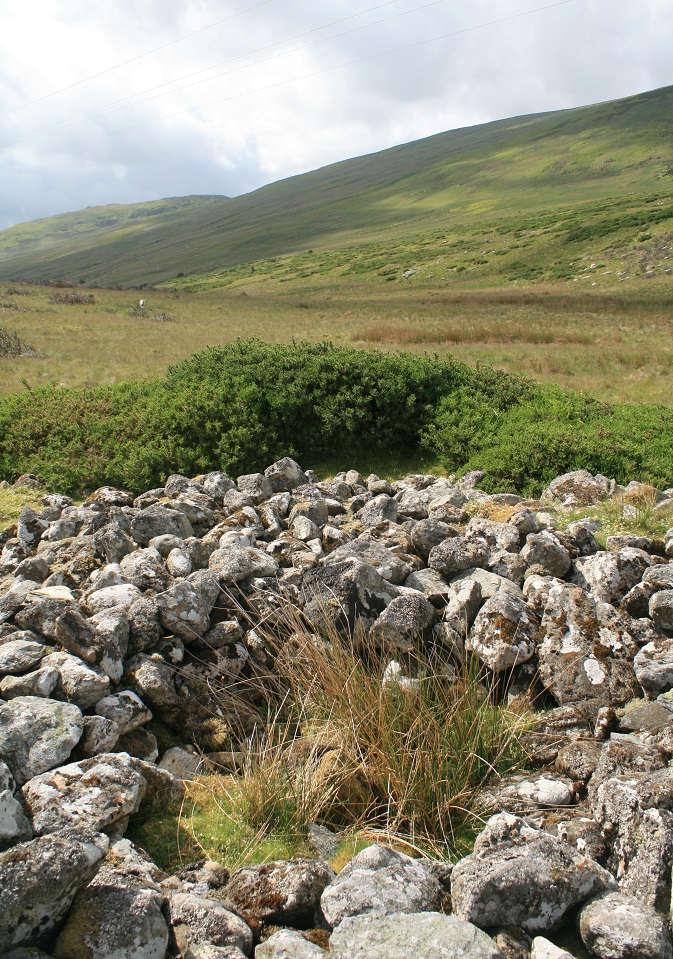
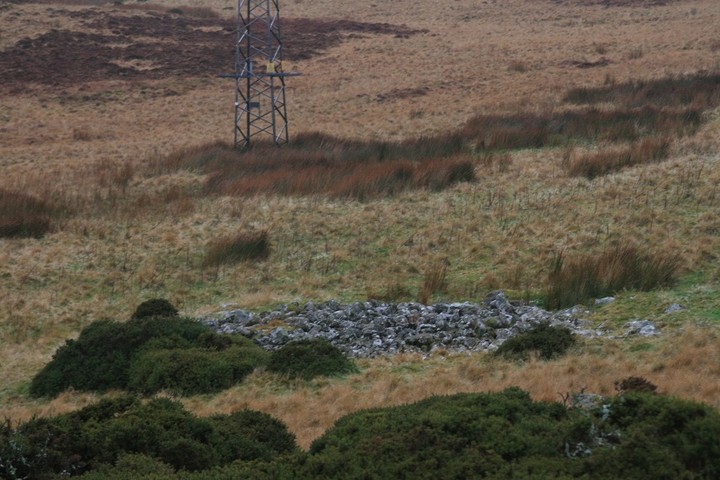
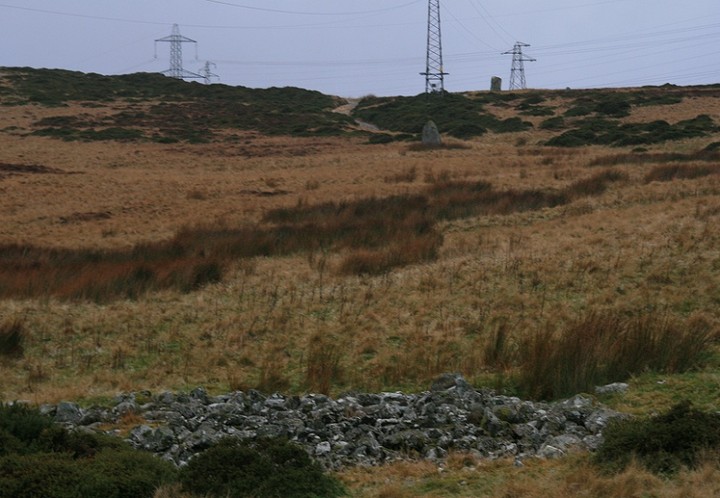
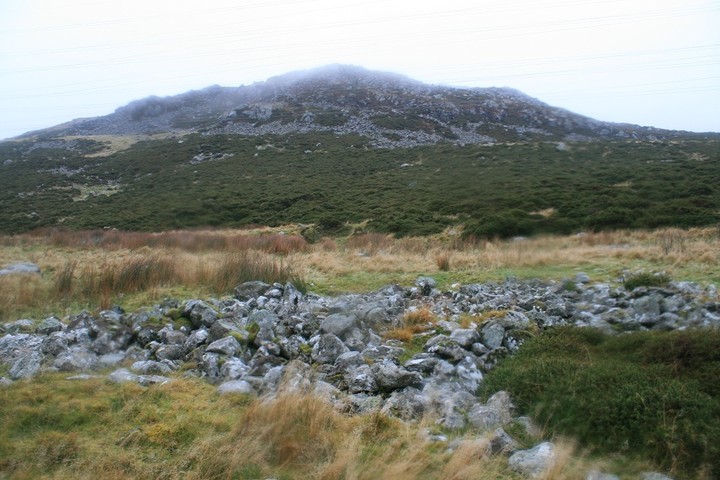
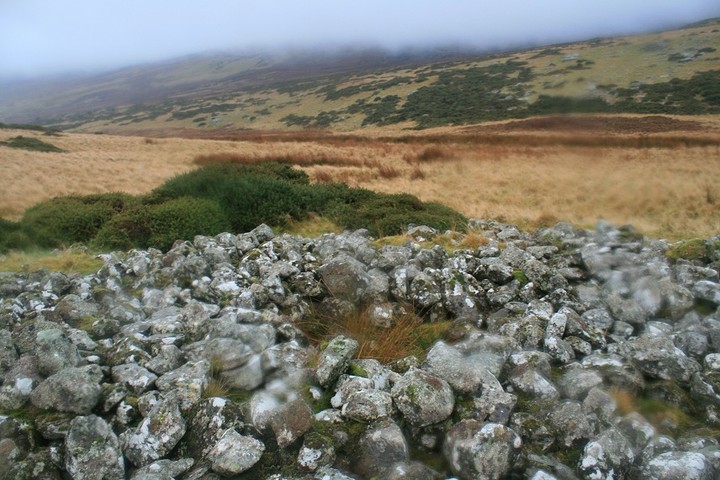
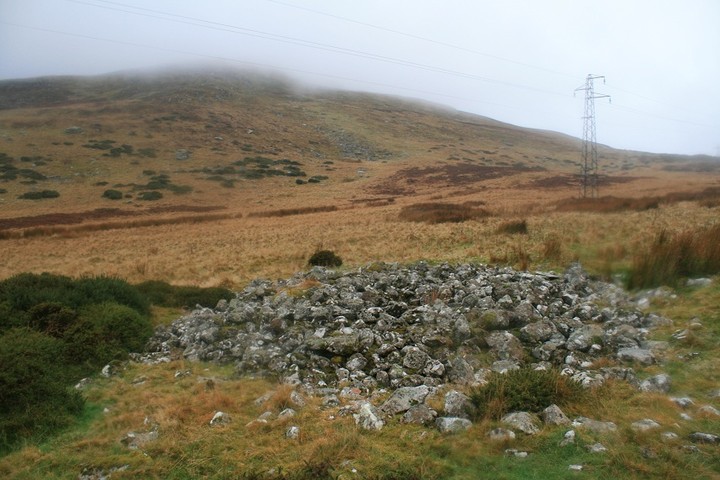
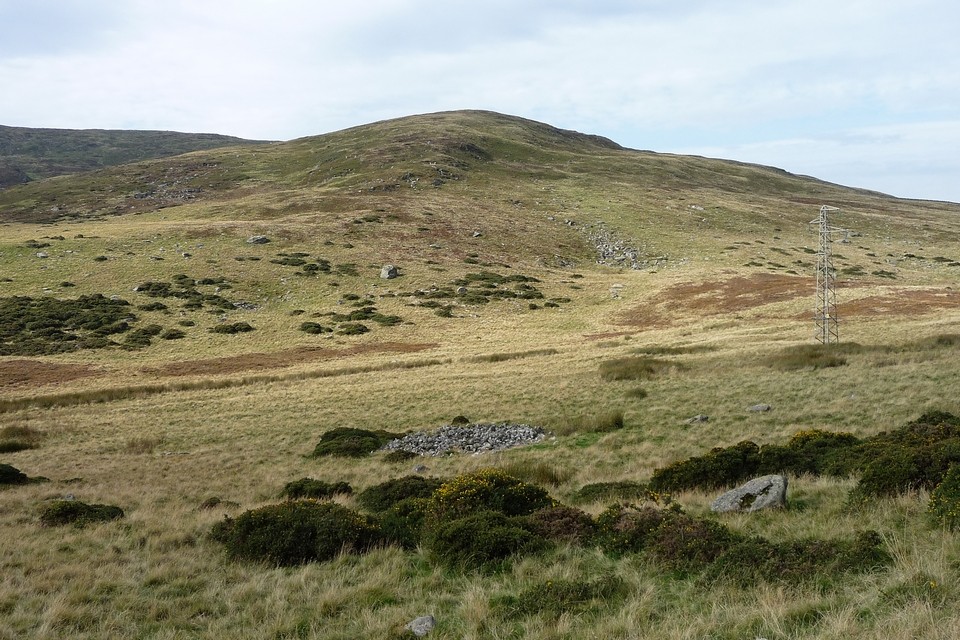
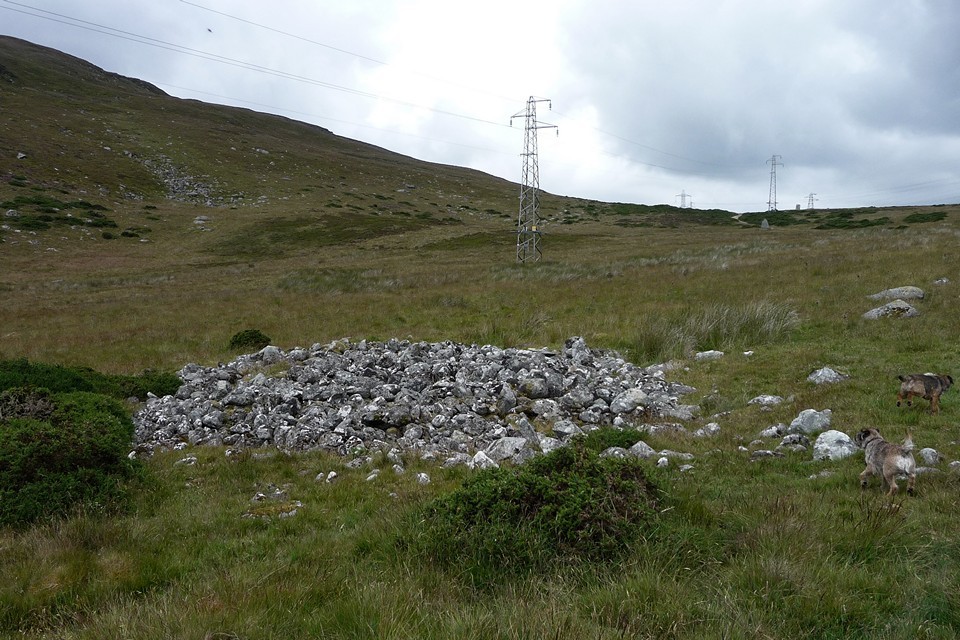
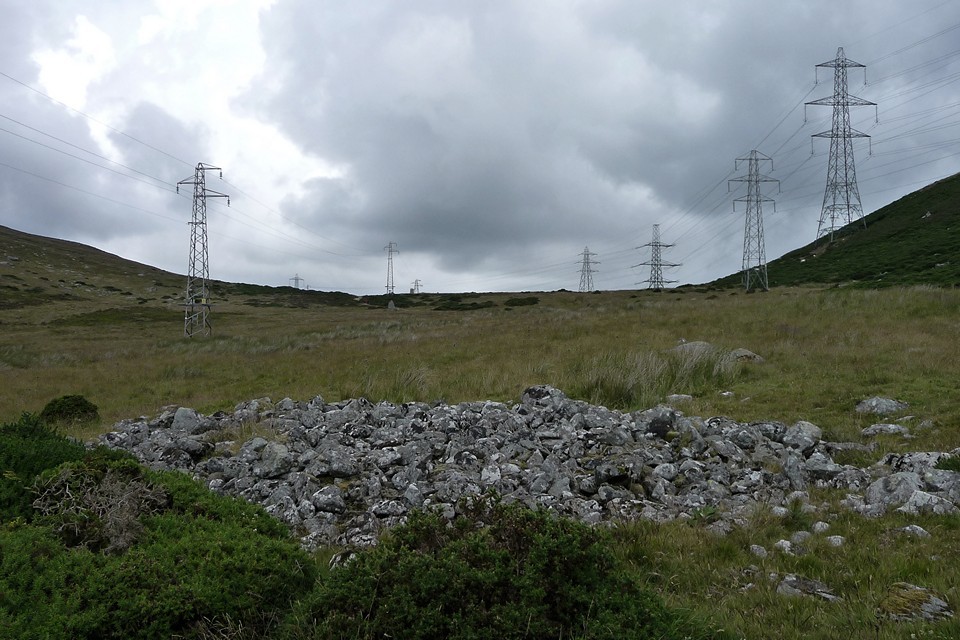
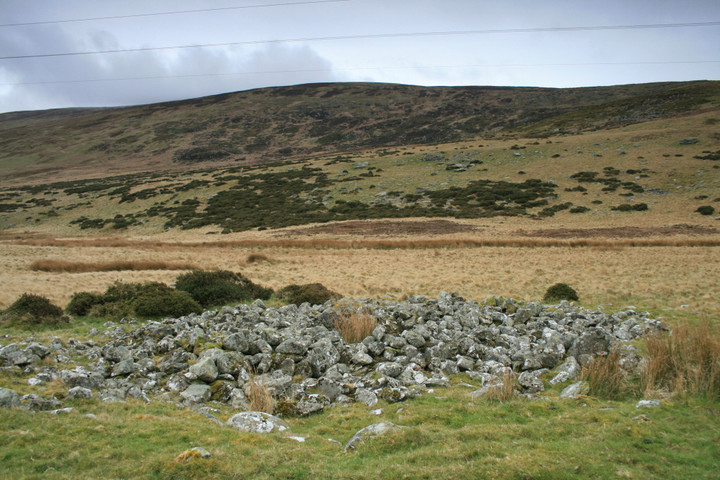
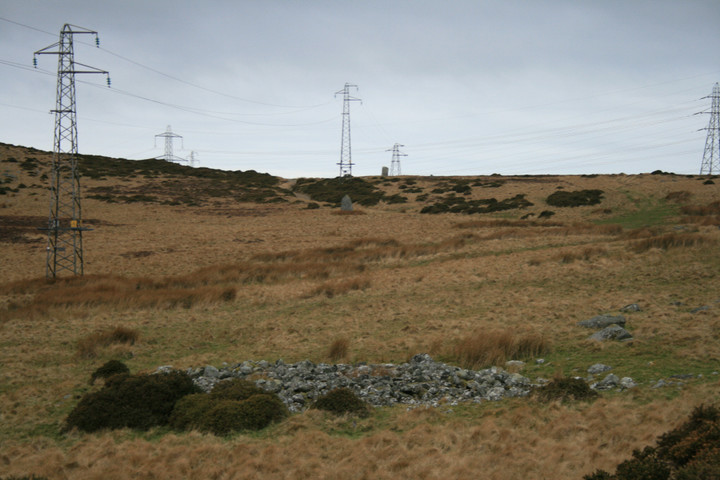
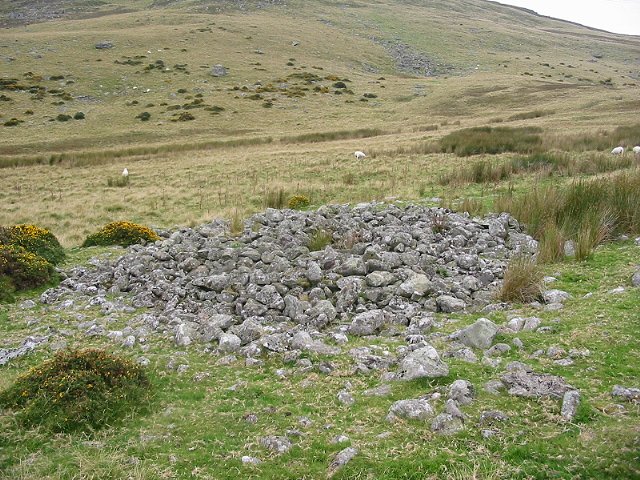
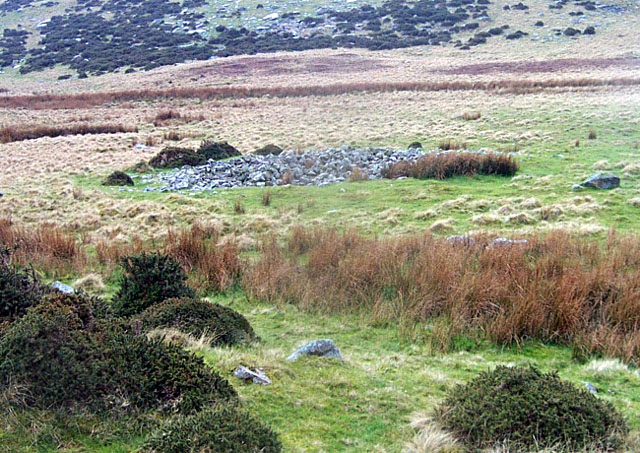
From stone circle to cairn. Barclodiad y Gawres is a good size (15-20m irregular diameter), composed of large cobbles with a central scoop. It’s dotted here and there with clumps of stonecrop, the pink-white five pointed flowers a splash of summer brightness against the grey stones. We entirely fail to see the cist, or either of the other cairns that are supposedly close by. A little way to the southeast we come across a small arrangement of stones, which look like they’ve been placed deliberately but not as anything obviously identifiable. Blossom’s dogs find nice big boulders to stand on and survey the area.
The visual focus is the prominent Bwlch-y-Ddeufaen standing stones, visible from here, nestled in the v-shaped pass between the ridges of the Carneddau and Foel Lwyd. The flanking pylons fail to detract from the setting, despite their best efforts.
Elsewhere this cairn would be worth a proper stop, but here it’s probably the least arresting of the day’s sites. And we can see the next one already, so it’s time to head off.
Another Barclodiad y Gawres can be seen almost perfectly west of here 25 miles away on Angelsey, but the two are very different monuments.
This Apronful of stones is much smaller with no big chambers or rock art and is also in a very different kind of place, Angelsey's is right by the sea, you cant even see the sea from here, this Apronful is very much mountain oriented.
The two big stones of Bwlch y Ddeufaen are very close and visible to the north west. Just to the north across the track is one of those natural burial chamber type things.
In the middle of the pile of stones is a hole, a scoop, a depression where supposedly a cist/chamber was once to be found. The cairn is actually much larger than the stones on the surface would suggest, approximately twice as large. I have been here before and posted a couple of images, but strangely no field notes, but I no longer have any pics on my computer so that is partly the reason for my return visit. It is also so close to Cerrig Pryfaid that to not come up here would have been very remiss.
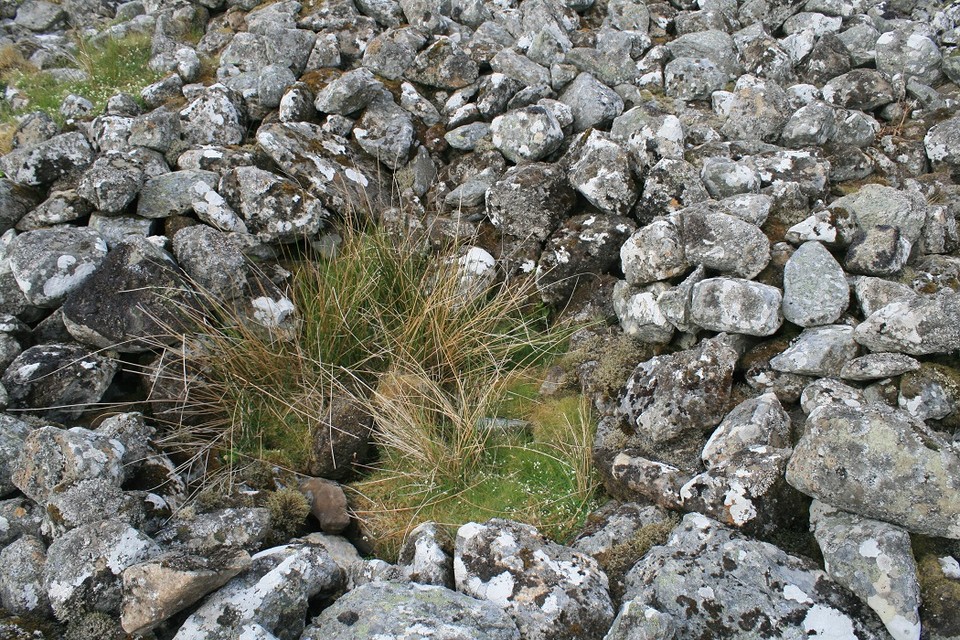
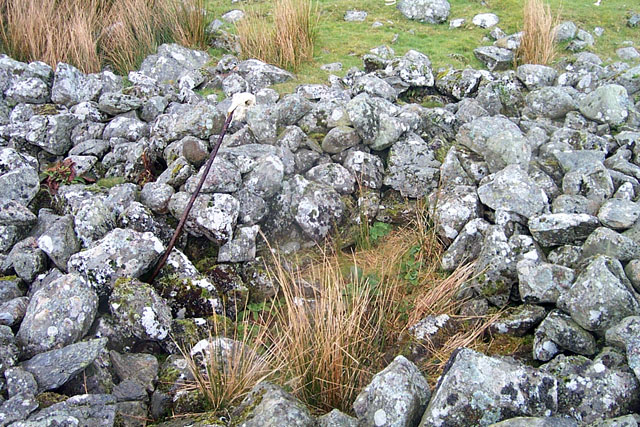
I had one of those moments here. Stood in the long spiky grass next to the pile of stones, I saw what I reckoned was the remains of the chamber. But then I talked myself out of it, and didn't take a pic. Found out later they are! Dog.
About two miles and a half further on is the pass of Bwlch y Ddwyfaen, formerly distinguished by two large stone pillars fixed upright in the ground at about a hundred yards' distance from each other. Only one of them, that to the left of the road, is now standing. It is a block of stone, about ten feet high, quadrilateral at bottom and tapering to a point at top. It has tthe appearance of having been originally a huge boulder, partially and rudely cut on the sides, and then placed upright in the ground.
The other stone, a little further on to the right of the road, has fallen down, and has evidently been partially cut by rude workmen. These stones once probably belonged to a large circle.
Near them, to the left, is a mutilated cairn of loose stones. All these stones, according to local tradition, came there in somewhat an odd manner. A giant and his wife, many centuries ago, were travelling along this route to Anglesea. At this spot, they met a rustic of whom they enquired the distance. The poor fellow shook his head, and lifting up his feet, protected only by the remnants of what were evidently once thick wooden clogs, informed his astonished hearers that these were quite new when he quitted the island, and that he had walked direct from it ever since. The giant's wife was so discouraged by this that she gave the whole matter up as a bad job, and in her despair let fall the contents of her apron, these identical stones.
If these roads in ancient times were anything like what they now are, we can readily believe in the state of the rustic's clogs. They are quite rough enough to wear out soles of any thickness, whether of leather or of wood. Ours were in a rare state by the time we got to the station in Aber, between five and six miles further on.
From p120/121 of 'Notes of Family Excursions in North Wales', by J. O. Halliwell, 1860. Online at Google Books.
 Log in |
Register
Log in |
Register


 0 discussions


 Show map (inline Google Map)
 Add an image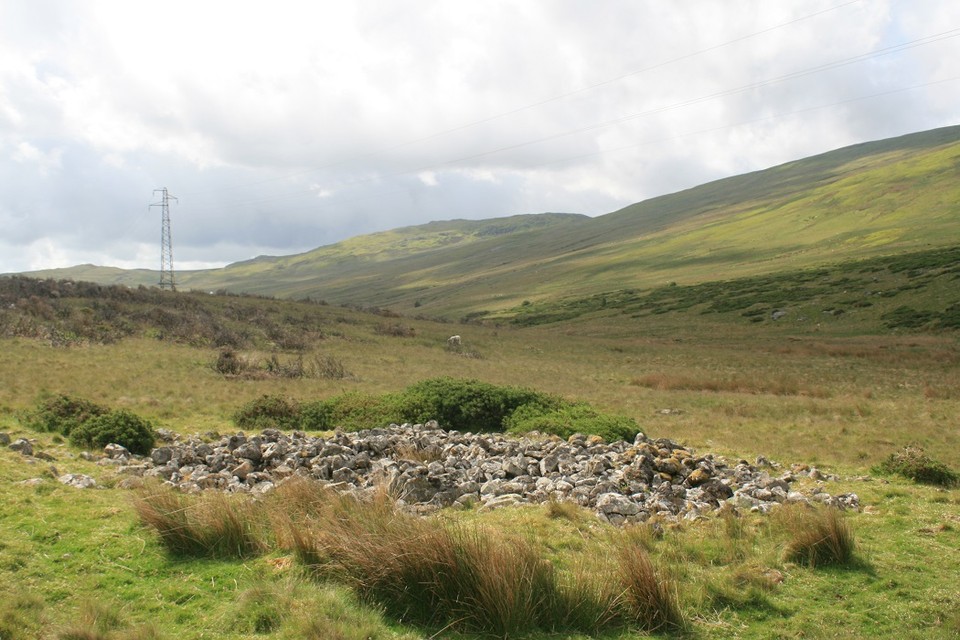

 Artistic / Interpretive: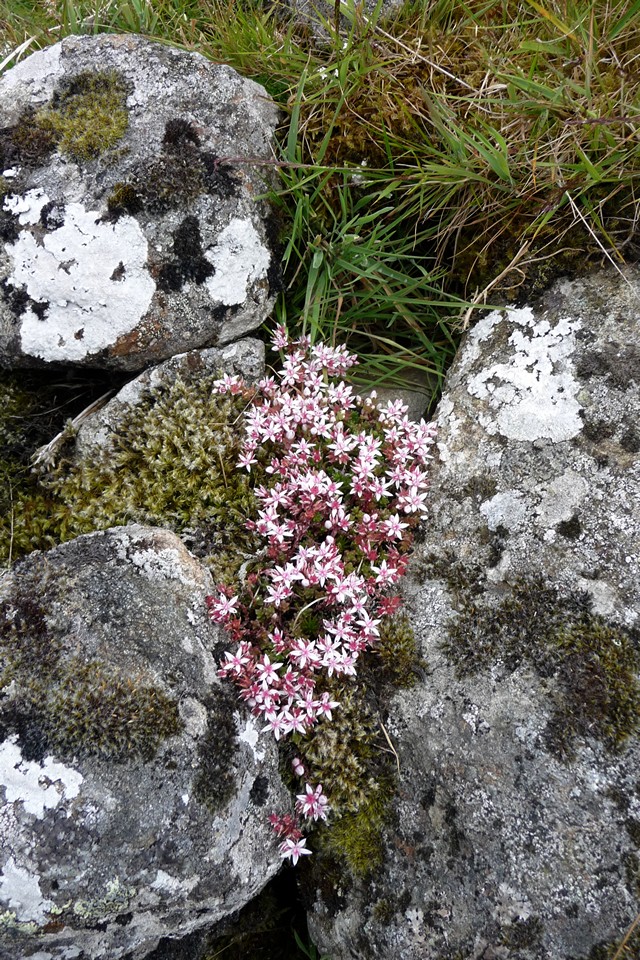
 Posted by thesweetcheat
 Posted by postman
 Posted by stubob
 Posted by IronMan
 Posted by Rhiannon
 Top of page