|
 Log in |
Register Log in |
Register
|

|
|

Hamdon HillHillfort
|


 Show map (inline Google Map)
|
|
|
News |
 Add news Add news |
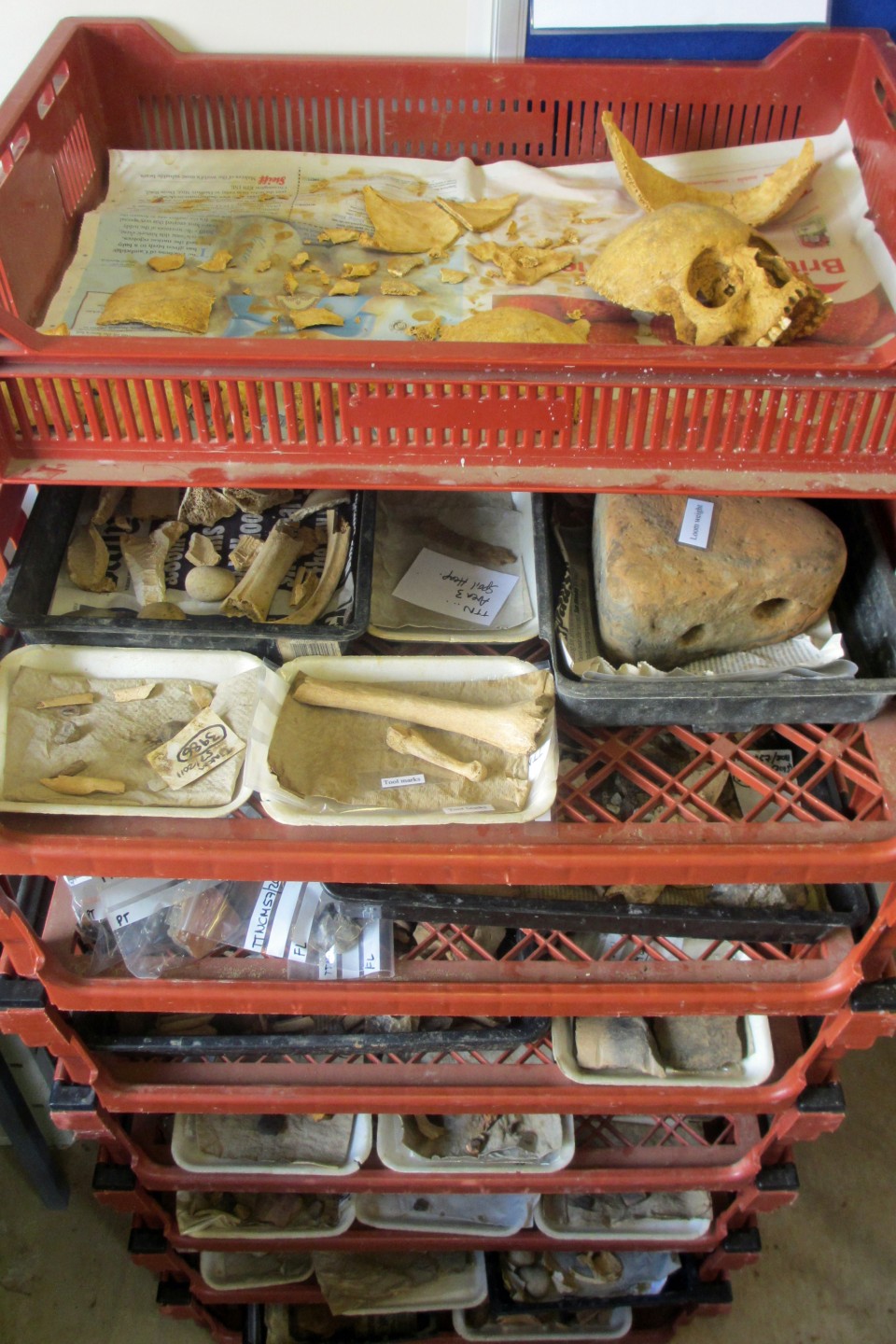
Ham Hill fort dig reveals 2,500-year-old human remainsHuman remains more than 2,500 years old have been found in the UK's largest Iron Age hill fort in Somerset. Archaeologists from Cardiff and Cambridge universities began excavating Ham Hill two years ago when a trial dig revealed an Iron Age skeleton... continues... |
 Posted by moss
3rd September 2013ce Edited 3rd September 2013ce |

Iron age hill fort excavation reveals 'possible suburbia'The most intensive investigation ever undertaken of Britain's largest iron age hill fort is expected to reveal new details of how Britons lived 2,000 years ago – and maybe even that they were almost as suburban as we are... continues... |
Posted by moss 11th September 2011ce |
Images (click to view fullsize) |
Add an image |
Photographs: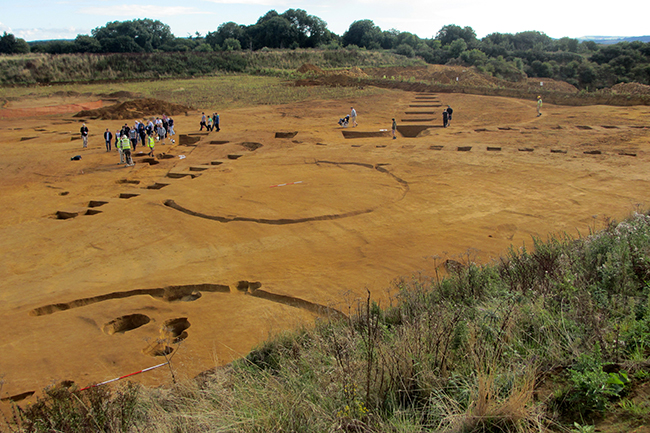
 Maps / Plans / Diagrams: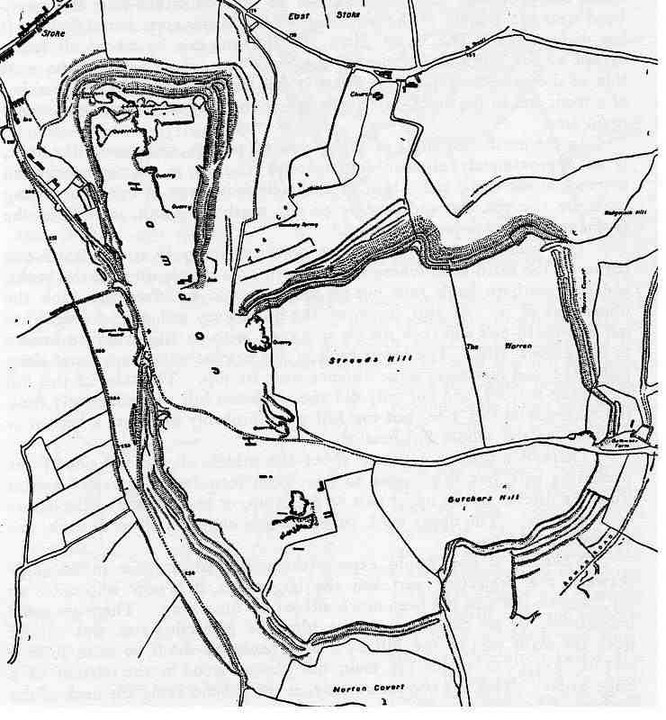
|
Fieldnotes |
Add fieldnotes |
|
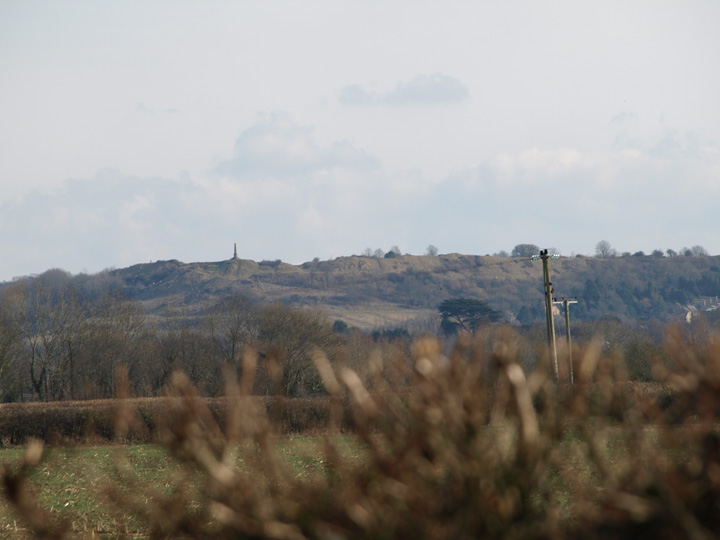
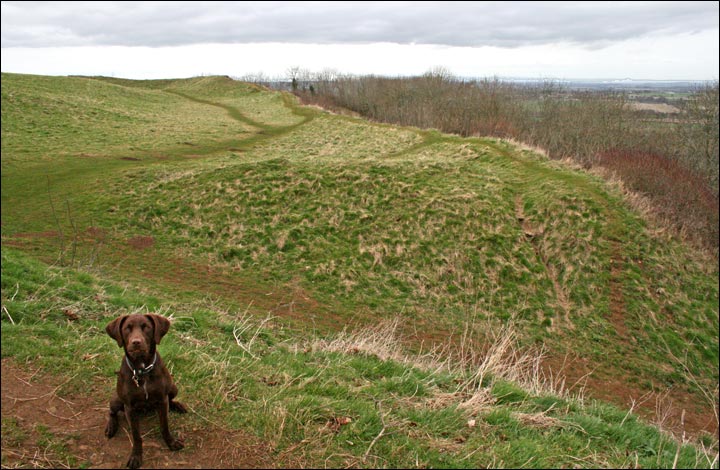
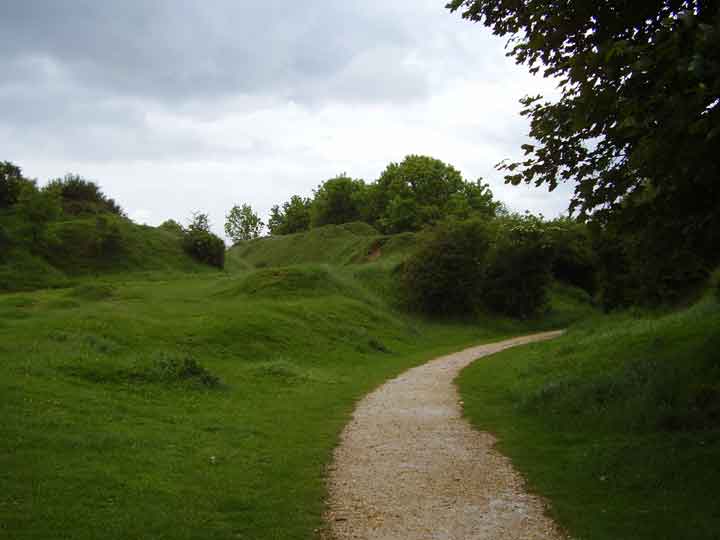
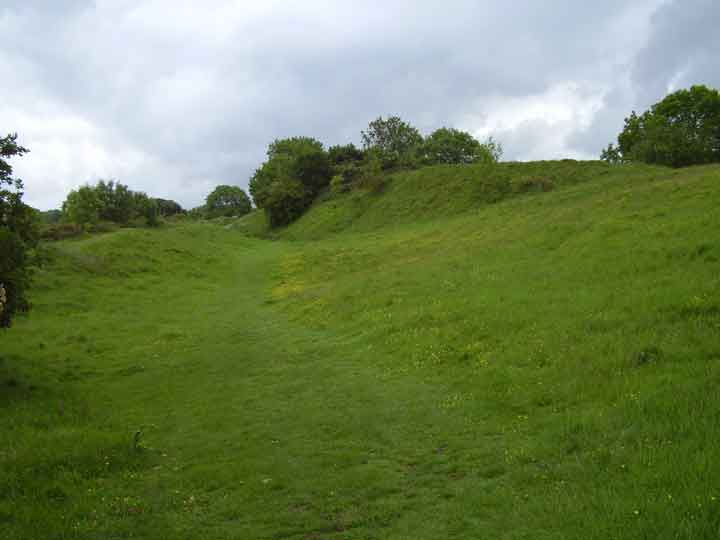
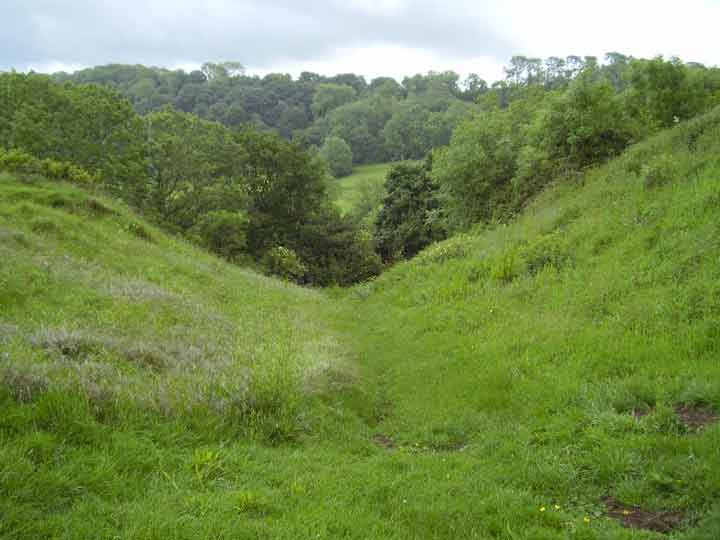
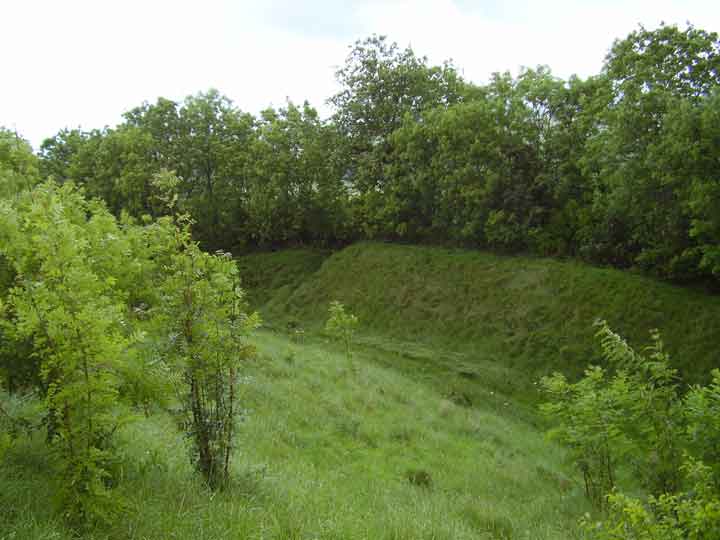
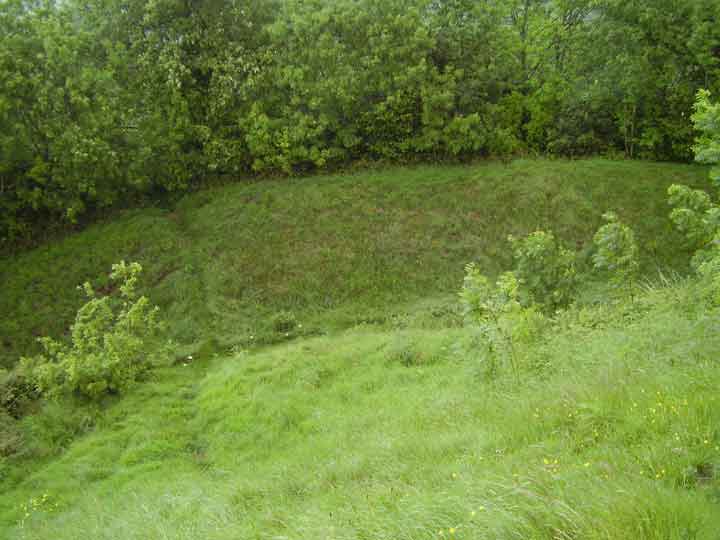
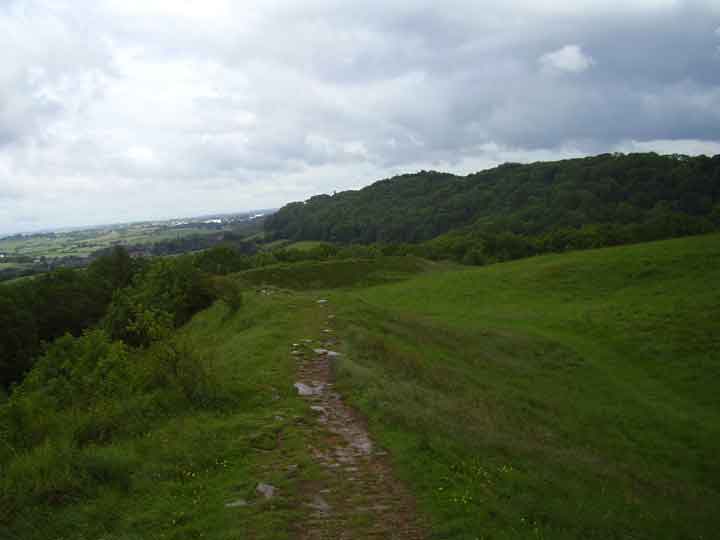
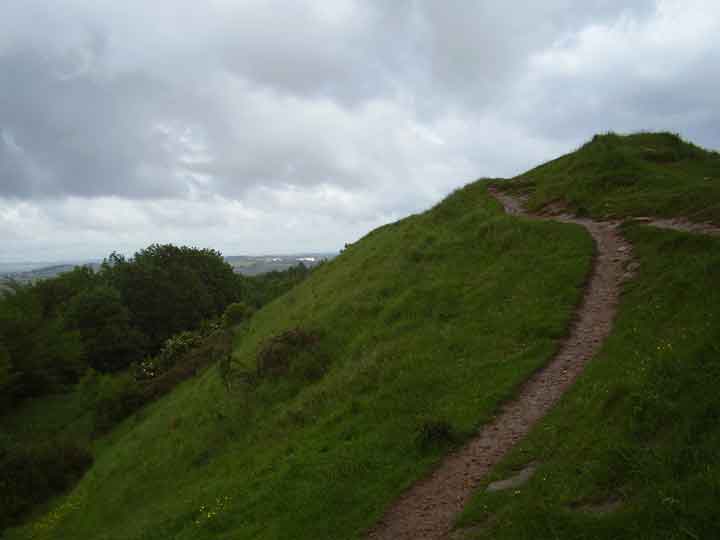
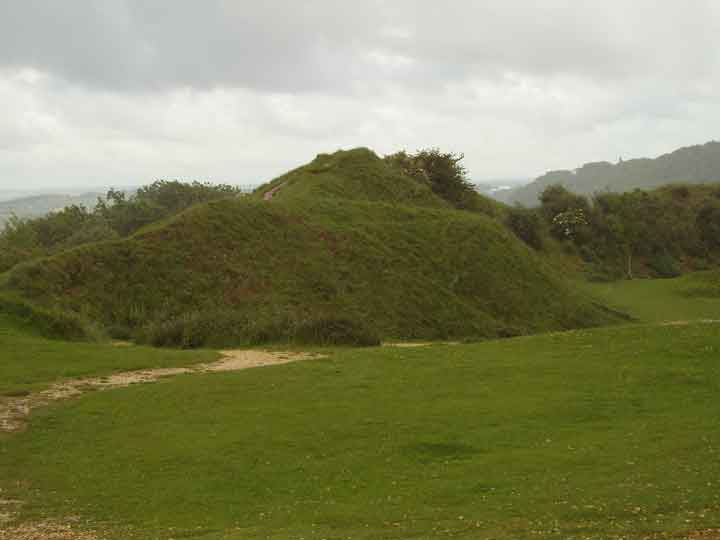
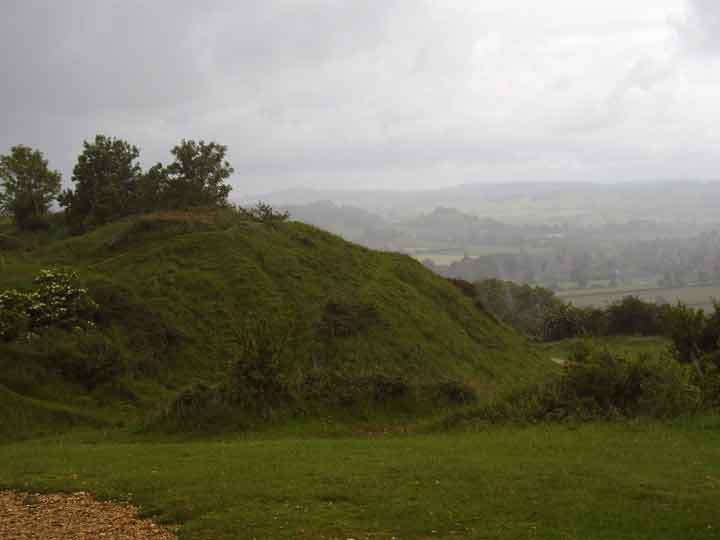
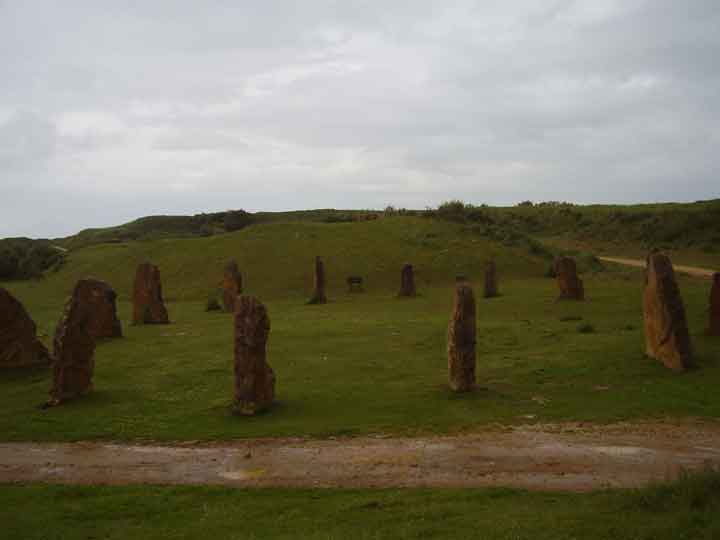
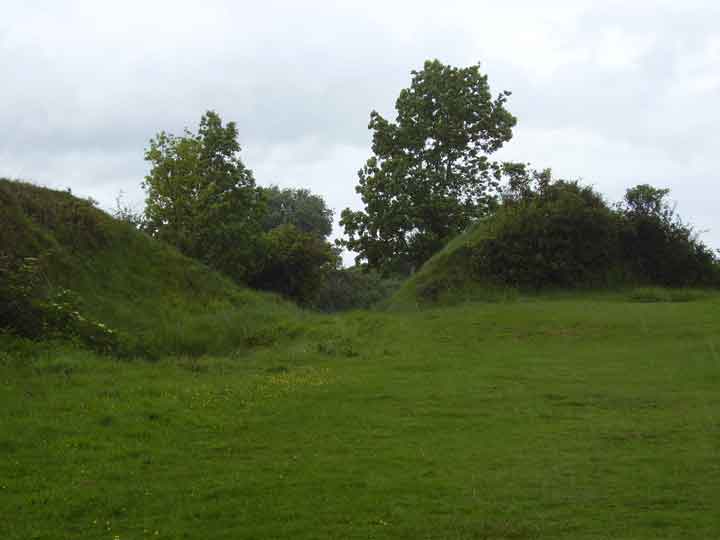
This is a massive and quite confusing site. The outer ramparts are three miles in length and enclose an area of 210 acres. The confusion is in large part to do with the amount of quarrying that is and has taken place on this site. What look like banks are spoil heaps, only once you get to the outer edge of the hilfort does it become more clear what is going on. It commands a hilltop with 360 degree views of the surrounding country. The easiest part to walk around is the northern end, where there is a large war memorial. This is a mainly bivallate hillfort, with a third bank and ditch at some lower points in the perimeter. Within the interior is a modern stone circle, which I have included to show the stone which is still being quarried from this site. Most of the surrounding villages are built of this redddish stone. |
 Posted by formicaant
31st May 2007ce Edited 31st May 2007ce |
Folklore |
Add folklore |
A curious superstition (says a Somersetshire correspondent) has come to light in Mid-Somerset. It seems that the labouring classes in that locality, like those of most other rural districts in England, hold or held sacred certain supposed prophecies of "Mother Shipton," whose topographical knowledge, if we are to believe all that is said of her, must have been little less marvellous than her insight into the future.Those crazy provincials. From the Pall Mall Gazette for April 14th, 1879. |
 Posted by Rhiannon
1st November 2012ce |

The Somerset HER website describes this as possibly the biggest hillfort in the country! covering the whole top of the hill. And there are finds from Mesolithic to R*man times. So you'd think there'd be room for a few ghosts.Hamdon Hill is, as some might say, 'seriously haunted', with descriptions of 'bizarre shapes outlined by light' to those of Roman soldiers walking the hilly ramparts.Mr G. allegedly asked his friend not to share the story with anyone until after his death (which the book says was the year after his experience). From 'Haunted Somerset' by John Garland (2007). I so want the nearby knoll of 'St Michael's Hill' (known as Lodegarsburgh in Saxon times) to have prehistoric significance. But if there ever were traces they've been destroyed by the overlaying layers of Norman castle. It's got interesting (and madly complicated) stoney folklore, according to Alan Holt's 'Folklore of Somerset' (1992). A blacksmith dreamed that Jesus told him to dig on the top of the hill. He had to dream it three times before he was convinced. In the hole he found a 'great stone which miraculously split in two, and in the cleft they saw a great crucifix of glistening black flint. Beneath it was a smaller one, an old bell and an old book.' Then the Dane Tofig stuck the cross on the back of a cart, drawn by 12 red oxen. The oxen didn't want to go anywhere except Waltham, where Tofig built his Abbey. He displayed the crucifix and when King Harold turned up it bowed to him. Giant stones? Flint? Blacksmiths? Red oxen? Crucifixes? Mental. |
Posted by Rhiannon 17th April 2009ce Edited 20th April 2009ce |
A writer on Somerset superstition in Cassell's Family Magazine for November, 1890, says: "The prophecies of Mother Shipton are nowhere more widely believed in than in the county of Somerset. Not long ago a report was in circulation that a great catastrophe had been predicted by this old sage. She had prophesied that Ham Hill, one of the great stone quarries of Somerset, would be swallowed up on Good Friday. This catastrophe was to be the consequence of a tremendous earthquake, which would be felt all over the county. Some of the inhabitants left the neighbourhood to escape the impending evil; others removed their crockery and breakable possessions to prevent their being thrown to the ground; others, again, ceased cultivating their gardens. Great alarm was felt, and Good Friday was looked forward to with universal anxiety. And yet when the day came and went without any disaster at all, even that did little to dispel the faith in Mother Shipton; the calculator had made a blunder about the date, and it was not her fault; and many Somersetshire folk are still waiting, expecting to suffer from the prophesied catastrophe.The Folk-Lore of Somerset Edward Vivian; F. W. Mathews Folklore, Vol. 31, No. 3. (Sep. 30, 1920), pp. 239-249. |
Posted by Rhiannon 1st October 2006ce |
|
Ham Hill has a feature called the 'Frying Pan' which was thought to have been a Roman amphitheatre at one time - but it's really a bit small. According to an informant from Stoke under Ham in 1908, every girl or woman who visits must sit down and slide from top to bottom of the bowl - 'it's lucky'. Ruth Tongue adds: "Surely here is a relic of pagan rites such as those embodied in the game of Trundles and others." Well, maybe and maybe not. And what is this game of Trundles anyway? The word must come from OE trendle = a circle; there are other round Trundles you can visit at ancient sites. from 'Somerset Folklore' by Ruth Tongue, 1965. |
Posted by Rhiannon 24th August 2005ce |
| An underground passage at least a mile long is said to lead from Montacute House to Ham Hill. Ham Hill is the site of a huge 210-acre hillfort, one of the largest in Britain. Although it is now much damaged by quarrying there are apparently still some very impressive ramparts to be seen. |
 Posted by pure joy
21st March 2003ce |
Miscellaneous |
Add miscellaneous |
|
Details of hillfort on Pastscape [ST 483164] Hillfort [GT] (1) A multivallate Iron Age hillfort on Hamdon Hill more generally known as Ham Hill, encloses an area of 210 acres and has a 3 mile perimeter. Due to extensive quarrying of the Ham stone since Roman times the entrances are difficult to determine, but a turning in of the banks at the north-west and south-east of the fort, probably indicate them. Numerous finds, most of which have come from the over-burden during quarrying operations, and also from excavations in the north-western sector by H. St. George Gray in 1923-5 and 1929 testify to occupation of the area at least from Neolithic times. The most intensive occupation of the hill-fort appears to have been in the 1st cent. B.C. and during the first 60-70 years A.D. This is attested by numerous finds including a late - probably Belgic - pit burial; pottery sherds of Halstatt form (IA 'A'); bowls of Glastonbury type (IA, 'B' or 'AB'); bead-rim vessels and other forms of south-western type dating towards the time of the Claudian conquest; a bronze bulls-head of Celtic type (possibly an ornamental chariot fitting); chariot horn caps; iron tyres of wheels; bridle-bits and nosebands. Iron currency bars have been found, also silvered bronze coins of the Durotriges. In 1930 excavations revealed a closely grouped area of dwelling and storage pits of pre-Roman date. There is also considerable evidence of further occupation of Hamdon Hill during the Roman period, including a villa situated in the east part of the fort (ST 41 NE 8). Miscellaneous finds include a Saxon shield boss of iron, and a 14th cent. jug spout and bronze spur. The majority of the finds are in Taunton Museum, primarily in the Walter and Norris collections. (2-4) Ham Hill is a bivallate contour following hillfort but in the S.W. corner it becomes trivallate. It is well preserved on all but the W. side where random quarrying makes it difficult to identify the ramparts. Two entrances can be positively identified; in the S.E. corner and on the E. side of the northern spur. Published survey (1/2500) revised. (5) No change; survey of 10.1.67 correct. (6) Traces of an Iron Age settlement have been identified within the northern spur of the hillfort by Gray's excavations during the 1920s (7-9) and from artefacts recovered over a period of time during quarrying and a watching brief (10). It was originally thought that only the northern spur was occupied, and was separately fortified from the rest of the hillfort which was used as a cattle pound. Excavations carried out in 1983, identified pits containing daub, grain and probable second century BC pottery within the southwestern area of the hillfort. These excavations have shown that parts of the interior were devoid of structures, and that there was settlement beyond the area of the northern spur. (10-13) Burials have been identified on Ham Hill (ST 41 NE 70) including one with weapons and chariot fittings (ST 41 NE 71). Iron currency bars have also been recovered (ST 41 NE 72). For details of Neolithic, Bronze Age and Roman occupation see child records. (compiler - J Lancley) ST483164. Ham Hill consists of a plateau of shelly limestone with a spur projecting from its north-western corner. The sides of the plateau and spur are steep and their upper edges are followed closely by the hillfort defences. The defences at the northern and southern edges of the plateau have marked angles in their courses where major geological faults are encountered and negotiated. The total length of the inner circuit of the defences is 4.9km. The form and number of defensive elements is fairly uniform throughout. The upper part of the hillside has been scarped to produce a steep inner rampart face. Generally the top of the inner rampart lacks a bank, or at least one of any significance, the major exception being the north-western spur where a prominent bank is present on the northern and eastern sides. The foot of the inner rampart is followed by a ditch which in places, especially where the natural slope is very steep, becomes a ledge or terrace. Beyond the ditch there is a second rampart represented by a bank. Where there is a terrace instead of a ditch the outer bank is replaced by a steep, outward facing scarp. Exceptions to this general pattern occur on the western side of the plateau and near the north-eastern corner of the spur. In these areas the defences are strengthened by an additional line of earthworks which comprise a ditch or ledge at the base of the second rampart beyond which is a third rampart consisting of either a bank or a steep, outward facing scarp. The defences are broken by a number of entrances most of which are not original features; it is possible that the gap through the eastern defences on the north-western spur was created by the Roman army. There appear to have been two early entrances, one on the south-east near Batemoor Barn and the other at the head of the combe separating the spur from the plateau on the north-west - this last probable entrance has been totally destroyed by quarrying. Geophysical survey of the interior has shown that the plateau area was extensively used in the past. Evidence for trackways, enclosures, fields, ring ditches, pits and areas of intensive occupation and industrial activity has been found (for reports see General Archive Materials below - UID/s 1005361, 1005362 and 1058425). Some of the fields are also visible as cropmarks on air photographs. A number of these sites appear to be related to the Roman villa whose principal range of buildings has also been revealed by geophysical survey in the eastern part of the hillfort. On the north-western spur a circlar depression and rectangular enclosure may relate to the use of this part of the hill for a fair during the medieval and post medieval period. South of these sites are the remains of four possible prehistoric round houses. The principal sites within the interior have been given individual NMR numbers and separately described (14). (15) |
 Posted by Chance
11th April 2016ce |
 Top of page