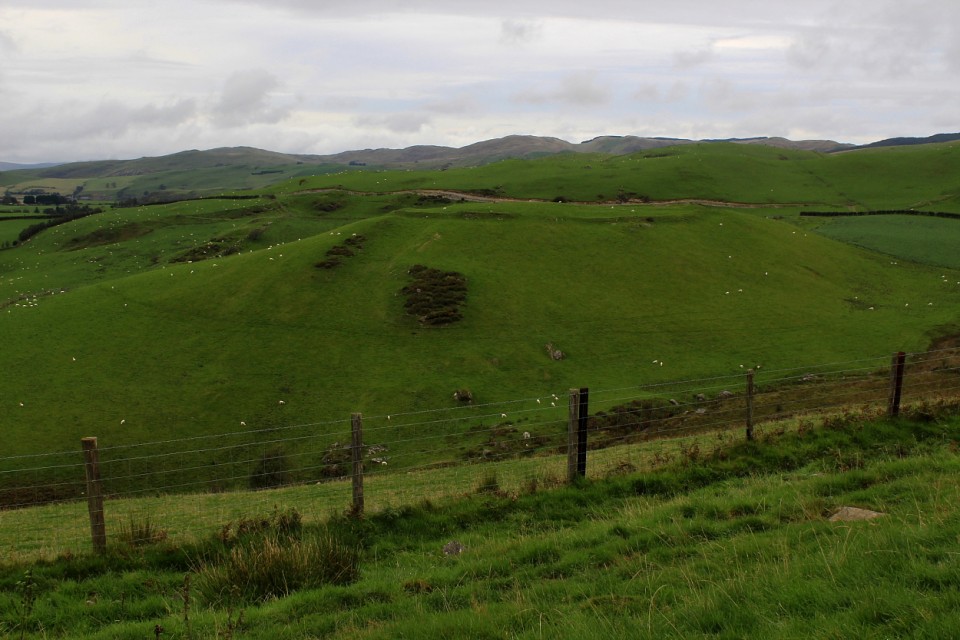
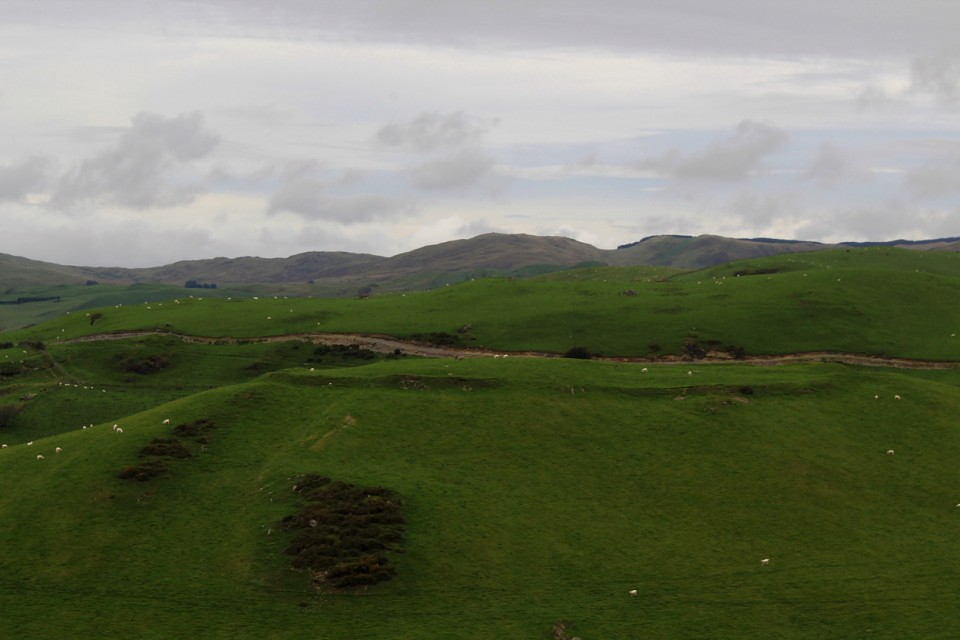
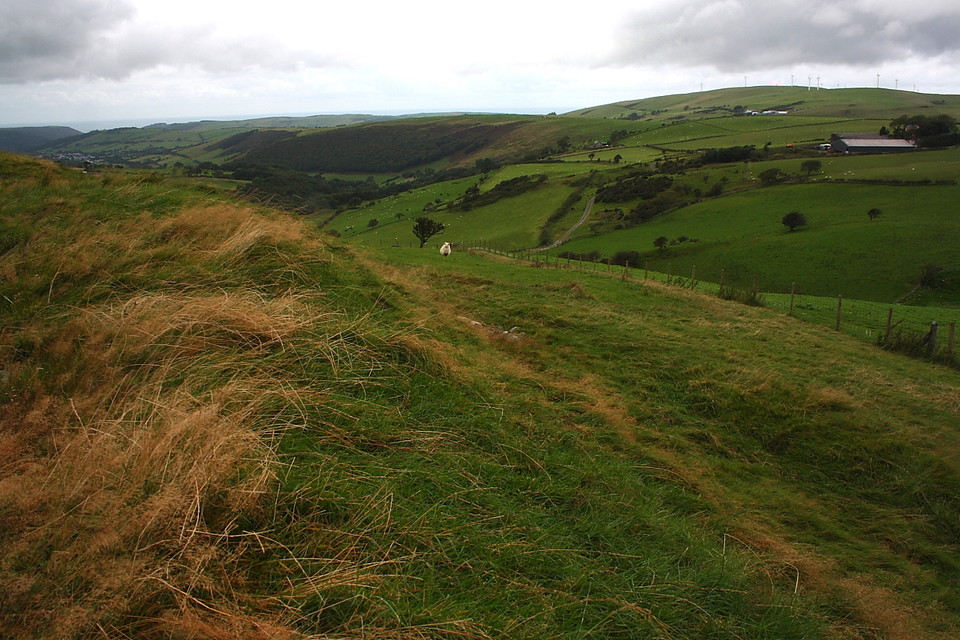
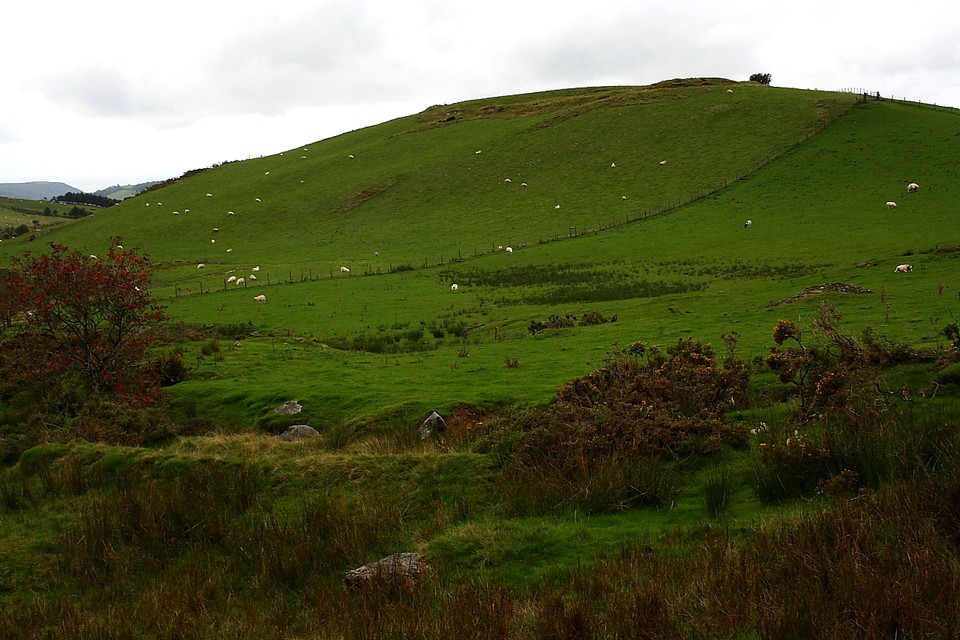
This photo clearly shows the hillfort, and to the east of the fort (about 3.5cm) is the standing stone, discernable as a small pale white dot. The stone is nearer the field boundary (marked by a white track) than the fort itself.
Visited 13th March 2003: I've regularly stopped to look at Pen-y-Castell Hillfort from the road, but you have to get a lot closer to see the standing stone (north east of the fort). The stone is local gritstone, small and squat, with an angular shape to it.
The people who erected it may well have chosen the site because of the distinctive hill nearby (later fortified) and the stream running to the south of it (Afon Stewi). The stone sits on flat ground, and is well positioned to be seen by anyone travelling along the valley between the sea and the Pumlumon area.
The two peaks of Disgwylfa Fâch and Disgwylfa Fawr to the east are very striking viewed from the coast, and may have had some significance as a symbolic gateway into the mountains. If this was the case then one of the routes towards this gateway would have taken people up the Stewi valley, past Pen-y-Castell, and the distinctive landmark of the hill. It makes sense for a stone to be erected here.
Back in the 21st Century, a public footpath runs between the stone and the hillfort, close enough for there to be no problem going right up to the stone. It's also marked on the Landranger, which is handy.
Visited 13th March 2000: After one aborted attempt last year, I finally got round to visiting Pen-y-Castell Hillfort on a lunch hour last week. The sharp winter sunlight was beautiful, but it was still very cold and windy once I got to the top.
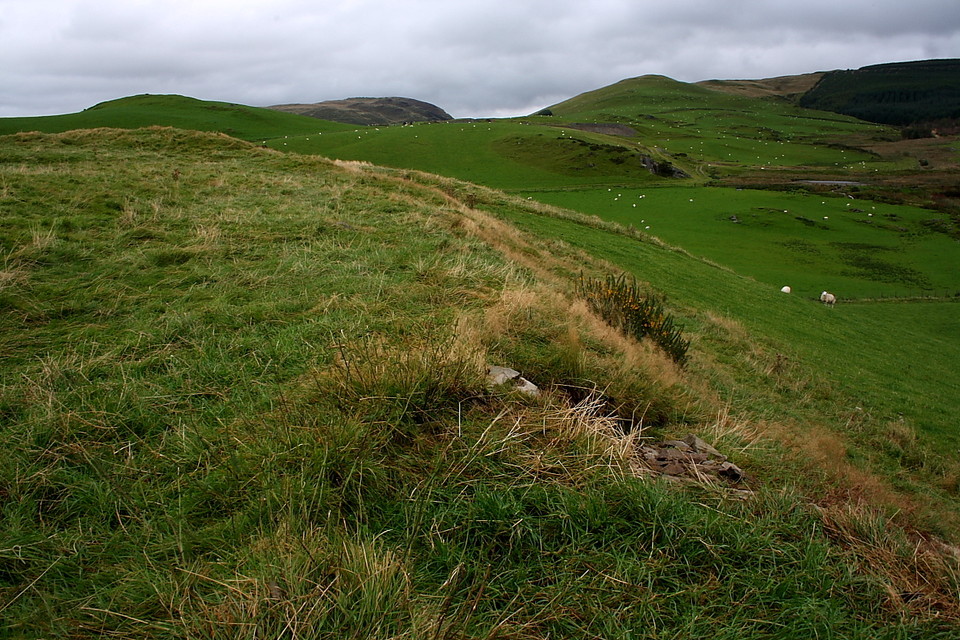
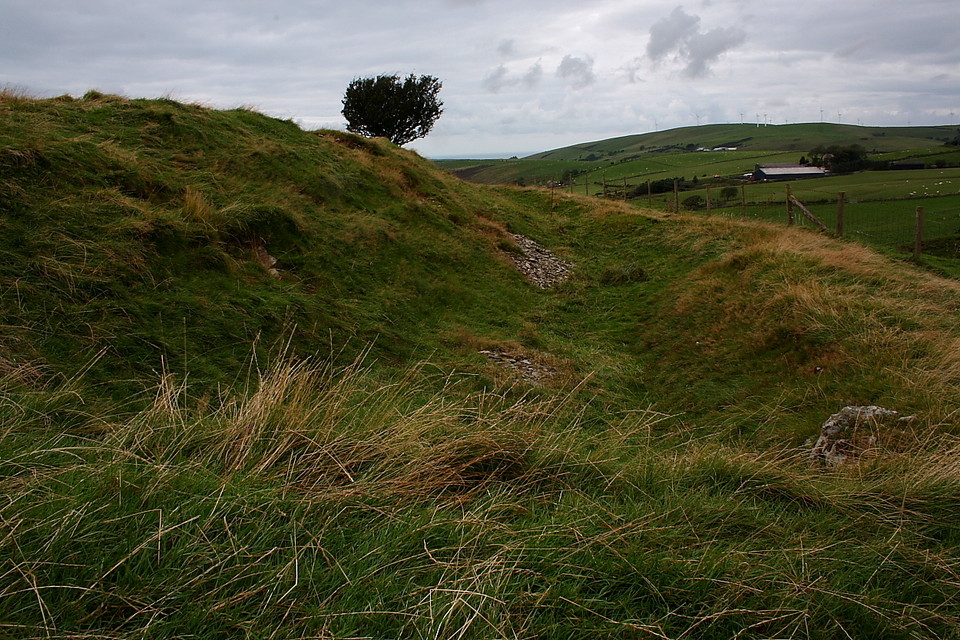
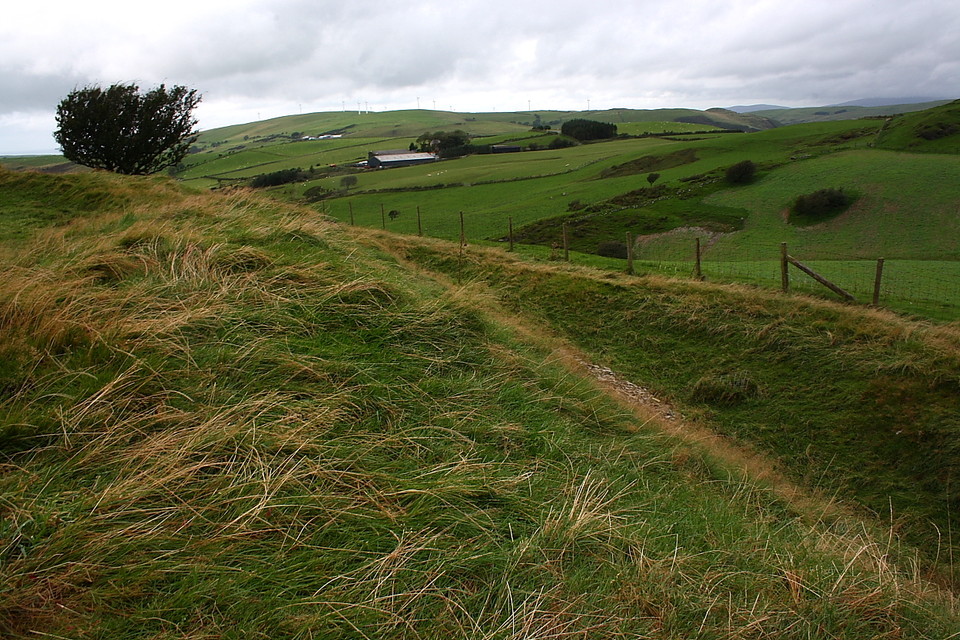
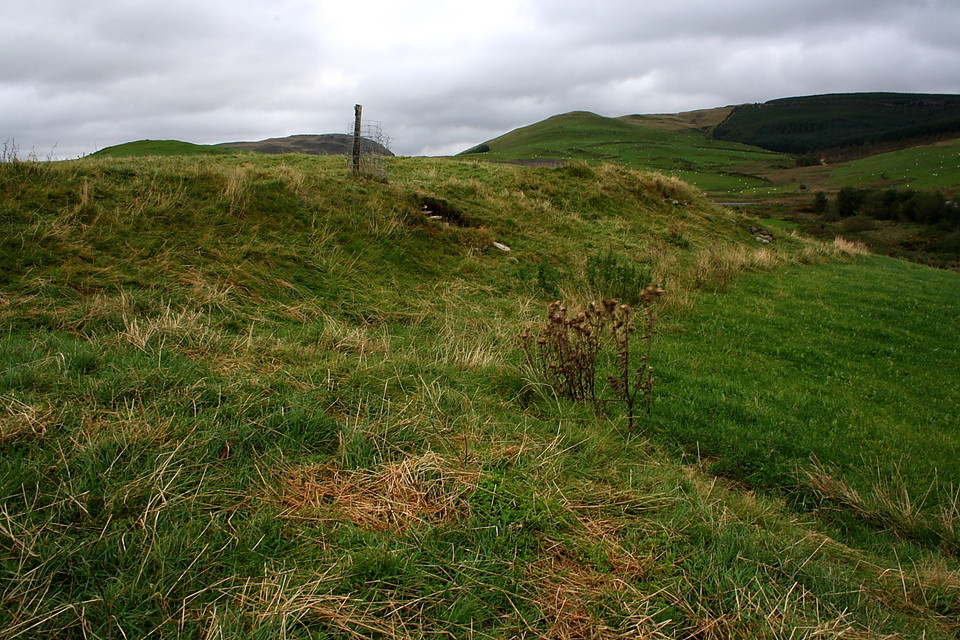
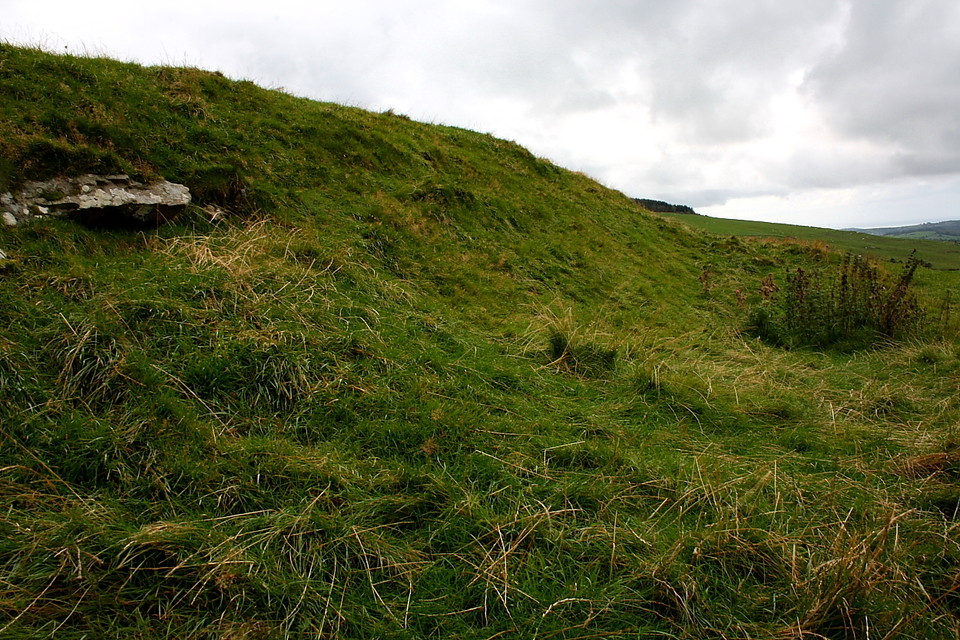
There's loads to see up there, especially considering how insignificant the fort is compared to some of its local rivals. The ramparts and ditches are still relatively well defined, especially around the entrance to the east. Modern erosion to the ramparts gives a cut-away view of the stones that make them up, and there are a number of large boulders within the boundaries of the fort that must have served some purpose when it was in use (it's unlikely that they've been lugged up there since).
The most interesting stone that appears to be part of the original fort stand on the north side of the main entrance, where there is a break in the defensive ditch. I found myself wondering whether it represents the remains of a defensive wall, or possibly the Iron Age equivalent of a kerb stone protecting wooden defensive walls from wear and tear.
As I descended the hill and made my way back to the car there were two F15 fighter planes circling overhead, presumably practising for the real thing in Iraq. I pondered the stupidity of it all, and how far mankind (I use this term intentionally) has come since the simple Iron Age defences of Pen-y-Castell. It took the edge off of an otherwise beautiful visit.