|
 Log in |
Register Log in |
Register
|

|
|

Robin Hood's StrideRocky Outcrop
|


 Show map (inline Google Map)
|
|
|
Images (click to view fullsize) |
 Add an image Add an image |
Photographs: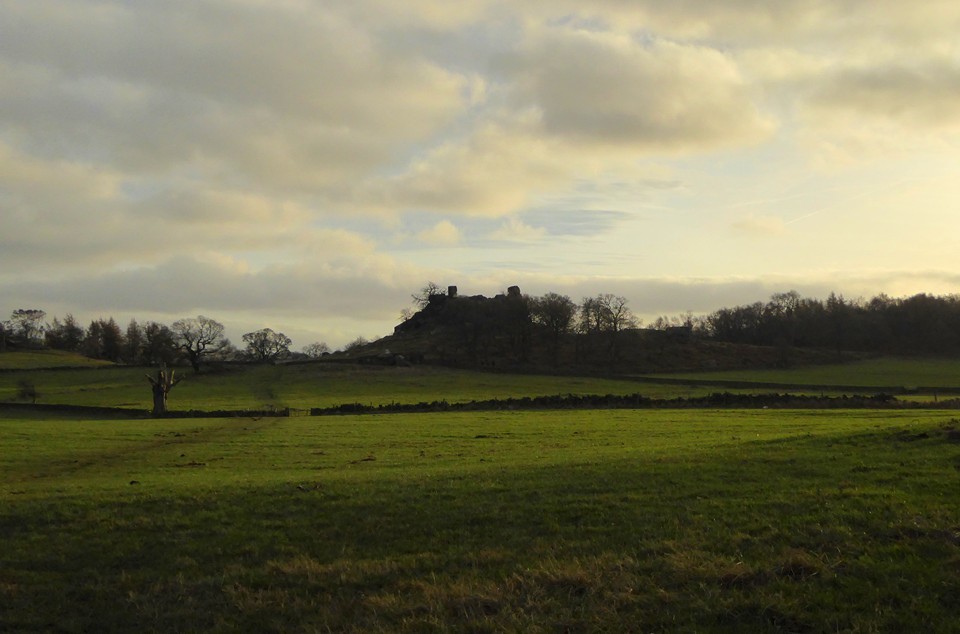



 Artistic / Interpretive: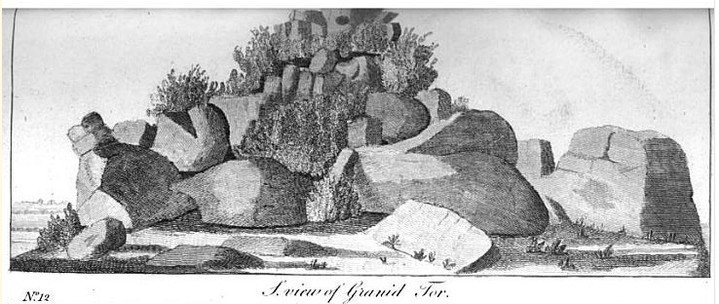
|
Fieldnotes |
Add fieldnotes |
|
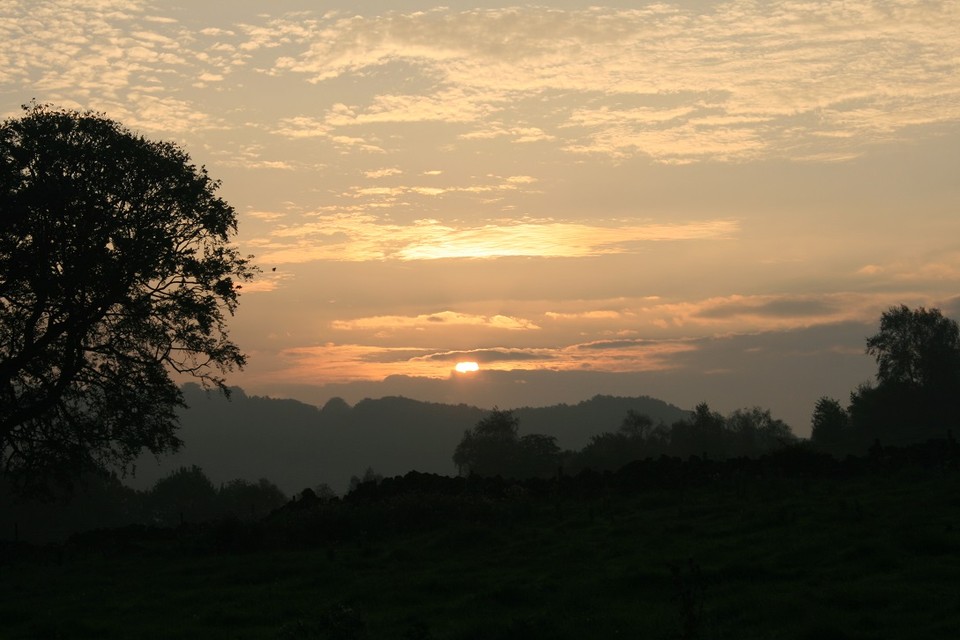
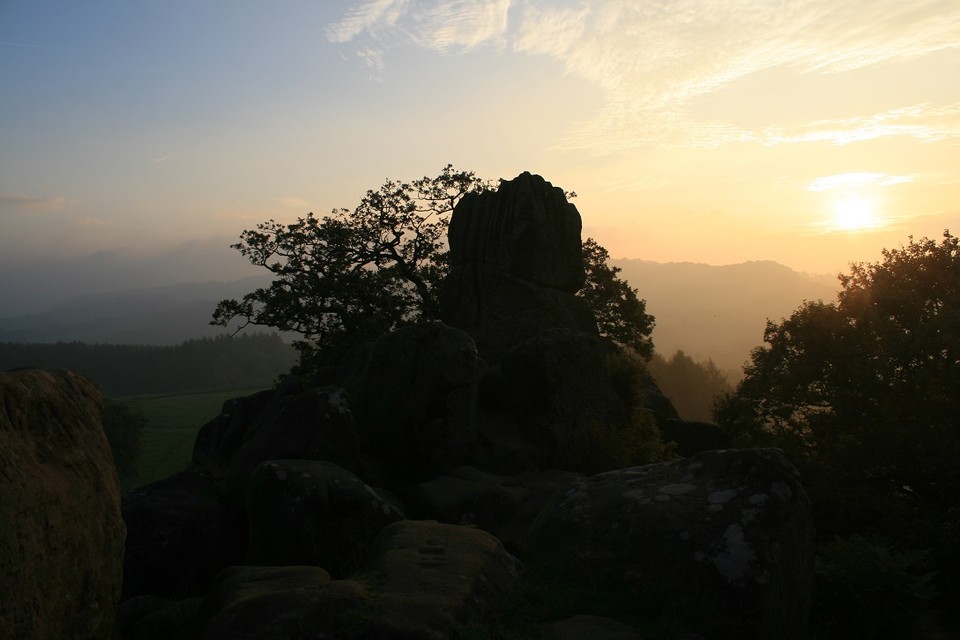
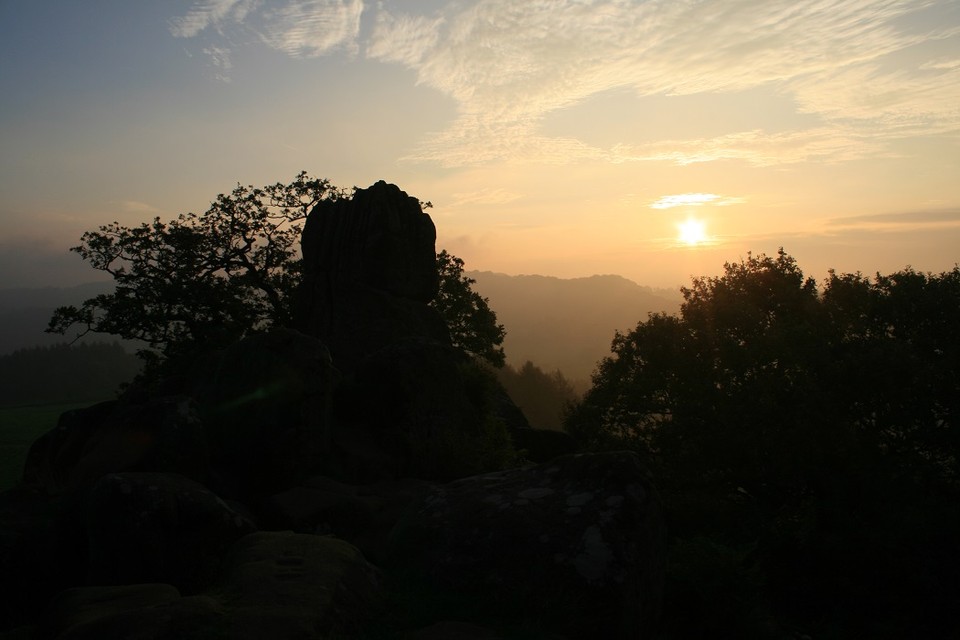
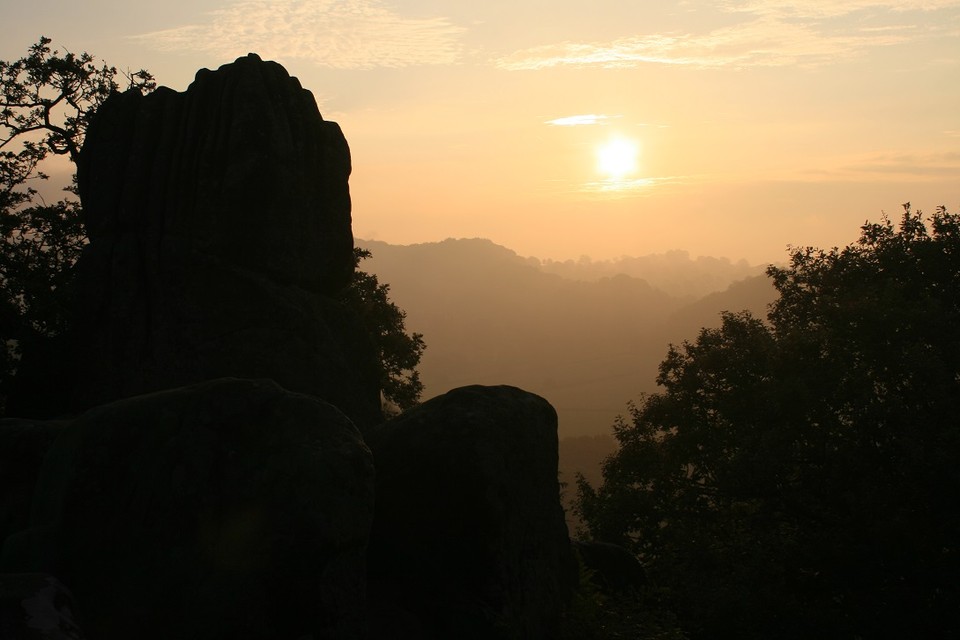
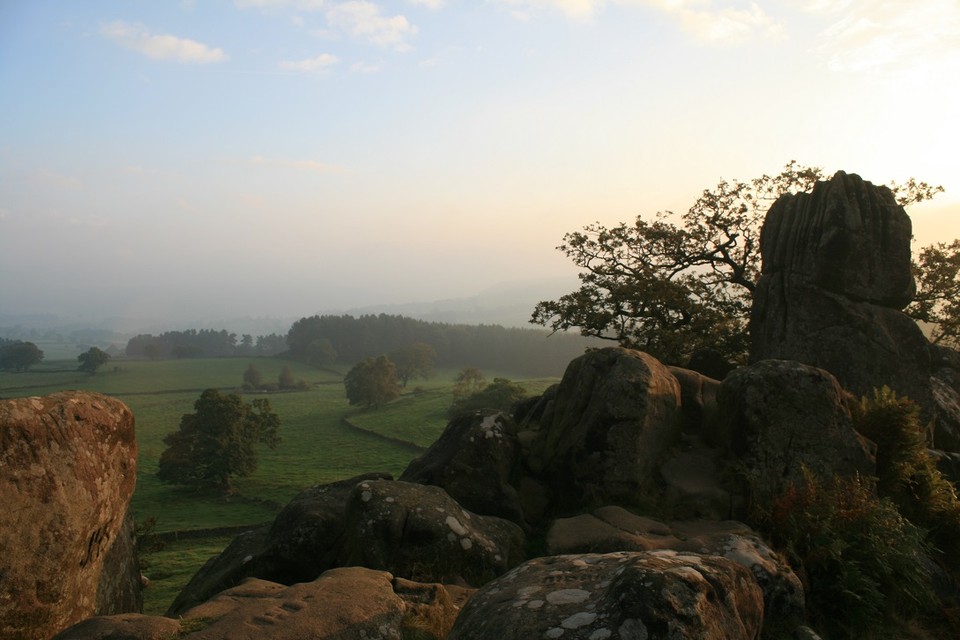
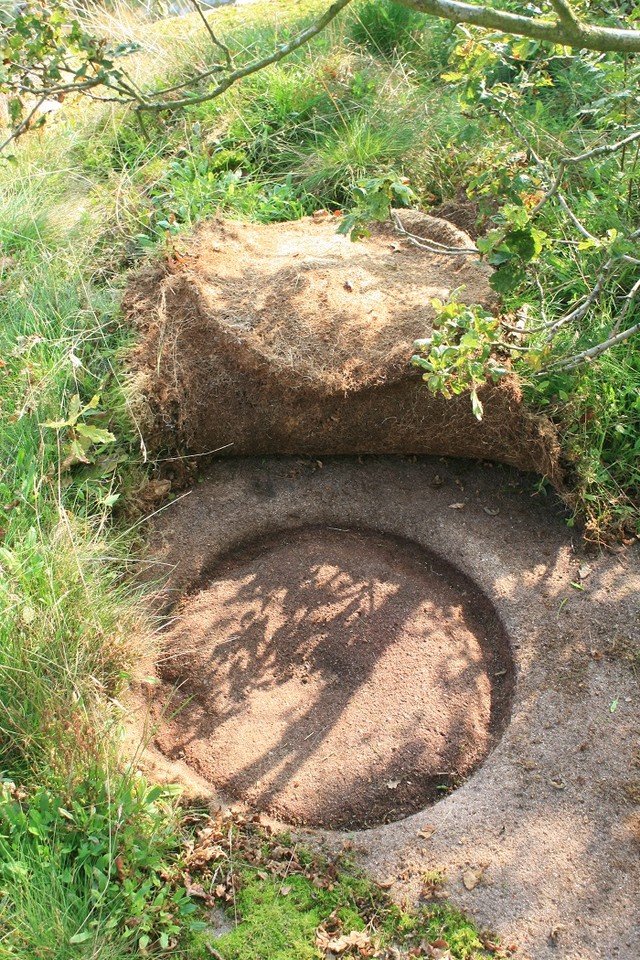
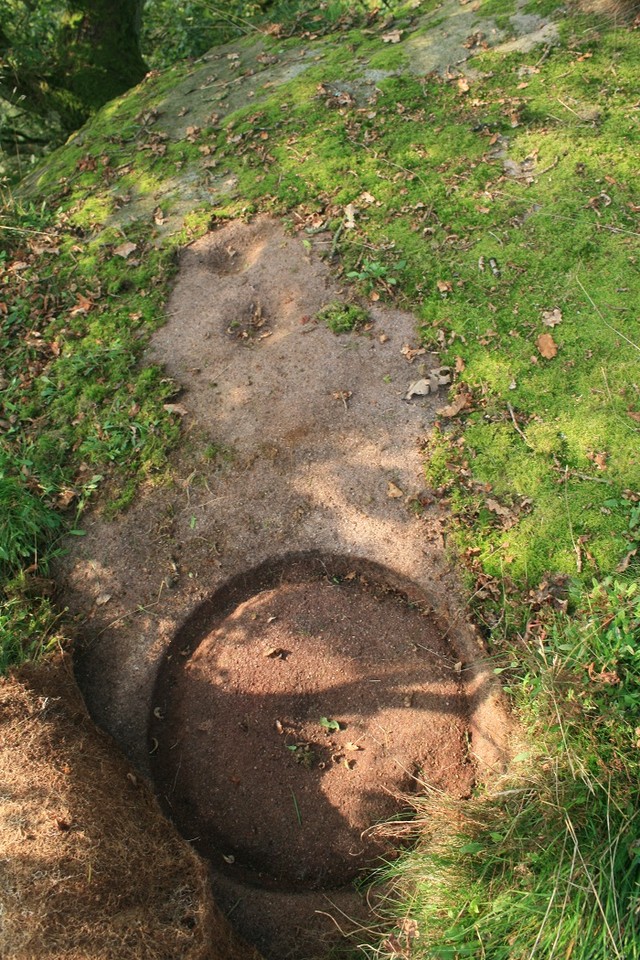
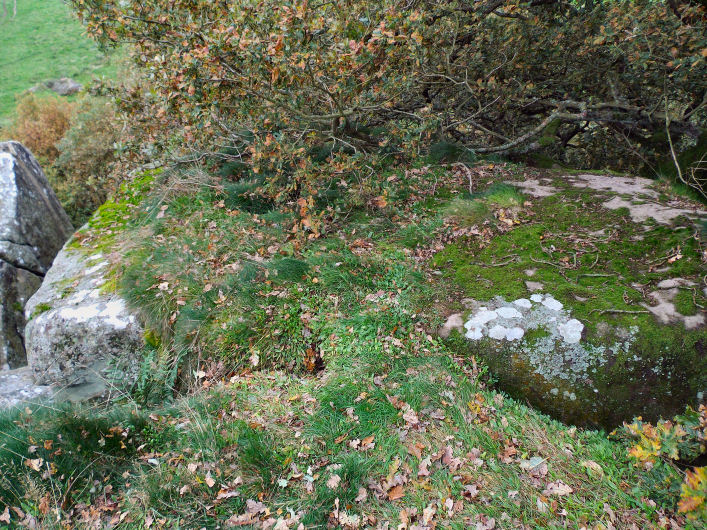
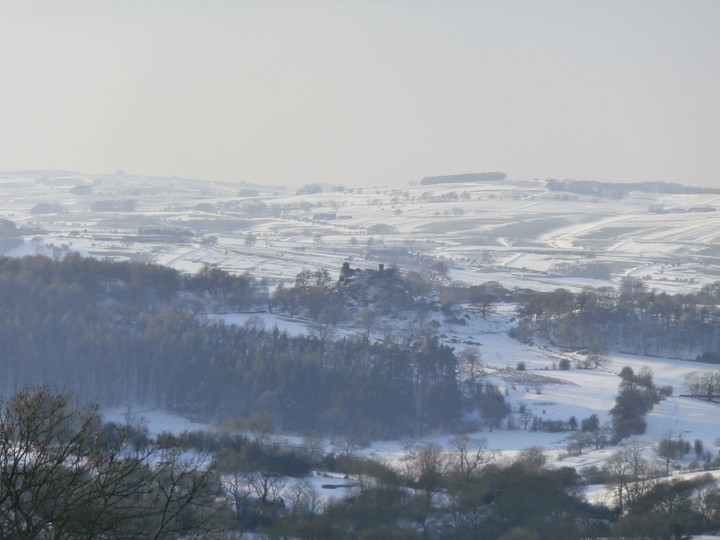
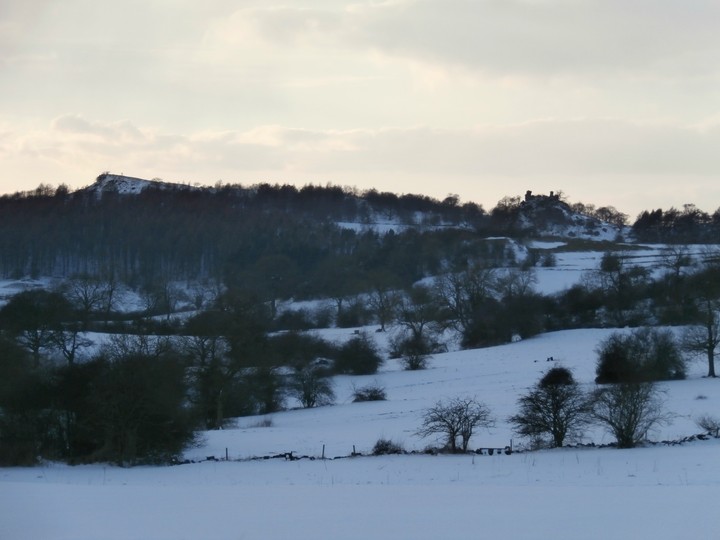
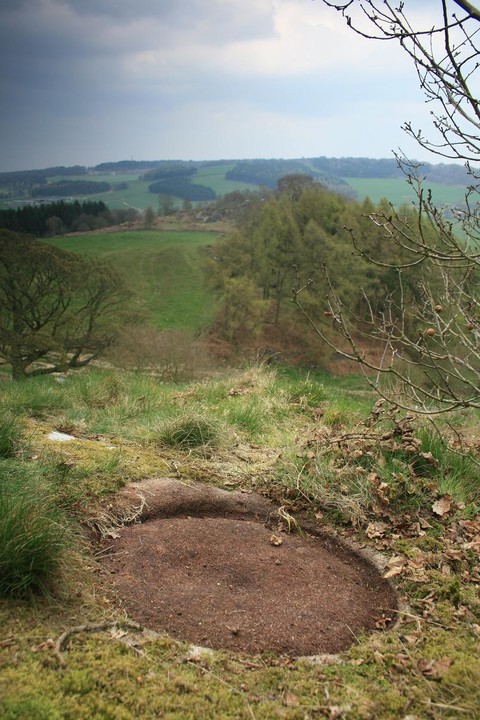
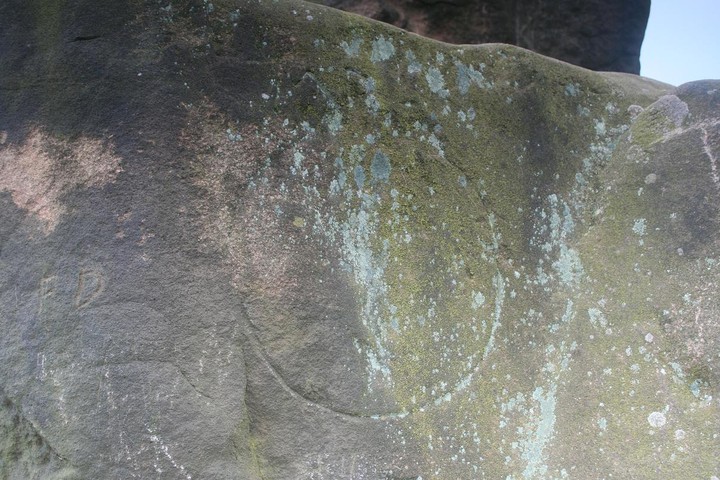
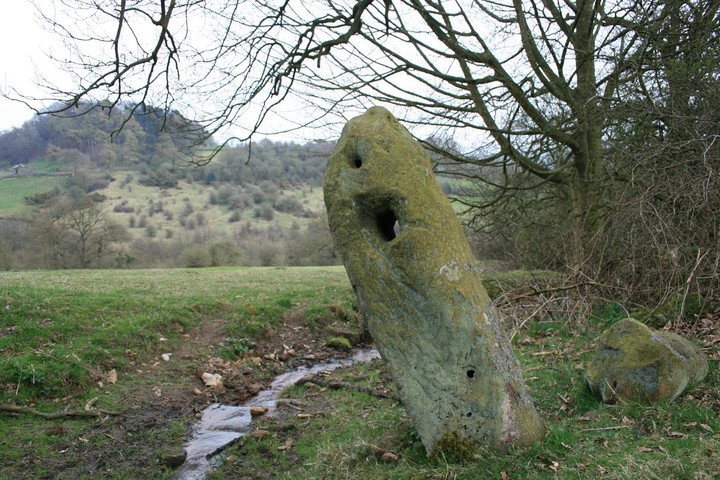
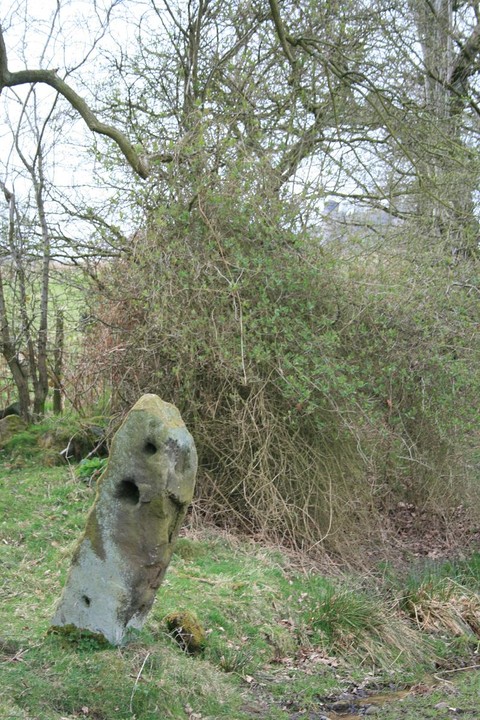
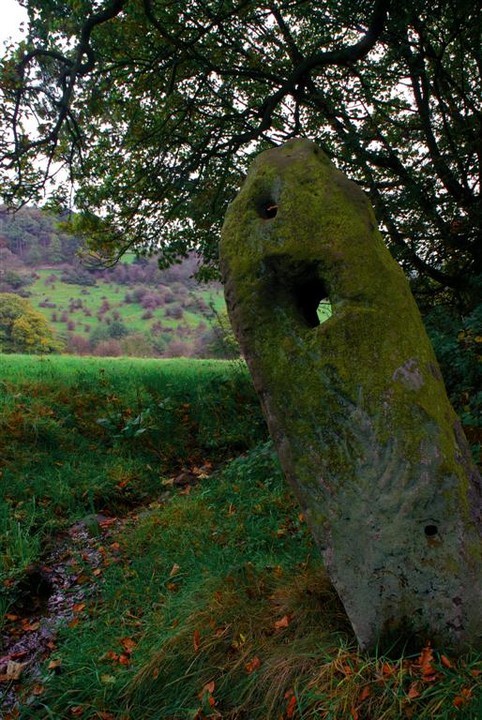
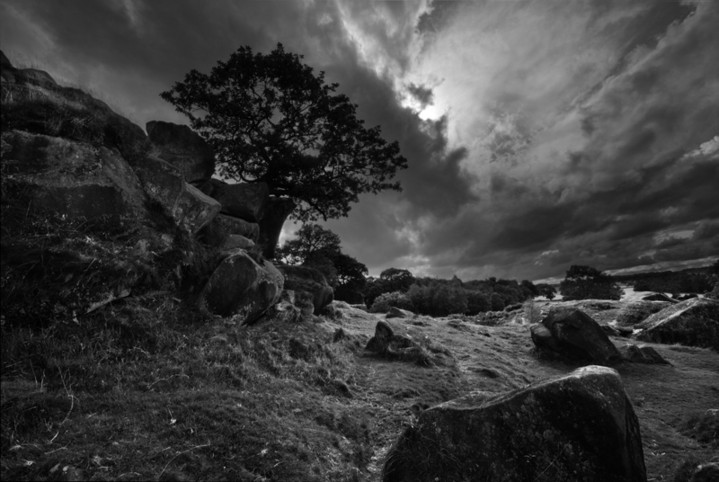
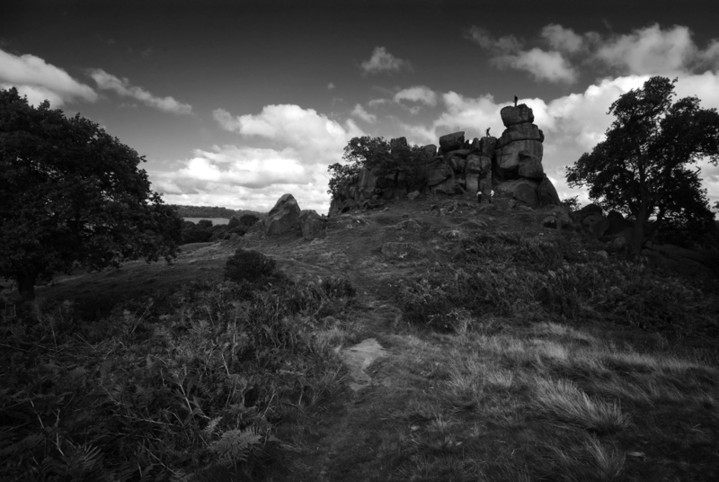
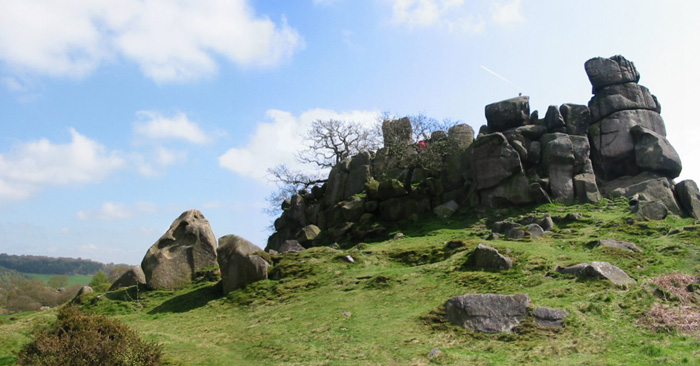
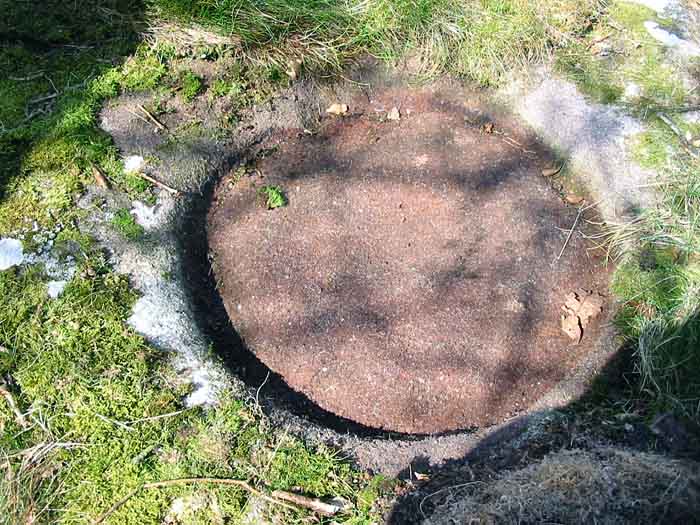
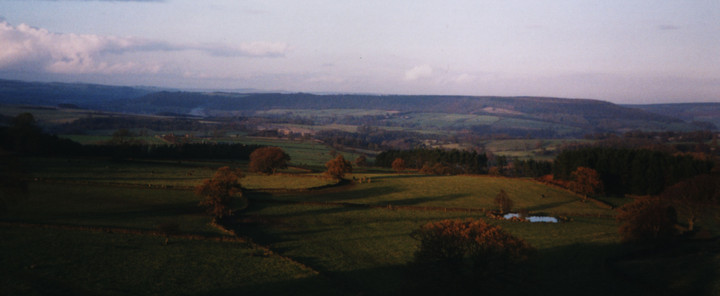
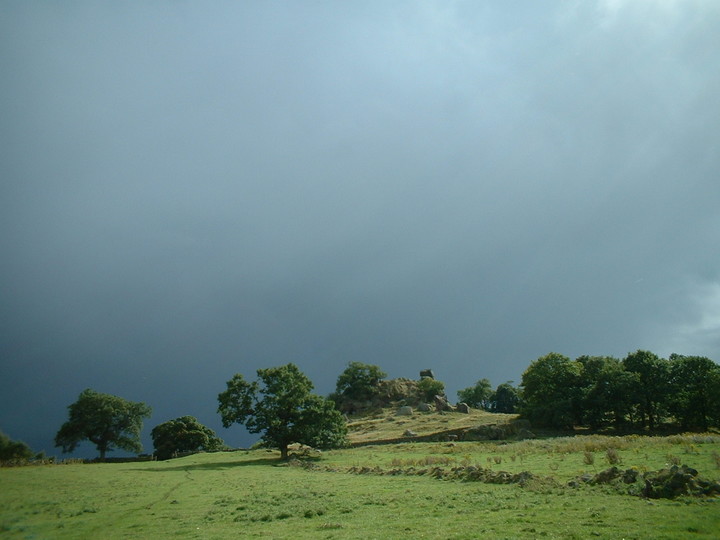
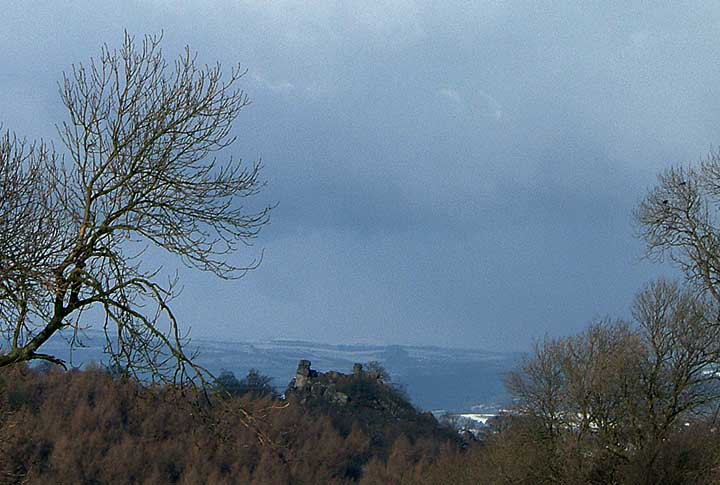
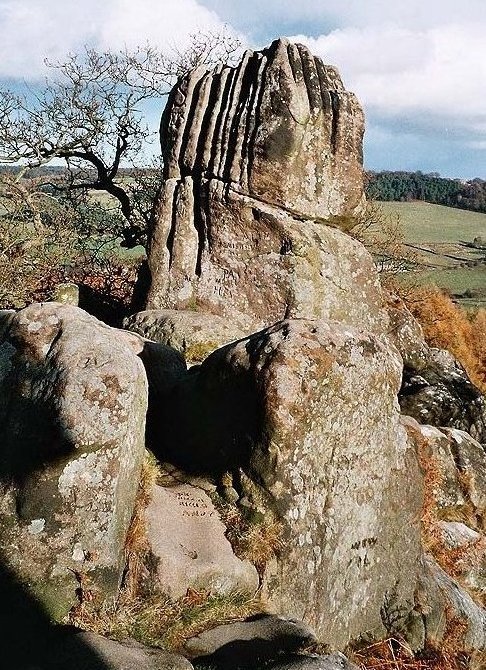
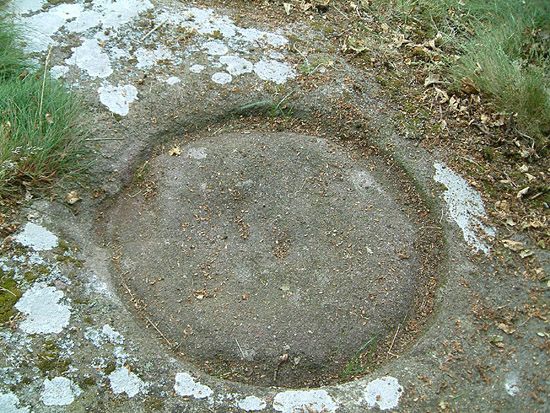
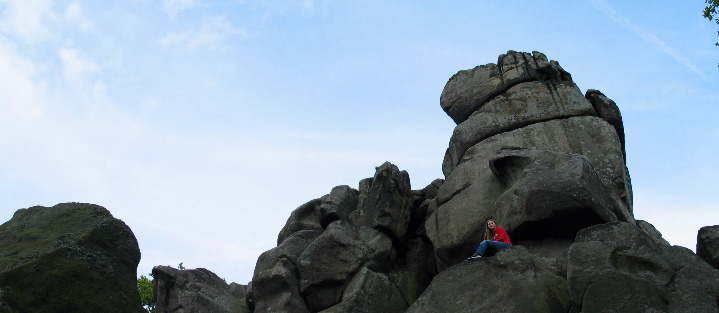
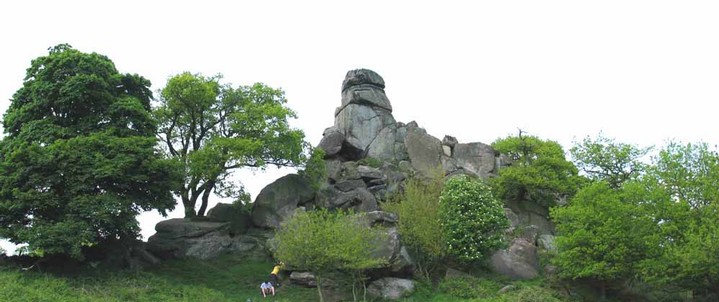
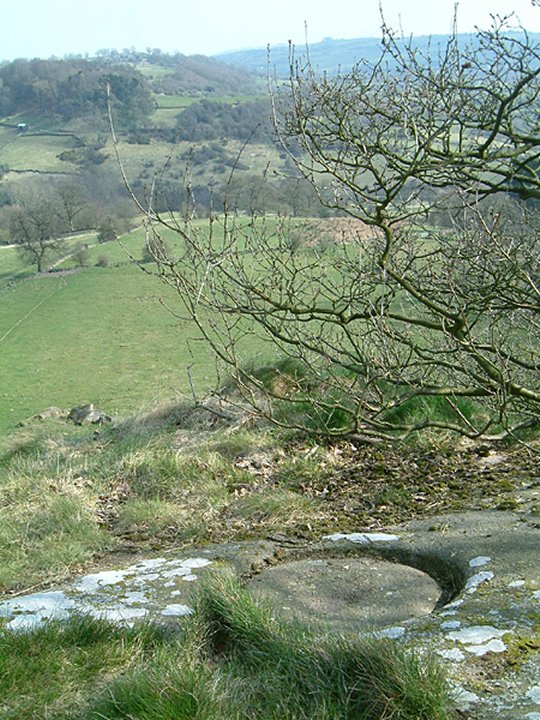
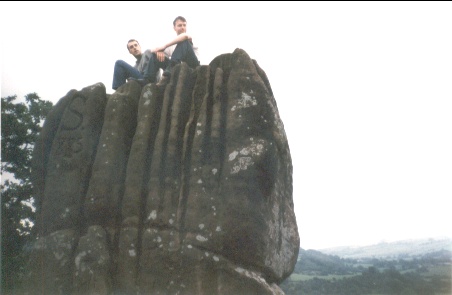
Together with the stone circle next door this is my favorite place in the whole of the Peak district, its got absolutely everything you could want from the outdoors, antiquities, nature in abundence, and lots of lovely rocks to clamber all over, and stunning views that leave you speechless (might also be vertigo though). The walk from the layby/verge is uphill and not gentle but it isnt far and there is an uncertain standing stone half way up, it has three holes through it, two little ones and a big one. Eric and me sat for a while on Lindsays seat (was that her name) and readied our cameras, for the final push up to the rocks, he's using my old camera because as he says when iv'e passed away he can keep posting for me, didnt quite know what to think of that. It was early afternoon so everyone and his second cousin was there, climbers, picnicers, lovers, oldies and us stone hunting postmen. We started by going straight to the top between the ears as it were, ive seen people sat on top of the pinnacles but i'm far too shaky and "what if" for that, then we just climbed all over the place sqeezing into nooks and crawling through crannies (?) and when no-one was looking we just sat and looked at the rocks. Whilst I was looking for the big carved ring I found what looked like another carved ring, about the same size but unfinished or not as finished as the other one, its between the ears on a vertical surface. Eventually we found the ring we were looking for, it was hiding under a circular mat of grass earth and moss, how peculiar didnt see that last time I was here. Another thing I found carved amongst the rocks was the surname of the woman whose dedicatory seat was below us and apparenly lived at the house just fifty yards away. My point is people have lived in that house for centuries maybe and some of them carved their names into the stride, and who knows what else. From the stride we went over to Cratcliffe rocks and from there through the trees to the stone circle once in the trees we were startled by a big buck (erm Roe ?) deer and then ten minutes later the whole herd. Our lad was proper amazed and immediately turned into Simon King, creeping around on his hands and knees trying to get closer, he may add a picture of them, theres no stones just deer but we were inbetween stride and circle. so tell me what do you think ? should I let him? |
 Posted by postman
20th April 2010ce Edited 20th April 2010ce |

|
I visited Robin Hood's Stride on 23rd July after firstly visiting the nearby Andle Stone and Doll Tor circle. It's not too bad a climb to the top of the outcrop and the views from the top is worth the little effort. From the top I noticed that you could see the Andle Stone on the horizon and it may be that Doll Tor stone circle lays on a direct line between the two. I had thought that (when leaving Doll Tor) the Andle Stone may have marked the sunrise when viewed from the circle, perhaps the linear arrangement stretched all the way to Robin Hood's Stride. |
Posted by Mark Kelly 23rd July 2005ce |
|
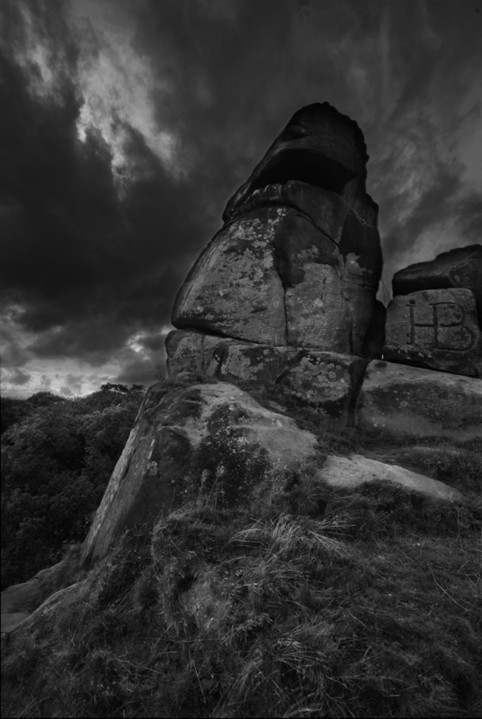
It does look a bit like a hippo (as Burl suggests) but it looks more like the Pink Panther. What a landscape, loved it as soon as I looked at it from the lane. I aim to spend more time there, perhaps with a picnik. I want to see the major moon rise between the ears! This post appears as part of the weblog entry Bakewell tart again
|
 Posted by daveyravey
30th September 2003ce |
|
Sunday 13 July 2003 On the way back to the car from Nine Stones Close stone circle, I quickly sprinted up Robin Hood's Stride to see if it was worth an 'elevated context*' snap of my now beloved Nine Stones Close, as I had a 300mm lens with me (it wasn't). *I just made up some jargon! Anyone know what it means? I was very impressed with Robin Hood's Stride itself and it's wacky shapes though, as well as the views it commands. This post appears as part of the weblog entry Delerious in Derbyshire
|
 Posted by Moth
17th July 2003ce Edited 17th July 2003ce |
|
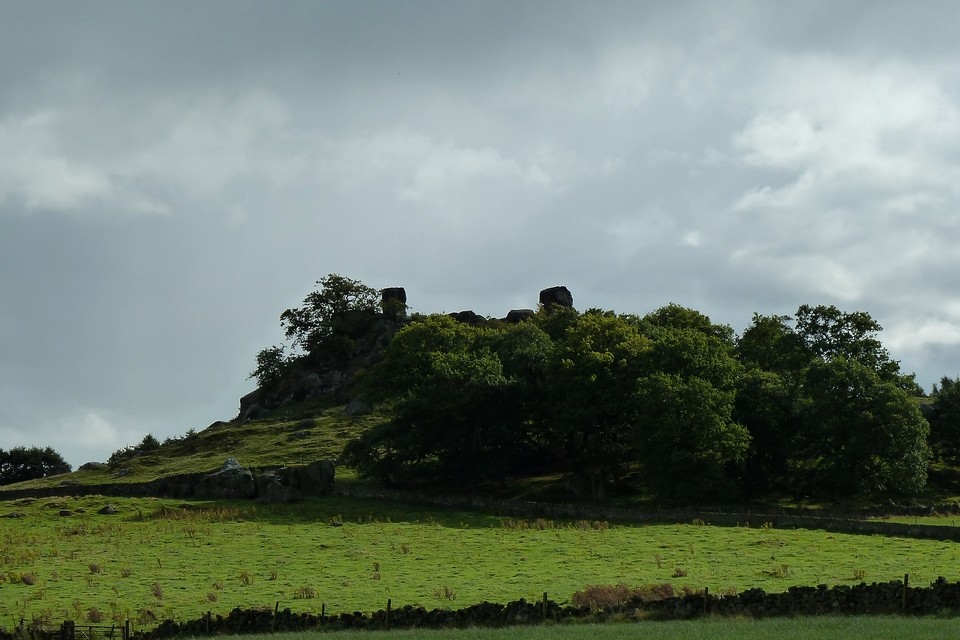
A gentle stroll of no more than half a mile from Nine Stones Close takes you to this magnificent natural outcrop of Robin Hood's Stride, where some attractive, muscly-legged young bucks were busy roping themselves to it and scaling it's faces. We sat admiring the great trees growing out of it's crevasses and massive boulders hanging on the grassy slopes. Now THIS is a place to sit and contemplate your life. |
 Posted by Jane
21st June 2003ce |
|
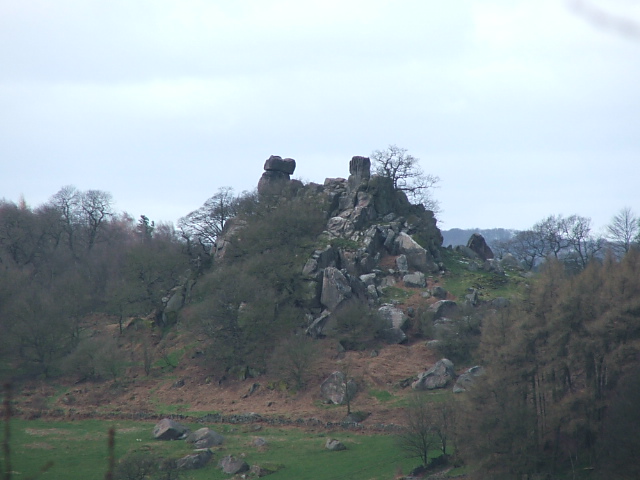
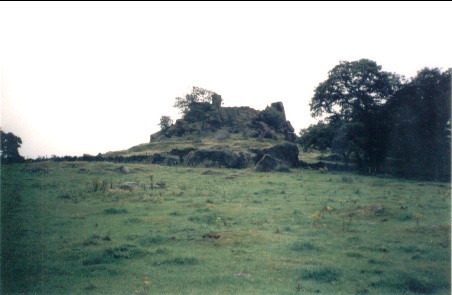
This beautiful outcrop is the most dramatic of the area's proto temples. The first circle builders must have been awe struck by this landscape. Walk up to it from the B5056 along the limestone way breathe it all in, and then look across the fields to 9 Stones Close...breathtaking! |
 Posted by fitzcoraldo
18th May 2003ce |
|
Harthill Moor is a great area, with a handful of sites all within a few minutes walk of each other. From the Neolithic(?) Cratcliff hillfort, the ancient Portway track, Bronze Age stone circle and barrows, Iron Age rings and settlements through to the Medieval hermits cave and finally the farm that's there now. Thousands of years worth of settlement all within view of Robin Hood's Stride. |
 Posted by stubob
3rd April 2003ce Edited 24th June 2019ce |
|
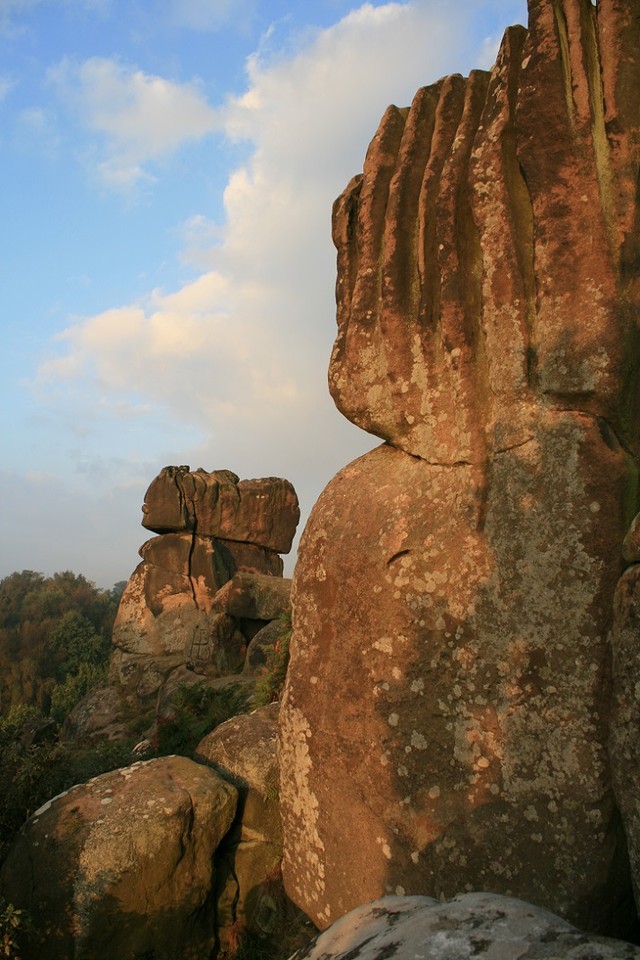
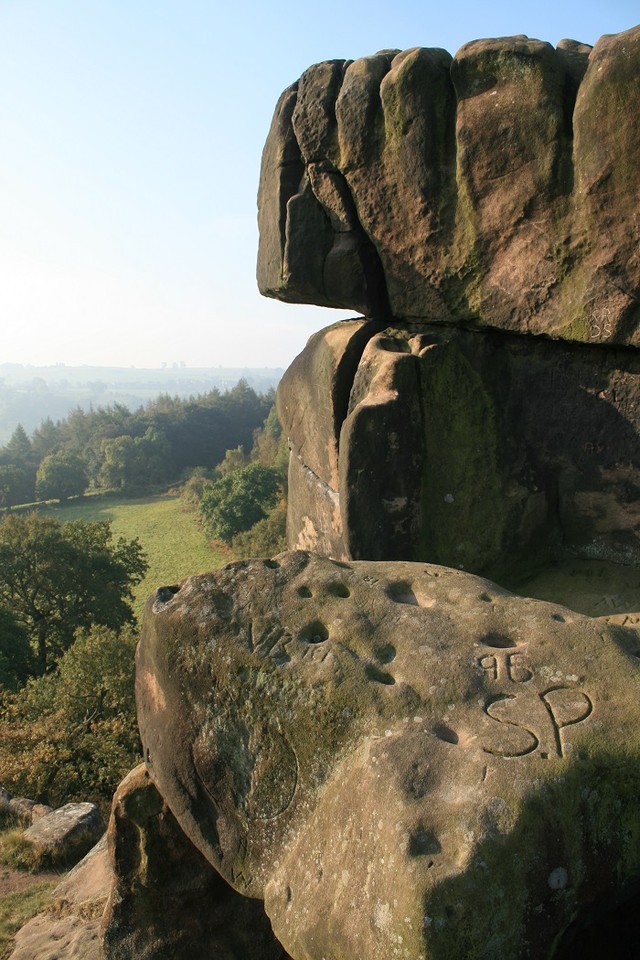
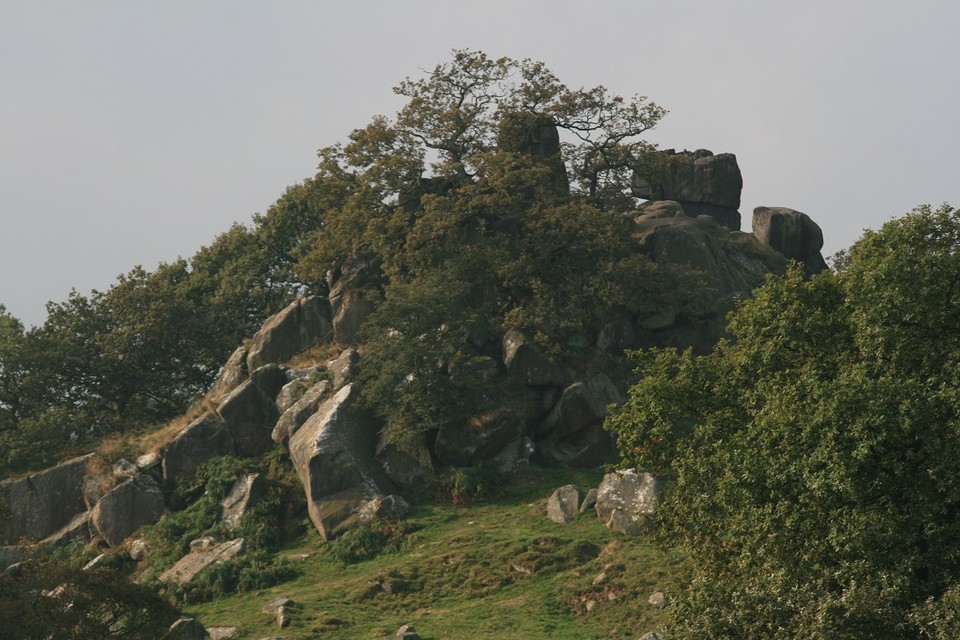
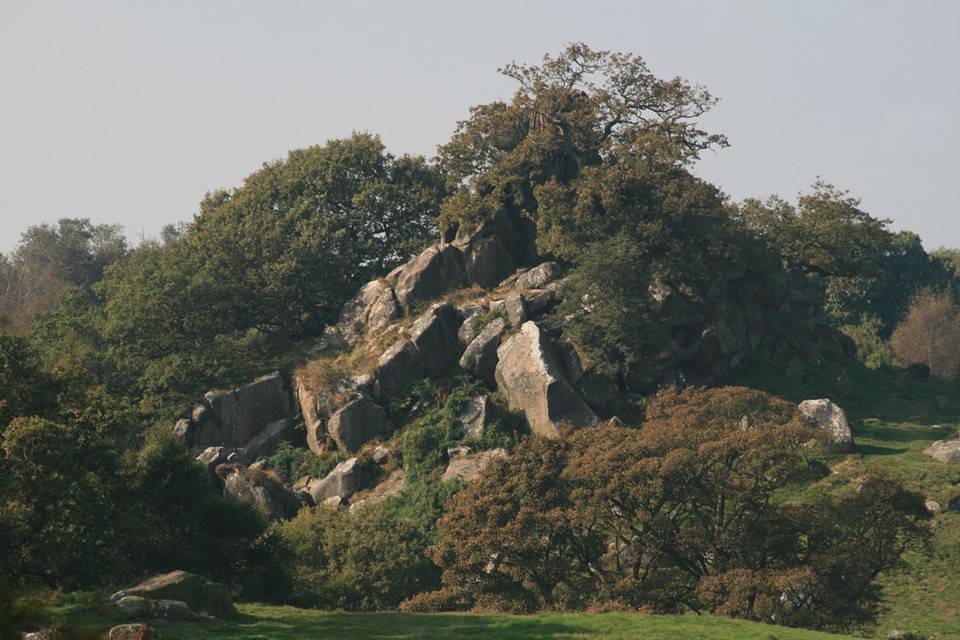
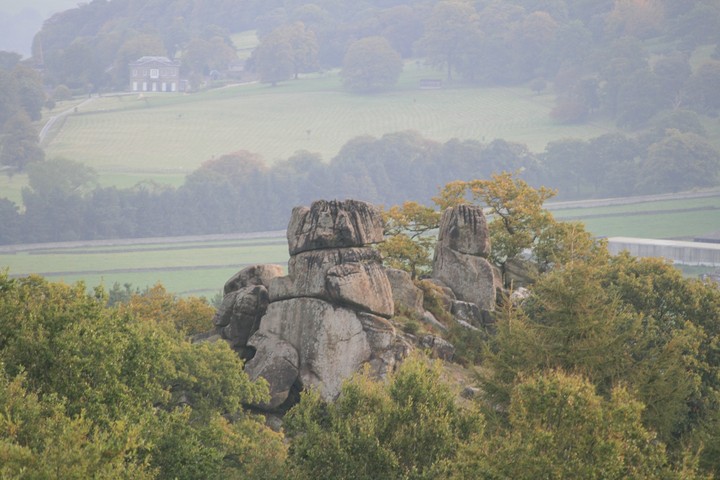
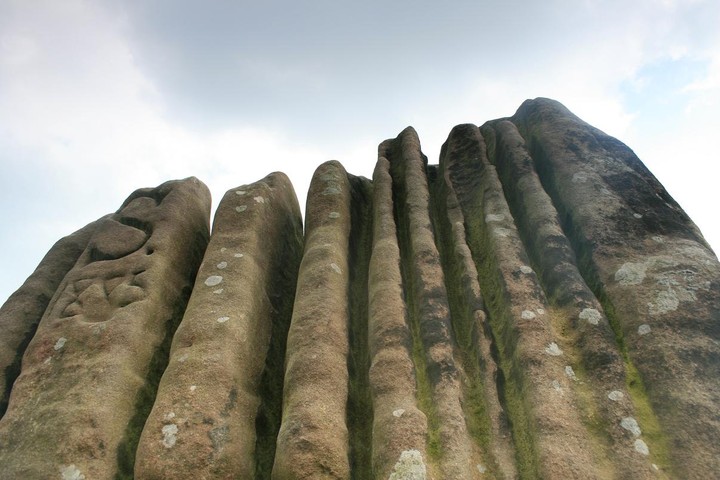
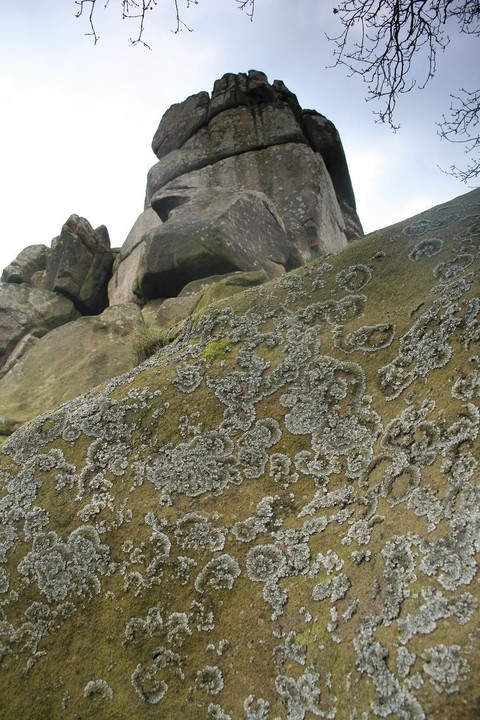
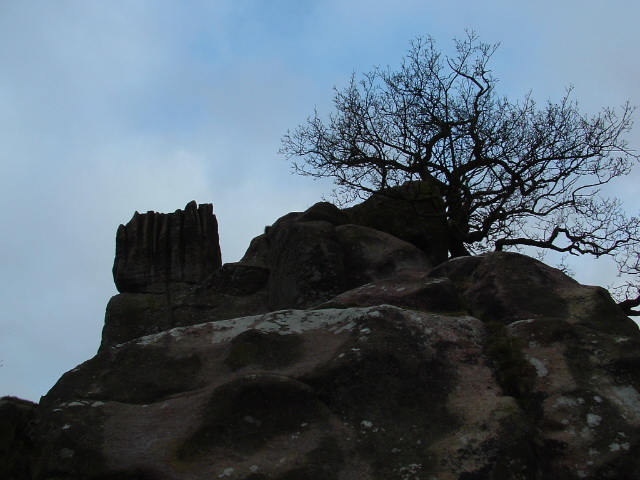
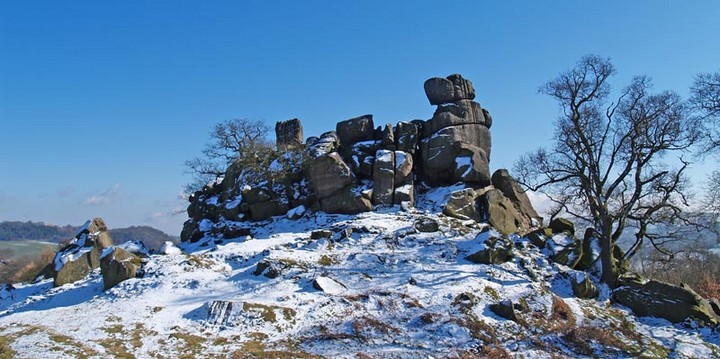
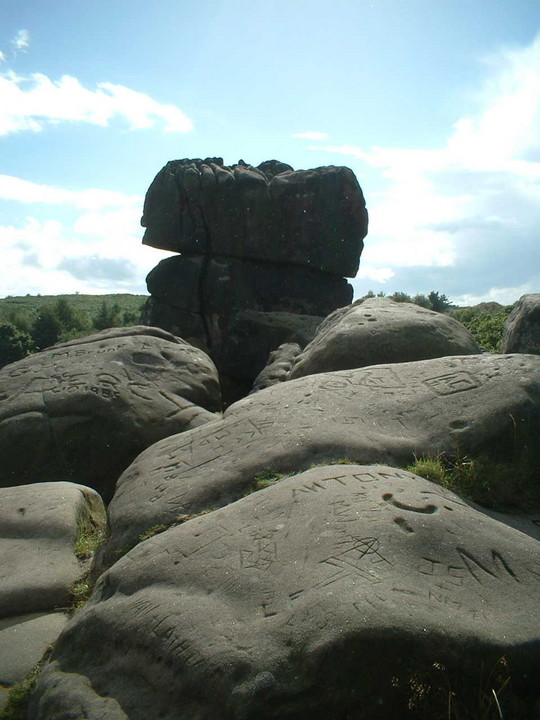
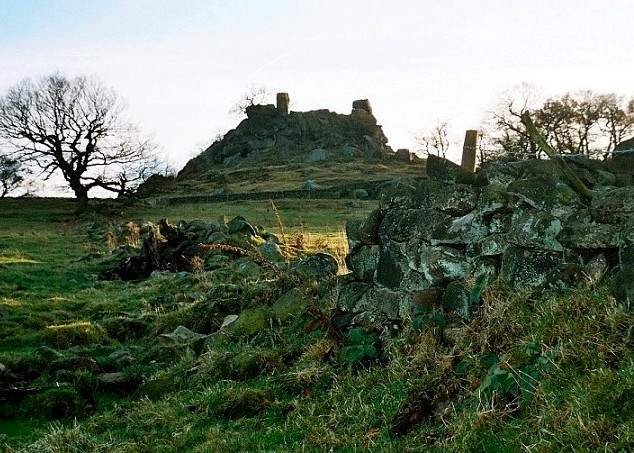
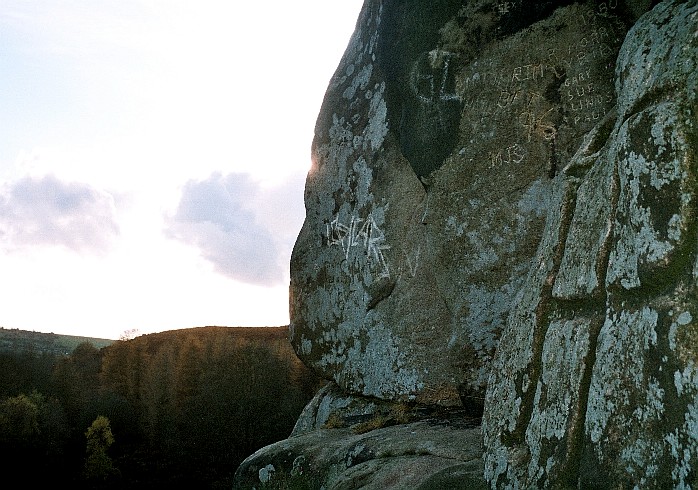
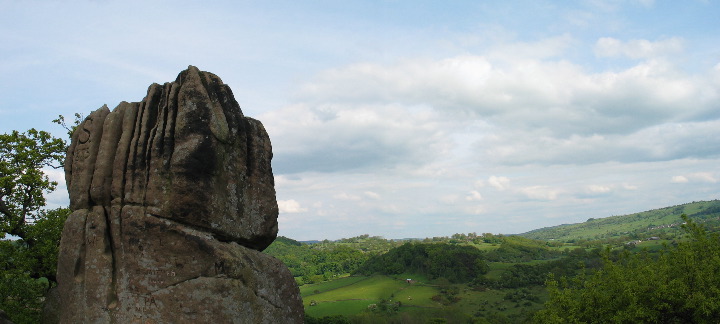
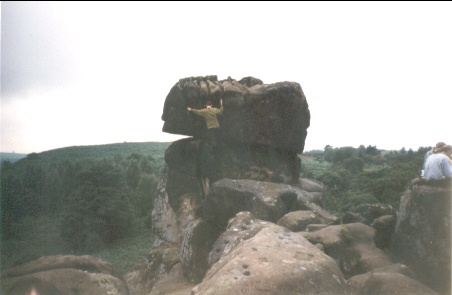
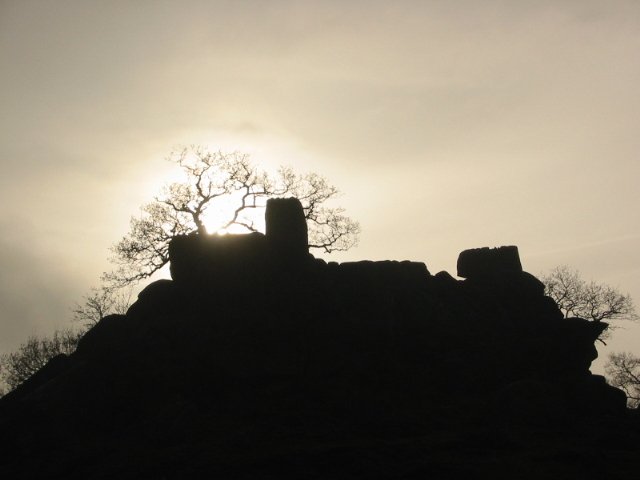
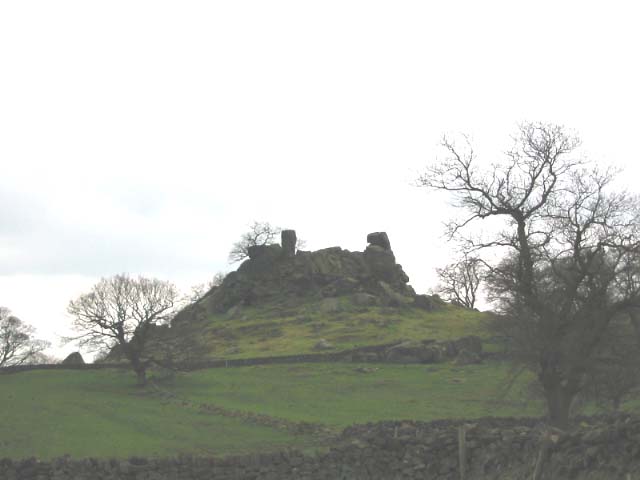
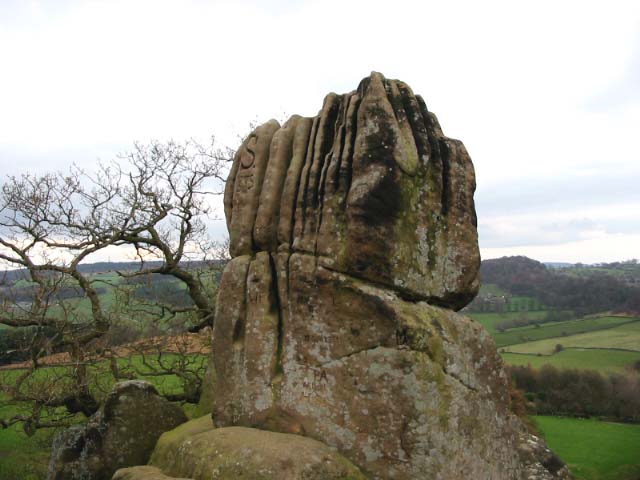
119 223623 There is a convenient layby just below the site on the B5056 at 229619. Cross the road and over the stile and follow the track up the hill. Keep an eye out on your left, for a slim, leaning standing stone in the hedge line. It's not marked on the map, and upon closer inspection has a hole cut through it (as though to receive a bolt) and I would imagine it was once a gatepost. Upon reaching the site, if you're up for it, a direct assault is possible, but there is a path on the right hand side, which makes for an easier ascent around the back. A wonderful natural landmark, fluid, eroded masses of stone, rising up to two stacks set either end of a horizontal top. It has a pleasing organic quality to it. Large boulders seemingly weightlessly leaning on one another and out into thin air. Also lacking in official heritage status as there are no protective railings or warnings on it, and although you can't fall more than twenty or so feet, please take care. Great view down to the four stones of Nine Stones Circle. There is so much 'territorial pissing' grafitti of names and initials carved all over the faces of the stones on it from past centuries, I didn't know where to begin looking for the prehistoric rock-art carving (...a large carved ring...on the south-eastern side of the outcrop on a wide horizontal ledge). |
Posted by elderford 1st January 2003ce Edited 1st January 2003ce |
|
The large (50cm) circular carving is on a horizontal ledge, behind the Eastern 'chimney'. It was uncovered in the 1970's. And is of an uncertain age, the vegetation that covered it may have preserved it. Careful if you go looking for this in the wet and if you suffer from vertigo. |
Posted by stubob 4th December 2002ce |
| Pre-historic rock carvings have been found on the rocks, although where amongst them all....? |
Posted by stubob 19th March 2002ce |
Folklore |
Add folklore |
|
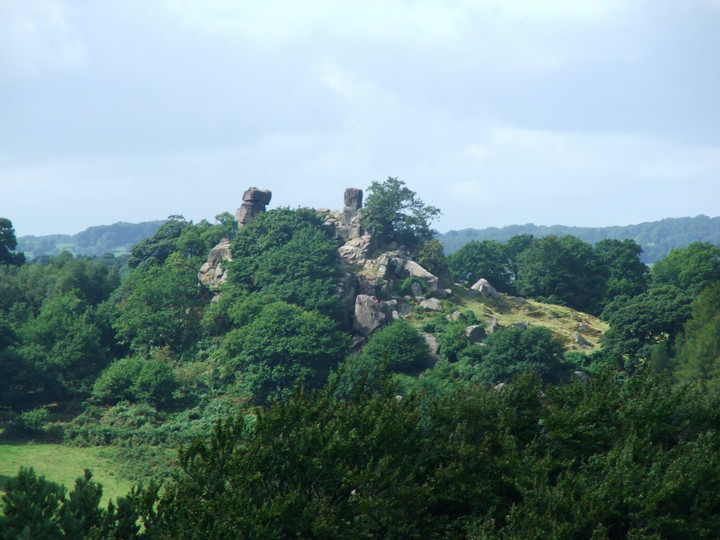
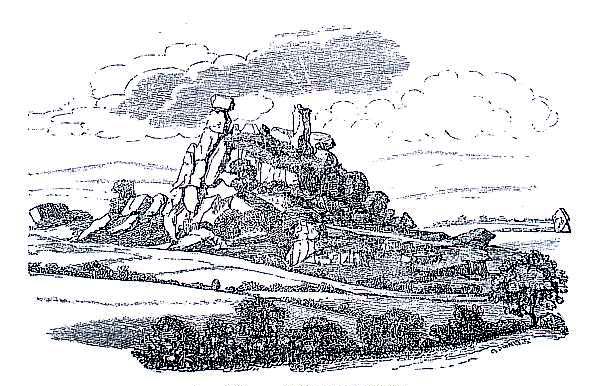
"An unfrequentd path of another quarter of a mile led us to the base of Mock Beggar Hall, a curious assemblage of sand-stone rocks thrown confusedly together, yet so arranged as to form at a distance a strong resemblance to a regular building, with a huge chimney at each extremity; hence the name which this mass of rocks has obtained: the stony towers at each end are called Robin Hood's Stride." 'Peak Scenery or The Derbyshire Tourist' by Ebenezer Rhodes 1824. |
Posted by stubob 21st August 2014ce Edited 21st August 2014ce |

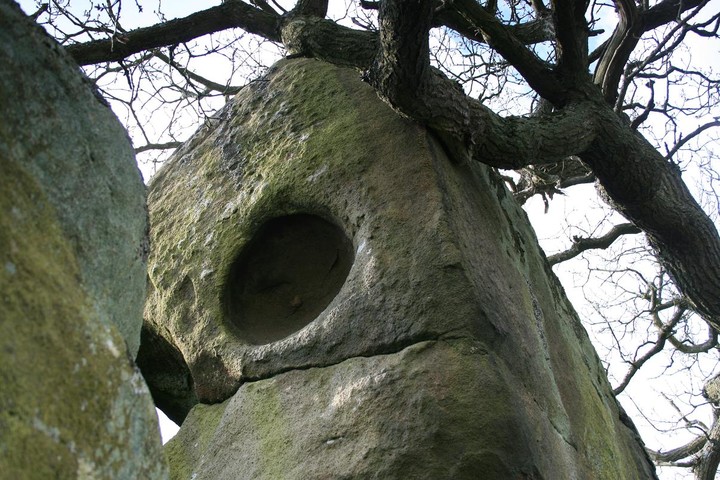
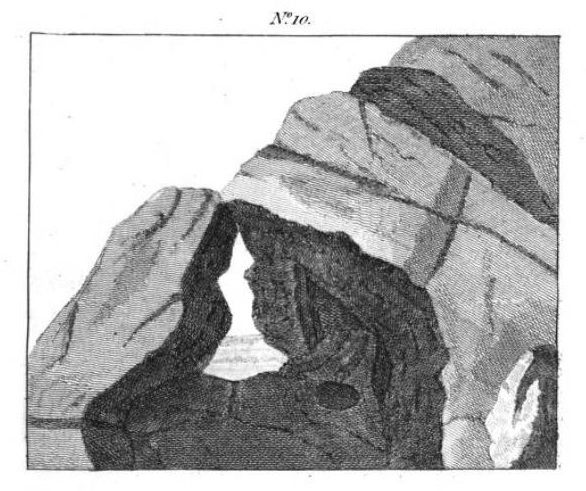
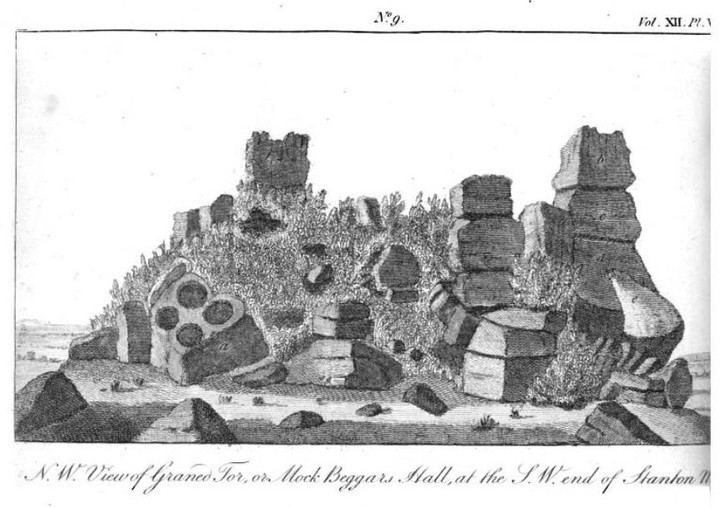
On the other side of the rock (f) in fig. 9, Plate VII. is an exact circular hole, as is seen in fig. 11, Plate VIII.* which is a South view of the Tor. I found there was no possibility of getting near enough to examine this rock, but I should suppose, from the little channels on the other sides, that there are rock basons on the top.Some druidic imaginings in An Account of the Druidical Remains in Derbyshire. In a Letter to the Right Honourable Frederick Montague, FAS. By Hayman Rooke, Esq. FAS. In Archaeologia v12 (1796). I cannot see (f) in fig. 9 here but I guess it's the one right at the top. (*seems to be labeled no.12, but that is my bad cropping of the picture.) |
 Posted by Rhiannon
1st May 2013ce Edited 1st May 2013ce |
At the South-west end of Stanton moor, in the Peak, and in Hartle liberty, is an assemblage of rocks, which stand on the summit of a circular hill called Graned Tor, but more commonly known by the name of Mock Beggar's Hall.Stone (a) is the one on the left with four big holes in it. Stone (b) is the highest on the right, with (c) and (d) beneath it, and (e) being the pointy one overlapping (d). From An Account of the Druidical Remains in Derbyshire. In a Letter to the Right Honourable Frederick Montague, FAS. By Hayman Rooke, Esq. FAS. In Archaeologia v12 (1796). |
Posted by Rhiannon 1st May 2013ce Edited 1st May 2013ce |
The favourite resort of Robin Hood and Little John and their comrades, when they desired to enjoy the wine of which they had deprived some luxurious abbot or sheriff, was a remarkable group of stones or rocks near Haddon Hall in Derbyshire, where the outlaw is believed to have built a sylvan palace and reigned lord of all, in spite of the Norman [strengths?] of Haddon and Chatsworth. Two stones rise above their neighbours, and here an old tradition says that Robin sat on one and Little John on the other, delivering judgment on litigated matters of [..?] Law; while another tradition still older asserts that Robin leaped or stepped from the summit of one to the other to show his wondrous agility, and that in consequence the stones have ever since been called Robin Hood's Stride.Page 272 in A Cunningham's 'Robin Hood Ballads' in 'The Boys' Own Story-Book' (1856). Online at Google Books. |
Posted by Rhiannon 19th February 2007ce Edited 19th February 2007ce |
Miscellaneous |
Add miscellaneous |
|
From the DAJ: "Across Robin Hood's Stride are at least seven groups of probable cup marks; six on the outcrop proper and one on a largeboulder to the SE." |
Posted by stubob 29th October 2012ce |
Links |
Add a link |
Robin Hood in YorkshireExplores the Robin Hood myth....not just Yorkshire! |
Posted by fitzcoraldo 16th February 2003ce |
 Top of page