|
 Log in |
Register Log in |
Register
|

|
|

Carn Euny Fogou & VillageFogou
|


 Show map (inline Google Map)
|
|
|
Images (click to view fullsize) |
 Add an image Add an image |
Photographs: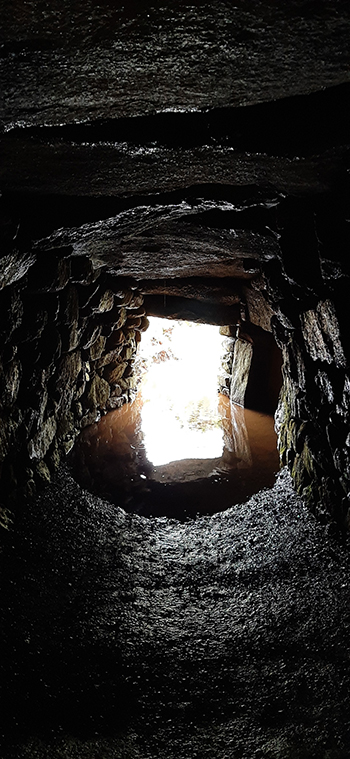







 Maps / Plans / Diagrams: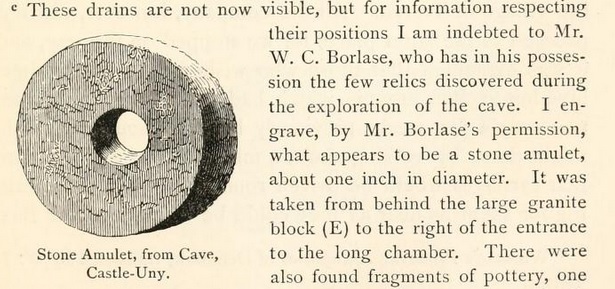
 Artistic / Interpretive: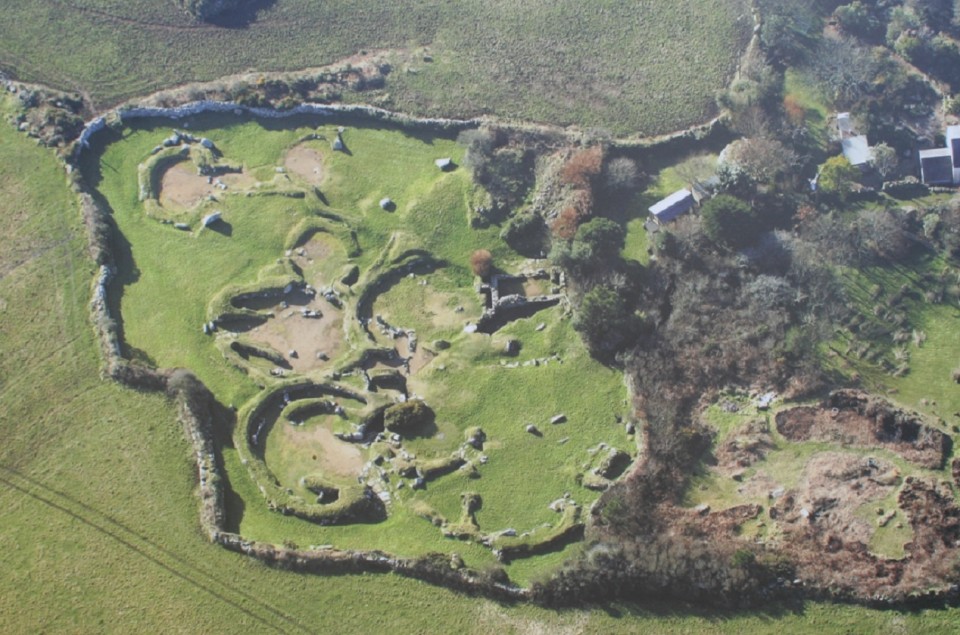
|
Fieldnotes |
Add fieldnotes |
|
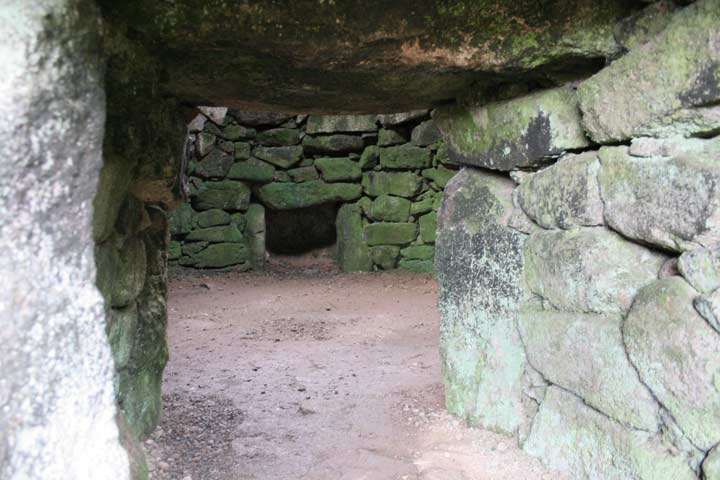
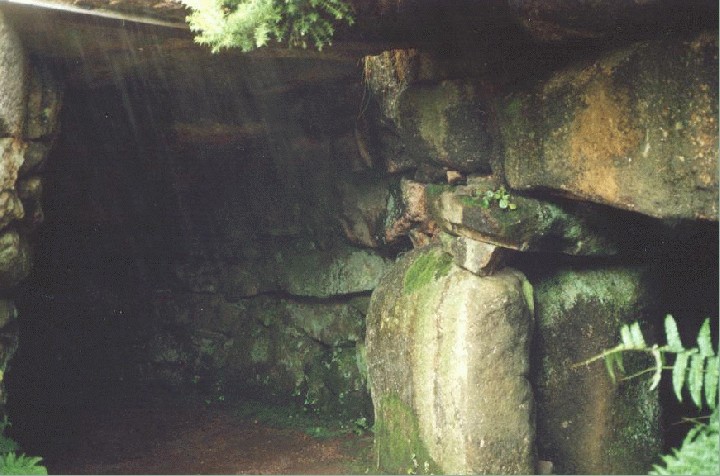
Visited this fabulous site on 12 May 2021 as part of 'postponed from last year post pandemic trip'. The archaeology of West Penwith silently endured throughout - this was one of the sites I didn't manage to get to when I visited back in 2010 without a car. This time fortunately I had access to a car but Ian McNeil Cooke's 'Guides to the Antiquities Of West Cornwall' still proved invaluable and contain a wealth of information. It is hard to describe the experience of visiting a place like Carn Euny in the pouring rain or the quiet sanctuary of the amazing Beehive Hut contained within fogou. Although Carn Euny is Iron Age there was something about the place that made me think of Orkney (the stone no doubt). |
 Posted by tjj
18th May 2021ce Edited 18th May 2021ce |

|
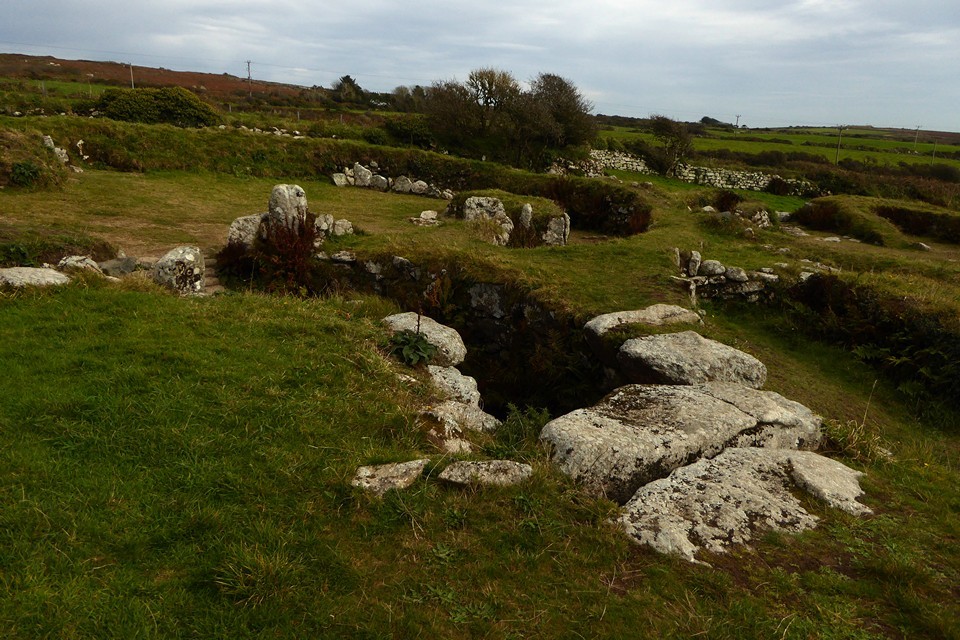
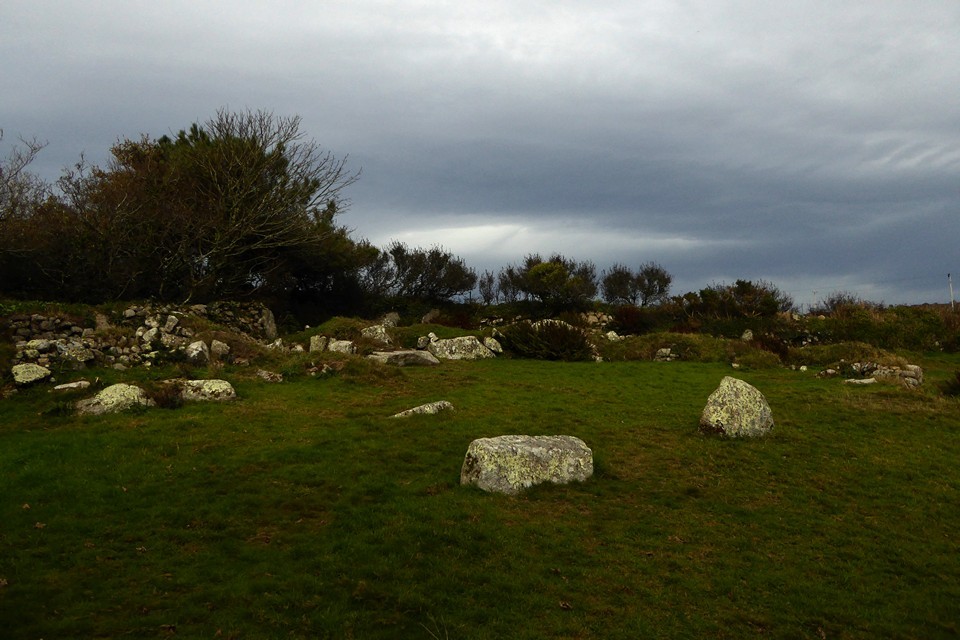
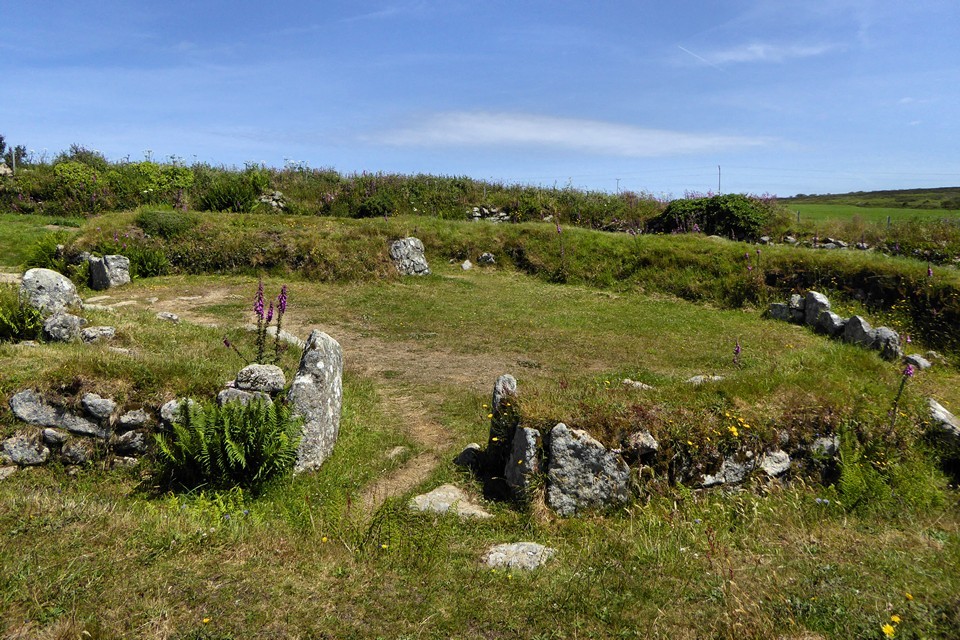
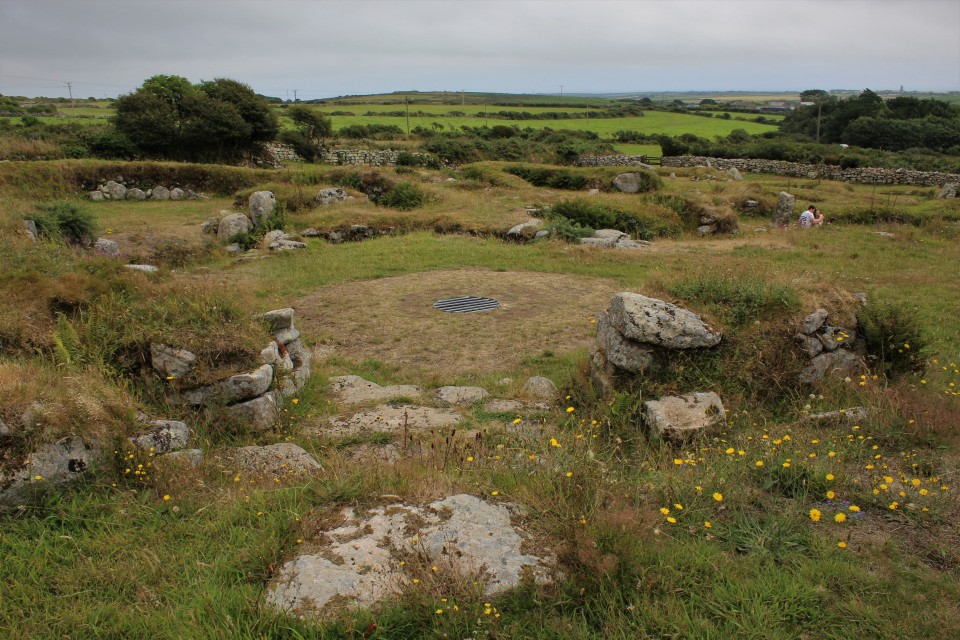
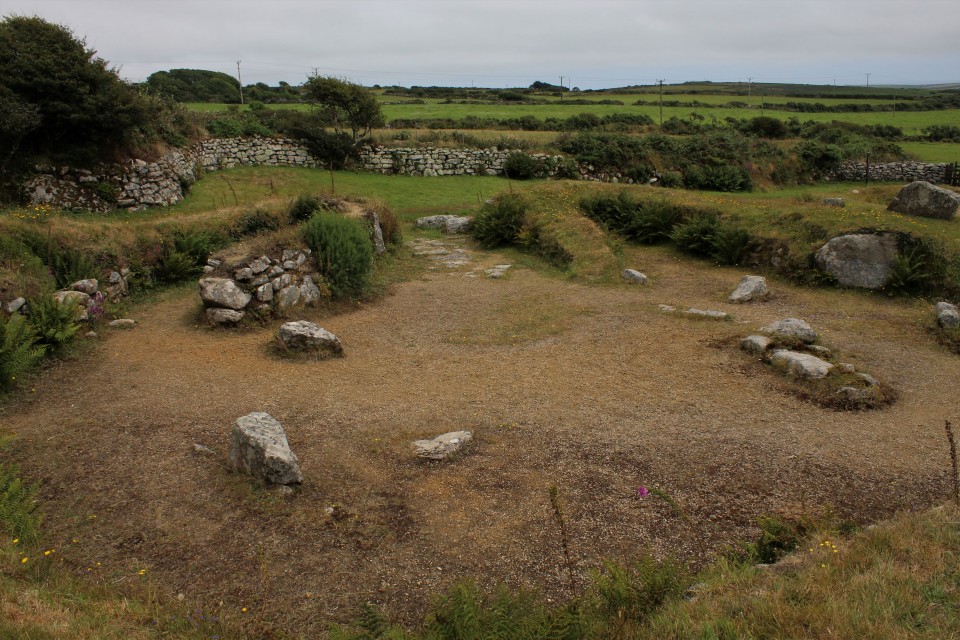
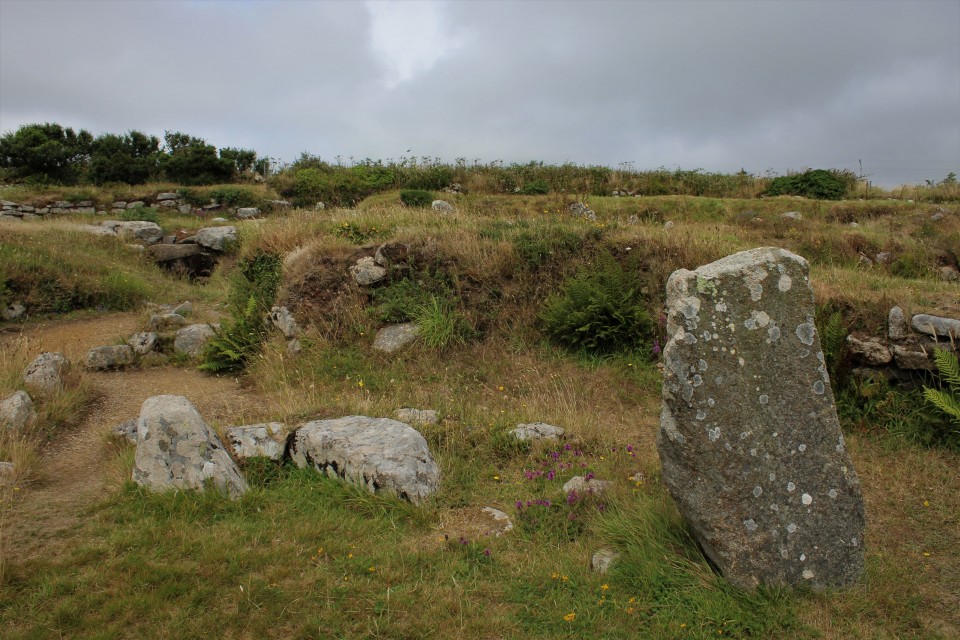
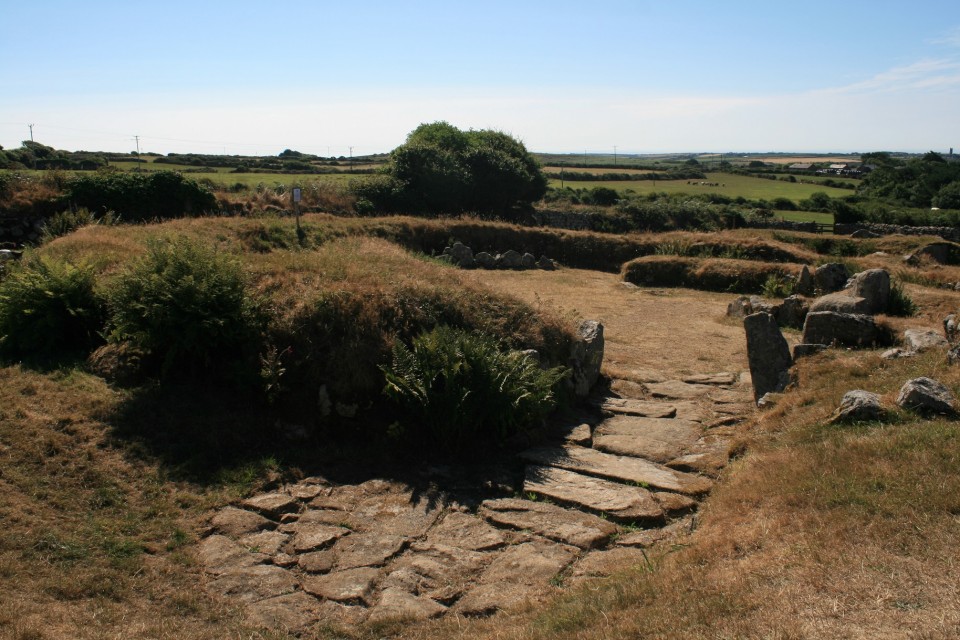
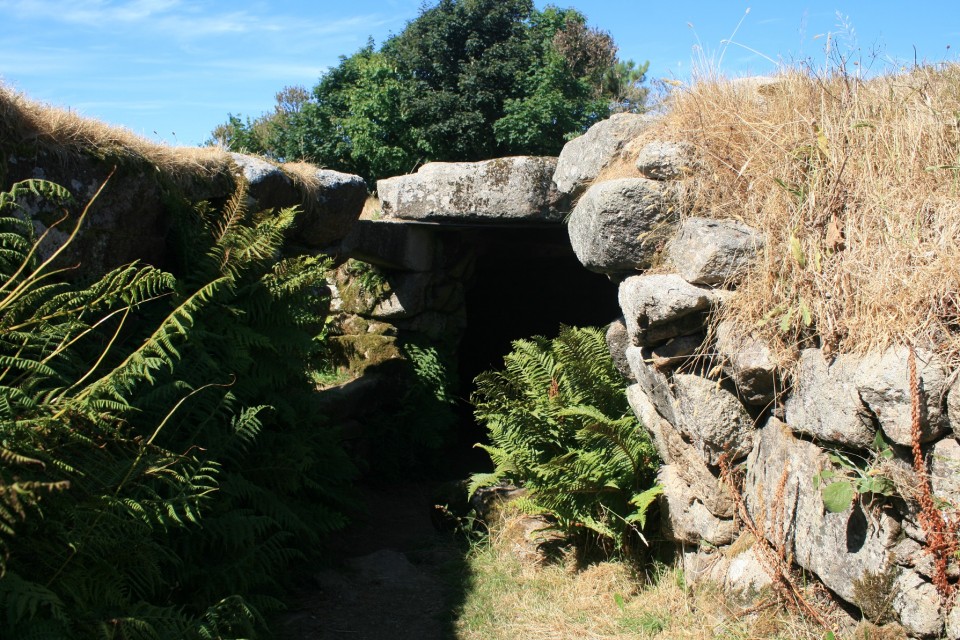
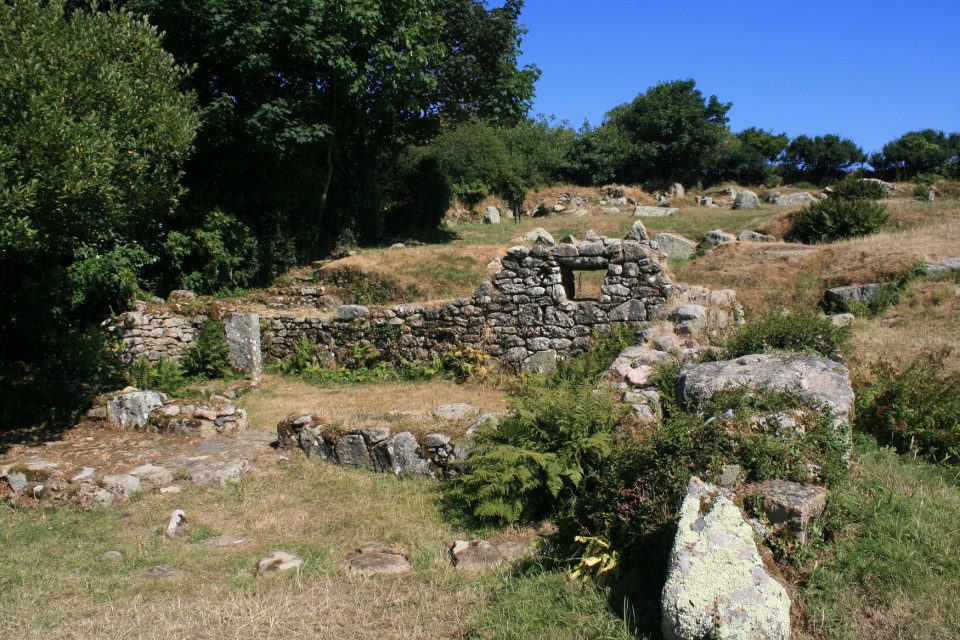
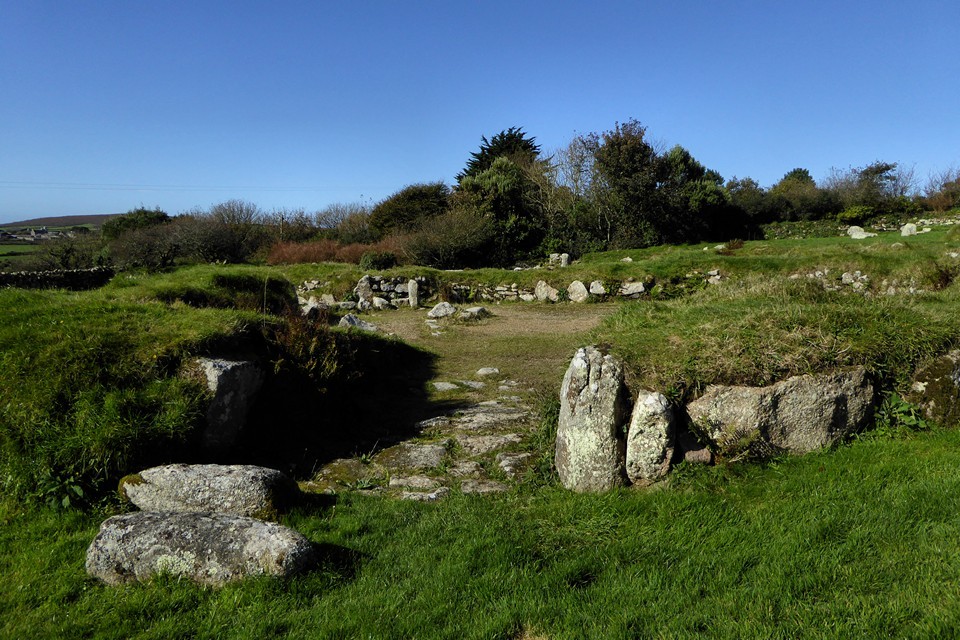
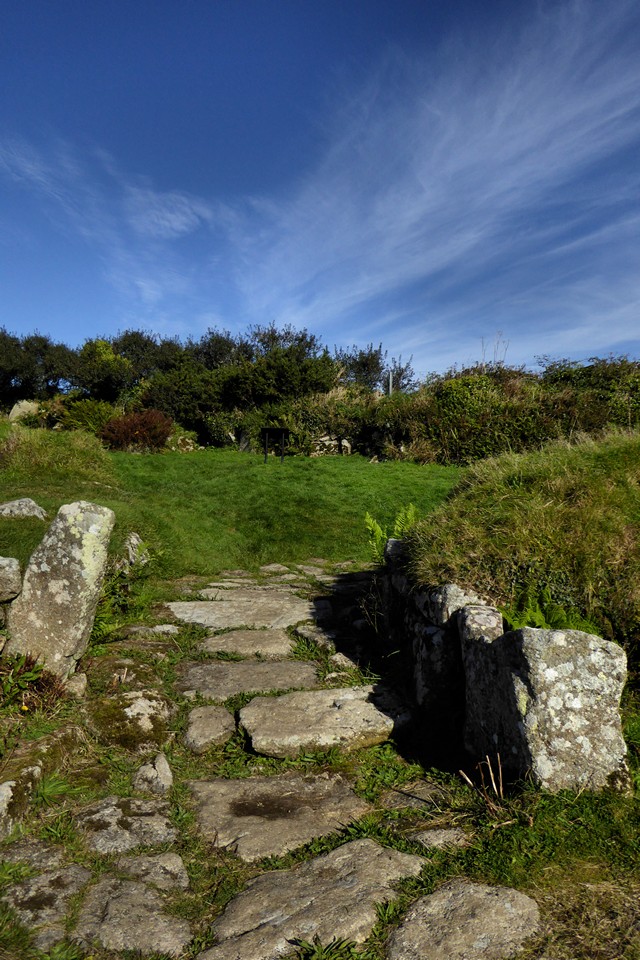
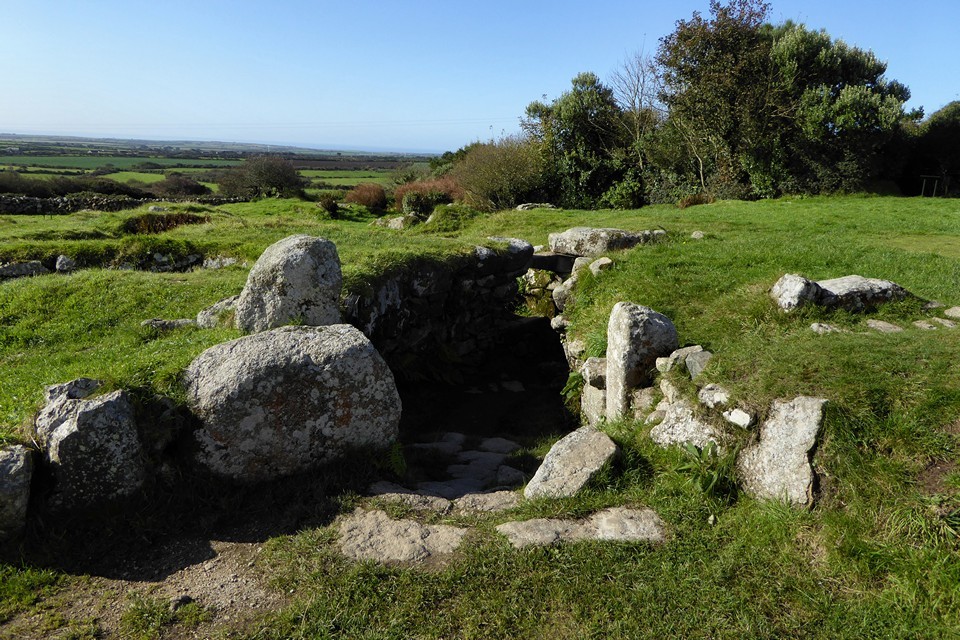
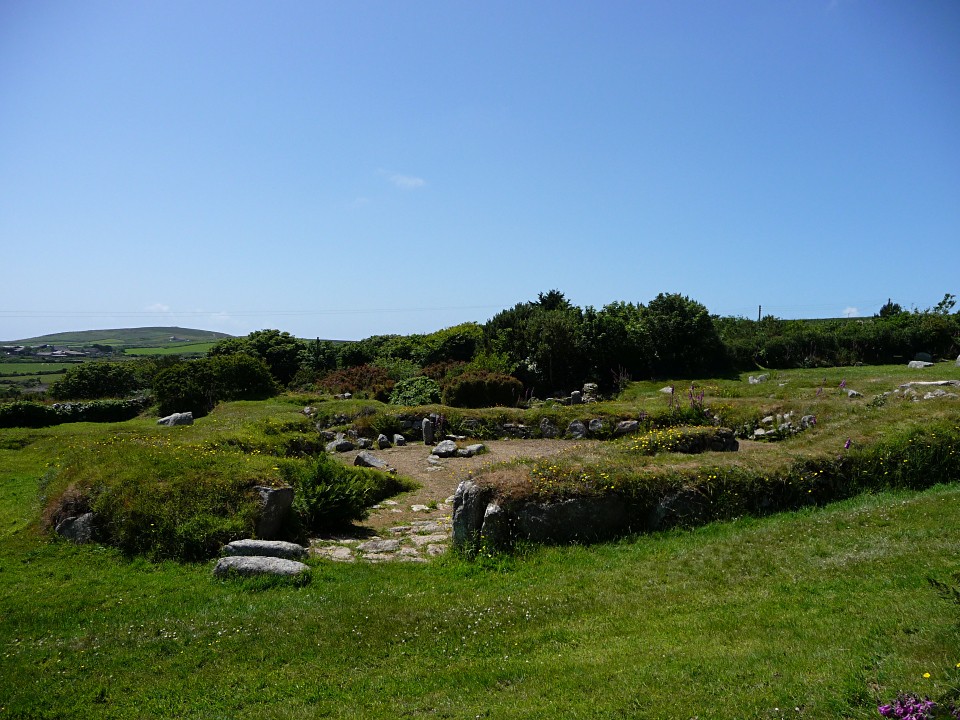
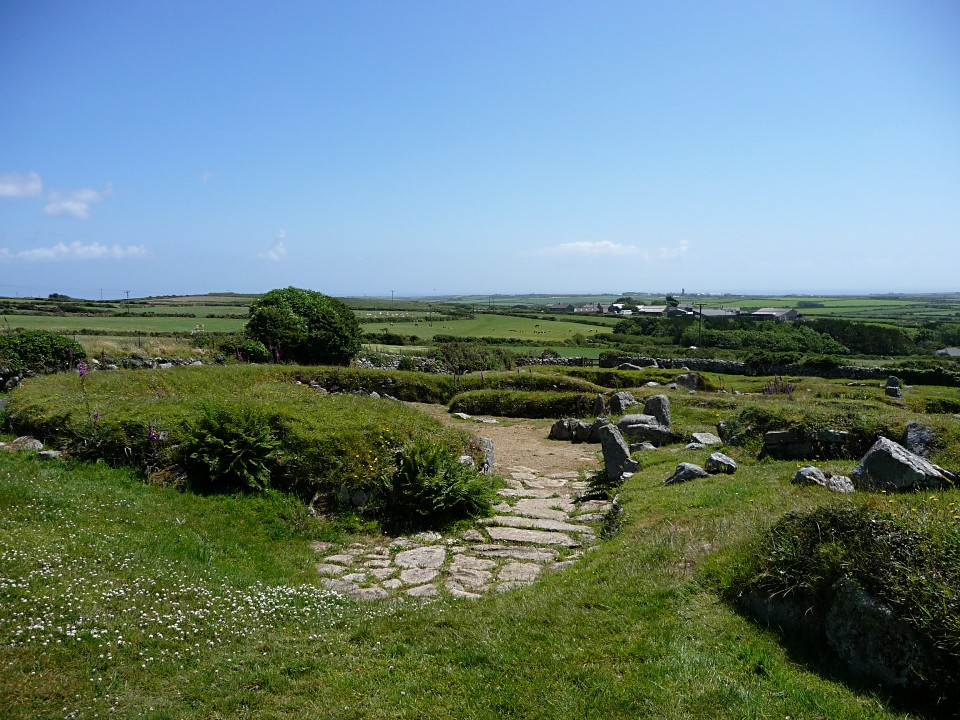
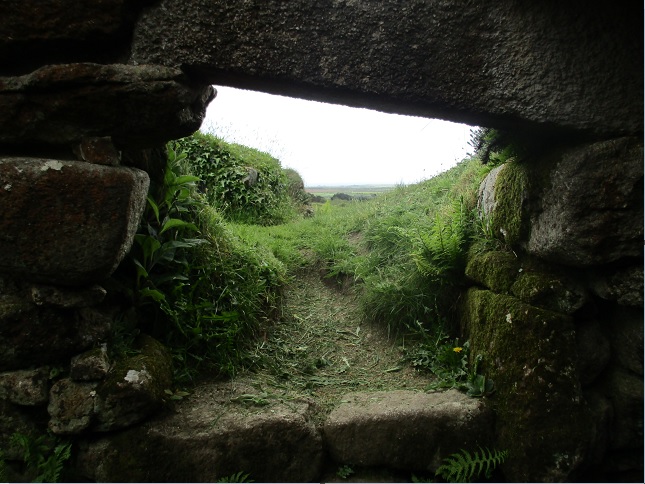
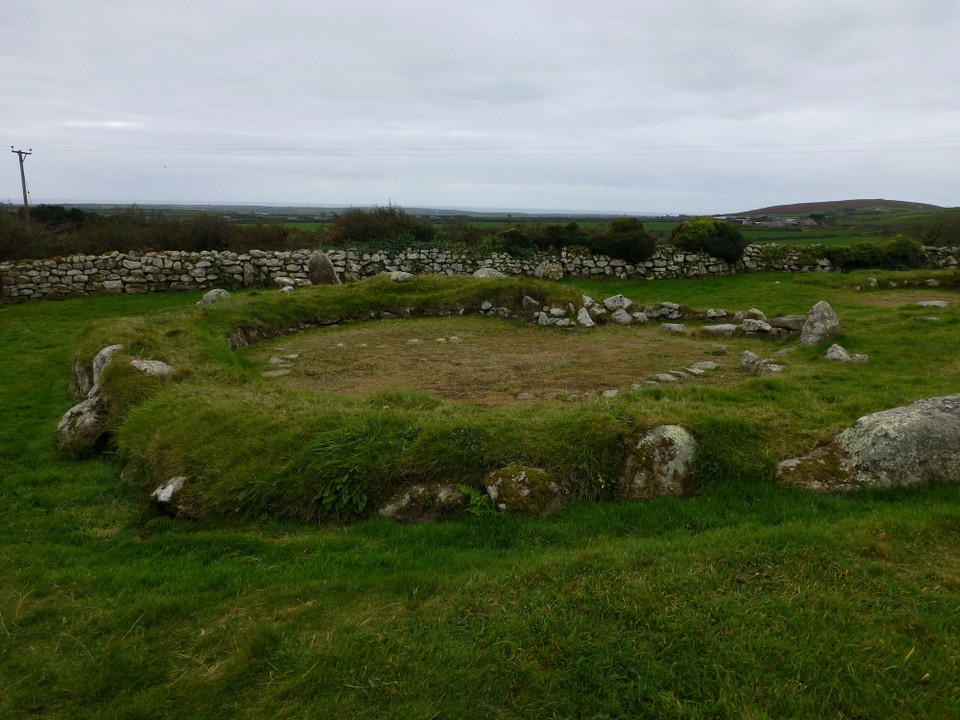
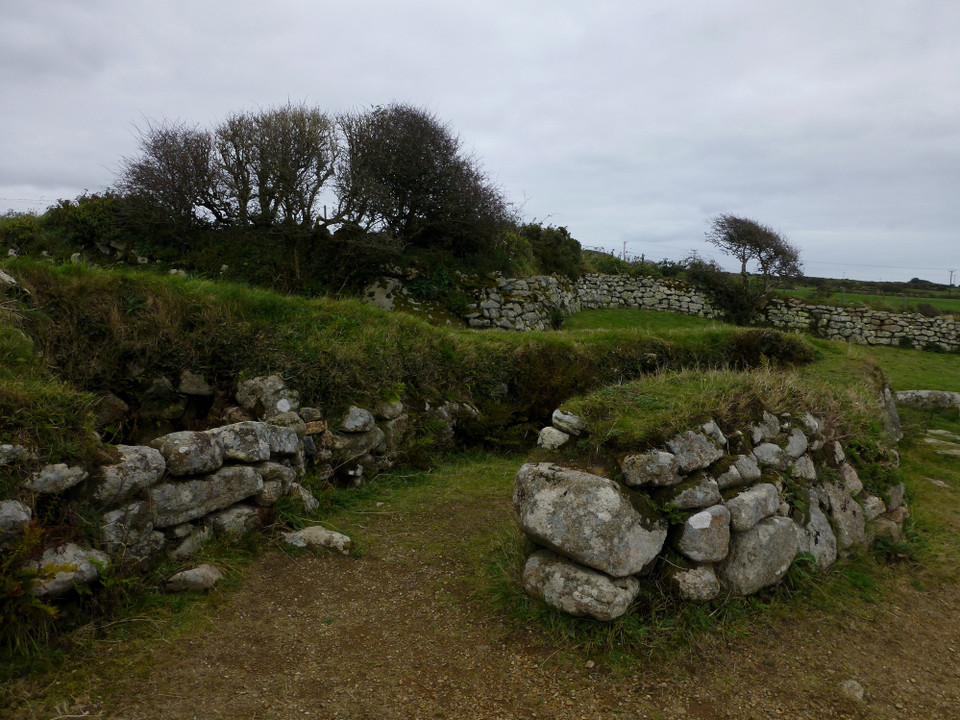
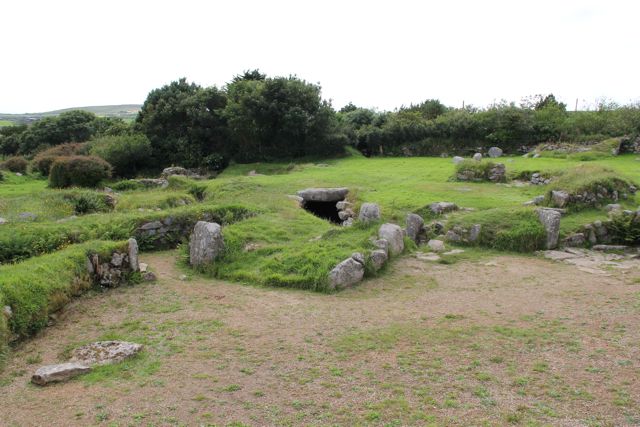
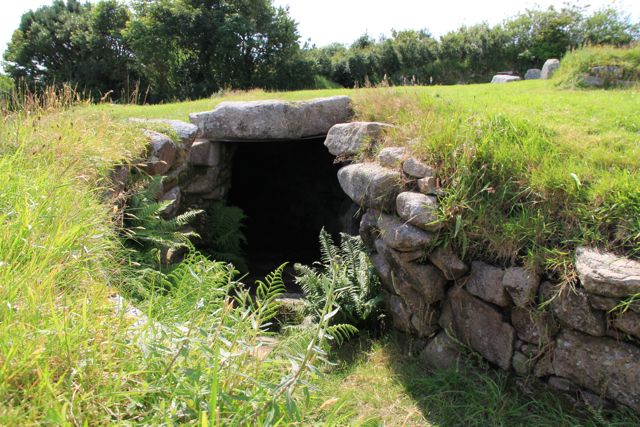
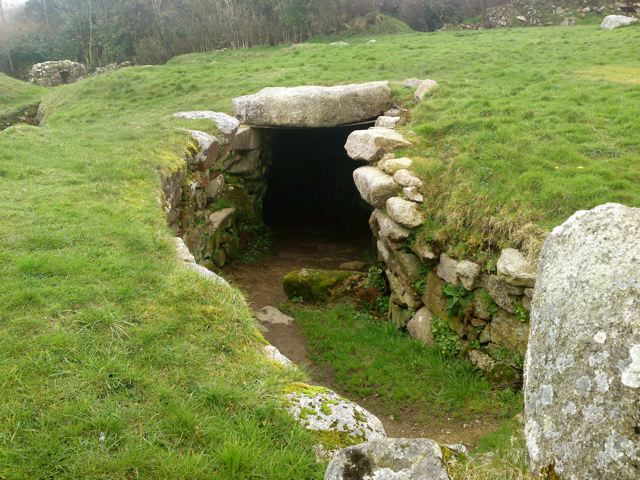
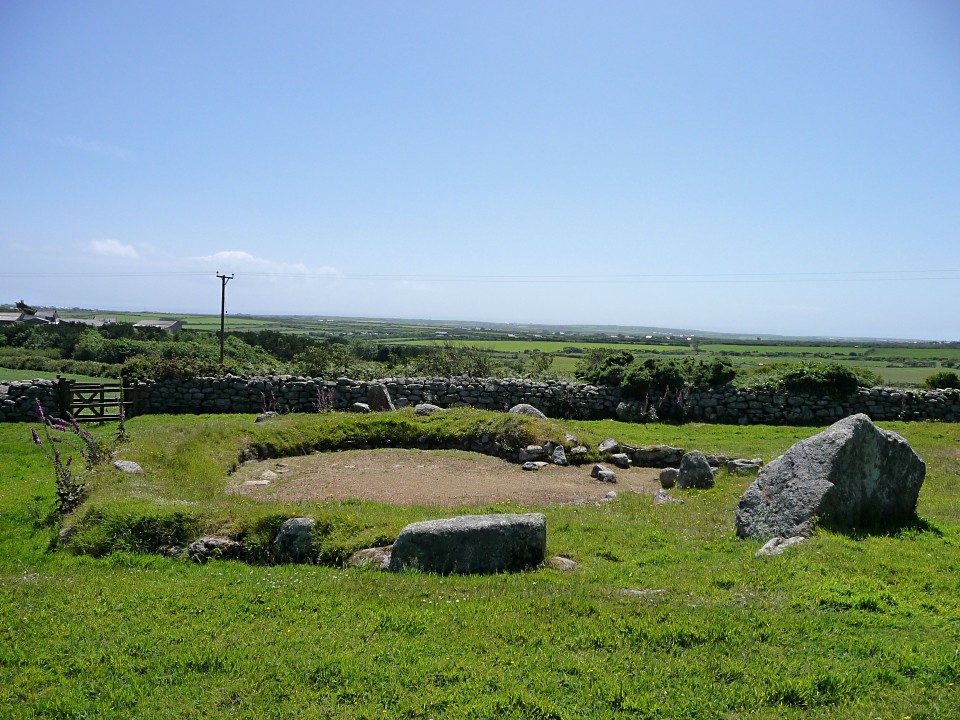
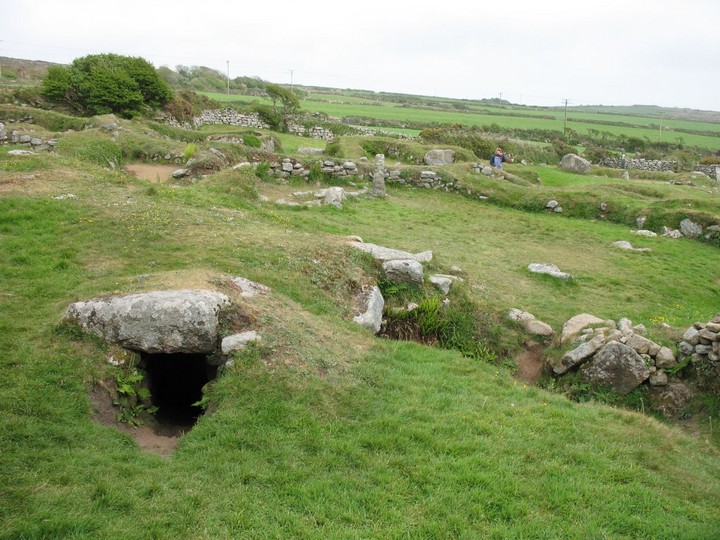
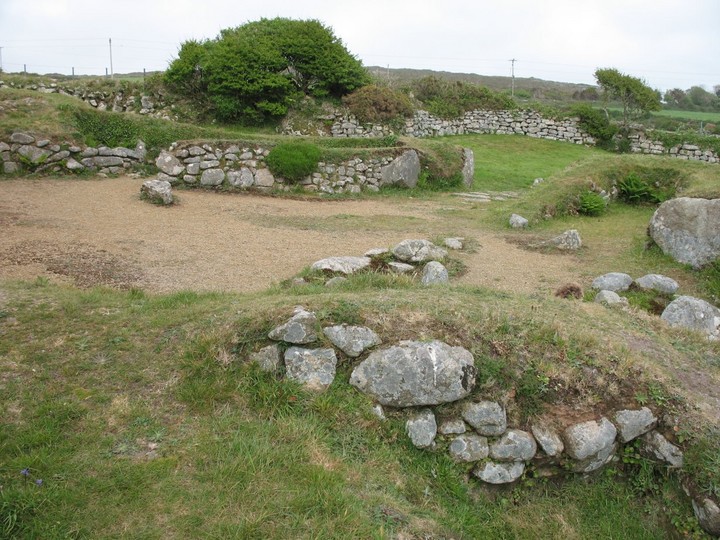
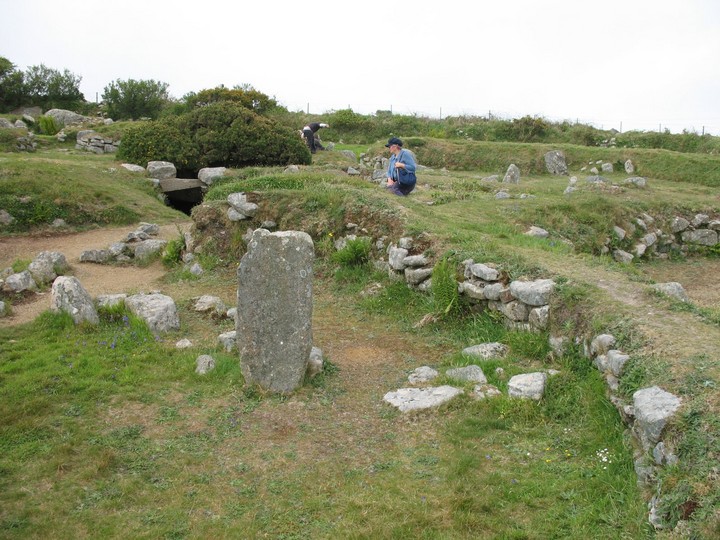
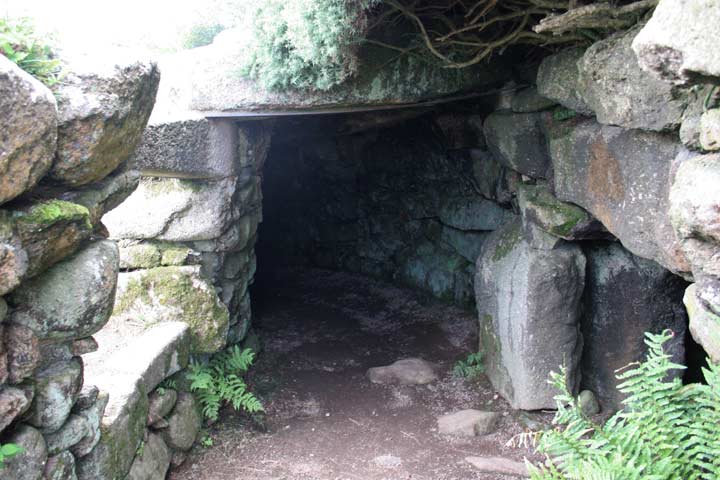
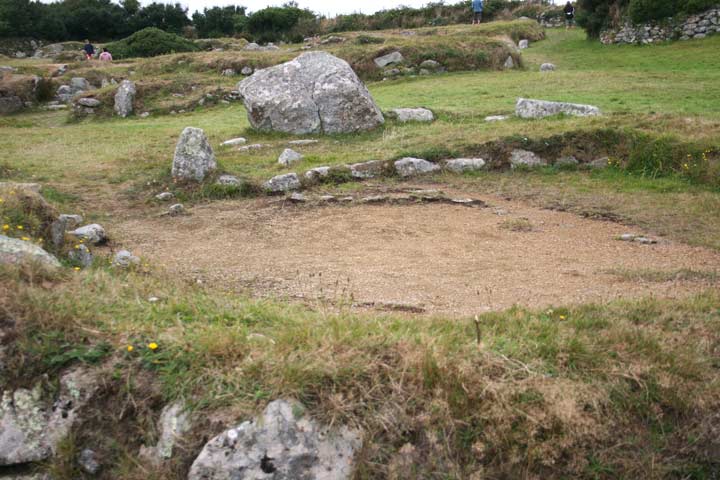
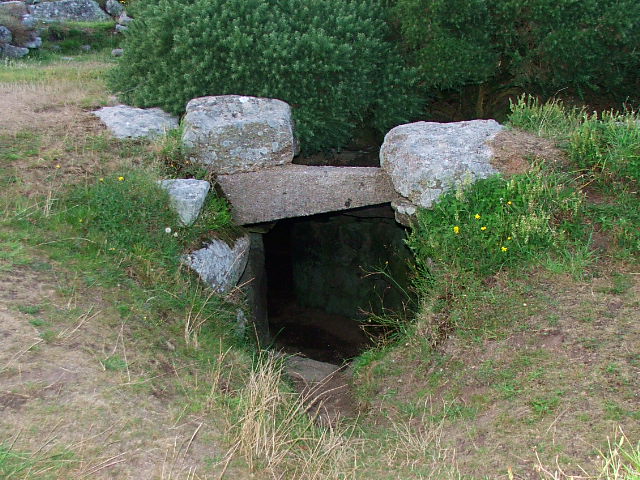
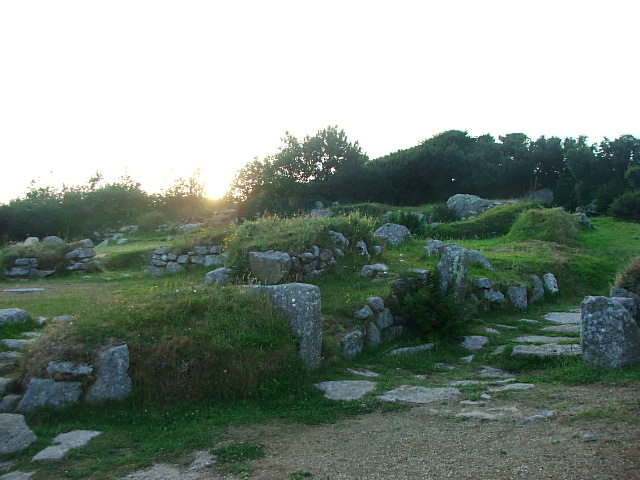
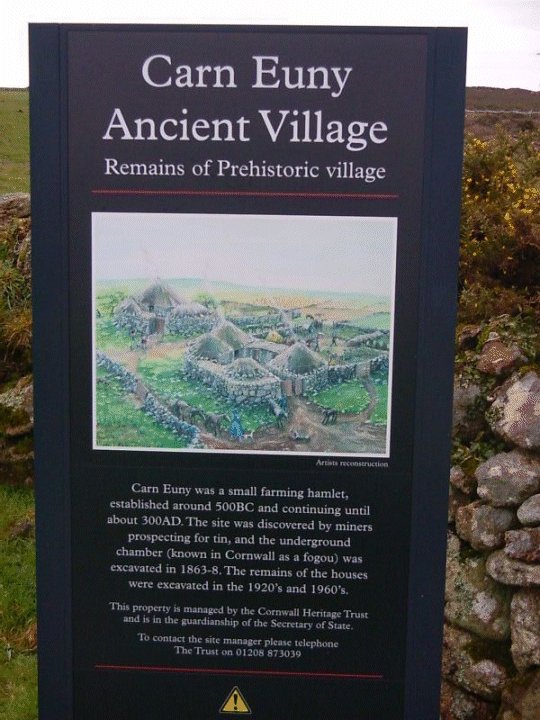
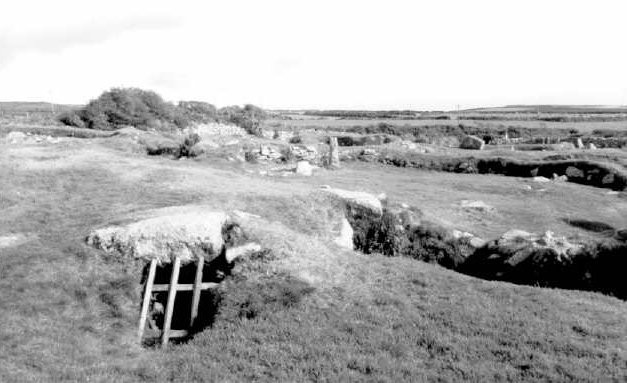
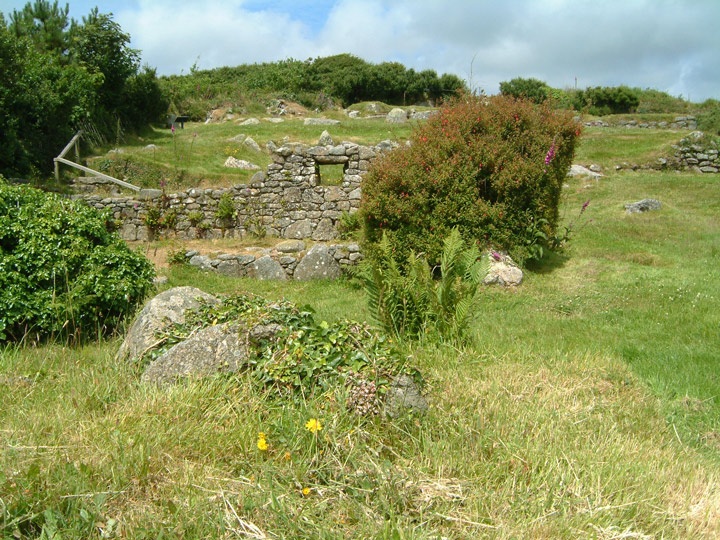
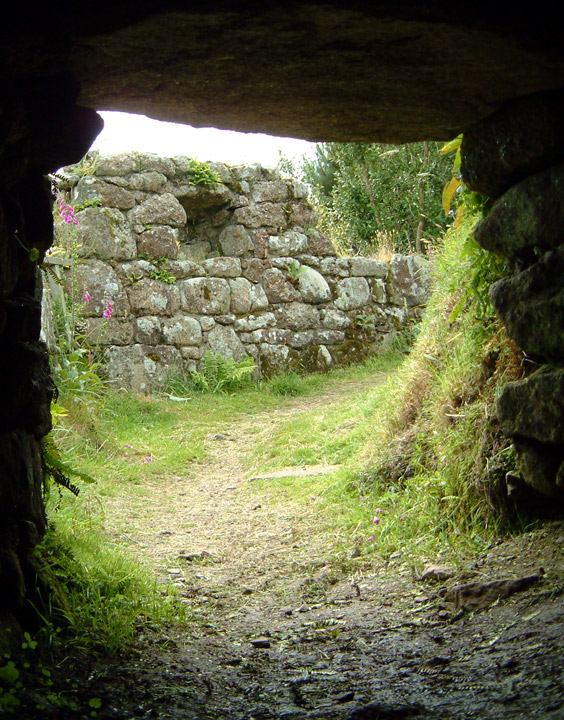
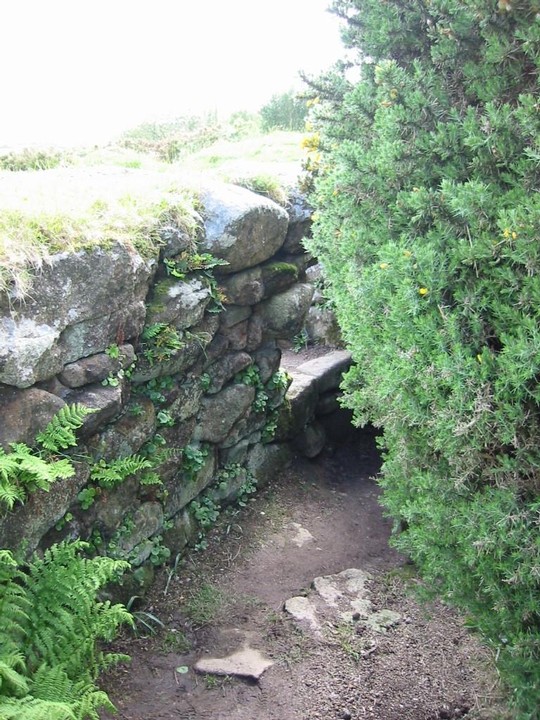
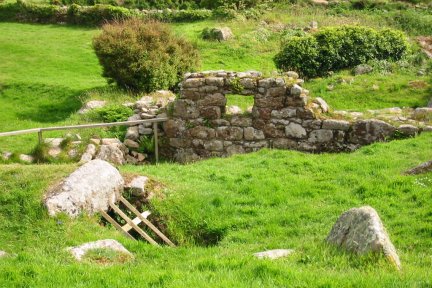
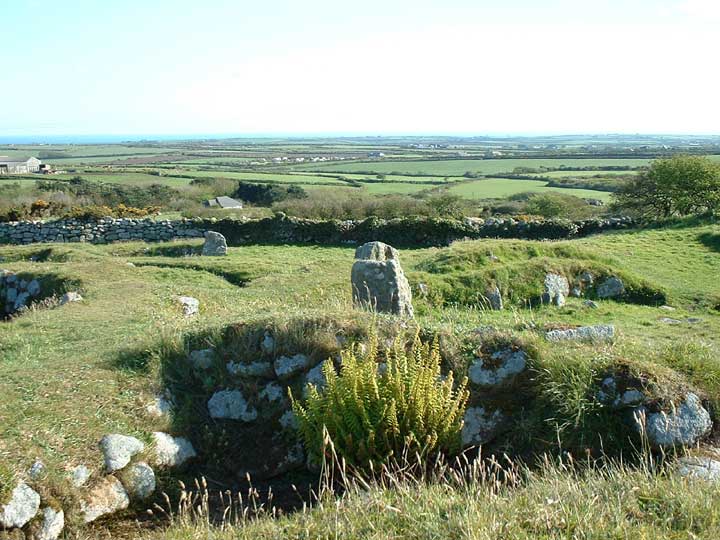
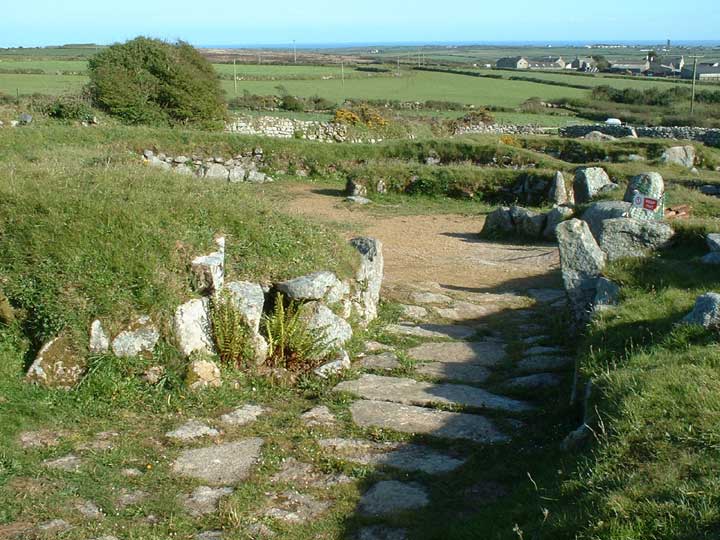
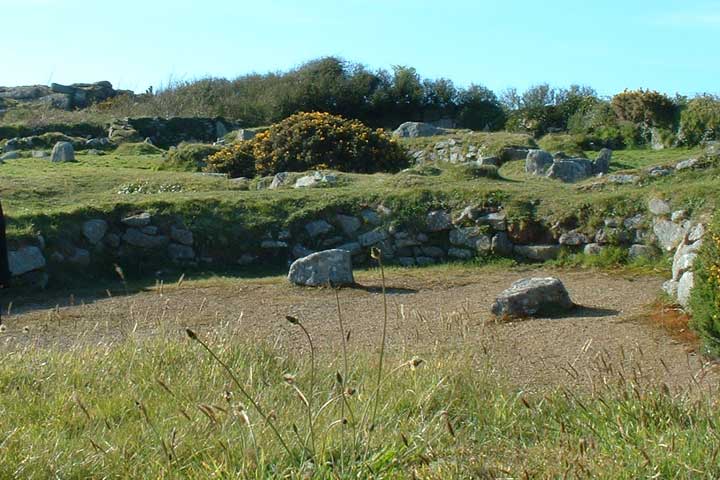
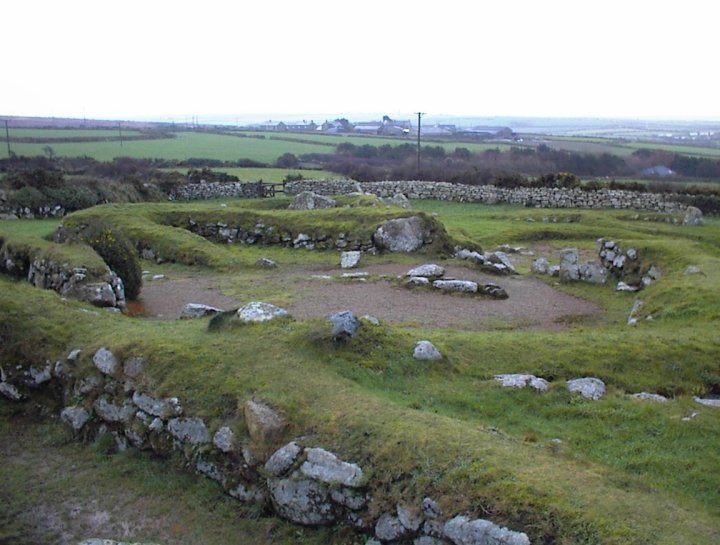
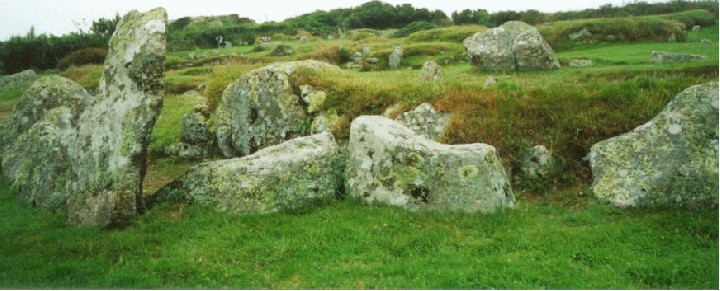
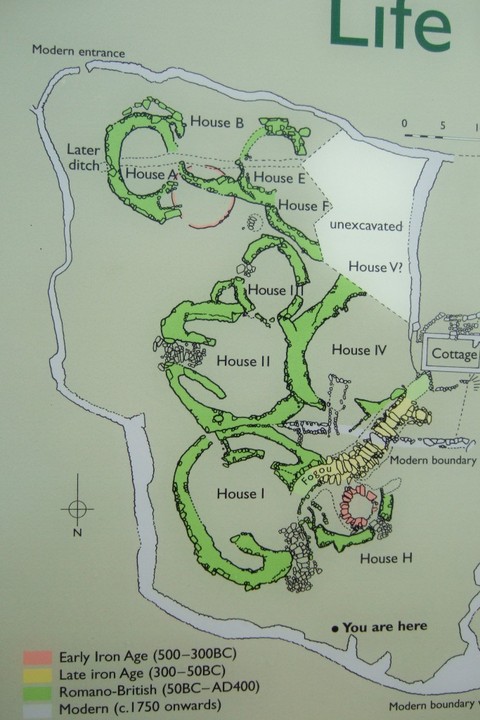
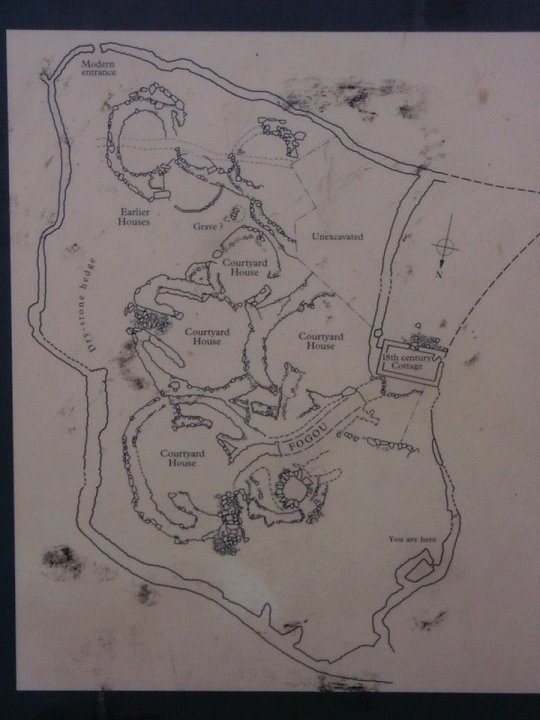
It's almost time to go home now, there's just time for a couple of fogou's and Tintagel castle. It's been twelve years since I was last here too, but the only thing that seems to have changed is you cant get through the creep passage in the fogou anymore. But, crucially we had the place to ourselves again. With heatwave Herbert (i'm naming heatwaves now) still pouring on the sunshine we made our way straight to the fogou, glorious shadows embraced us lovingly. Inside the round chamber/beehive hut, which is it? There were no Swallows here this time, like most of nature they aren't doing very well. But hey, the football season has started so it's not all bad. Once out of the shade we go up to the top and find some more shade to sit in, shade and an iron age view unrivaled in the central Penwith peninsula. But the shade can't contain us for long, we enter the big house with a cobbled porch, there is an annexed section by one wall, and a small gully through the wall to outside the house. But best is the north east entrance to the fogou, it actually seems to be in the corner of the house, there's a chance it may have just been excavated that way. But either way it's a beautiful little place, if there was no such things as fairies it would be necessary to invent them to explain this place. Attention should be applied to the rectangular windowed house as well, if only to acquaint ones self with the 18th century part of the site. The aerial picture on the perhaps new information board seems to show more round houses over the wall at the west side of the village. One Fogou to go. |
 Posted by postman
5th August 2018ce |
|
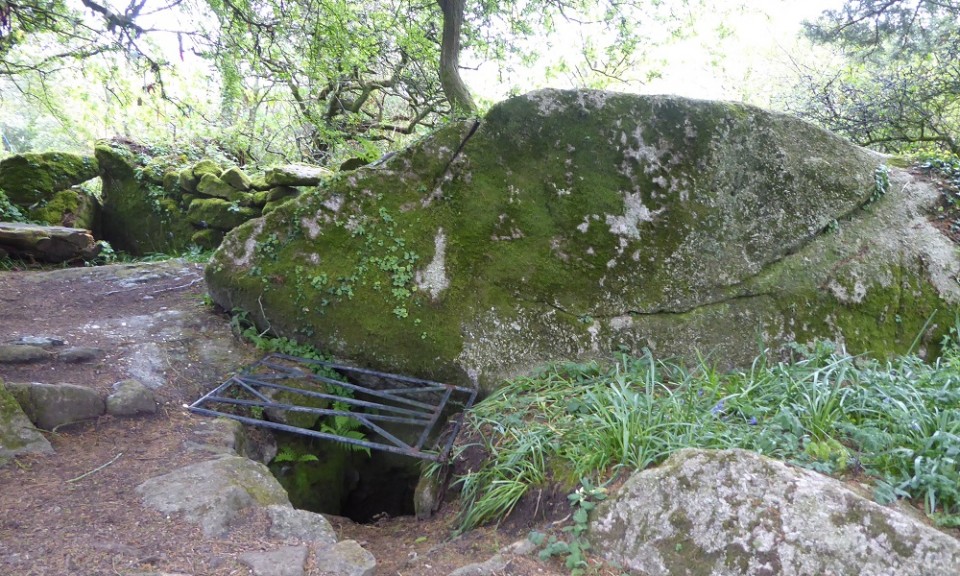
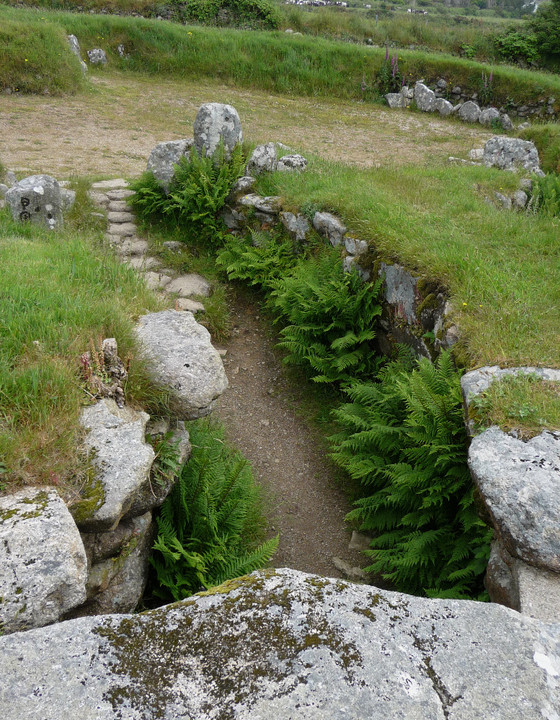
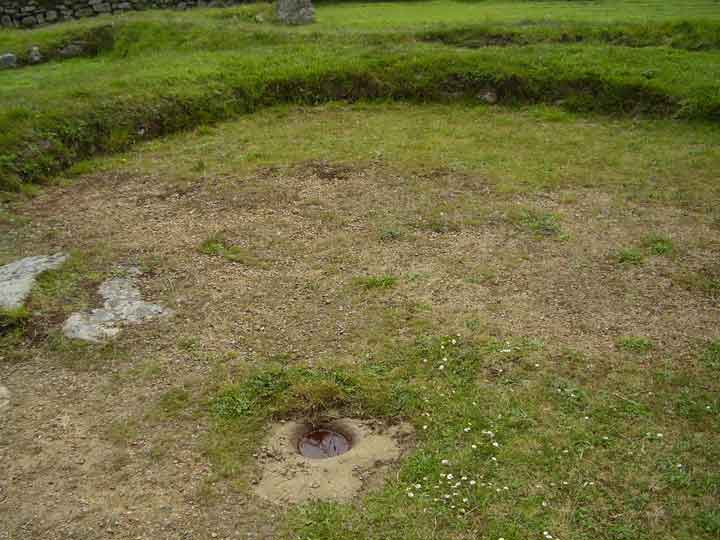
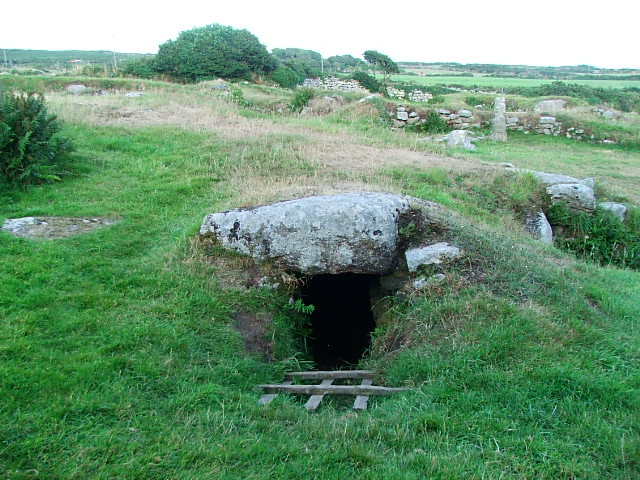
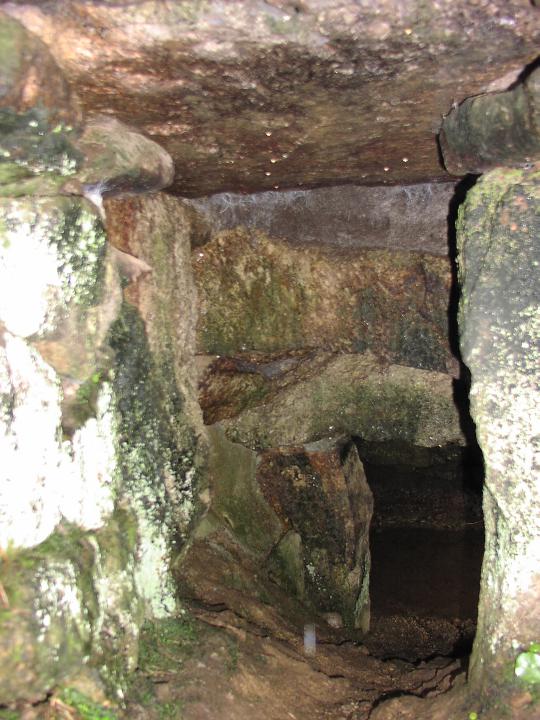
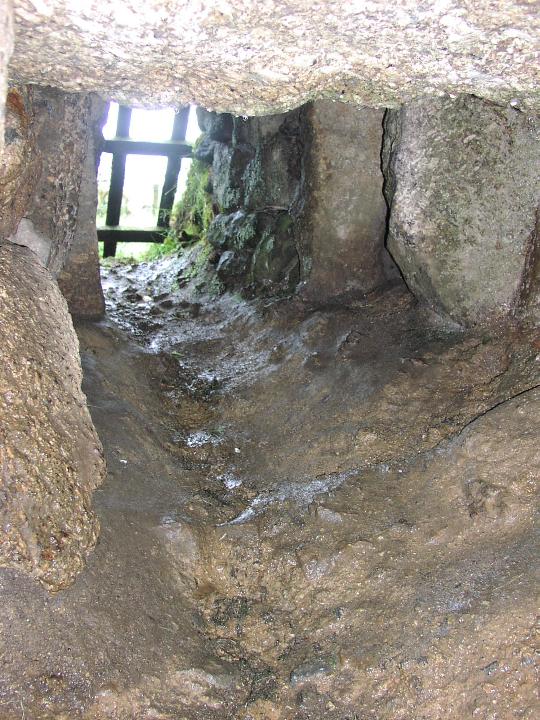
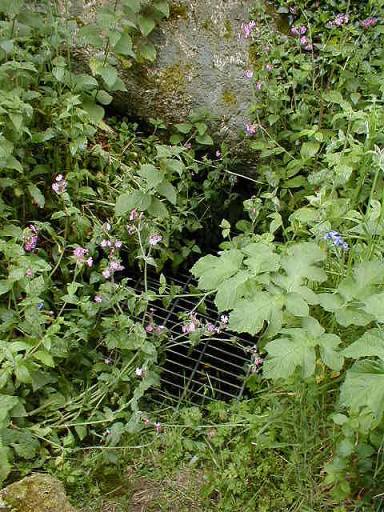
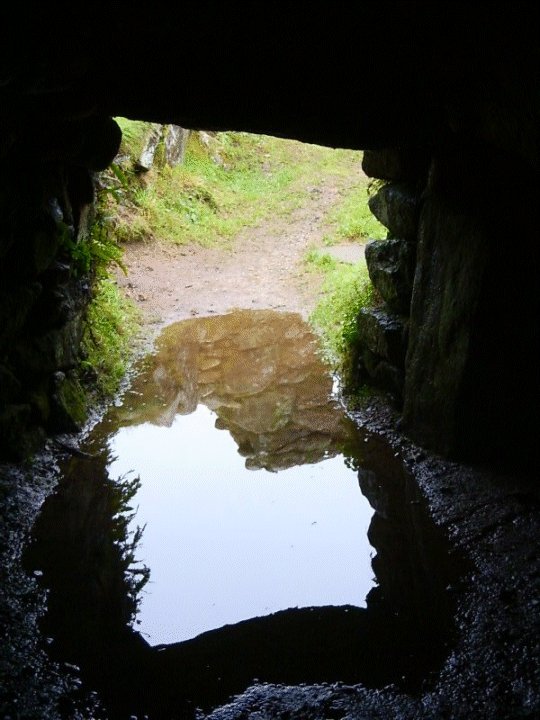
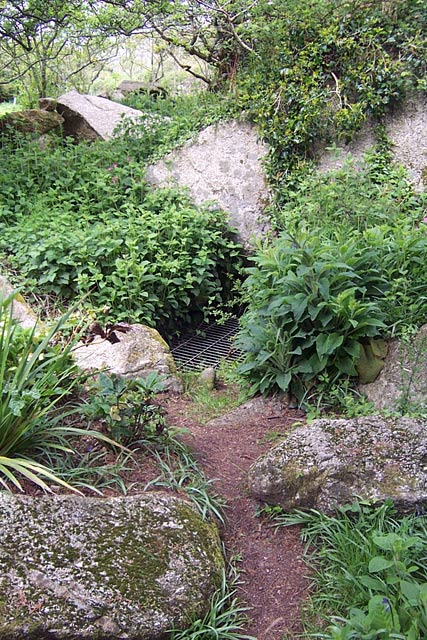
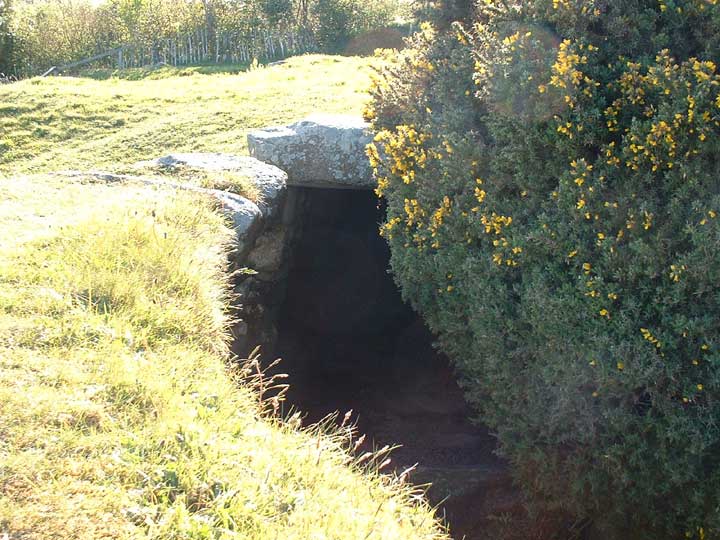
Site re-visit date: 20th Sept 2012. Whilst I was making a quick return to Zennor Quoit I also dropped in to Carn Euny again to see the fogou. It was whilst coming out of the rear entrance to the fogou that Indy, my other dog and son of Chief, stood on a slightly rocking flat stone to the side of the path. Feeling I should lift it, I did, and was surprised to find it covered a natural water supply about a metre down. Thinking no more about it other than, 'Oh they were okay for water then' I just carried on. On leaving, I took the longer path back to the car park and got a real surprise as I left the site, as on the right-hand side immediately adjacent to the site boundary, was a HUGE stone and beneath it a well...a Holy Well along with the traditional blackthorn adorned with ribbons and the usual trinkets and coins pressed into its bark and other orifices. It was a lovely thing to see I must admit and obviously at the same water table level as the 'well' at the 'rear' entrance to the fogou, which although only a small opening (may have been narrowed because of the path) showed an 'emergency' water supply for the fogou users possibly? I took a few pix as growing out of the top of the huge 'capstone' was a tree would you believe with its roots travelling down the stone and into the ground! Here they are:- https://picasaweb.google.com/100525707086862773355/HolyWell?authkey=Gv1sRgCI688ZD2lsSj9QE# |
Posted by Sanctuary 26th September 2012ce Edited 26th September 2012ce |
|
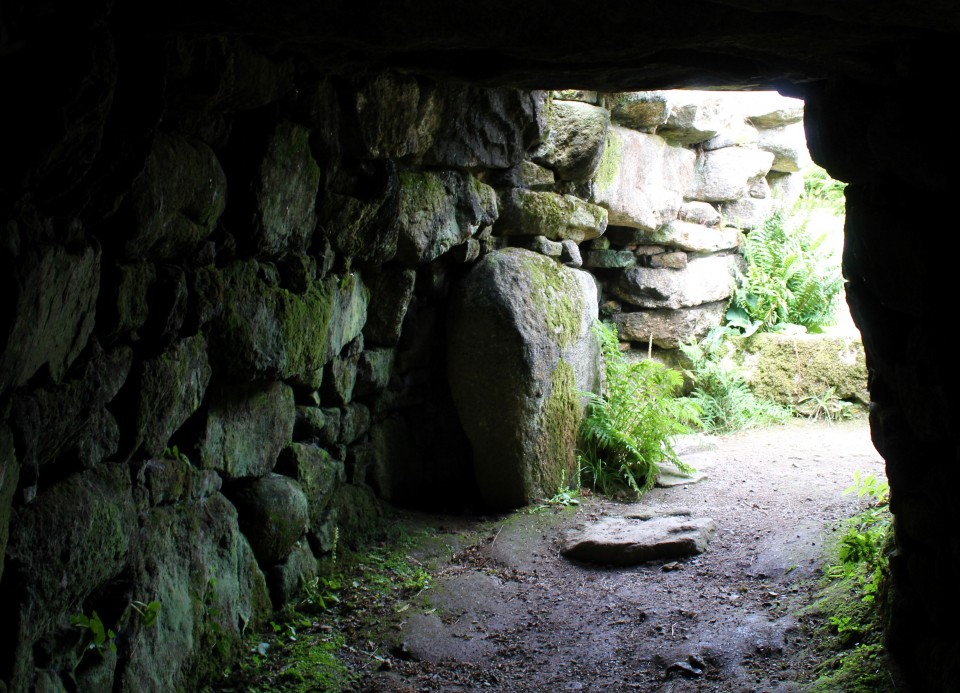
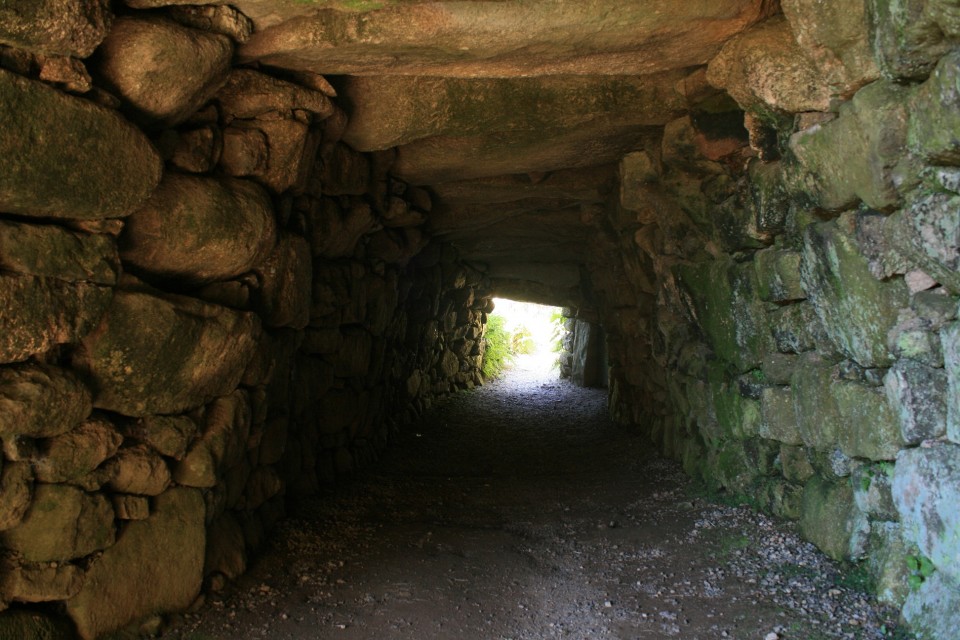
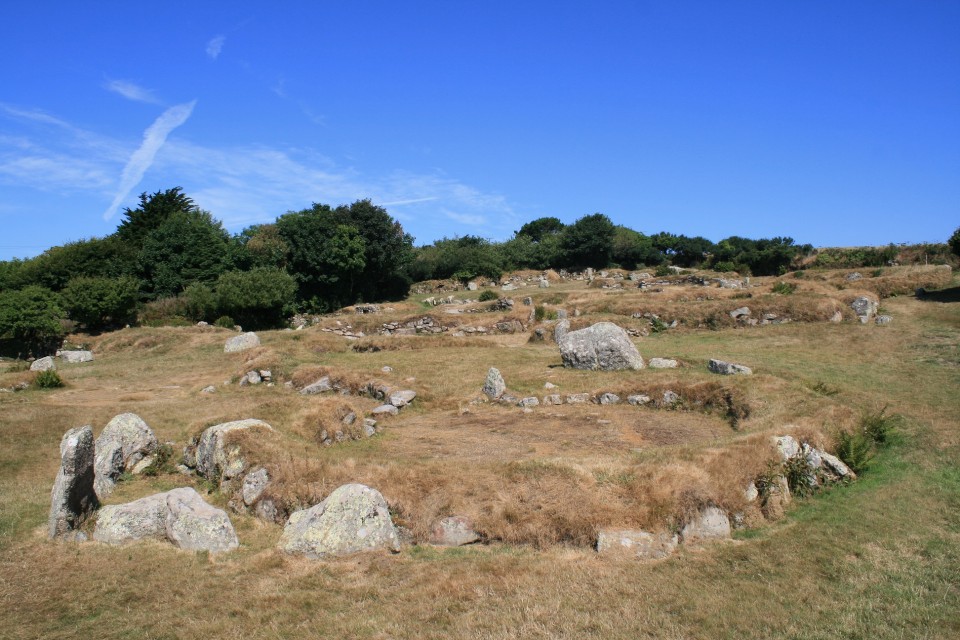
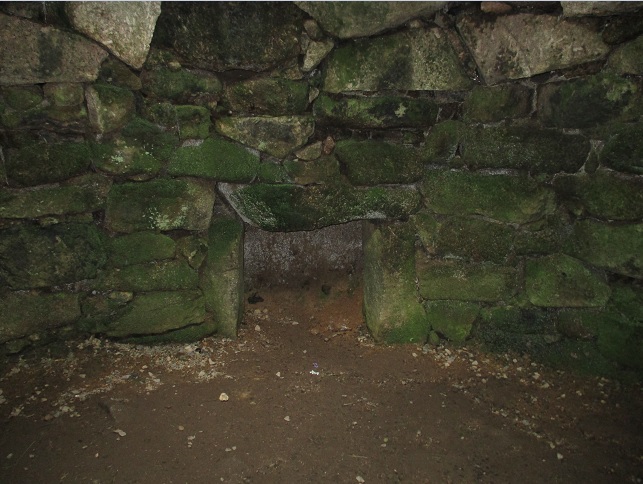
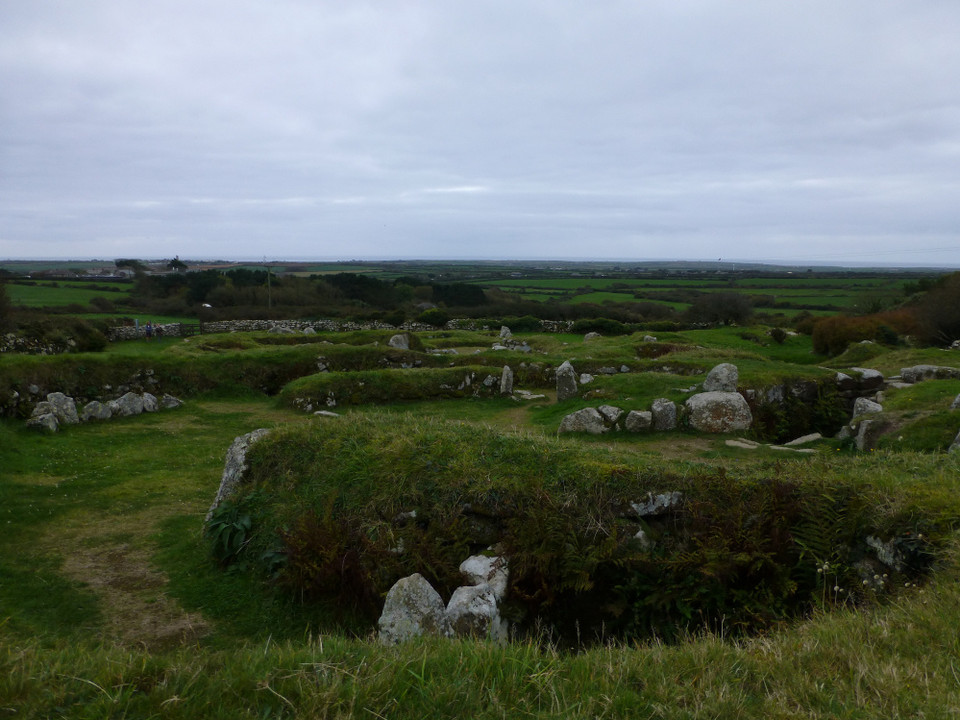
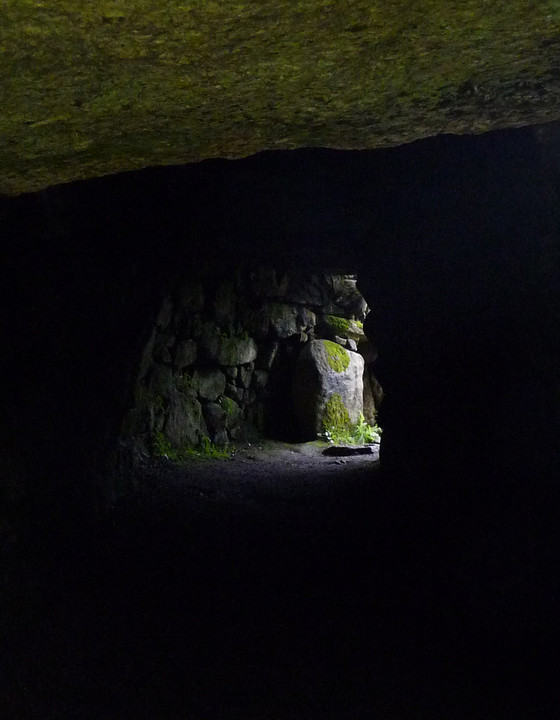
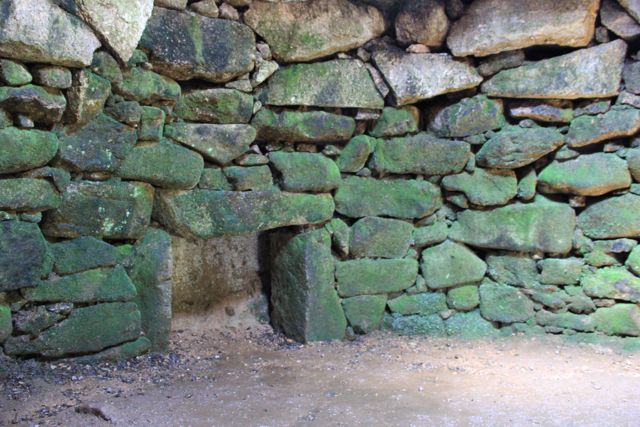
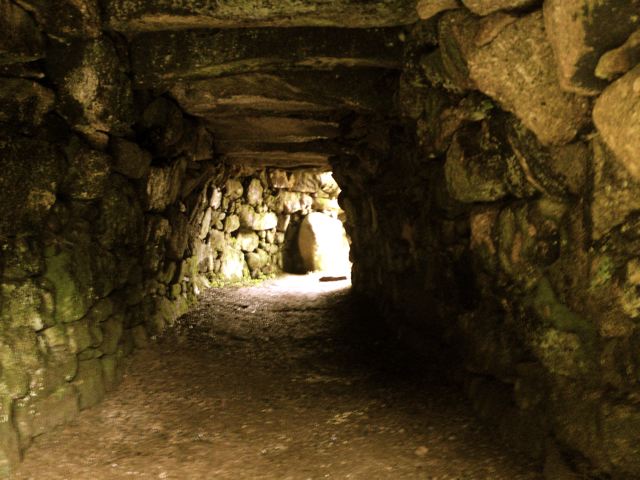
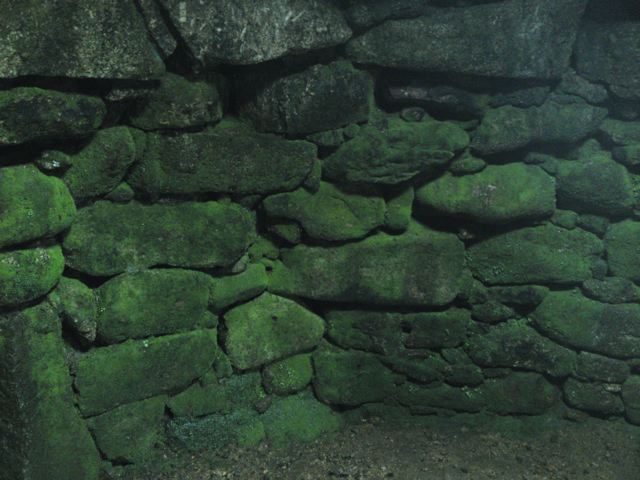
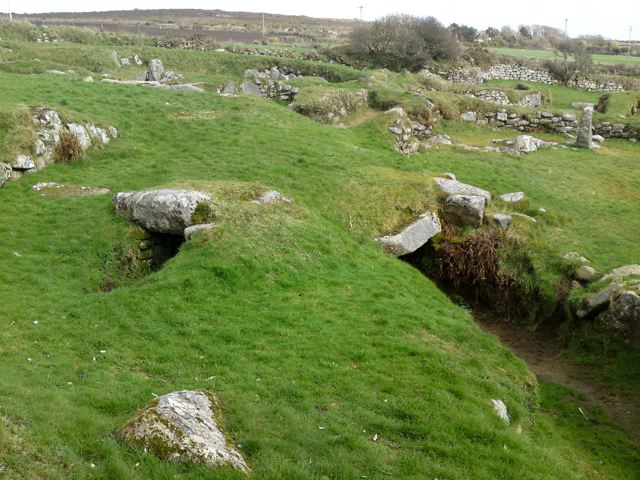
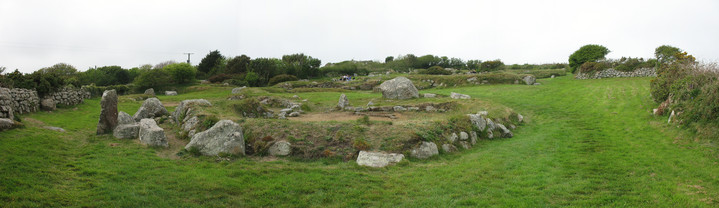
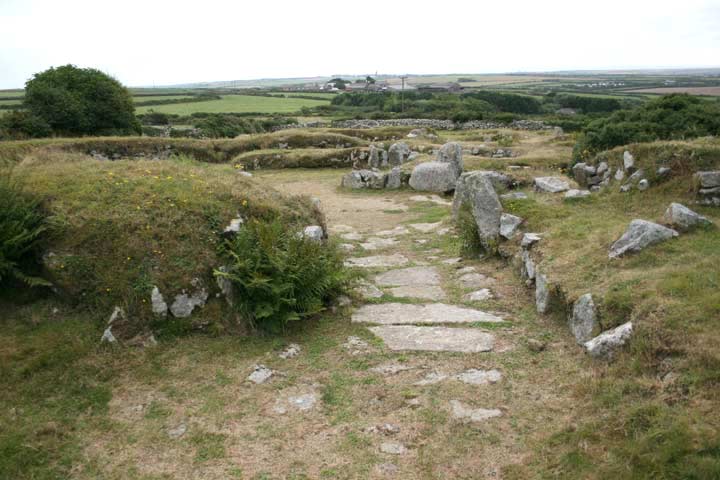
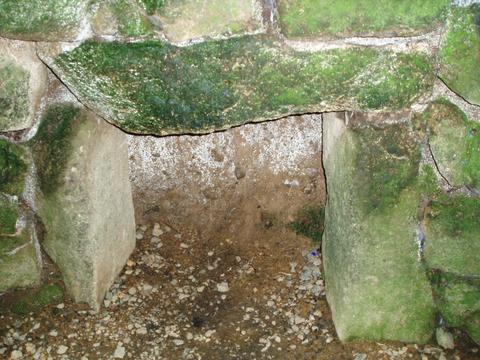
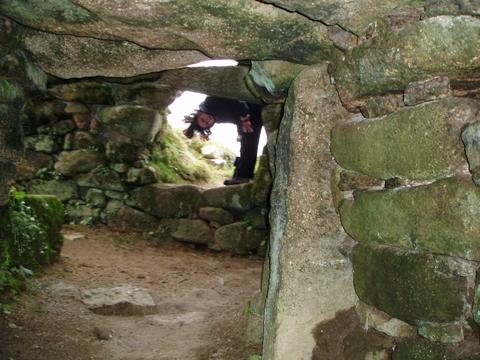
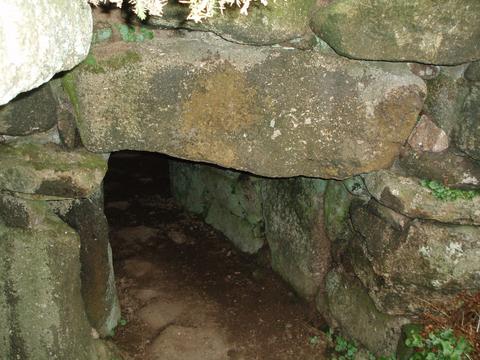
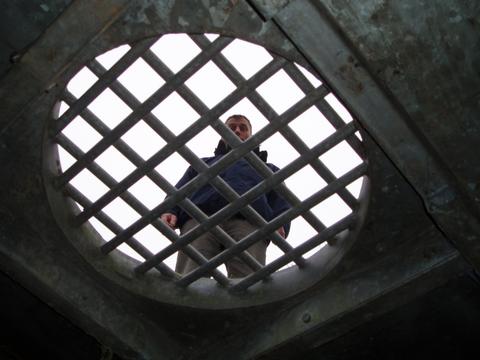
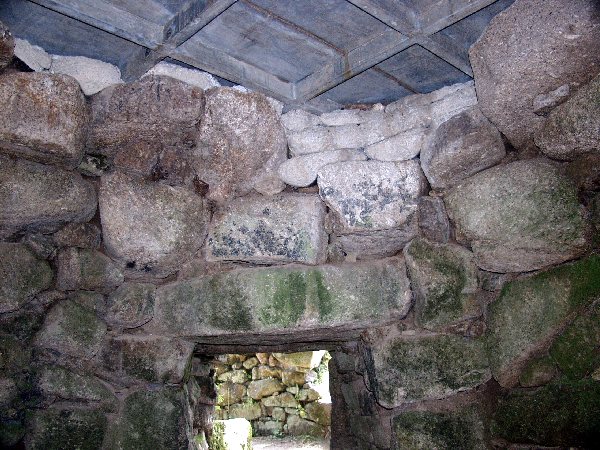
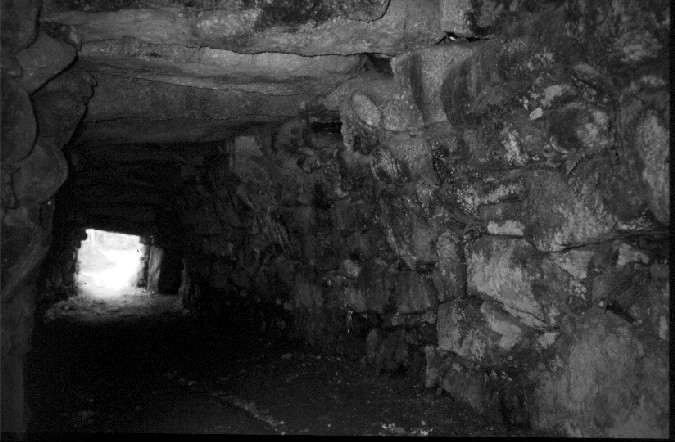
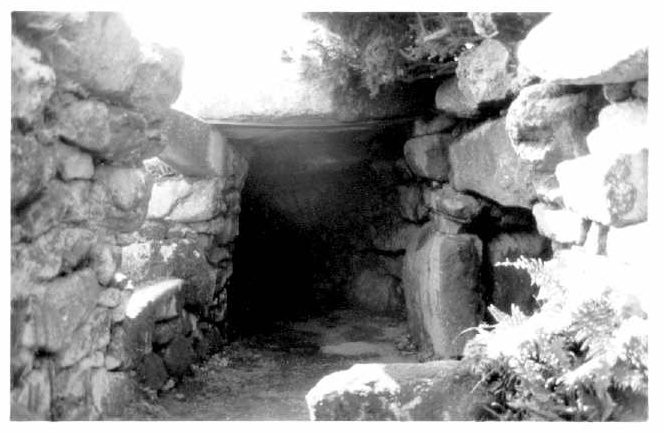
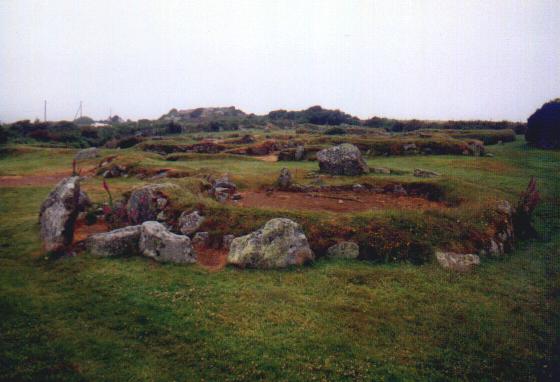
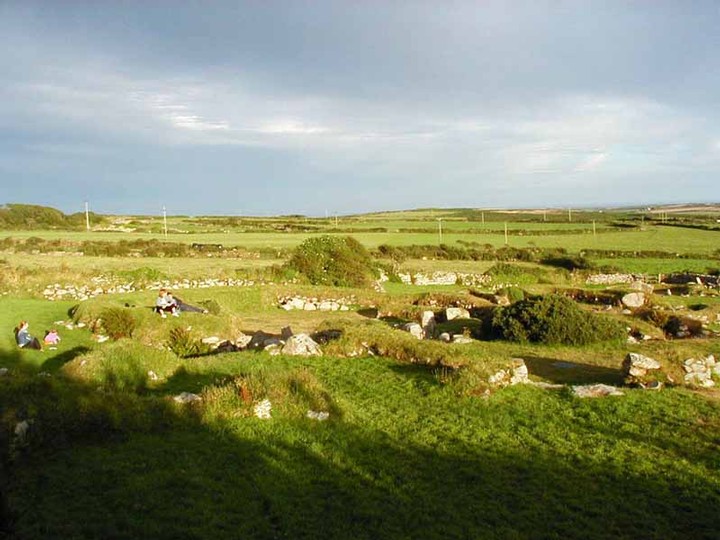
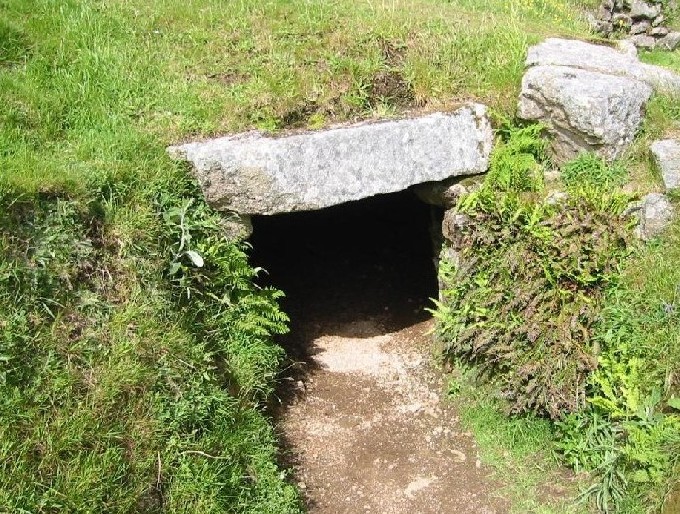
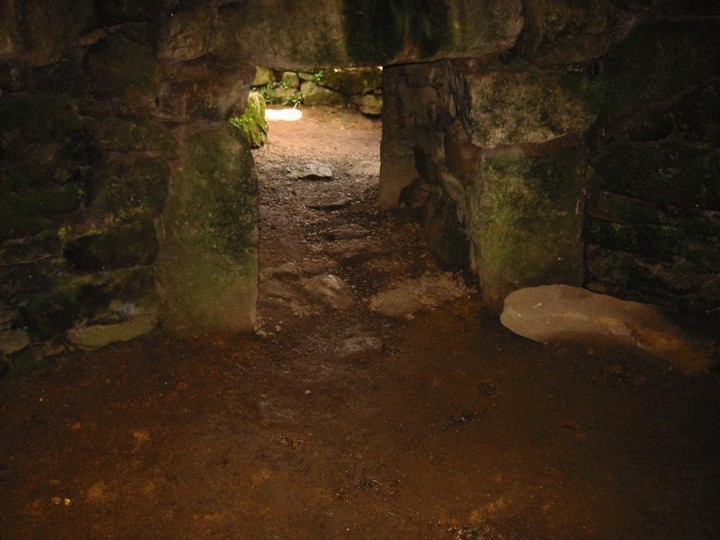
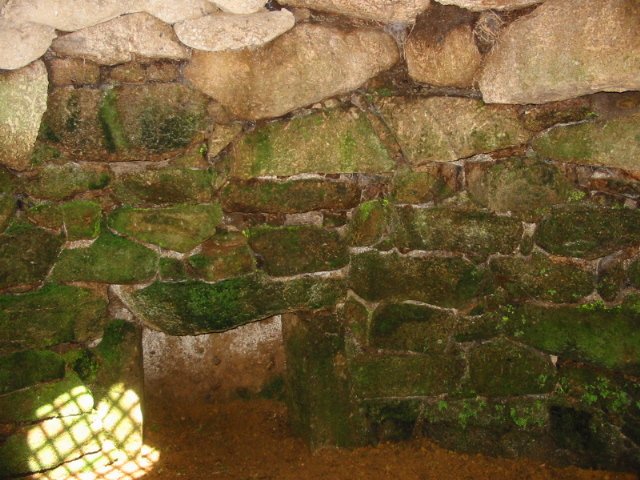
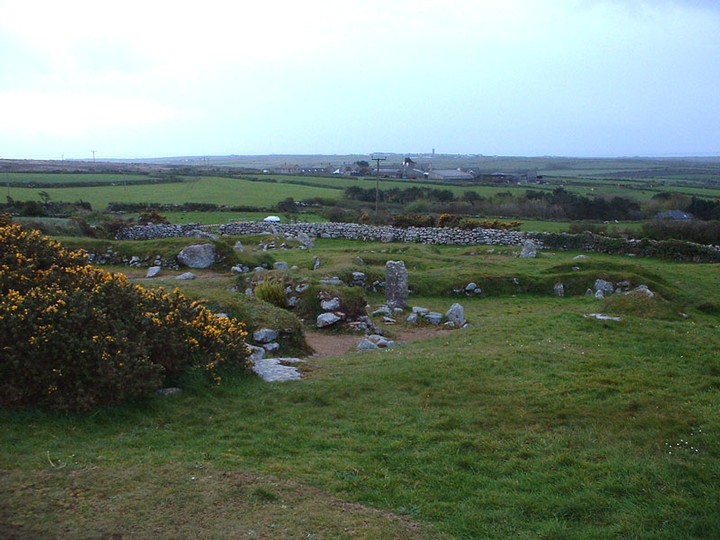
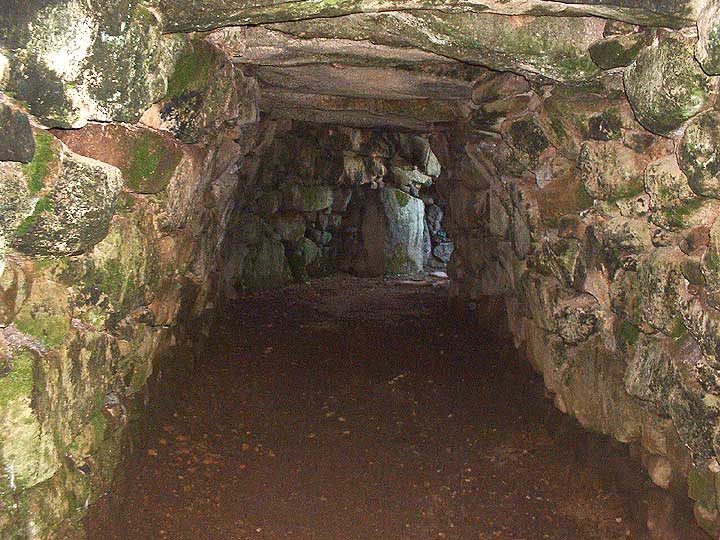
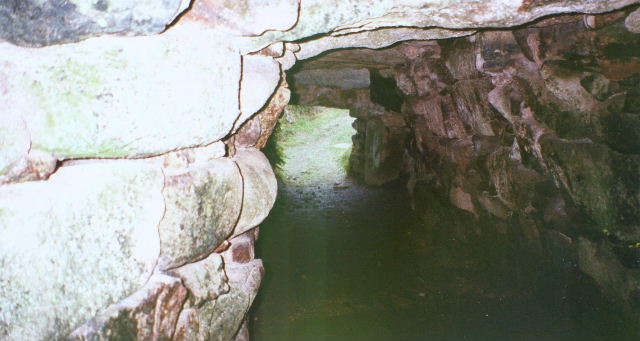
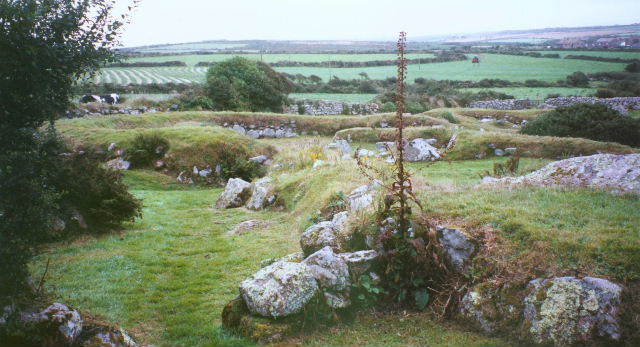
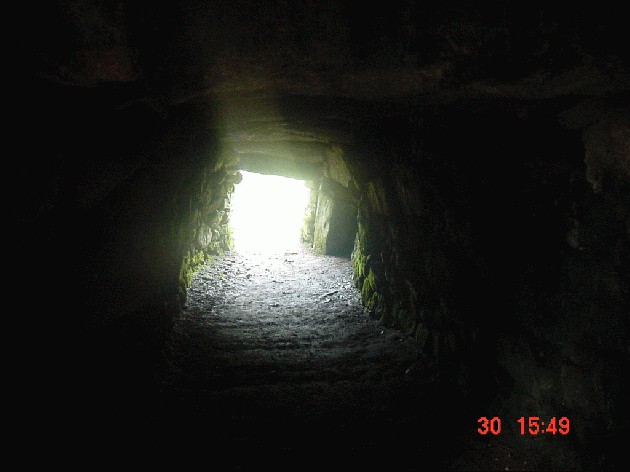
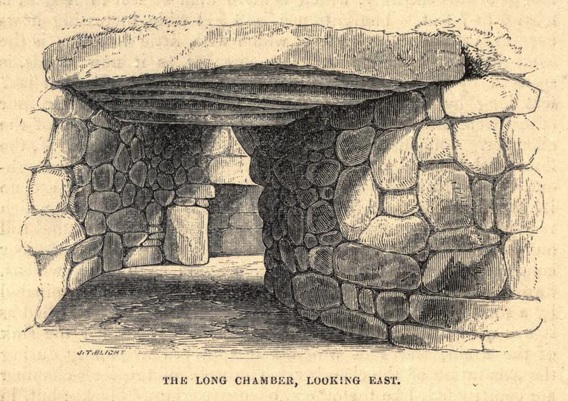
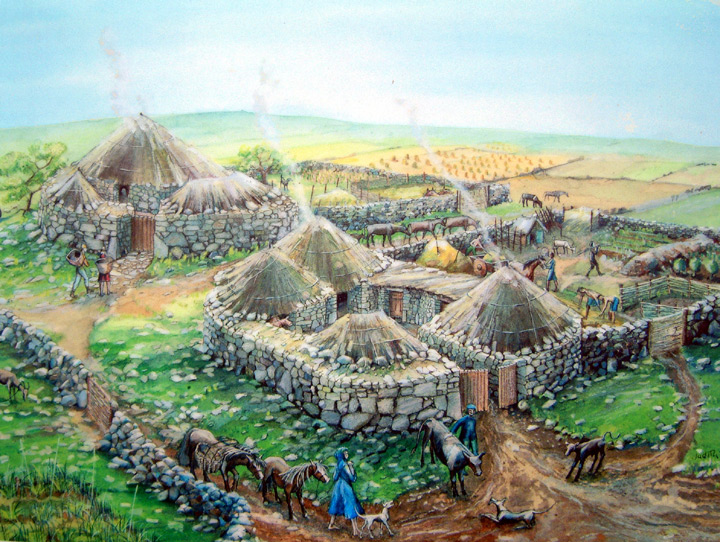
Carn Euny: Visit date: September 3rd 2012 Aside from Zennor Quoit, this surprisingly made my short break in Penwith that bit special. Not normally being an IA Settlement person I nevertheless went to see Carn Euny while I was close by. Boy oh boy what a surprise I got because I got to see my first Fogou (pronounced Foo Goo I am informed) and it blew me away. It was like entering a Neolithic Long Barrow but without any side chambers and you went in one end and came out the other! In other words it was a tunnel but so much more which you'll understand when you see it for yourself. To the right of the main entrance of the fogou was another smaller entrance which lead to a circular 'room' with a circular roof ventilator/light. It was this chamber that is the WOW factor and as I was filming it with my camcorder I couldn't stop talking into its mic. Both the circular walls of the chamber and the straight walls of the main fogou were neatly constructed to their lower sections and had a breen/blue tinge to them but above that the quality of the stone laying became less 'skilfull' I felt. This is probably down to the reconstruction work that has taken place which in itself was disappointing because it appeared like modern construction workers hadn't either the skill or not taken the time to equal our great ancestors quality of work. Prior to visiting a fogou I had understood them to have been a product of the Bronze Age (so I'd read) but it seems they are more from the Early IA. The construction of the stonework is probably a good indication of that compared to the Bronze or Late Neolithic. I reached the site easily enough. Take the Sancreed turning off the A30 and simply follow the plentiful signs to Carn Euny. The parking space is on a firm standing and would be large enough for around 6 or seven vehicles. There are two paths on offer to reach the site from there although the one off to the right alongside the house can be wet and muddy as it goes across a field and a couple of stiles. But I loved it here and had the benefit of a lovely sunny day which was such a bonus after the poor summer we have had in 2012. The layout of the round houses in the village is quite a charming sight and it was obviously a very close-knit community in its heyday. Loved it! I took loads of pix but haven't uploaded any as there are plenty of the same already on display. Oh and one last thing...access to the site is FREE! |
Posted by Sanctuary 14th September 2012ce Edited 14th September 2012ce |
|
Visited 13.4.10. Signposted all the way from the A30 at Drift. Follow the signs to the car park and then it's only a 5 minute walk to the site. Be warned - on a wet day make sure you take your wellies!! You have to walk through a field where cows are fed and it is very, very muddy. The village itself is quite similar to Chysauster although it does have the big advantage that you can go into the Fogou - it is worth coming here for that experience alone! Th roads to the site are very narrow and bendy and have few passing places - take care. The small car park is alongside a house and can hold about 6 cars or so I would say. |
Posted by CARL 26th April 2010ce |
|
I was just so pleased to have finally seen a fogou!!! Ever since watching The Modern Antiquarian and guffawing at Julian getting all mystic at Boleigh Fogou, I have harboured a desire to see one myself and Carn Euny is a cracker! Yes, the roads up here are quite tortuous but it is well signed (as long as your driver isn't doing 45mph on hair-pin bends as mine was!) and we were lucky enough not to meet any other traffic on the way up there. However, due to some rather crafty cows in the first field, who were stood in front of the sign which pointed us to the site, we ended up 2 fields away and had to jump over walls and barbed wire fence to get in. What an amazing place! It was cold, grey and very blustery but we spent ages just milling around and the fogou istelf was just fabulous - I tried to video it but it was so dark inside, the picture is almost black - all you can hear is my voice squeaking with excitement! You get a real feel for how this place was once alive, something that isn;t always true of other sites. Didn't see the glowing moss though - maybe because it was so overcast that there wasn't any light to reflect? And check out the amazing house and gardens at the parking area - pretty fantastic place to live! |
 Posted by Vicster
22nd February 2006ce Edited 22nd February 2006ce |
|
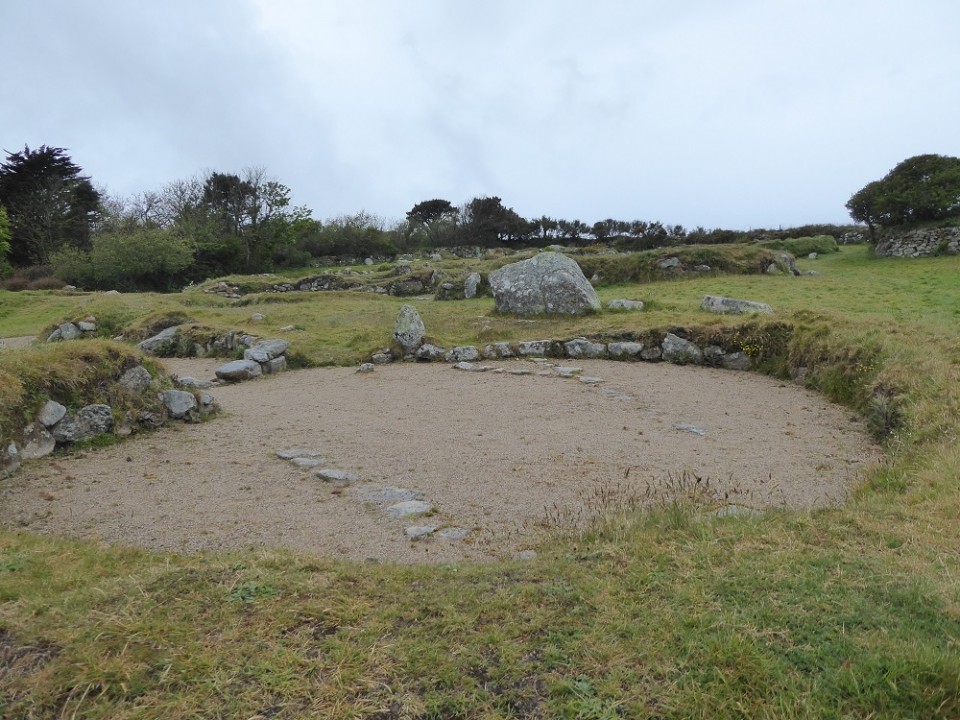
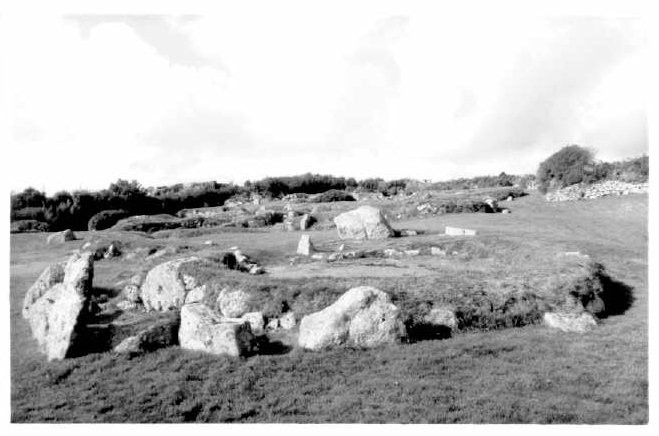
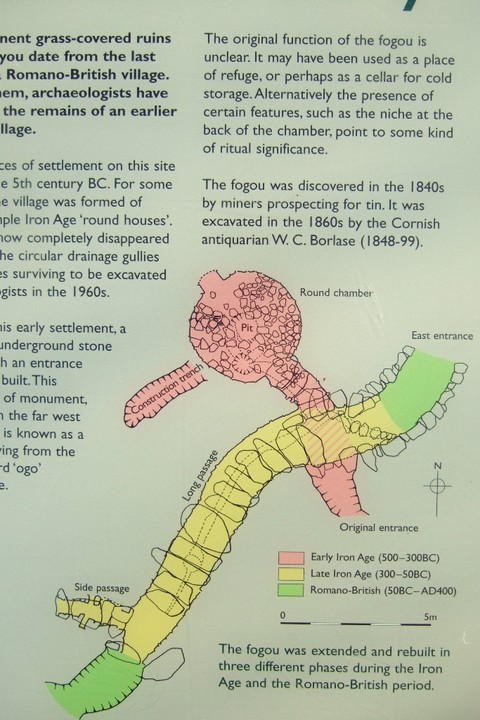
It was wonderful to see a fogou within the context of an ancient village and to muse upon what it might have been for. It was here that it became obvious to me that this fogou was a place to store the excess goodies; the community's 'bank', 'saving's account' or 'life insurance' policy, if you like. It's construction is quite amazing, especially the internal beehive chamber, leading off from the main passageway - a masterpiece of engineering, 3 metres tall reaching up to ground level and 5 metres diameter. The village is wonderful to walk around and easy to imagine a small community of farmers making a living from their land. As you stand in the ruins of their roundhouses you can almost smell the woodsmoke, hear the children playing, the grain being pounded, feel their tie to this land. This post appears as part of the weblog entry Scary fogous and super creeps
|
 Posted by Jane
15th March 2004ce Edited 15th March 2004ce |
|
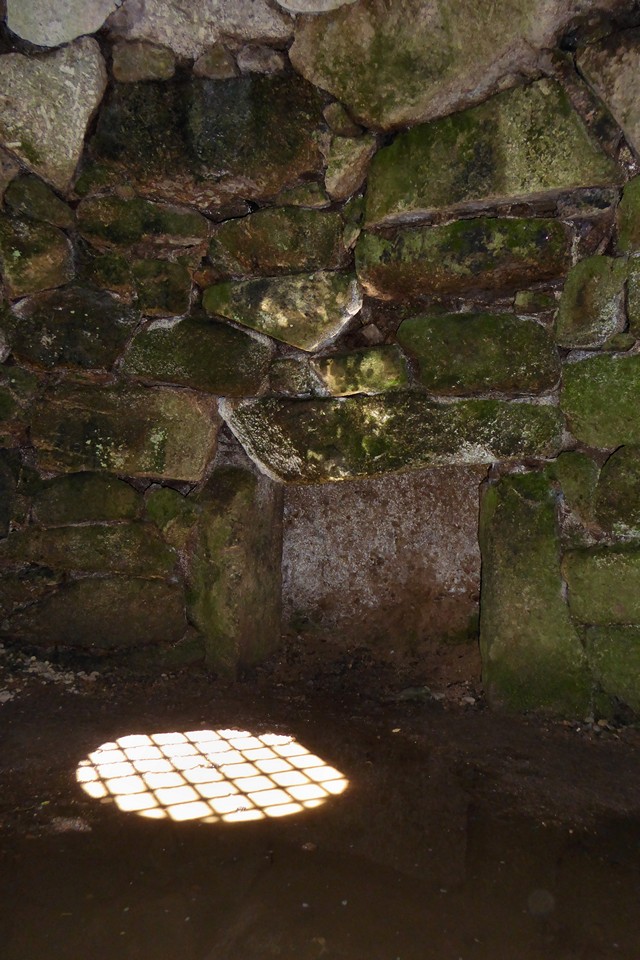
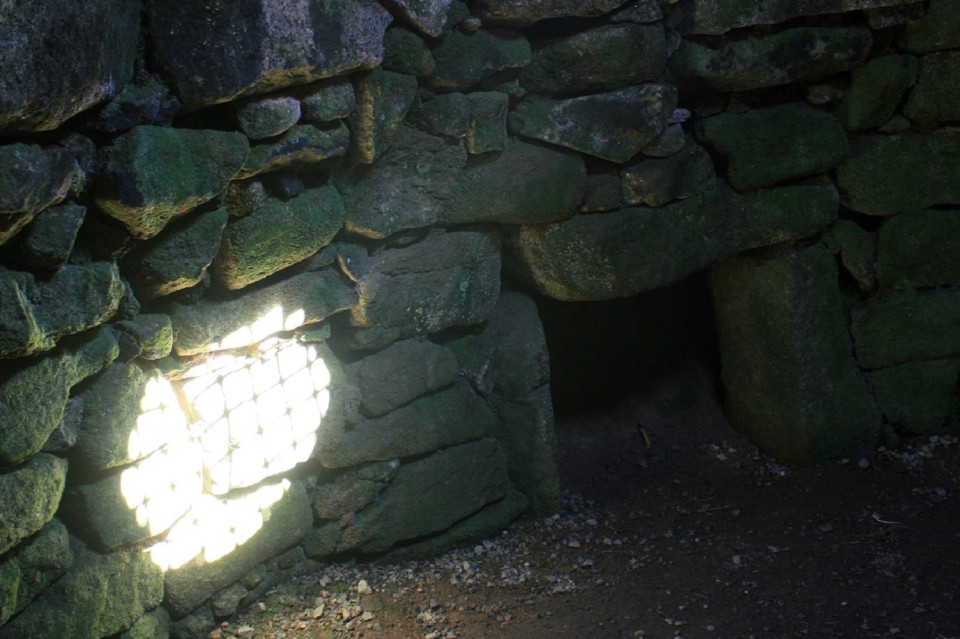
5.3.04 First time at Carn Uny for a few years, work has been done since I was last here. The fougou is dry!, last time I came I could have done with wellies. Also the chamber has been enclosed more with now only a small hole in the roof. Better still, I have the place to myself. I sit in the chamber and listen to the water dripping off the walls. Sunlight breaks through every so often catching the moss. After a while it is time to go, duty calls up county. I will be back again, but I bet it won't be so peaceful. |
 Posted by Mr Hamhead
11th March 2004ce |
|
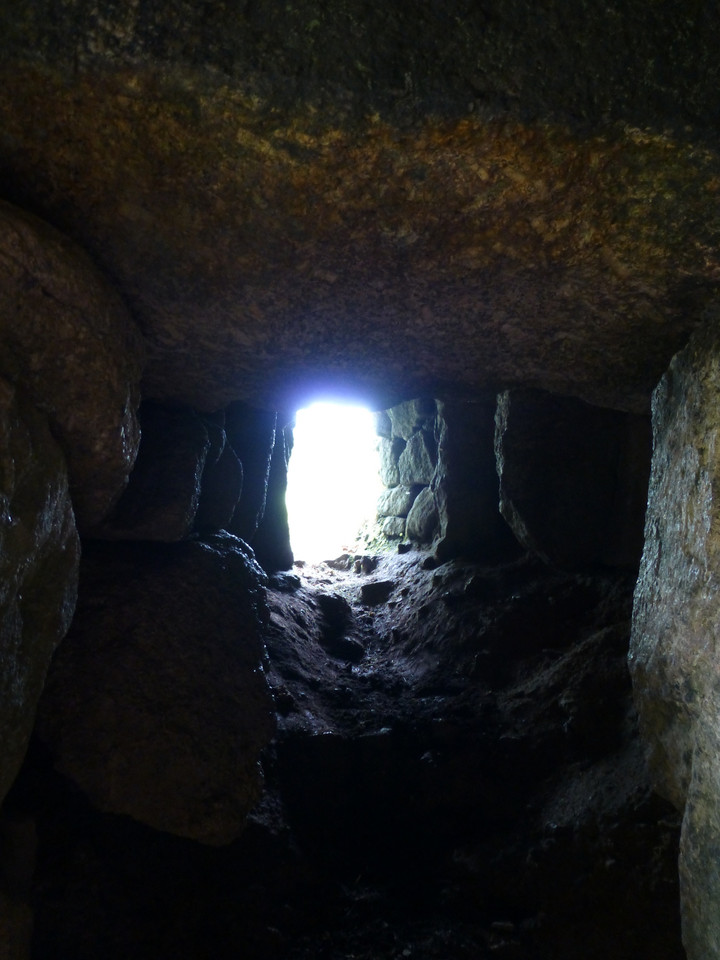
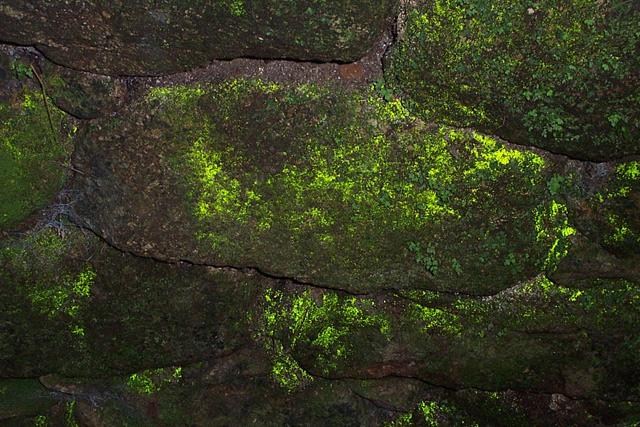
The moss in the fogu does indeed appear to glow but you have to be positioned just right as what is happening is the moss is reflecting light straight back very efficiently from small water droplets. If you're tallish then stand in the middle of the round room and look straight at the walls, move your head around and you'll suddenly catch the brilliant green reflections. Short people have to get in closer to get the right angle. It really is remarkable to see the whole wall light up in some areas. While you're there why not go on and visit the holywell nearby, take the path out near the top (with the 'pottery' sign ) and turn right when you hit the road opposite a very nice garden with a building being refurbished (good luck to whoever's setting up home there!) after walking a little way up the road (not far at all, 20 yds maybe) take the slightly overgrown path to the left along the boundary of the above mentioned garden. |
Posted by Zedsquared 12th October 2003ce Edited 12th October 2003ce |
|
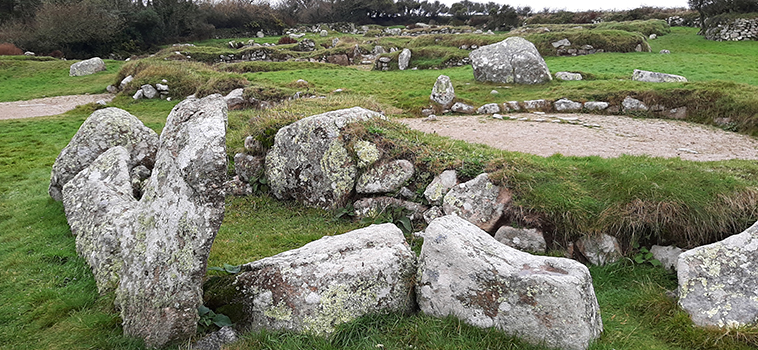
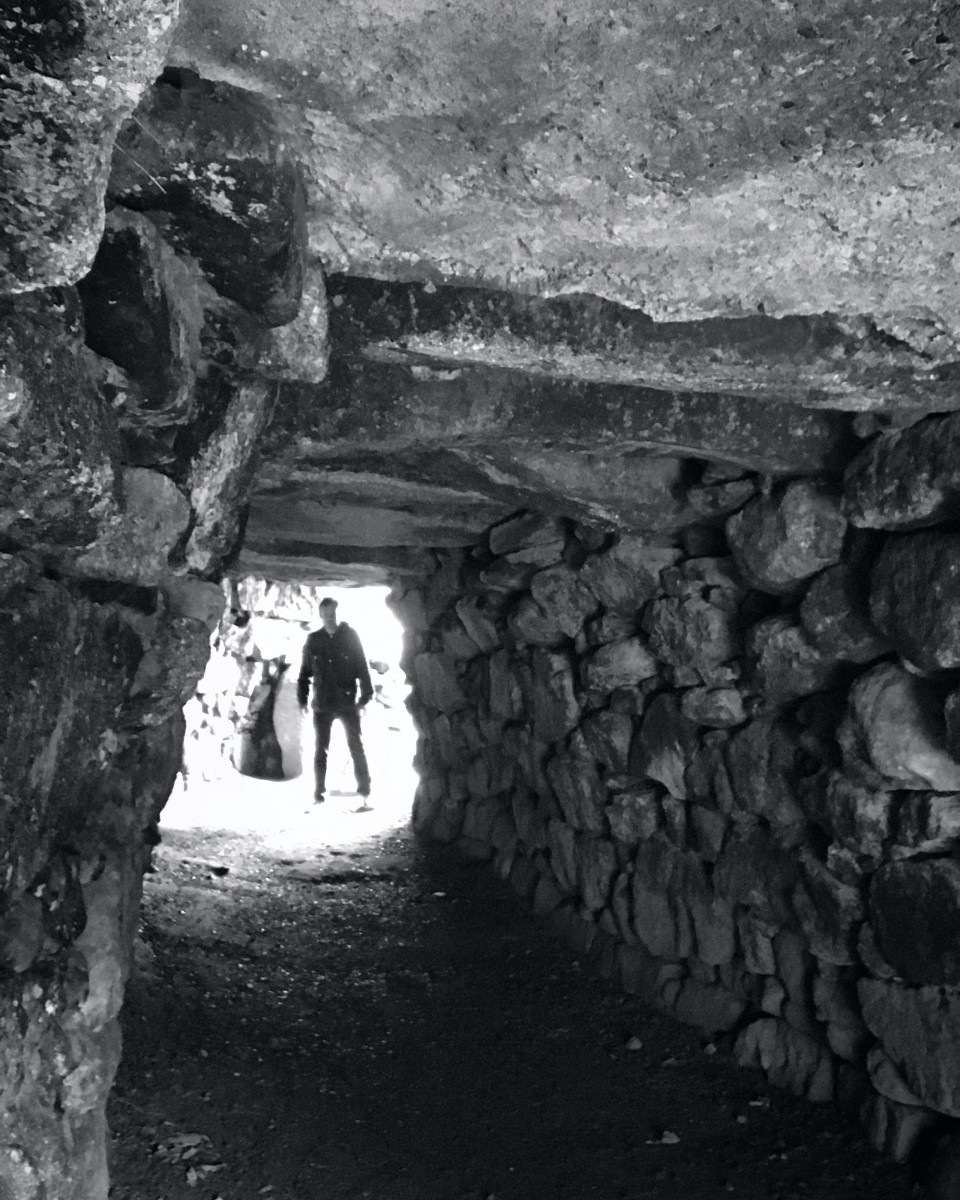
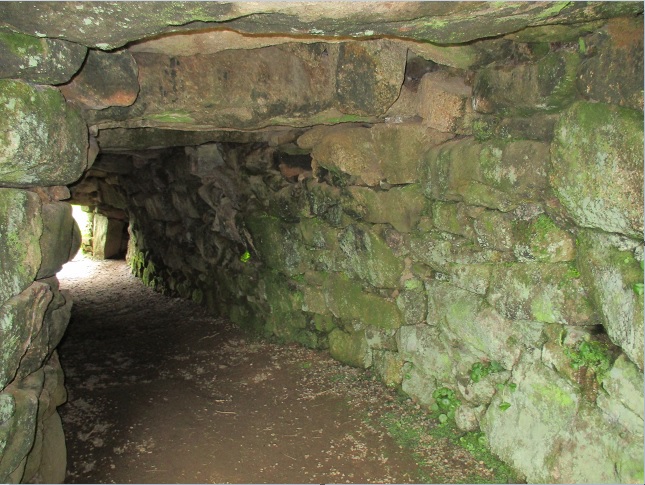
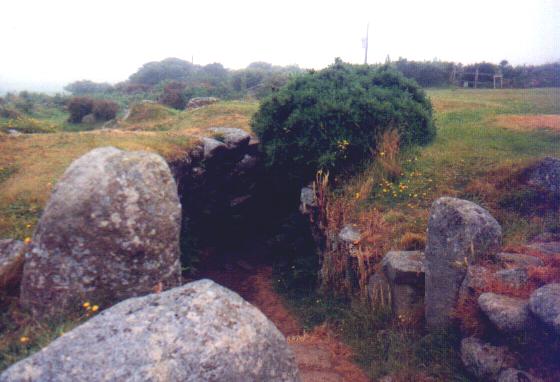
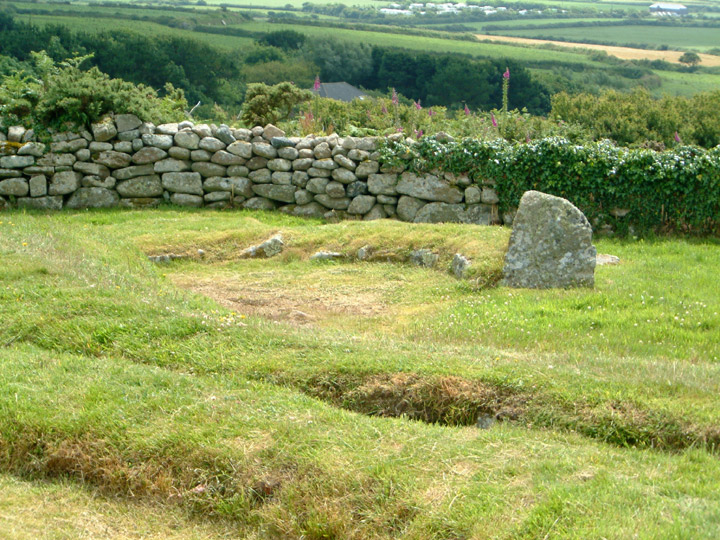
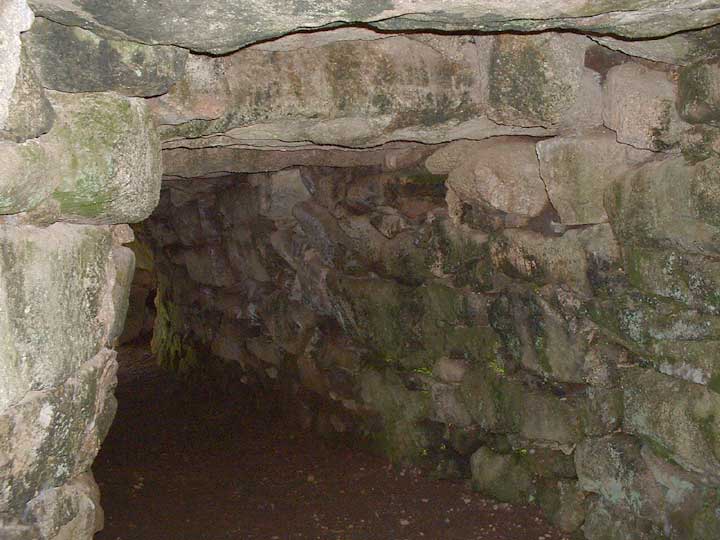
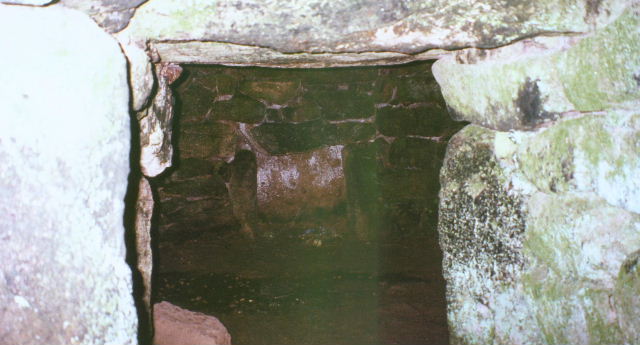
Carn Euny Settlement - 29th September 2003 With an OS map, this is pretty easy to get to, despite the tortuous journey through lanes with many blind corners. Without a map you might still just make it because the settlement is easily found once you reach Brane, which is basically a dead end settlement. It's a shame that this amazing settlement isn't a little bit better signposted from the carpark and given a separate footpath up to it because I can imagine that this could be a very muddy trek in the wrong weather, and if cows are in the fields. There is a very small 'brown' tourist sign at Drift, alongside the sign to Sancreed. At the next main junction (at SW423291) 'Brane' is clearly signposted. Only at the next junction (with the lane to Tregonebris - SW416288) is 'Carn Euny' not signposted. As you come into Brane, there is one last 'Carn Euny' brown signpost. 300 metres after this, next to small wooded area and opposite the last house in Brane, is space for about 5 cars to park. The settlement is then about 300 metres away, up a lane, half way up the next field and then left though a small field to the settlement. The fogou will blow your mind. The journey is worth it just for this. Although I knew it was a long fogou I wasn't sure if it was open (because the Chysauster one is so sadly neglected and buggered by English Heritage) and hadn't totally read up about it. I was happy to simply see that the south entrance was open and got my torch at the ready thinking it would be a creepy, narrow place, but soon realised that once under the lintelled south entrance (which originally wouldn't have been an entrance by the way) I could easily stand up - indeed, I later ran through the fogou and back into the corbelled room jumping up and down at the bloody size of the underground structures! The corbelled room will shock you even if you have been in other fogous or Scottish souterrains. Forget the dodgy roof, just feel the width! And look at the skill of the building work. Amazing. The main fogou passage is also a masterpiece of engineering. The creep at the southern end (believed to be originally the only entrance) is also pretty cool, although it is sensitively blocked at ground level by wooden slats. The courtyard houses are not as impressive as Chysauster, but nevertheless are well worth the visit as well. This post appears as part of the weblog entry Kernow Again - Part 1 - Vote Alex
|
 Posted by pure joy
5th October 2003ce Edited 5th October 2003ce |
|
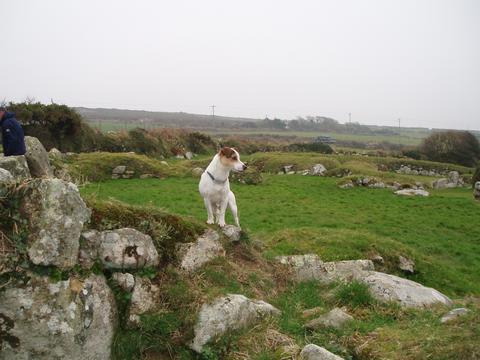
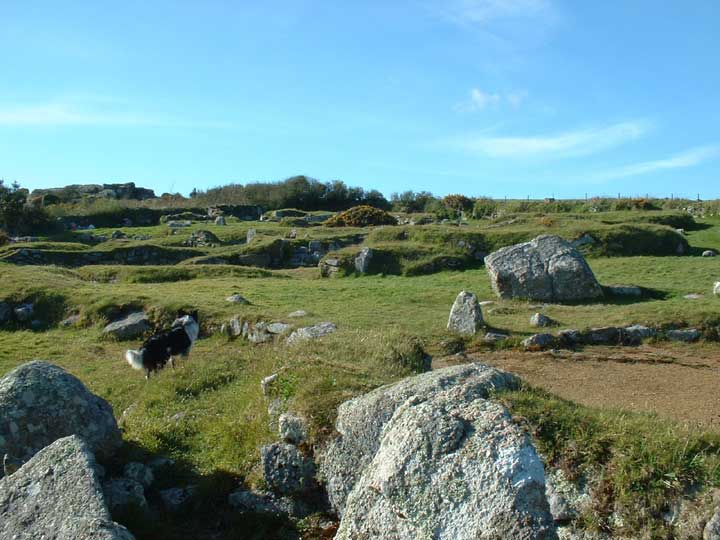
Visiting Carn Euny for the first time last week, I was immediately struck by how peaceful the site was. Save for the distant hum of light aircraft, taking off and landing at nearby Land's End airfield, all is silence. Entering from above the site, from the north-west, a narrow path carved through shady trees opens onto the village. If the GreenMan dwelt, it would be in such a place. A small gurgling spring adds to the feeling of enchantment. Smaller and more compact than nearby Chysauster, it is far more friendly. A feeling of calm pervades the site, that truly feels as if it is a welcoming family home. I began to dowse and encountered only gentle energies, trickles almost, but the most powerful appearing to emanate from St Michaels Mount, just over 5 miles away. The Fougou and Beehive are wondrous, and after my eyes became accustomed to the gloom I could see the phosphorescent moss that others here have talked of. Confetti litters the entrance to the fougou, together with small bunches of tightly bound and neatly interwoven flowers. A local visitor told me that he thought a wedding had taken place in the previous 48 hours. Standing at the entrance to the fougou, looking west at the rolling countryside I could empathise with such a decision. This is a gentle, peaceful sight, and one that has quickly risen to the top of the list in my affections. Linger and soak up the harmonious nature, and enjoy the company of the 'guardians of the stones', two dogs of indeterminate years who will shepherd you around their site, asking only for a crust from your sandwich in payment! |
 Posted by Dominic_Brayne
8th August 2003ce Edited 9th August 2003ce |
|
After visiting Boleigh Fogou we decided to come here next, in order to compare the experience. This didn't have quite the same impact, but did have one or two surprises in store for us - the phosphorescent moss on the walls of the corbelled chamber impressed us most. We decided that Boleigh's magic must have a lot to do with it's 'living' nature - this felt much more like the sites I'm used to, and so much less alive. A tour group arrived after 20 minutes or so, thus signalling our departure. On the way back we wandered a few metres down the track marked 'pottery' to visit the little well there. This post appears as part of the weblog entry Fogou freak-out and other fantastic tales
|
 Posted by IronMan
11th May 2003ce |
|
Saturday 6th October, 1330hrs - a beautiful day with a slight south westerly breeze. Slight cloud cover and a milky sun (important fact-wait and see)The collie dog from the nearby house was there again and showing interest in our sandwiches - very placid and acts as if he owns the site - probably a reincarnated celt. There were only 2 other visitors and the site was dry and clean. The fougou was as peaceful as ever and the beehive had obviously been the subject of a ritual, as the scamps had left their tea light cases all over the inside of the structure, along with sprinklings of fresh earth. As I started to sketch I saw glowing from the walls of the beehive. As I moved my head I could see green phosphorescence all around me. Looking closely I saw that it seemed to come from a greenish moss or lichen. The effect was like fibre optic decorations. I wondered if it was residue from the ritual but then found it extended the length of the fougou. A man with a digital camera tried to photograph the phenomenon but the camera couldn't quite adapt to the conditions. Very magical. The sun was shining through the door to the beehive from the empty door space opposite, which added to the magic. Carn Euny is a very peaceful place, very calming feel., far better than Chysauster and also delightfuly hidden away. Chances are if someone finds it, they're an enthusiast too. Spent two hours there before walking over the fields to Boscawen Un to top up my batteries for the walk back to Sancreed. |
Posted by scissorman 8th October 2002ce |
| A great place to lunch! Very well preserved settlement with a great fogou. Check the pottery shop to the right as you look down over the site. Follow path and your in someones garden. Pottery there! Very good stuff. |
Posted by CraigR 25th January 2002ce |
|
It is reckoned that these settlements, of which there are many in Penwith, were training centers or initiation centres. Most of them are near or contain a fogou and are always situated near to a sacred hill, a quoit, a stone circle and a holy well. So it seems that each community had it's own set of tools as it were. Unfortunatly the fogou at Carn Euny is the least impressive in Penwith as far as it's feel goes. Probably because parts of it are missing, though the main passage seems complete. However the whole complex of Carn Euny is very impressive - the largest 'room's shape is well worth checking out. Also notice how there is a ruined dwelling from a later period tacked on the edges of the settlement which has a very different feel to it ie. it is square. A nice compare and contrast - 'brighten the corners'! |
 Posted by kingrolo
2nd October 2001ce |
|
Visited at the same time as a 'Harry Safari' minibus full of the elderly and foreign. Well, why not; but I observed that the not so nimble were struggling bending down in the fogou and the non-English speakers were somewhat baffled by Harry's colloquialisms and interpretations of the site (and listening in, so was I). Still, the smiles in their eyes told me that the site had touched them with its mystery, as it did for me. Rushed on to Men an Tol etc. before the minibus got there. I like people to enjoy the places so beloved to me, but I don't like being part of a tourist attraction as I perform my ceremonies or just sit and meditate. Sorry Harry! |
Posted by Serenissima 26th September 2001ce |
|
Near to the circle at Boskawen-un (across the road then along a narrow winding farm road). Never having been to a fogou before, wasn't quite sure what to expect. An easy walk from the layby took me there, greeted by a man cutting the grass and his collie dog, which seemed determined to pull the laces out of my boots, but backed off in a big way when I went near the Fogou. It had been raining in the days before my visit, so there was about 8" water lying in one end of the fogou, making access to the creep wet! The main chamber was dry underfoot and very roomy, with a very peaceful feel all around. Not in the least claustrophobic. Village ruins are not really my cup of tea however - didn't seem anything particularly special about them, but fogou well worth a visit |
Posted by a23 24th October 2000ce |
| This is a marvellous site, didn't have long enough to work out the overall layout and 'what was what' but definately got a village feel. The passage way and domed 'room' were awsome. Some nesting birds cacked Deb who momentarilty thought they were bats. Two possible routes are given, one long one short, both are easily accessible compared to most (ie no hill or bracken). |
 Posted by dickie
5th September 2000ce |
Folklore |
Add folklore |
A more modern update on giant-related folklore, and why not:I followed, and found myself in the famous subterranean passage known as Chapel Uny Cave, walled and roofed with flat stones of granite. It is thirty-five feet long, and leads to a circular domed chamber twelve feet in diameter, now open to the sky.From 'Days in Cornwall' by Charles Hind (1909). |
 Posted by Rhiannon
31st March 2010ce Edited 31st March 2010ce |
Miscellaneous |
Add miscellaneous |
| A Guidebook for Carn Euny can be bought at Chysauster. You do not have to pay to go into Chysauster just to buy the guidebook. |
Posted by Mr Hamhead 16th June 2006ce |

| Go late in the afternoon and see if the black and white sheep dog greets you and gives you the guided tour. It was very obliging when I was there with the family and went out of it's way to point out the fogou, before retiring to a discreet distance, all the while keeping an eye out to make sure we didn't cause trouble, then escorted us back to the car park. |
 Posted by Hob
20th August 2003ce |
Links |
Add a link |
Internet ArchiveWilliam Borlase's descriptions of his excavations at the fogou between 1863 and 1867, in the Proceedings of the Society of Antiquaries of London (series 2, volume 4). |
Posted by Rhiannon 21st April 2013ce |

Into CornwallVideo of Carn Euny Iron Age Settlement and fogou |
Posted by Jane 3 22nd February 2011ce |
Cornish Ancient SitesThis is a web leaflet about Carn Euny you can download as a PDF This post appears as part of the weblog entry The Boleigh Working
|
 Posted by texlahoma
31st March 2010ce Edited 31st March 2010ce |
 Top of page