|
 Log in |
Register Log in |
Register
|

|
|

The BuckstoneRocking Stone
|
||||||||||||||||||||||||


 0 discussions


 Show map (inline Google Map)
|
|
|
Images (click to view fullsize) |
 Add an image Add an image |
Photographs: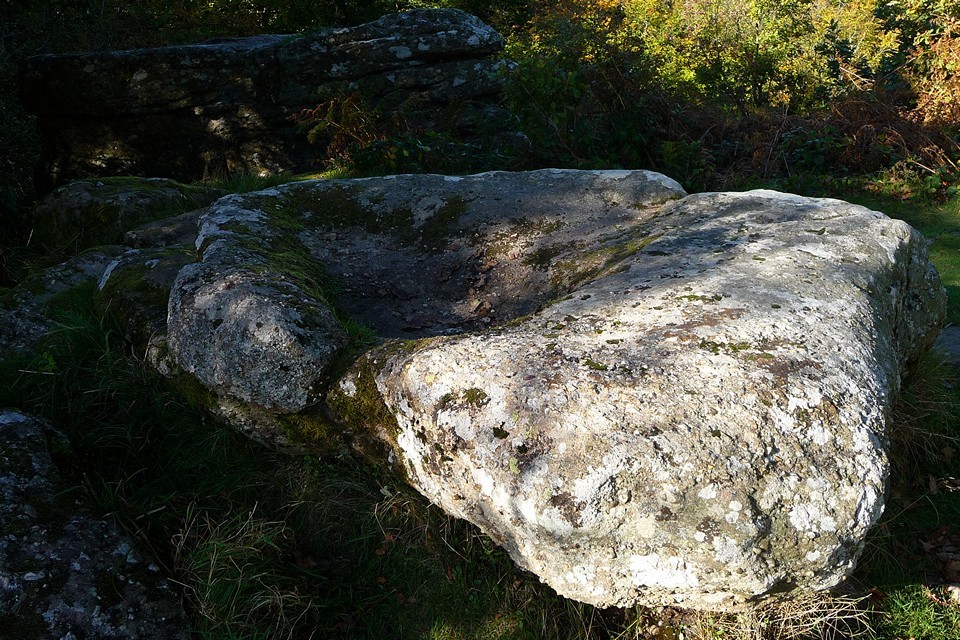
 Artistic / Interpretive: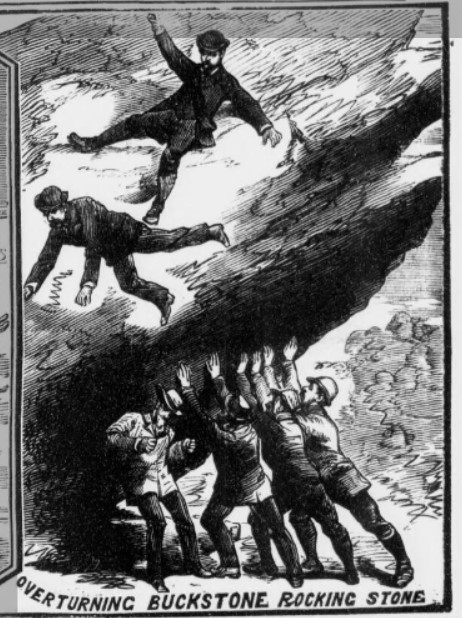
|
Fieldnotes |
Add fieldnotes |
|
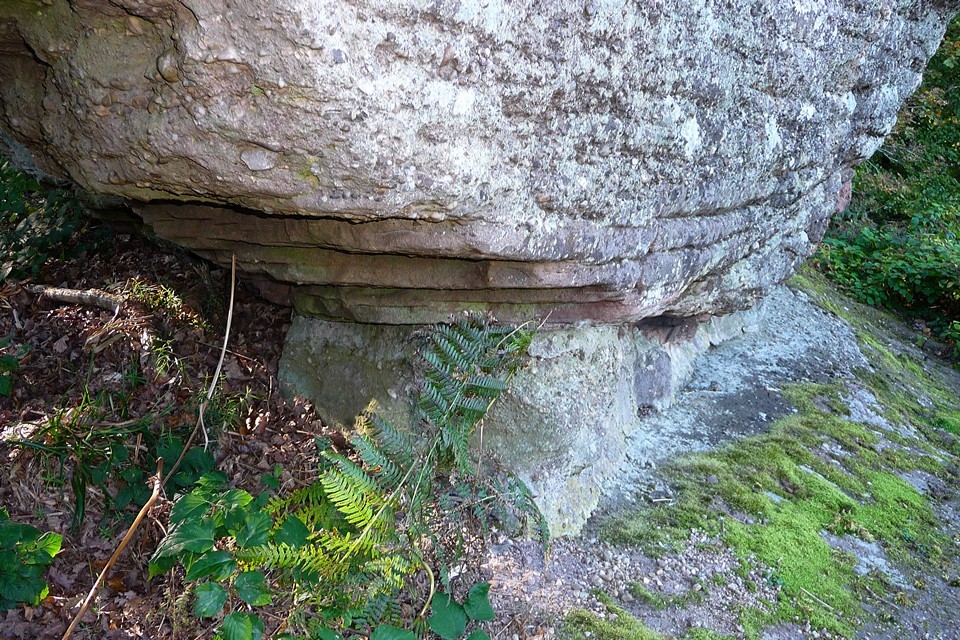
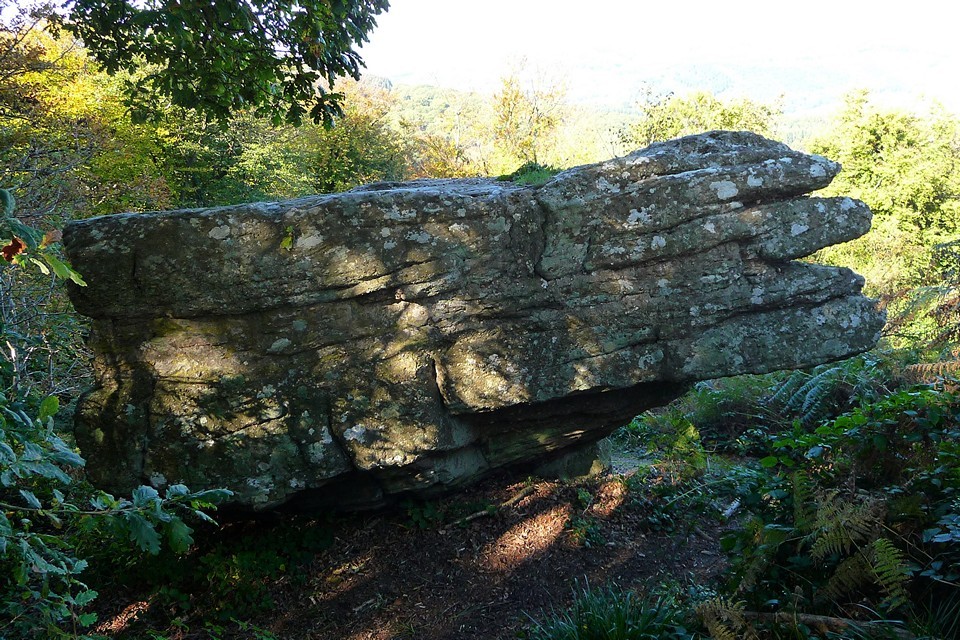
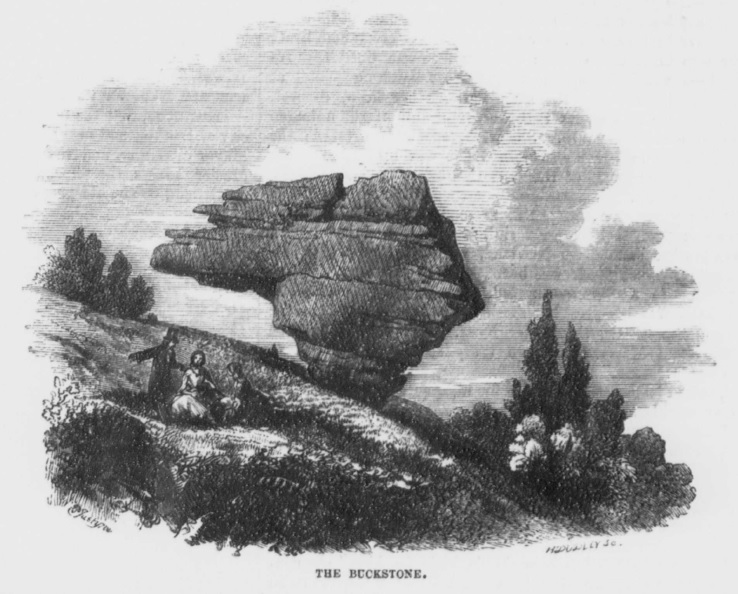
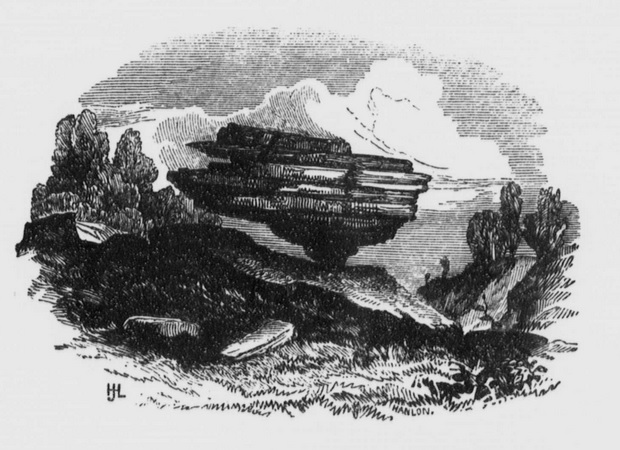
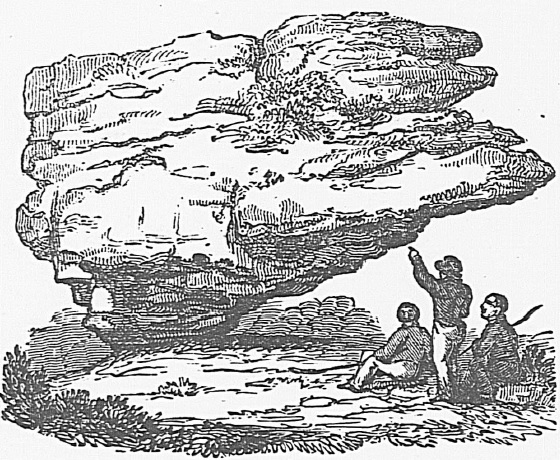
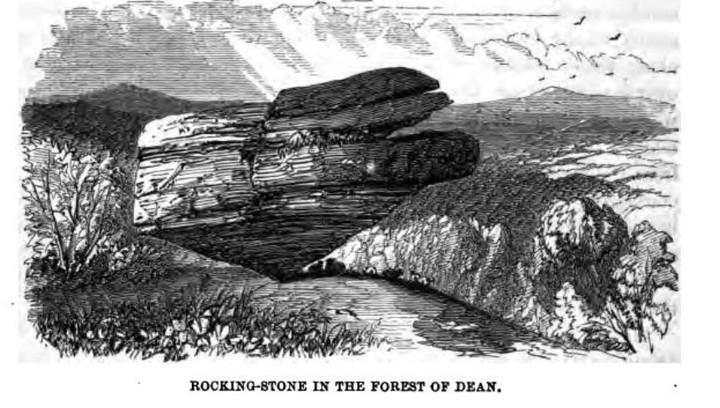
Visited 17 October 2010 on a lovely autumn day of full sun and leaves gradually turning to gold. After leaving Long Stone I walk through Blake's Wood to Staunton, an attractive village with a lovely church, a restored pound and decent pub. At the western end of the village, a byway leads southwest to Hymens Meend, and the Buckstone is easily reached along this path. The stone is situated on an unexpectedly terrific viewpoint, with great views of the eastern aspect of the Black Moutains across the Welsh border, including the recognisable tops of Pen Cerrig-calch, Pen Allt-mawr, Pen y Gadair Fawr, The Sugarloaf and Ysgyryd Fawr, then south across the Usk valley to include Blorenge. I'm excited to see the top of Pen-y-Fan in the Brecon Beacons from here too. The stone itself is a monster, a wedge-shaped lump weighing several tons, supported on a spindly base, which apparently used to allow the stone to rock, but no longer. It reminds me a little of the High & Low Bridestones on the North Yorkshire Moors. Between the path and the stone are a number of scattered boulders, one of which has been (naturally) sculpted into a basin, the sort of thing that Gentlemen's Magazines would have had lined up for Druidical blood sacrifices. Today it's filled with water, which is cool to my dipped finger tips on this unseasonally warm day. A quieter and more relaxing spot than the Long Stone, come on a clear, fine day and admire the views. Just don't expect the stone to rock. |
 Posted by thesweetcheat
19th August 2012ce Edited 20th December 2020ce |

|
Visited 6.3.12 What would you like to do for our anniversary? I asked the ever patient Karen. ‘Let’s go to Monmouth for the day’ she replied. So that is what we did. Monmouth is a very nice town and well worth a visit - it has the only surviving medieval fortified bridge in Britain (built 1270) -you can also feed the ducks from the bridge! So after a couple of hours rummaging through the many charity shops they have (Karen likes a bargain) it was time for a bit of ‘old stoning’. We headed east out of Monmouth along the A4136. Just as you enter the village of Staunton there is a turning on the right with a ‘dead end’ sign. Turn here and there is room to park on the side of the road. This is just in front of the driveway to Buckstone Adventure Centre. From here there is a public footpath sign to the right. All you have to do is follow the ‘path’ up through the woods (pretty walk) for about 10 minutes – keeping the drystone wall to your right. There are many moss covered large boulders you pass along the way. When you get to the top of the hill you will see a covered reservoir on your left and a sign for the Buckstone on your right. Through the wooden gate and you are there. Apparently until 1775 it was thought that the Buckstone could be rocked. ‘The stone attracted many attempts to topple it until the feat was achieved in 1885 by a party of 5 travelling actors and a Monmouth innkeeper. The stone split into several pieces but at the expenses of the Crown (the landowner) it was cemented back together and secured in place with an iron bar.’ The stone itself is very large – approximately 2.5 metres high x 8 metres long. It has superb views down the valley. It reminded me very much of the Devil’s Pulpit stone overlooking Tintern Abbey. The repair made to the stone with cement is clearly visible as is the rusting iron bar sticking out of one end. It is probably fortunate that this is not an easy stone to climb up. I think only those quite agile (not me!) would be able to do so. There are two Trig points next to the stone. Under the Buckstone I spotted a Tupperware dish with a stone on top. I opened the dish and discovered 3 small numbered stones and a piece of paper asking visitors to identify which of the small stones is made of the same material as the Buckstone? I assume this is something to do with the nearby Adventure Centre? What I also wasn’t expecting to see were the several large boulders near the Buckstone. One of these looked like a basin (natural?) which was full of water. I could well imagine this being used in ancient times for some reason or other. Before visiting this site I had some trepidation as I thought it may be a difficult one to access / find. I had no reason the worry. It is quite the reverse. On a public footpath and is actually sign posted near the stone with a new-look gate giving access. The stone is well worth a visit when in the area. |
Posted by CARL 7th March 2012ce |
Folklore |
Add folklore |
About a mile from the Summer House, to which a pleasant path conducts the visitor, -- in the wood of Stanton Meend, stands a curiosity highly deserving notice, called BUCKSTONE.From the extravagantly titled 'Descriptive account of the Kymin Pavilion and Beaulieu Grove, with their various views: also, the Naval Temple with new notices of Buckstone, a supposed Druidical relique, near it : to which is added, Lord Nelson's visit to Monmouth, his speeches and conversation at the dinner table, his own remarks on his important victories, with his public reception at Rudhall, Hereford, and other places, on his tour' by Charles Heath. (Hume Tracts, 1813). |
 Posted by Rhiannon
4th January 2011ce Edited 4th January 2011ce |
Miscellaneous |
Add miscellaneous |
Restoration of the Celebrated "Buckstone" Rock.From the 'Western Mail', December 15th, 1885. |
Posted by Rhiannon 16th May 2016ce |

We have, with much regret, to record the destruction of the famous and well-known object called "The Buckstone," [...] it formed a prominent object on the top of a hill 891 feet above the level of the sea, and was one of the attractions to visitors to the Forest of Dean and the beautiful Wye Valley district. This unfortunate event occured on the 10th June, 1885, on the occasion of a visit of some half-a-dozen strolling acrobats possessed of more energy than sense.From Transactions of the Bristol and Gloucestershire Archaeological Society, volume 10 (1884-5). |
Posted by Rhiannon 27th August 2013ce Edited 27th August 2013ce |
We regret to have to record that this curiously poised stone has been thoughtlessly overthrown; and though H.M. Commissioners of Woods and Forests propose to replace it in position, it will never be a rocking stone again.From 'Archaeologia Cambrensis', July 1885 (p225-7). |
Posted by Rhiannon 31st August 2012ce |
|
Extract from "Old Stones of the Cotswolds and Forest of Dean" by D.P. Sullivan (1999 Reardon Publishing): A description of this natural rock was mentioned by Louis Jennings in Field and Green Lanes in 1878: "In the south-east, that curious rocking stone, the Buckstone, can be discerned, and there is a path from the Kymin to it, chiefly through woods or across fields. The site of the Buckstone is marked by a small flagstaff, a stone weighing hundreds of tons, yet poised upon a piece of rock scarcely two feet broad, like a huge top standing upon its peg. The hill runds down a thousand feet sheer below it, and the stone inclines over at an acute angle, and can be rocked by a strong man. An old fellow, whom I overtook on the common, told me that a frolicsome youth of Staunton had one night come up here armed with picks and crowbars, but could not move it. 'It is considered', this old man said to me, 'as it was washed there when the world was drownded'." ..... It was at one time believed to have been a rocking or 'logan' stone, 'placed in its present position by Druidical agency', and that it was possible, with apparent ease, to push the massive boulder to and fro on its point. The continuing onslaught of the elements, which fashioned this curiosity out of the softer surrounding strata, eventually wore away at the pivot preventing further rocking of the Buckstone. Various attempts, over the years, to get the stone to move resulted in its being dislodged in 1885. It toppled over, breaking into several pieces. Local worthies set about restoring the Buckstone and it was reconstituted and set back on its pivot by the insertion of a steel reinforcing rod. Further movement of the stone has been permanently arrested. |
Posted by thesweetcheat 23rd December 2010ce |
 Top of page