Coflein is determined that this is a natural stone, which it surely is. It's a big and noticeable one though, at 13ft 2ins by 10ft and 4ft 1in high, "and is a natural erratic, of blue augitic porphyrite." But its presence has been linked in local consciousness with the once-present St Mary's Chapel (of which no trace is now said to be), St Mary's well, and the tradition of a burial site on the hill. The Coflein record also mentions rumours "that it was a 'Druidical Alter', or used for performing acts of mortification in connection with worship at the nearby chapel". It's interesting that the following quote mentions Special Protection afforded to the stone.
At a place called the Chapel Craigs, about half a mile from the village of Dunlop, there existed until lately the ruins of a chapel, which was dedicated to the Virgin Mary... It stood upon a rock, on the side of a rivulet, which was crossed by steps, called the lady's steps - which steps, however, have been superseded by a bridge. A beautiful stream of water gushes from the rock.
The existence of this chapel has given name to a number of localities around. A few hundred yards south-west of the site of the chapel, on the gentle swell of the hill, is a Druidical stone, called the Thugart stane, supposed to be a corruption of the grit stane. It appears at one time or another to have been a rocking -stone. The base is so covered with rubbisth, that it has now lost its vibratory motion. It lies on the farm of Brandleside, and the tenant is bound in his tack to protect it, by neither removing it, nor cultivating the ground for a considerable number of square yards around it.
Above the site of the chapel, a pathway was cut out of the solid rock, leading to the top of the hill, where tradition says there was a burying-place belonging to the chapel. The pathway is nearly obliterated, a quarry having been opened in the place a number of years ago.
From 'History of the County of Ayr' by James Paterson (1852) p45.
I visited this site today in a misty drizzle as the light was falling. Huge coal lorries flew past. Yet this mighty stone exudes a real timeless peaceful authority over all the passing traffic. The site stands in a landscape shaped by grassed over pit bings and slag heaps, old mine workings and deserted railway lines. The mining hasn't completely left and there are huge opencasts in the vicinity (one a few hundred yards behind the stone).
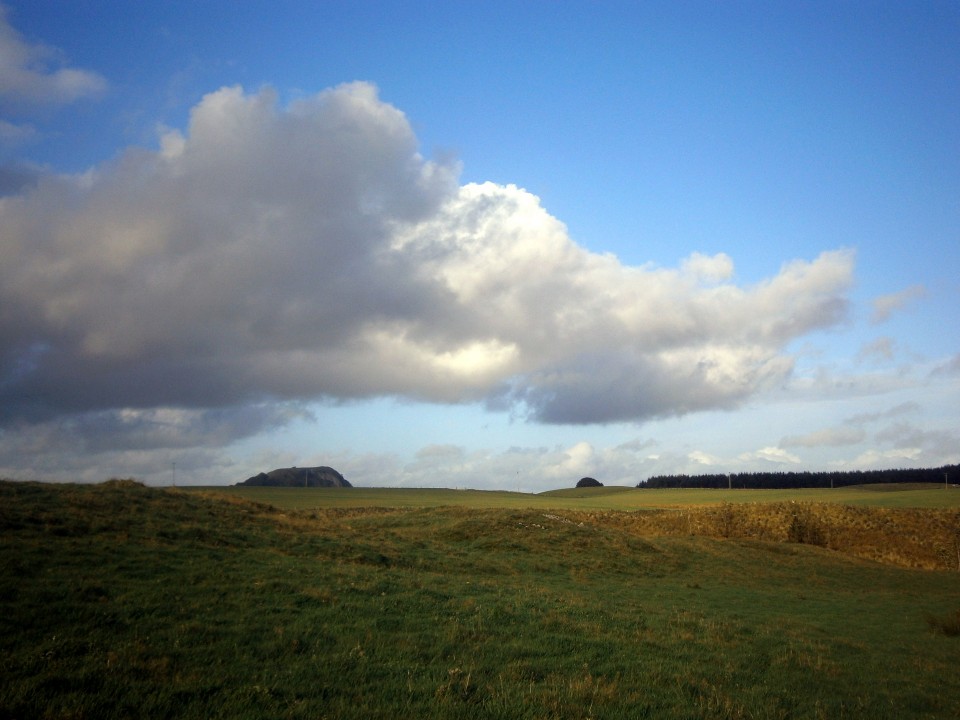
There are two massive stones on the skyline a few hundred yards above the Lightshaw stone which may just be there as a result of field clearance or the opencast. I'll check them out on my next visit. Forgot my camera today!
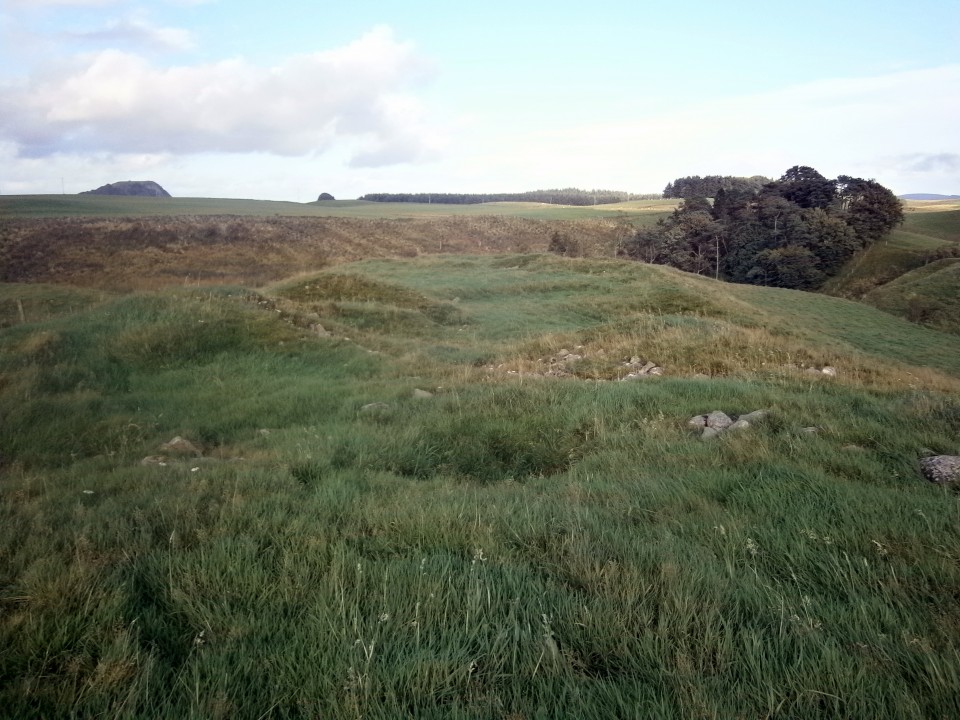
Dowan's Hill is a fort with double ramparts. It gets a mention in Robert Burns' poem "Halloween":
Upon that night when fairies light
On Cassillis Downans dance
Or owre the lays in splendid blaze
On sprightly coursers prance;
Or for Colean the rout is ta'en
Beneath the moon's pale beams;
There up the cove, to stray and rove
Amang the rocks and streams.
Burns wrote in a 1787 letter: "In my infant and boyish days too, I owed much to an old maid of my Mother's, remarkable for her ignorance, credulity and superstition. --She had, I suppose, the largest collection in the county of tales and songs concerning devils, ghosts, fairies, brownies, witches, warlocks, spunkies, Kelpies, elf-candles, dead-lights, wraiths, apparitions, cantraips, giants, inchanted towers, dragons, and other trumpery.
--This cultivated the latent seeds of Poesy; but had so strong an effect on my imagination, that to this hour, in my nocturnal rambles, I sometimes keep a sharp look-our in suspicious places; and though nobody can be more sceptical in these matters than I, yet it often takes an effort of Philosophy to shake off these idle terrors."
found in Robert Burns' Satires and the Folk Tradition: "Halloween"
Butler Waugh
South Atlantic Bulletin, Vol. 32, No. 4. (Nov., 1967), pp. 10-13.