Kerloas, the field of sadness, grief or mourning, which ever meaning you take it is not a happy place.
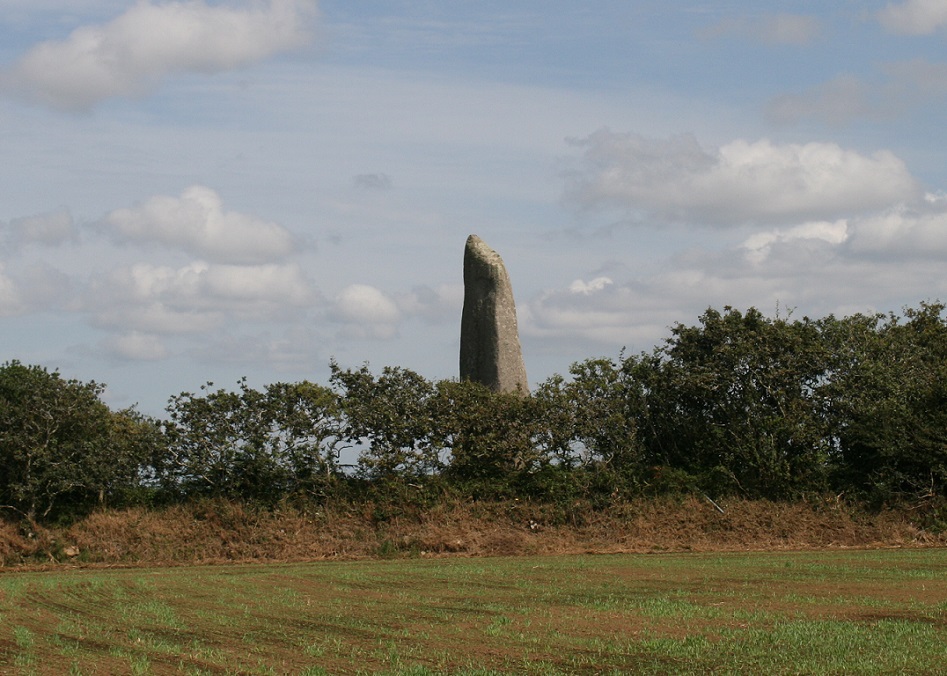
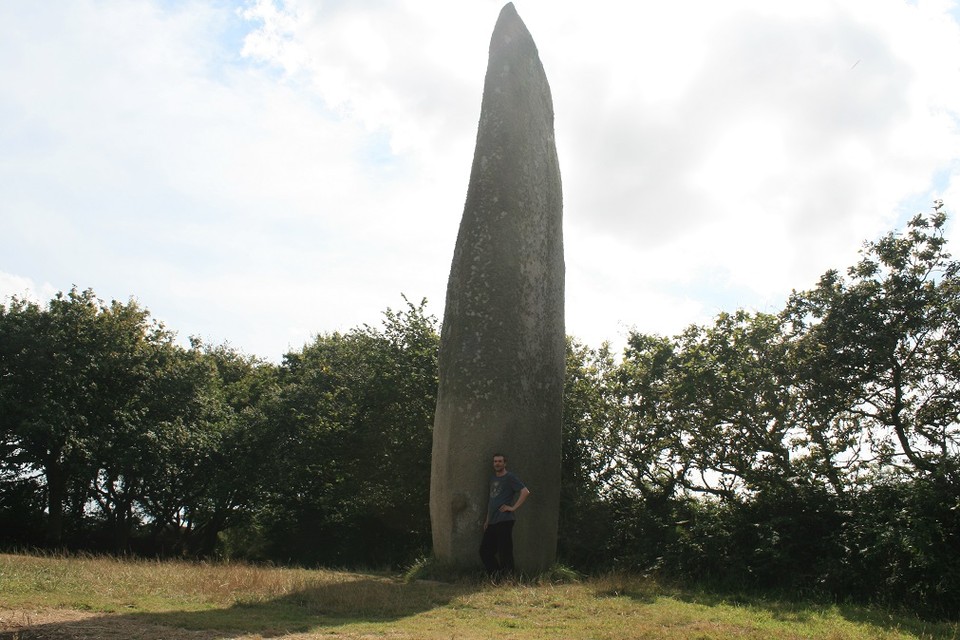
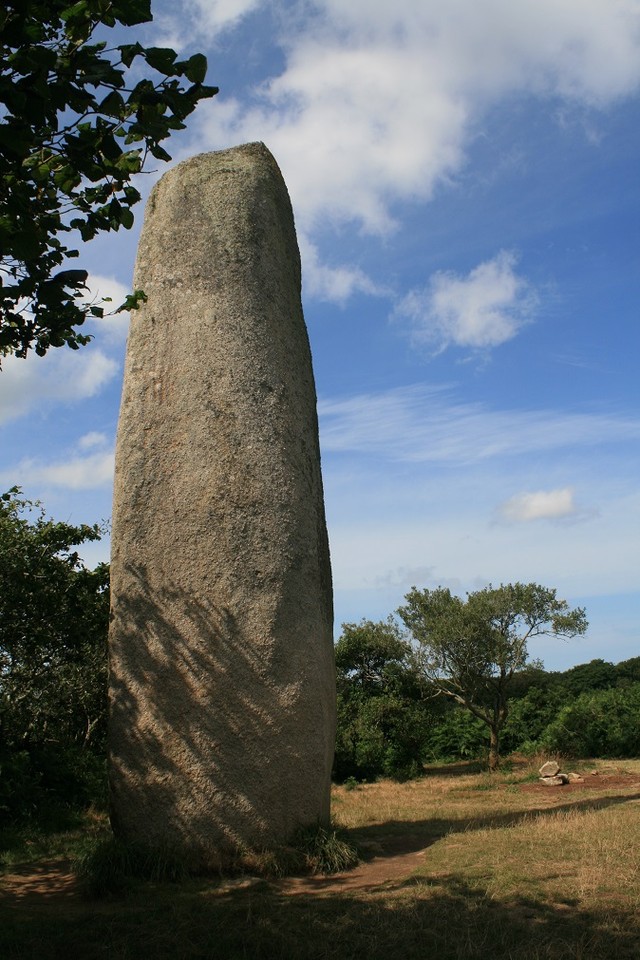
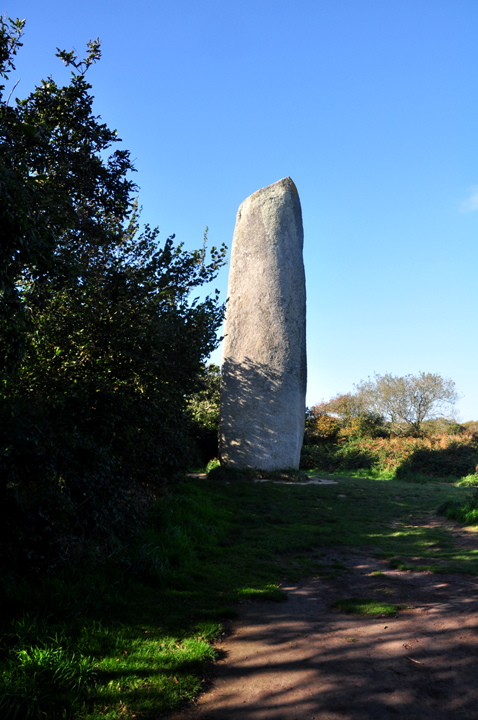
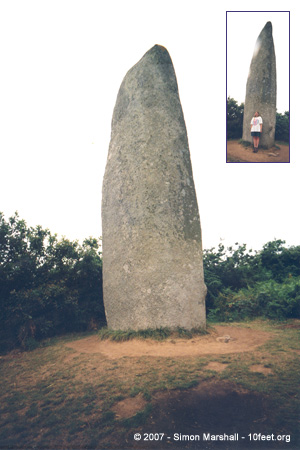
But today it is a very happy place, I have the stone all to myself, but should we call it a stone ? it is made of stone, granted, but a tall thin mountain would be more like it.
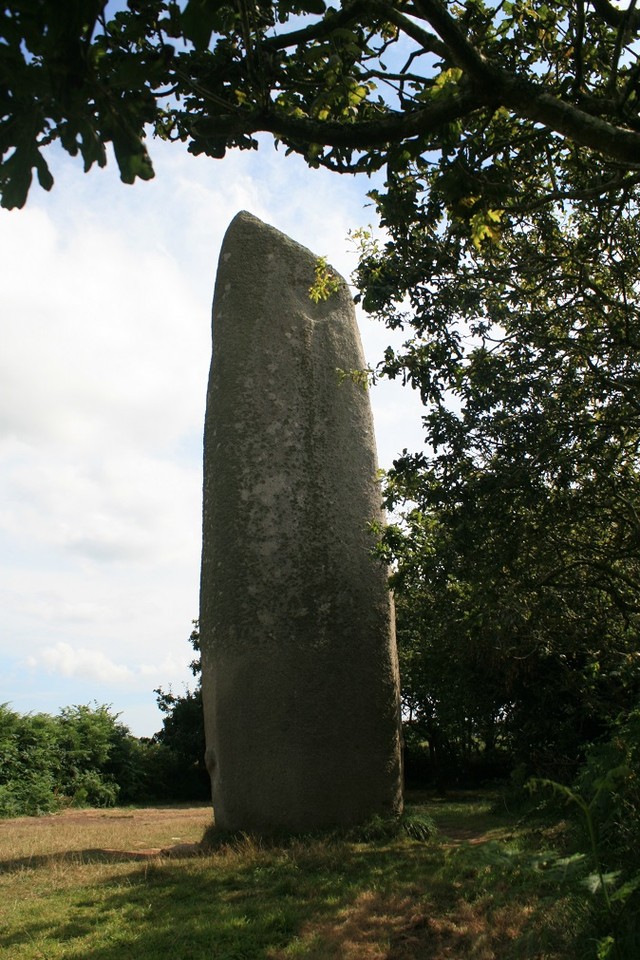
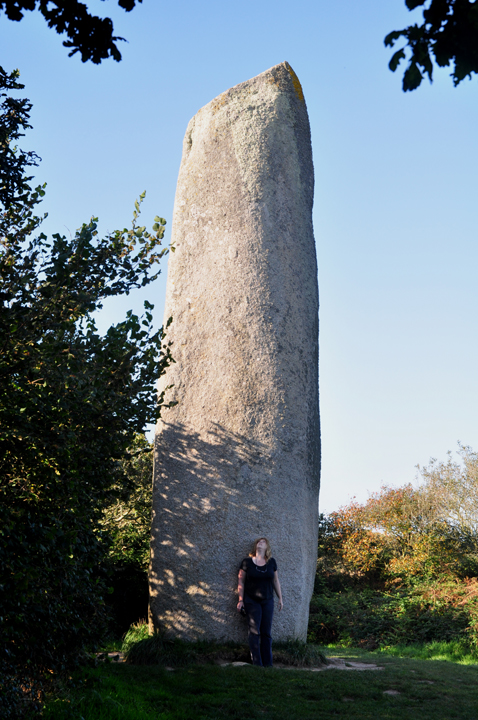
Is this the tallest standing stone in the whole world ? excepting Egyptian obelisks, which to my mind don't count. If it isn't, ive yet to hear of a bigger one. Some say it is 9.5 meters high, which is exactly what they say of Champ Dolent menhir, so it is equal first place, but then Kerloas has been truncated, cut short by as much as two meters, the broken bits apparently carted away by local farmer.
As I walk around I cant help smiling at the incredulous hugeness of it, 350 tonnes, dragged over 3km and then stood upright. Blammo, is your mind intact, nowhere near.
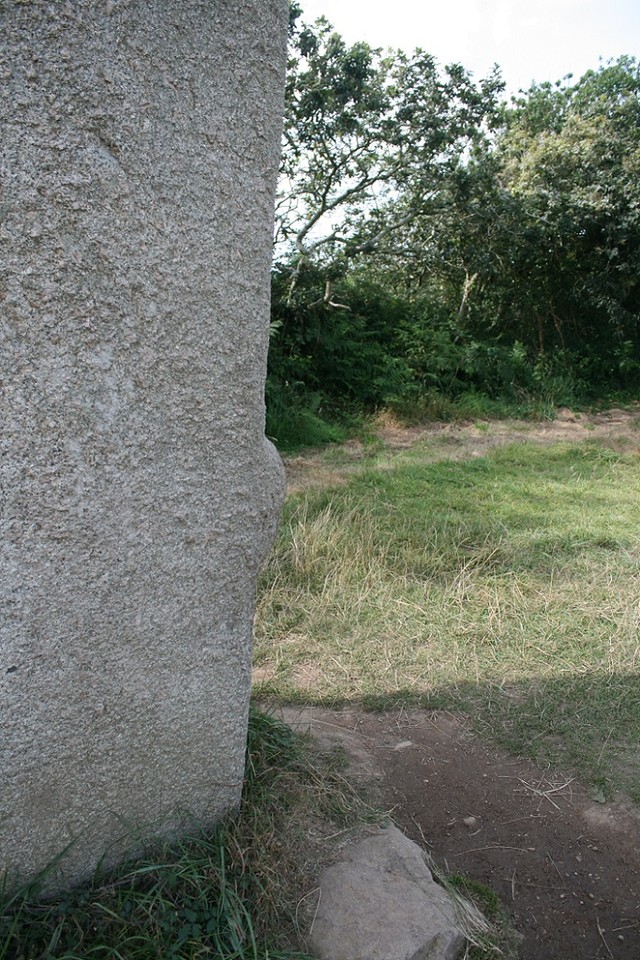
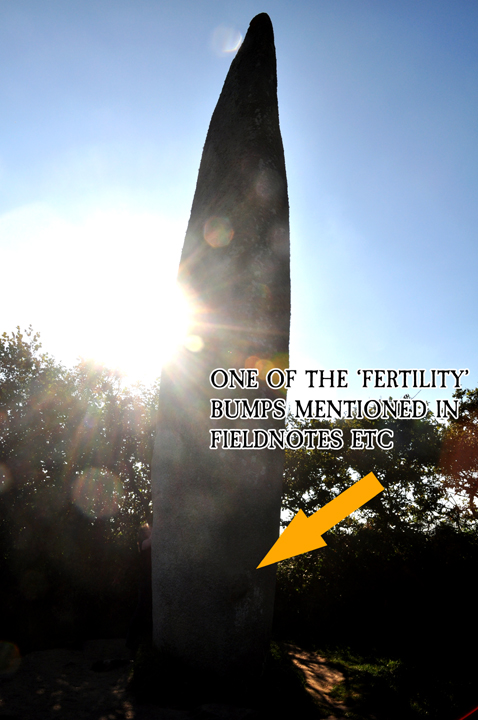
The two bumps carved on its lower flanks are very intriguing, his and hers fertility rubbing points, tosh I'd say, I tried, I'm too short by nearly a foot. So I decided it was for medicinal purposes, I rubbed my back where I had my operation and I'm glad to say that it does not hurt at all, it could just be good doctormanship instead though.
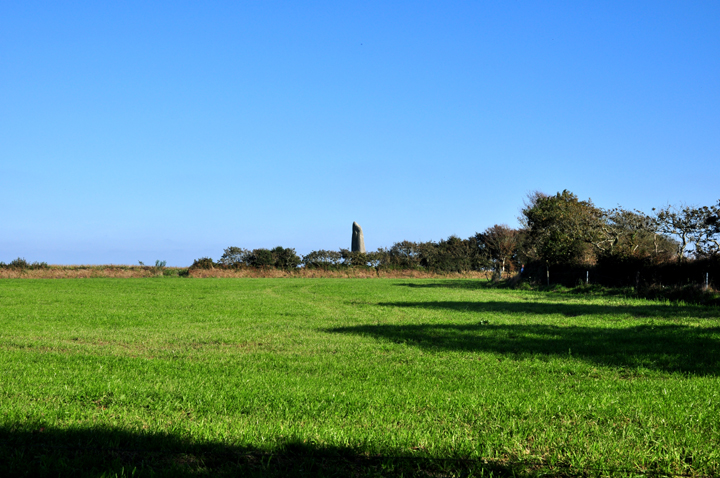
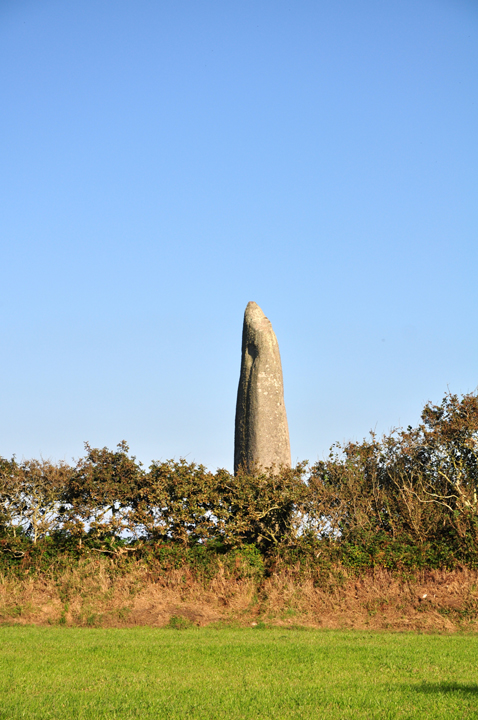
Not far from the big car park, very easy to find, well, your not going to miss it are you.
I combined it with a trip to Oceanopolis, Brittany's biggest aquarium, the kids loved it.
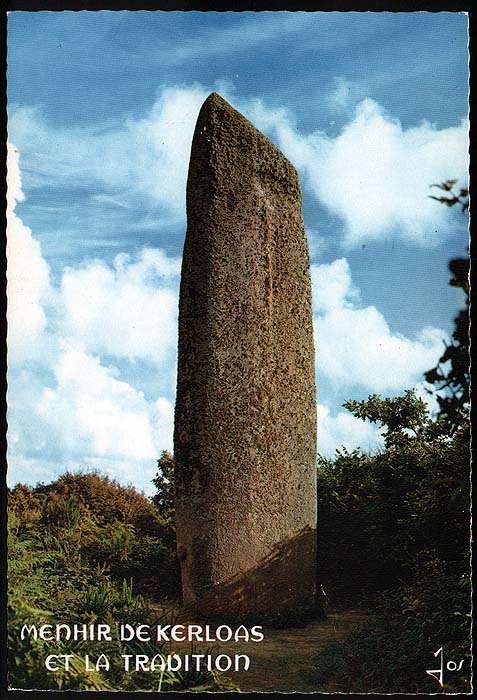
Oh la la, it's big. Very big. They say the tallest still standing menhir in the world. And I can believe it. It's 9.5ms, for goodness sake! That's 31 feet in old money. And it used to be taller still! A lightning strike a couple of centuries ago knocked 2ms off the top apparently. Quite apart from its sheer dizzying height, it is a curious shape; not even and slender like most of the menhirs, but wider than it is thick.
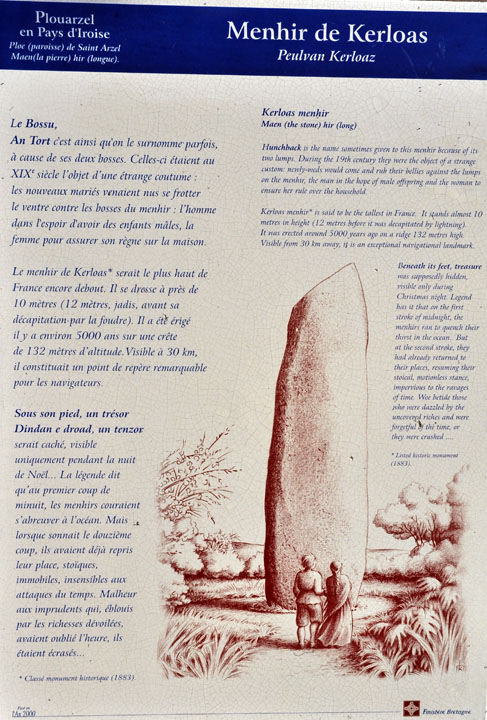
It has two curious sticky-outy hemispherical lumps carved on either side, each about the size of half a football. Each is at about belly height. I could well imagine superstitious people wanting to increase their fecundity coming to the menhir to rub their abdomens on the lumps in the hope of getting babies. They'd have been better off just having sex…
The great Menhir of Kerloaz stands on a dreary moorland, with no object near it to distract attention from the impressive mass. It consists of a single granite block, thirty-seven feet nine inches high, having a quadrangular base, with a curious round protuberance on two of its sides, about three feet from the ground.
Numerous conjectures have been hazarded respecting these bosses, none of which are supported by tradition. They are regarded with extraordinary veneration by the peasants. Villemarque states that newly-married people repair to this imposing Menhir at nightfall, and divesting themselves of a portion of their clothes, the husband goes to one boss, the wife to the other, and rub their naked bodies against the stone; the man believing that by this ridiculous ceremony he will be the father of male children only, while the woman hopes that she will have dominion over her husband.
The ground surrounding this Menhir is called in Breton "Kerglas," which means the field of grief or mourning -- traditionary evidence that the obelisk was erected as a funeral monument. In this case, Villemarque justly observes, the vast size of the stone denotes that the grave contained a mighty chief, for generally speaking, the bulk of the monument raised over the bodies of chiefs was proportionate to their rank and valour in war.
I just love it when these people call something 'ridiculous' and then come out with something equally spurious.
From p187 of Charles Richard Weld's "A vacation in Brittany' (1856) - now digitised at Google Books.
At 9.5 metres, Kerloas Menhir is the tallest standing stone to remain erect. In the English Edition of The Megaliths of Brittany (ISBN: 2-87747-063-6) Jacques Briard states that the stone was originally over 10 metres high, but the tip was struck off during a thunder storm "some centuries ago", bits landing in a nearby farm. At it's base the menhir has two very feminine looking lumps. The stone is granite, and is thought to have been transported 3km from L'Aber Ildut.
 Log in |
Register
Log in |
Register


 0 discussions


 Show map (inline Google Map)
 Add an image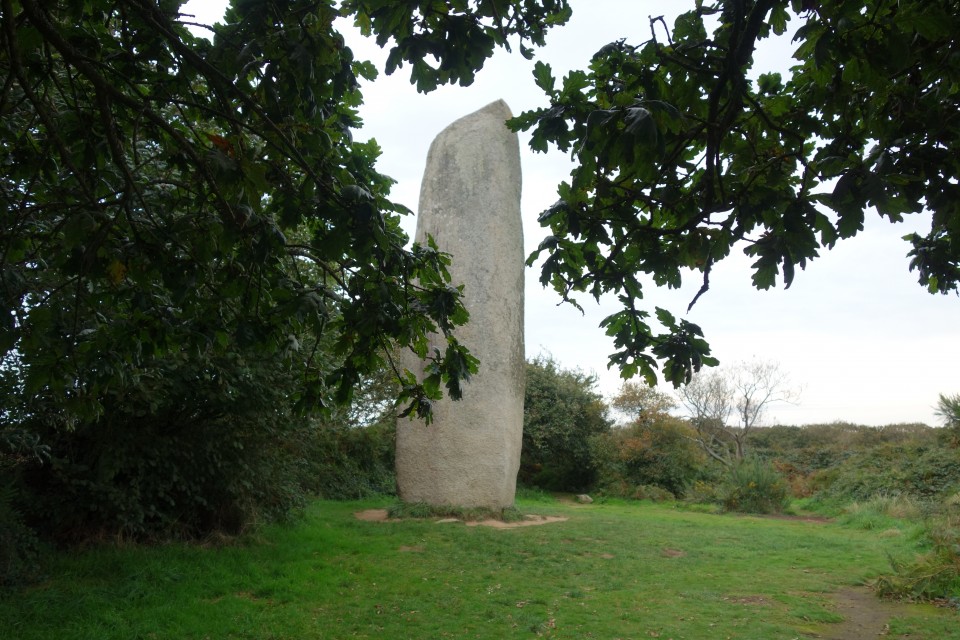

 Artistic / Interpretive: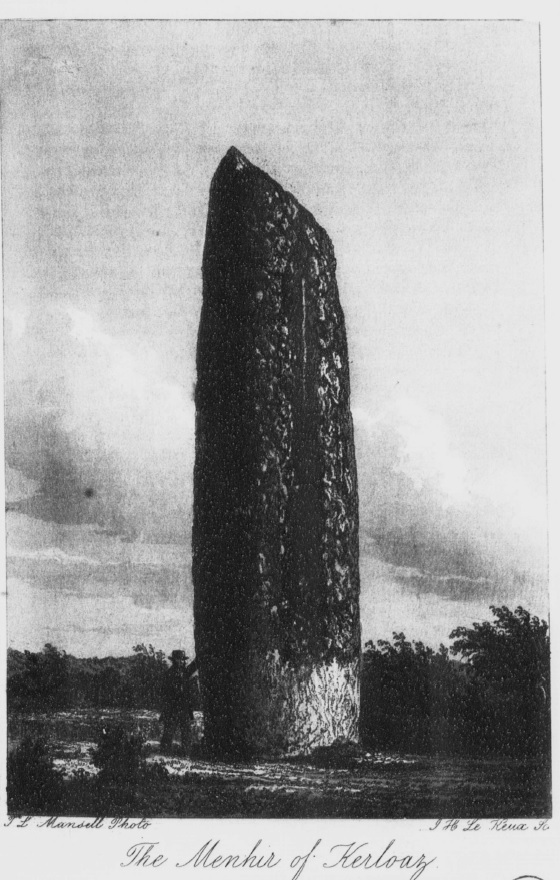
 Posted by postman
 Posted by Jane
 Posted by Rhiannon
 Posted by Kammer
 Top of page