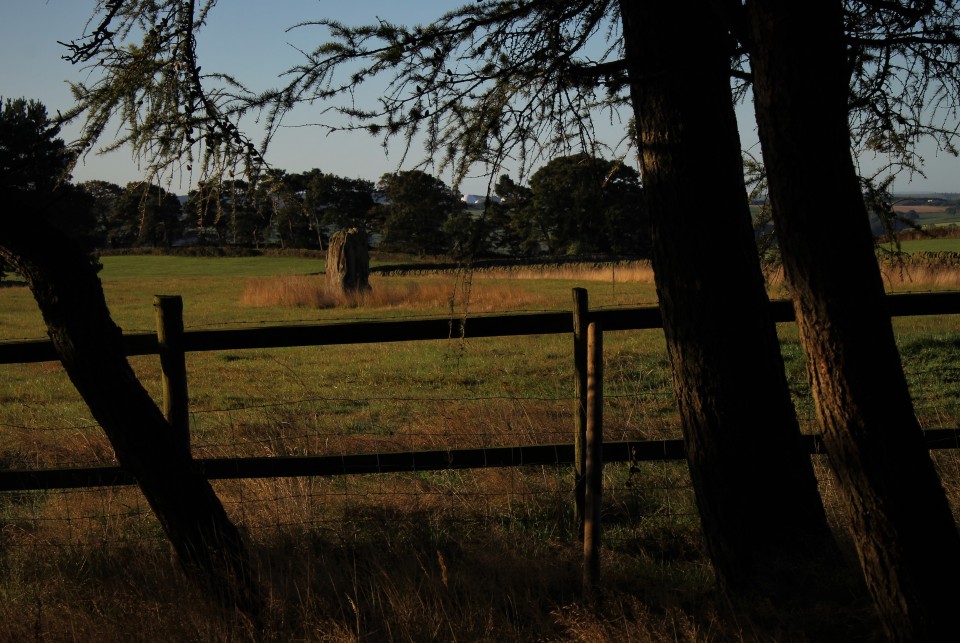
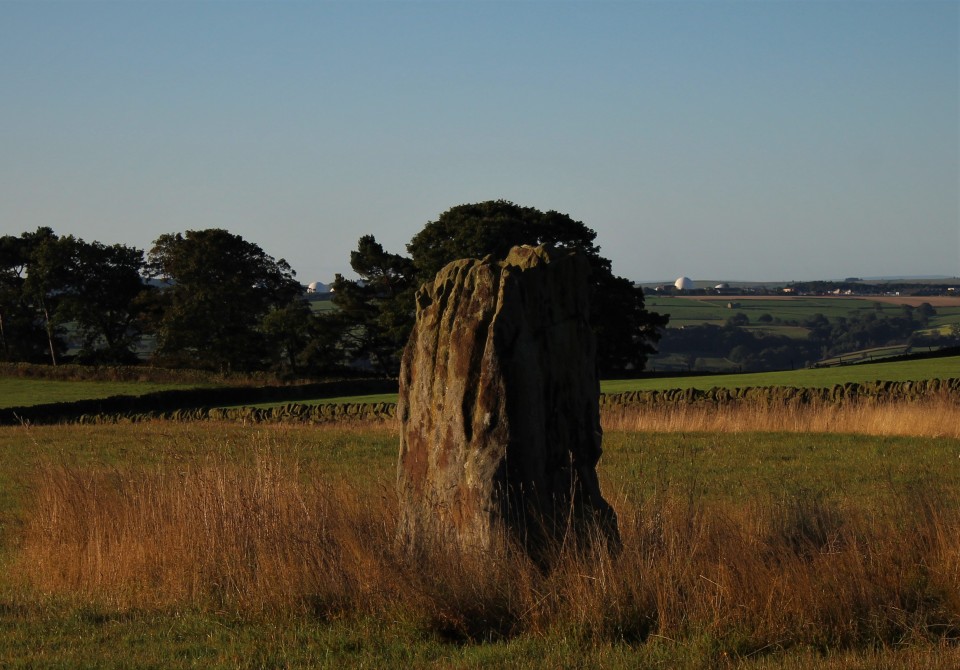
Details of stone on Pastscape
[Marginal] A cup and ring marked stone was discovered in 1938 by H.J. Stickland on the edge of the moors above Braisty Woods Farm. It is now in the Leeds Museum and dated to the M.B.A. (1-2)
The site of this stone at SE 20556374, was indicated to C.E.Hartley (Hon. Corr.) by the finder. It is no longer in Leeds Museum, and is presumed to have been lost as a result of bomb damage during the war. (3)
|
Posted by Chance 12th October 2012ce |
Details of site on Pastscape
(SE 212642) Supposed (NAT) Tumuli (NR) (1)
Two cairns, forming part of a group on Graffa Plains: one, 12 ft. in diameter and situated about 150 yards north west of the first large group of rocks upon the south east boundary of Brimham Moor, and about 50 yards southeast of the trackway leading to 'Riva Hill Farm'; the other cairn 9ft. in diameter and 100 yards south west of the first. Both excavated in 1908 by A. L. Armstrong. Nothing was found except 'black earth' and charcoal suggesting cremations and two shaped sandstone blocks, possibly grain rubbers. (2)
The indicated area is on the edge of an extensive moorland region thickly covered with outcropping rock and natural hillocks. A thorough ground inspection revealed no evidence of any cairns. (3)
|
Posted by Chance 12th October 2012ce |
Once you've crossed the field and are on the moor itself the stone wall dog-legs to the left and this is where the rock is - in a direct line with Carr Farm and the radio mast.
It really is a beautiful carving.
|
Posted by jones-y-gog 28th September 2012ce |
Near the track on the right leading to Carr Farm there is a gate and the large panel is in this field, about 15 yards away.
The carving is very clearly defined - a perfect example of cup and ring - so much so that it may have been protected by vegetation till relatively recently.
About 500 yards further to the west over the wall and on the moor itself is the exquisite Tree of Life - definitely worth a visit.
|
Posted by jones-y-gog 28th September 2012ce |
Hereabouts was a stronghold of the old British, until ousted by the advancing legions of Rome; and yonder on the south bluff of Addlebrough is an immense cairn, and under a large heap of stones, called Stone Raise, there slept in peace, for centuries, a chieftain of the old Celtic race; but tradition reported that vast wealth was hidden in the "Golden Chest on Greenbar," as the spot is called, and so, for either curiosity or greed of gain, the ancient chieftain's resting-place has been rudely disturbed; but if the visitor be sufficiently imaginative, he will hear in the spirit of the whirlwind sweeping and howling around Addlebrough, dire sounds as if of conflict; it is the confusion of battle welling up the centuries. From Wensleydale and the lower vale of the Yore by Edmund Bogg (1899).
|
Posted by Rhiannon 26th August 2012ce |
|